
Axios Macro

November 18, 2026

Between Neil's interview with New York Fed president John Williams yesterday afternoon and other scattered commentary from top officials, the central bank's path forward is getting a little bit clearer. More below.
- Plus, the mixed messages in this morning's housing data. 🏠
Today's newsletter, edited by George Moriarty and copy edited by Katie Lewis, is 883 words, a 3.5-minute read.
1 big thing: The Fed's next moves come into focus
Get ready for an interest rate hike in three weeks' time. Then probably a couple more early next year. But pump the brakes on talk of a supersized rate hike — and keep an open mind about what 2027 policy looks like.
- That is the upshot of comments from Federal Reserve leadership in recent days that show officials relatively unfazed by the bumpy last few weeks in financial markets — so far, at least.
The big picture: There is broad consensus among policymakers that inflation is the predominant concern right now, and the combination of robust growth, a solid job market and continued price pressure demands higher rates.
- The tightening in credit markets and drop in the stock market over the last month is getting close attention in the halls of the Fed, but so far is viewed more as a constructive repricing of risk.
- Top officials' disagreements are less about the direction of travel and more about the speed — and how to talk about it.
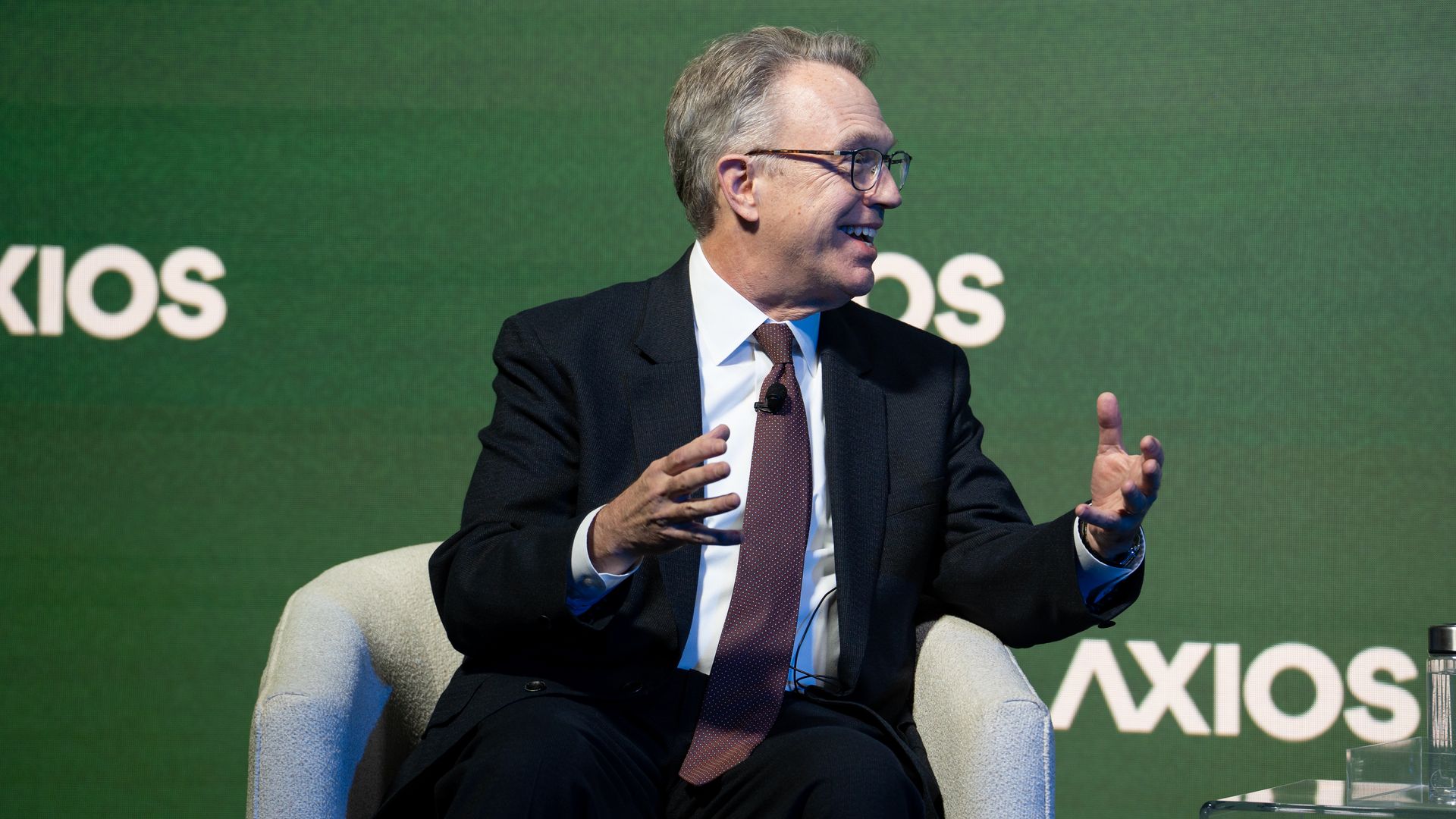
Driving the news: "The economy is strong; it's strengthening, and inflation is stubbornly high," Williams said at the Axios BFD conference yesterday. "And we need to get it down," he said, adding that the Fed has "work to do" to bring inflation to 2%.
- He noted economic strength driven by the AI investment surge and robust consumer spending, saying that "if those continue, I think that's a factor that will argue that we may need to raise rates more."
- As to whether the wobbling stock market and stresses in AI-related debt markets amount to a tightening of conditions that might mitigate the need for rate hikes, he said that "financial conditions were incredibly positive just a few months ago," and that what we've seen is "more of a normalization of financial conditions which are still pretty supportive of growth."
The intrigue: Williams poured cold water on the notion of raising rates by a half-percentage point, saying, "I don't think the situation calls for dramatic action."
- Governor Christopher Waller has raised that possibility, and did so again this morning.
- "I'm very, very concerned about inflation. It's kind of headed in the wrong direction, and it's spreading out," Waller said on CNBC's Squawk Box. "If you really want to get it down, you've got to start taking more aggressive actions."
- "You might need to, like, shock people," Waller said.
Between the lines: Waller's argument is that under chairman Kevin Warsh's new regime with less explicit guidance about future policy action, the Fed needs to act more aggressively to send messages.
- In other words, if you're going to talk less, you may need your policy actions to do more of the talking for you.
- "If you're not going to signal this very clearly to markets" that a January rate hike is on the way, "my view is then you have to go to [half a percent] in December to put it in place and get it done."
Yes, but: There's not much evidence Waller is winning the internal argument. Two hawkish presidents of regional Fed banks, Beth Hammack of Cleveland and Alberto Musalem of St. Louis, have each spoken this week about a string of smaller rate increases being justified.
The bottom line: Wobbling financial markets aren't worrying the Fed too much yet, but high inflation readings are. Gradualism is the most likely response, not break-the-glass action.
2. Home construction rebounds, plans plunge


Homebuilders are pulling back on plans for new construction, even as the number of homes they actually started building rebounded last month.
Why it matters: The disconnect suggests the housing market's troubles are far from over, with builders bracing for weaker demand and higher costs.
- Elevated mortgage rates, rising construction costs and increasingly pessimistic builders threaten to prolong that weakness into next year.
By the numbers: Housing starts rebounded by nearly 10% last month, recovering from a particularly weak September. But the more forward-looking data suggests construction will weaken in the months ahead.
- Building permits fell 7.4% to an annualized 1.3 million in October — the lowest level since May 2020, during pandemic shutdowns — led by a sharp pullback in single-family home construction.
Between the lines: The shrinking pipeline of future construction mirrors a historic deterioration in homebuilder sentiment.
- Builder confidence fell to its lowest level since 2012 this month.
- About 46% of builders reported cutting prices, the highest share since the pandemic. Prospective buyer traffic fell to the lowest level since COVID and the lowest since 2015, excluding the pandemic.
What they're saying: "Stepped-up immigration enforcement is keeping legal workers off job sites, deepening labor shortages and driving up costs," Bill Owens, chairman of the National Association of Home Builders, said in a release.
- "Higher fuel prices are prompting subcontractors to raise their rates sharply, and with fewer buyers in the market, more builders are scaling back construction," Owens said.
The bottom line: The risk is that weaker construction becomes a more persistent drag on economic growth while making the nation's housing shortage harder to address.
Sign up for Axios Macro