Axios Macro

October 17, 2022

Today in Macro, we digest the somber mood and messages we heard from the international financial meetings that concluded in Washington on Saturday.
- Plus, a look at what Britain's policy U-turn means for the rest of the world.
🗓 Join the Axios BFD summit of dealmakers virtually on Wednesday, Oct. 26. Register here to livestream interviews with Mark Cuban, NYSE president Lynn Martin, ESPN chair James Pitaro and more.
Today's newsletter — a 719-word, 3-minute read — was edited by Javier E. David and copy edited by Katie Lewis.
1 big thing: What we learned at the IMF-World Bank
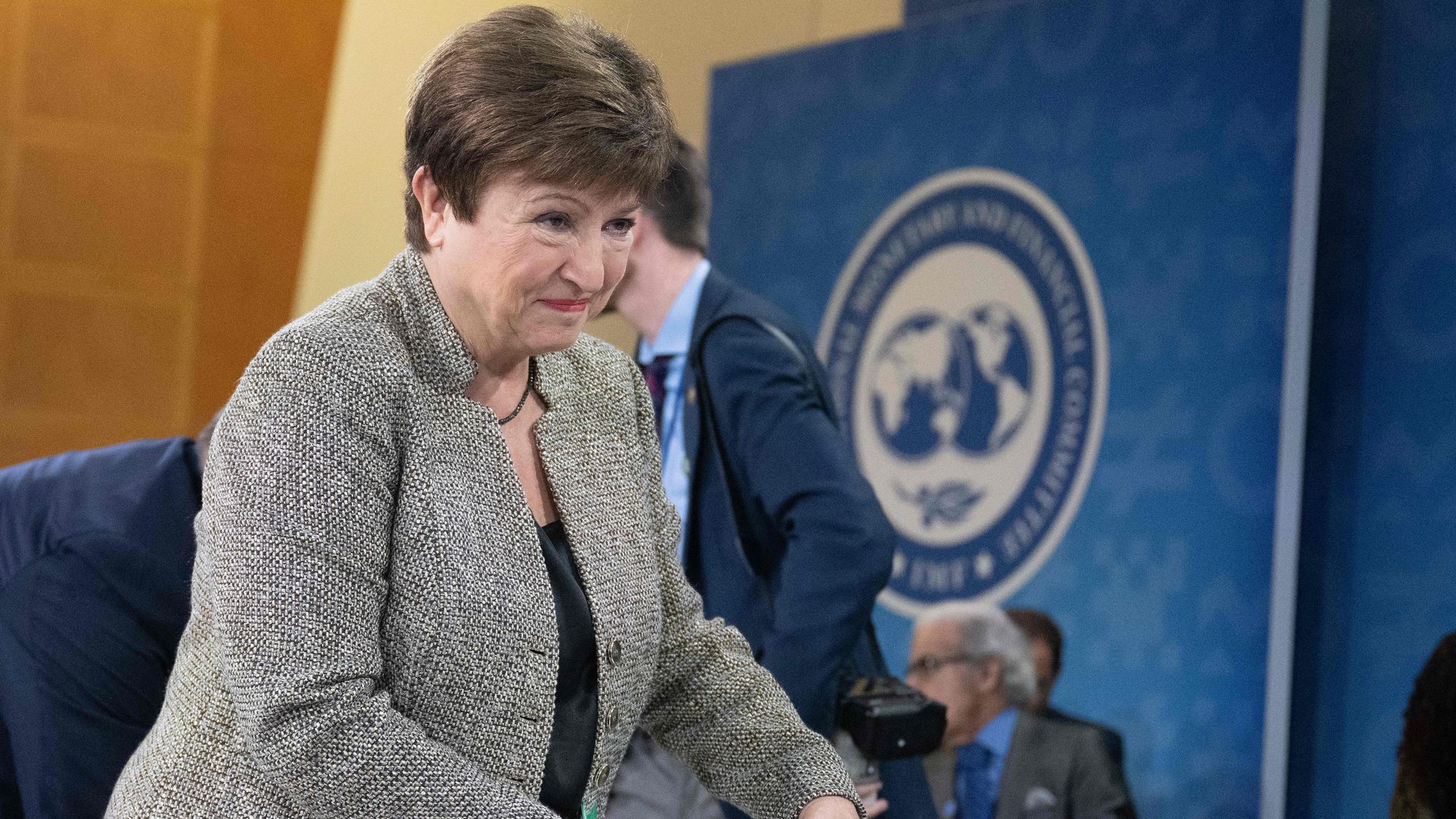
IMF managing director Kristalina Georgieva at annual meetings on Friday. Photo: Jim Watson/AFP via Getty Images.
The annual meetings of the IMF and World Bank were really back in Washington last week, following two years of being mostly (or entirely) virtual. It was not terribly festive, however.
- Instead, there is a deep sense of foreboding among the world's financial elite.
- As top Singaporean official Tharman Shanmugaratnam put it at a Group of 30 event Saturday, we have entered "an era of enduring uncertainty and fragility."
Why it matters: As the world faces a new era of high inflation, rising interest rates, constricted supply chains and geopolitical strife, global financial leaders face a situation in which the policy toolkit of the 2010s is no longer readily available.
- Fiscal and monetary policy is constrained by the pandemic, war and climate change.
The scene: In Washington last week, things looked much as they did back in 2019. Black sedans lined up at every luxury hotel and crowded gates at Dulles International Airport for the Saturday evening Lufthansa flights to Frankfurt. Banks threw fancy receptions attended by badge-wearing people in dark suits.
- But the underlying challenges have changed. The Federal Reserve and other major central banks are aggressively raising rates to try to bring down inflation, after a decade in which central banks were trying novel techniques to spur prices higher.
- Global bond markets are pricing in substantially higher rates worldwide, leaving governments and other borrowers less room to maneuver. The dollar's value has soared, stressing the entire world financial system.
- "It is very telling that the tougher the environment becomes, the easier it is for people to remember my last name and pronounce it correctly," quipped IMF managing director Kristalina Georgieva at the Group of 30 event.
Between the lines: The 2008 crisis, and the sluggish recovery that followed, were certainly painful. But economic tools were reasonably well-suited to addressing that pain.
- It was fine to spend money and cut rates when inflation was low and demand for government bonds seemingly bottomless.
- The dilemma these policymakers face now is that these problems cannot be solved by turning financial and economic dials.
- Rather, constraints like fewer workers, supply chain disruptions and war mean that central bankers feel they must inflict pain to bring down demand and, thus, inflation.
Driving the news: To a large degree, the events in Britain in the last few weeks seemed like a warning sign of what's to come in other rich countries. Bond markets essentially forced the U.K. government to back off its signature tax-cutting plans, lest borrowing costs escalate further.
- "The problem is that the supply side has shrunk, particularly the labor force, and the economy has been hit by a huge shock to national real income from the war," Bank of England governor Andrew Bailey said in a speech Saturday.
The bottom line: The world's economic challenges right now are rooted in forces that finance ministers and central bankers can't control.
2. 🇬🇧 Lingering fallout in the U.K.
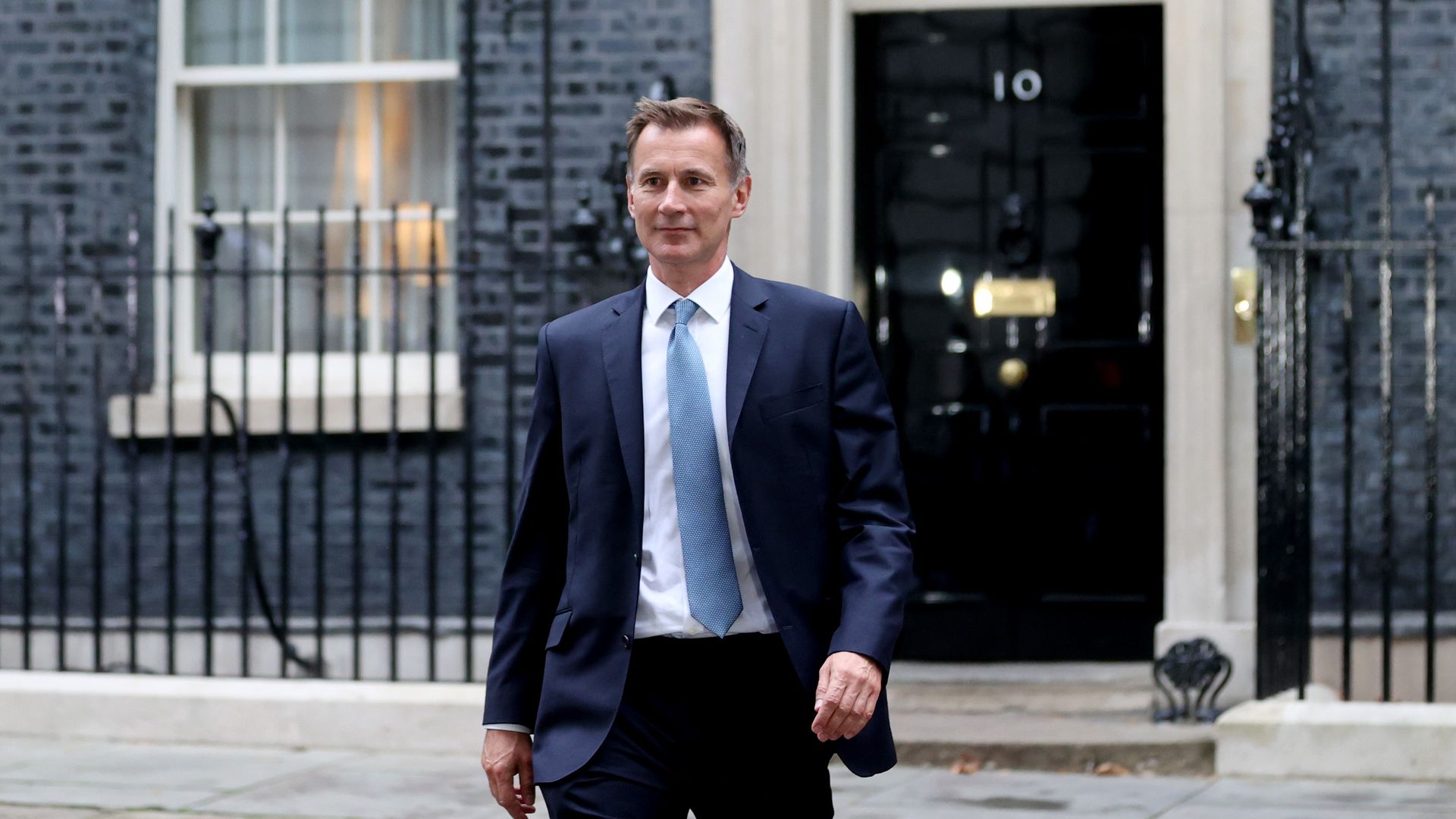
Newly appointed U.K. finance minister Jeremy Hunt leaves 10 Downing Street in London on Friday. Photo: Li Ying/Xinhua via Getty Images
'Trussonomics' — at least as we knew it — is essentially dead. After all of the drama and upheaval in financial markets, almost none of the tax cut plans proposed under U.K. Prime Minister Liz Truss will see the light of day.
Driving the news: Newly installed finance minister Jeremy Hunt said today that just two components of the original plan would remain. Notably, a proposal to help households and businesses with soaring energy bills will also be scaled back, costing taxpayers "significantly less than planned," Hunt added.
Why it matters: The U.K.'s about-face caps an extraordinary saga in which financial markets all but forced officials to scale back spending plans — a dynamic not seen in a developing nation in decades.
- It may, too, be a cautionary tale for other countries, like Italy, who may be more prudent about their own spending proposals.
The intrigue: Britain's proposals might be rolled back, but there remains lingering market damage from the episode. Even with the U-turn, the country is still left with higher borrowing costs than before.
- Yields on U.K. bonds fell after Hunt's announcement, but they remain much higher than before the chaotic events unfolded. Today, the yield on the 30-year gilt fell over 40 basis points to close at 4.34%. On Sept. 22, the eve of the initial tax cut announcement, that bond yielded 3.78%.
- A caveat, of course, is that government yields have risen across much of the world.
Sign up for Axios Macro

Stay ahead of the curve on the most important economic developments with reporting and analysis on how business, policy, and markets collide.