Axios Macro
July 17, 2025


Good news: The U.S. economy is holding up in the face of tariff threats and related price increases — at least, so far. More below on the signals from the latest key indicators.
- Plus, Neil reports from a breakfast this morning where a senior administration official laid out some additional problems the Trump team has with how the Federal Reserve is being run.
Today's newsletter, edited by Ben Berkowitz and copy edited by Katie Lewis, is 772 words, a 3-minute read.
1 big thing: The economy is doing fine

American consumers are spending freely, unemployment filings are low and executives feel more optimistic about business prospects.
Why it matters: A trade war-stunted economy remains something forecasters hand-wring about, but it's not the reality on the ground.
- Economic activity wrapped the second quarter on stronger footing, with consumers spending plenty after a tariff front-loading shopping spree earlier this year.
- It doesn't look like an economic boom time, but it's also not the stagnation that looked possible just months earlier.
Driving the news: Retail sales, which aren't adjusted for inflation, rose by 0.6% in June — more than double the increase that economists anticipated.
- That came after a sharp pullback in May, when retail sales fell by nearly a full percentage point. It raised fears about a heightened sense of caution among consumers.
- Spending increased in all but three categories: department stores, furniture retailers and electronics stores. Sales at gasoline stations were flat.
- Miscellaneous retailers (a group that includes florists, pet supply stores and more), auto dealerships and home improvement stores saw the biggest increase in sales.
What they're saying: "Delayed tariff price increases and steady income growth continue to fuel spending despite weak survey data indicating building concerns by households," Nationwide senior economist Ben Ayers wrote in a note.
- "The strong June for retail sales should support a solid rebound for real GDP growth in the second quarter," Ayers added — but warned that "tariff uncertainty hangs over the outlook."
Zoom out: The data follows further confirmation that aggregate layoffs remain low, after a spike in filings earlier this year that stoked concern about weaker labor market trends.
- Filings for unemployment benefits fell by 7,000 last week to 221,000, the fifth straight week of declines.
- Survey results from the Philadelphia Fed district — including Delaware and parts of New Jersey and Pennsylvania — showed manufacturers anticipate more hiring and growth over the next six months.
The intrigue: The Atlanta Fed GDPNow reading shows 2.6% growth in the second quarter, helped by normalizing imports after a first-quarter rush.
Reality check: The economy is not out of the woods, especially as continued trade tensions threaten higher prices for consumers.
- The Philadelphia Fed survey showed forecasts for stronger activity came alongside expectations of higher prices paid and received.
- Import prices for consumer goods rose 0.4% in June, the largest one-month increase in over a year. That is before the tariff effect, for which the data does not account.
- Continued unemployment filings — that is, those collecting benefits for multiple weeks — rose to 1.96 million in early July, ticking up from the previous week, pointing to sluggish hiring for those who do lose their jobs.
2. The Trump administration's other Fed beefs
If you've been reading this newsletter in recent weeks, you're familiar with the Trump administration's complaints about the Fed's interest rate policies and expensive building renovation.
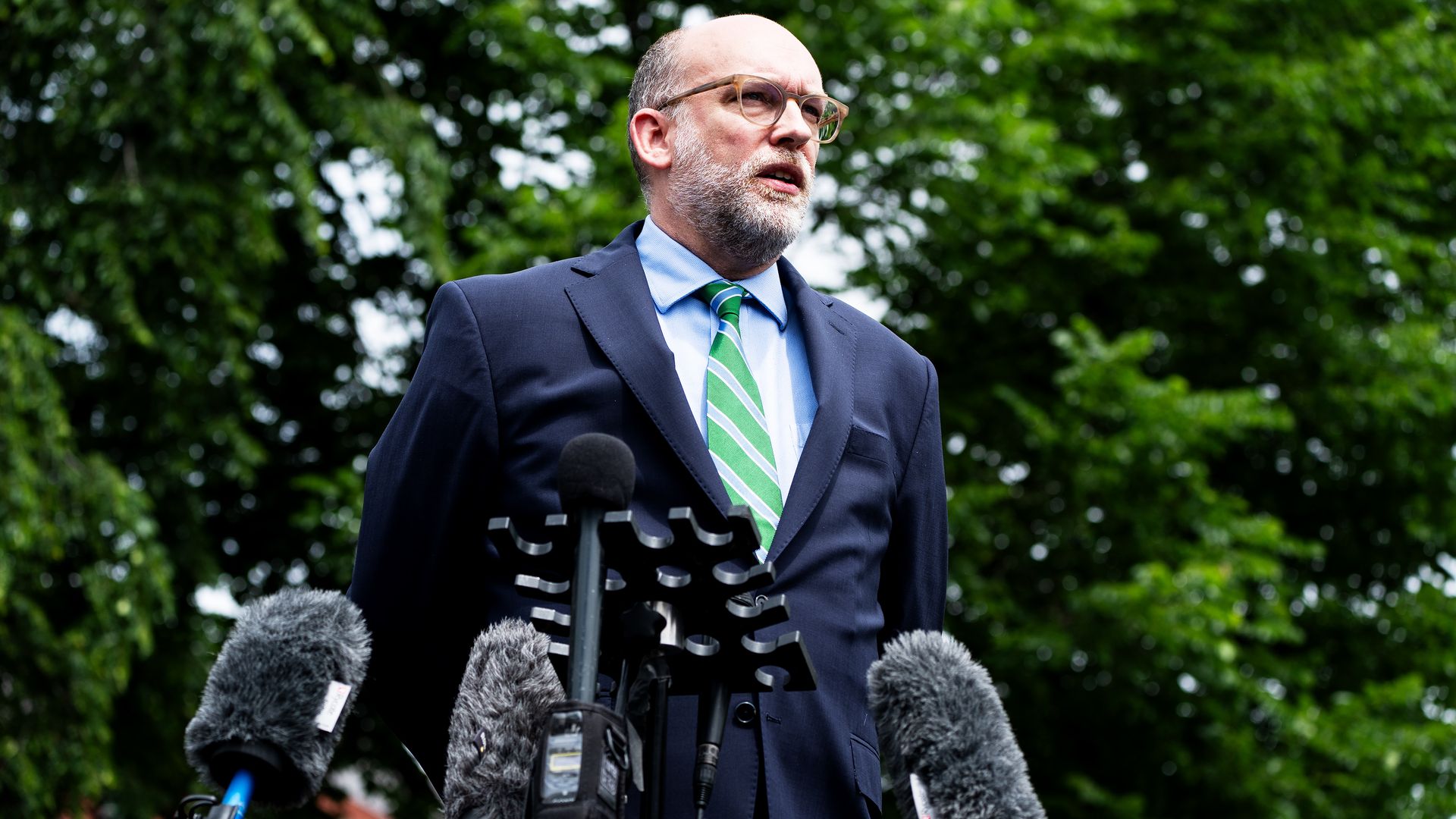
- But speaking to reporters this morning, Office of Management and Budget director Russ Vought revealed a wider set of beef he has with the central bank.
The big picture: The complaints about monetary policy and the renovation are only the forward tip of the spear of what Trump administration officials believe to be deep-seated failures by the Fed.
- It points to the next Fed chair — regardless of who it is or when they take office — seeking a more root-and-branch overhaul of the institution than has been seen in modern times.
Driving the news: "You know, they should be sending their rules through OIRA right now," Vought said at The Monitor Breakfast, referring to the Office of Information and Regulatory Affairs, through which the White House keeps tabs on regulations across the government.
- "They are not doing that," Vought said. "That is something that is another concern we've had. The president put out [an executive order] for independent agencies to send their rules through."
What they're saying: Vought also said that even apart from the Fed's renovations now underway, the modern office tower that currently houses Fed staff and leadership is excessively luxurious.
- He said the Martin Building looks like "a palace. You go through the halls, and it's the artwork, just so much artwork. I mean, the level of largesse ... This is an institution that has no accountability."
- The Fed's art collection is mostly donations and work on loan from the Smithsonian, and was originally part of a government-wide effort to encourage the fine arts launched by Richard Nixon.
Vought also said that Fed chair Jerome Powell, in appointing an inspector general for the Fed and the Consumer Financial Protection Bureau earlier this year, did not do the "requisite amount of consultation with me as the director of the CFPB." (Vought is also the interim head of the CFPB).
Sign up for Axios Macro