Axios Macro
February 03, 2026


Companies that have held off on raising prices despite big tariff increases might be making some adjustments in this new year. We look at the early evidence — and what it would mean for overall inflation.
- Plus, another shutdown ... and another delay to key economic data. ☹️
Today's newsletter, edited by Jeffrey Cane and copy edited by Katie Lewis, is 840 words, a 3-minute read.
1 big thing: Companies are tired of absorbing tarifffs

Businesses that held the line on tariff-related price increases last year might be passing more of those costs on to consumers at the start of 2026.
Why it matters: The Trump administration is celebrating how little its huge levies have impacted inflation. But new signs indicate the policies are appearing with a lag, complicating their push to address affordability concerns.
Zoom out: Many companies reassess pricing at the start of the year — one factor that historically makes January a month of above-average price increases.
- Tariffs could be supercharging that historic trend: Companies might finally be raising prices to address the costs they ate throughout much of last year.
- Adobe's Digital Price Index rose by the most, month on month, in its 12-year history in January — even faster than at the height of the inflation shock in 2022.
- "The strong increase could be a sign of greater tariff pass-through to start off the new year," with large price changes for electronics, furniture, bedding and appliances, economists at UBS wrote in a note.
Yes, but: The bank's economists caution that the series can be volatile, and it was down sharply in November, so it could be a head fake.
State of play: Official government inflation data for January is not scheduled to be released until next week, pending a government shutdown. Still, there's other evidence that January could be a spicy month for price hikes.
- The Institute for Supply Management's manufacturing survey sub-index for prices ticked up to 59 in January, from 58.5, the highest since September.
Zoom in: While there is still caution that higher prices could crimp demand, several references in the Federal Reserve's compilation of anecdotal information from across the U.S. point to price increases in the new year.
- In Atlanta, for instance, "many contacts expect to implement price increases in the first half of 2026 to preserve margins, especially those who held prices steady in 2025," according to the most recent Beige Book.
- The Philadelphia Fed notes that many businesses anticipated "tariffs to seep into general price levels."
In a speech this morning, Richmond Fed president Tom Barkin said that he has spoken with about 75 companies since the start of the year, and described a dynamic within companies regarding price-setting.
- "In boardrooms around the country, sales and finance teams are debating how aggressively to increase prices, for example, in the context of increased tariff-driven input costs," Barkin said.
- "If I can stereotype: Sales doesn't want to pass through those costs at the risk of lost volume; finance doesn't want to eat the cost at the risk of reduced margins," Barkin said.
- "I imagine some finance teams have done well recently (at least based on the increases I've seen in my streaming services and homeowners insurance)," he added.
What they're saying: "The Fed is telling us, 'Don't worry, the inflationary effects of [tariffs] will subside,' but I am a little bit skeptical of that," James Knightley, chief international economist at ING, told reporters in Washington, D.C., this morning.
- "I do get the sense that there is some delay related to the Supreme Court decision — a lot of companies are hoping it will just disappear," Knightley said, referring to a pending decision about the legality of the bulk of President Trump's tariffs.
- "There is a risk that costs end up getting passed along to you and I in time ... it just will come through more slowly," Knightley said.
2. Data dogs go hungry, again
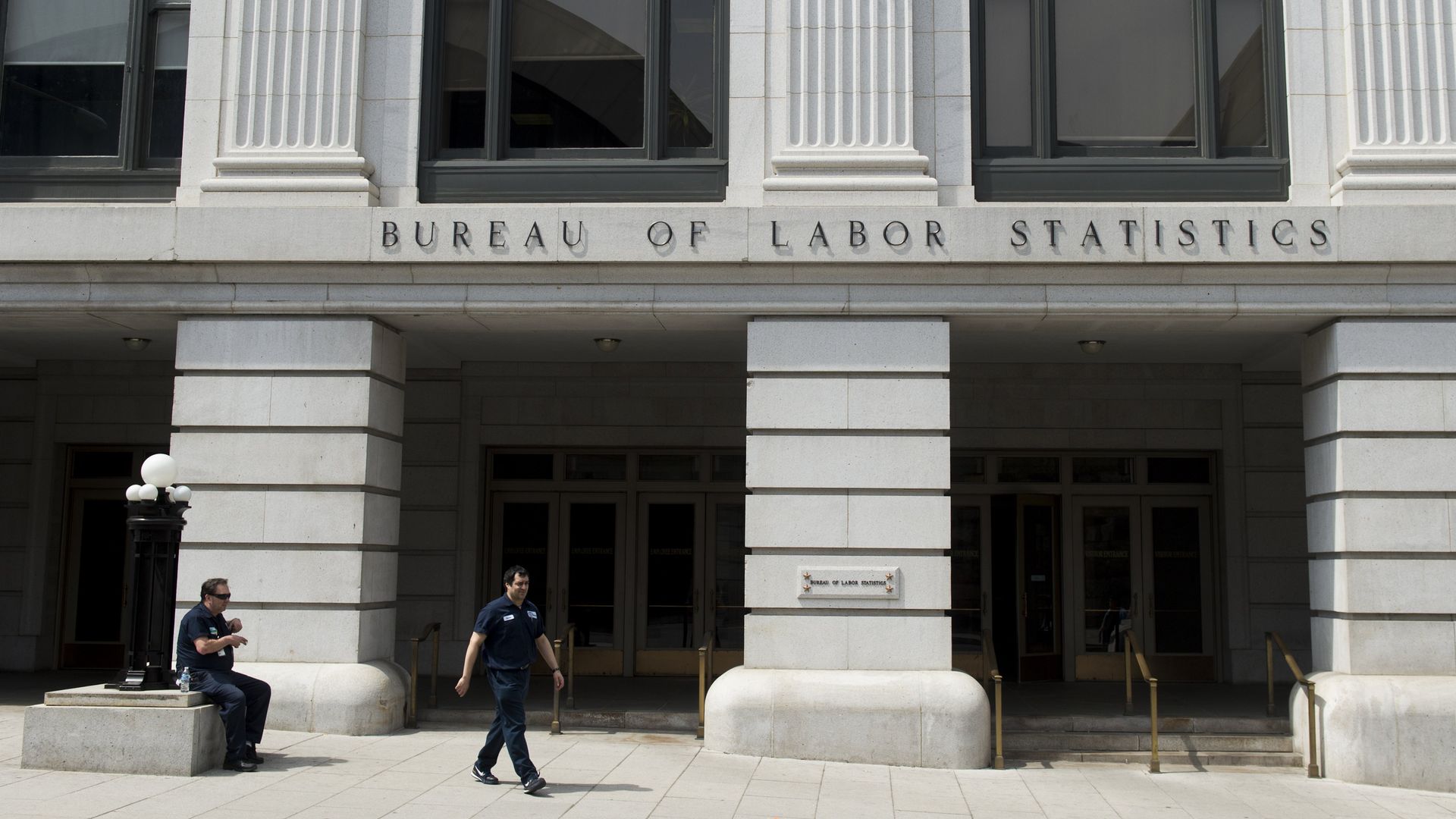
Just when we were emerging from the data fog created by the 43-day government shutdown in October and November, a new shutdown is delaying the flow of data this week.
The big picture: This looks likely to be a short delay, but it's still frustrating given the disruptions experienced over the last few months for those trying to get a clear read on the economy.
Driving the news: The January employment situation report scheduled to be released Friday morning has been delayed, as has the December Job Openings and Labor Turnover data due out this morning.
- A Bureau of Labor Statistics official said in a statement that the reports will be rescheduled once funding for the Labor Department — of which BLS is part — resumes.
- House Speaker Mike Johnson has made progress in the last 24 hours in cobbling together votes to end the shutdown, our colleagues on Capitol Hill report.
Reality check: We're probably only looking at a few days' delay in the reports. Unlike in October, data collection has not been interrupted, so there should be no holes in the major economic data series as there were for October 2025.
- It's not the end of the world.
Yes, but: Come on. This is getting ridiculous!
Sign up for Axios Macro