Axios Macro
September 02, 2022

1. This is the jobs report the Fed wanted
We're in a strange moment for economic data. Good is bad (a booming economy means the Federal Reserve will tighten the screws more). Bad is bad (nobody wants a recession).
- So what would "actually good" numbers look like? They would look an awful lot like the August employment situation report that came out this morning.
Why it matters: The new data threads the macroeconomic needle, showing continued robustness in the labor market and a softening of inflationary pressures.
- It thus amounts to a signal that a soft economic landing may be possible after all, and that the Fed may not need to act quite as aggressively to contain prices as the central bank's recent communication would imply.
The details: It's not just one data point out of the 40-page report that supports this "Goldilocks" interpretation. It's many of them.
- The 315,000 jobs added to employers' payrolls, plus revisions that subtracted 107,000 from the previous two months, show job growth adjusting toward a more sustainable, moderate rate. It has averaged 378,000 in the last three months, versus 539,000 in Q1.
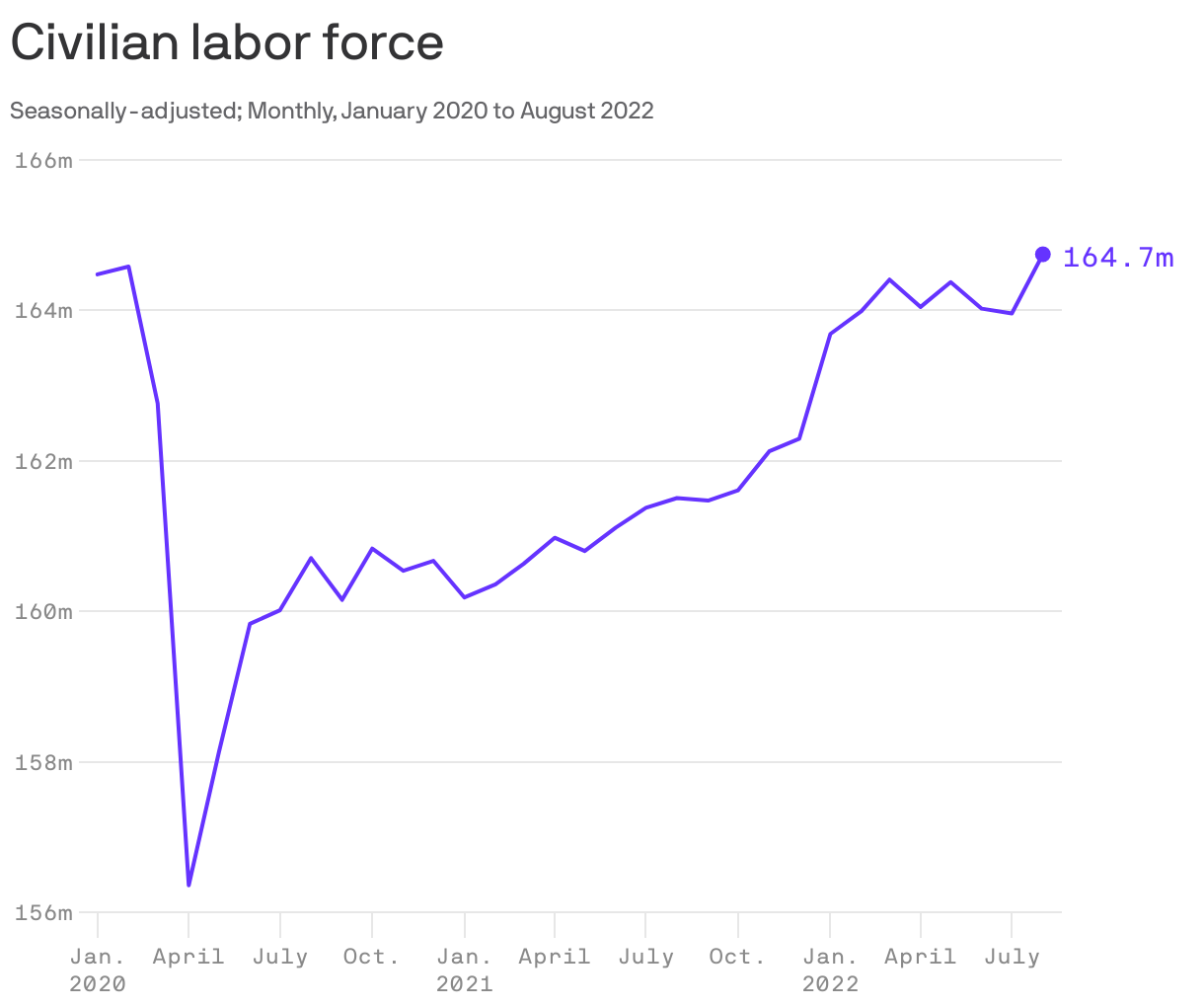
- The unemployment rate rose two ticks, to 3.7%, for good reasons. The number of people in the labor force rose by a whopping 786,000, but not all of those net new workers immediately found jobs. That's good news for anyone who thinks the job market has been too tight.
- Average hourly earnings rose a moderate 0.3%, hardly a rate that will alarm those who fear an upward spiral of wages and prices.
State of play: This balanced labor report follows benign price readings for July. The first major August inflation reading is Consumer Price Index, due out Sept. 13. If it also points to a softening inflation trend, the Fed's next decision looks more interesting.
- At its meeting concluding Sept. 21, Fed officials have indicated they will likely raise interest rates by either half a percentage point or 0.75 points.
- It seemed as if the higher number were more likely, especially following chair Jerome Powell's tough-talking Jackson Hole speech last week.
- But in light of the new jobs numbers, that looks like more of an open question, especially if August's CPI points to moderating inflation.
Yes, but: One month of data is not a trend. We have seen head fakes in employment and inflation figures before, and there is no guarantee that the recent shifts evident in July and August data will continue.
The bottom line: The goal for policymakers, both in the Biden administration and the Fed, is to achieve an economy that has rebalanced toward a more durable combination of stable growth, a good but not overheated job market and lower inflation.
- For the moment, at least, things are pointing in that direction.
2. Women's recovery
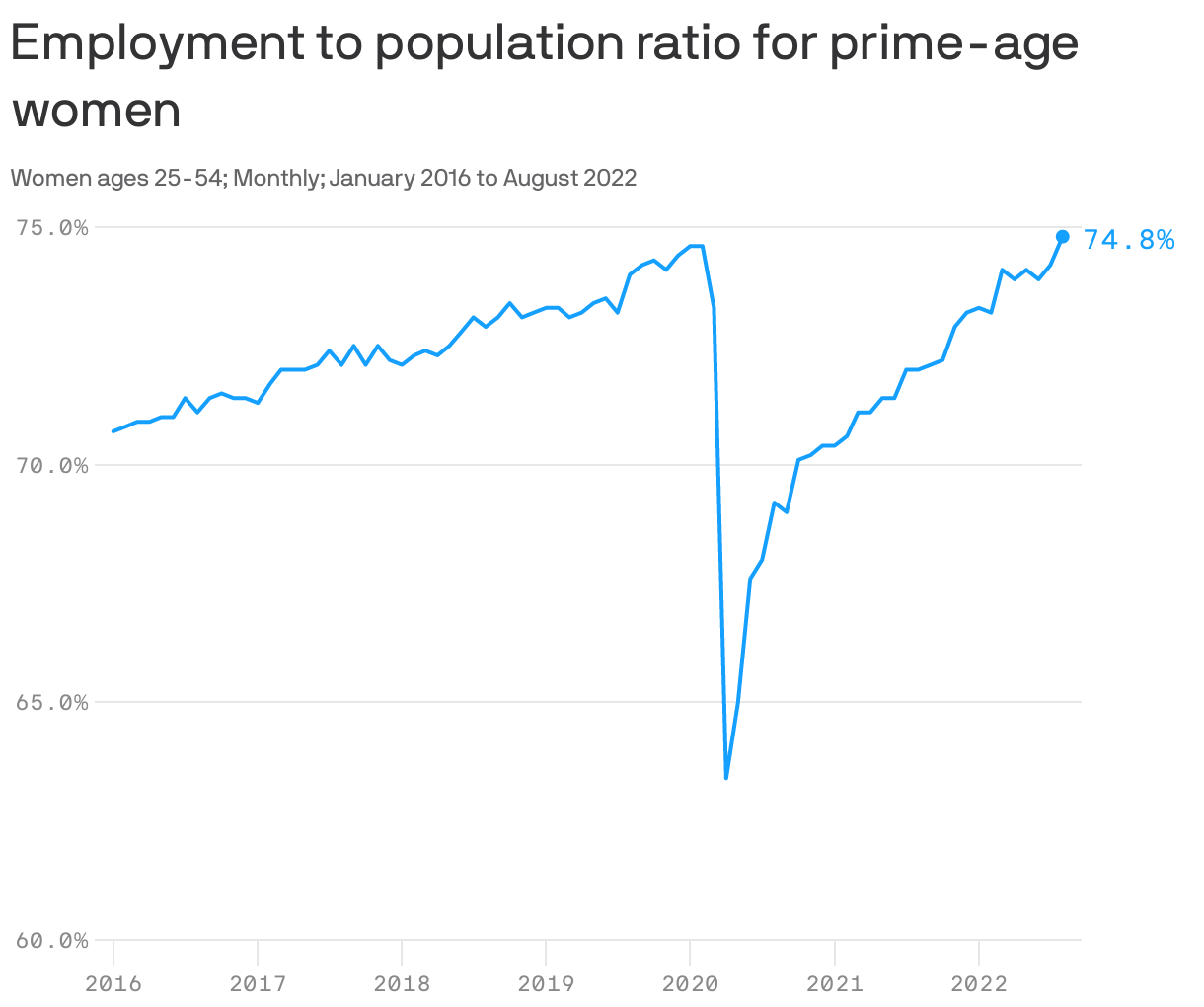
Women workers hit a milestone last month: The proportion of employed prime-aged women (that is, between the ages of 25-54) is finally above the level seen before the pandemic.
- Labor force participation rate in this cohort ticked up last month by a whopping 0.8 percentage points. Julia Coronado, founder of MacroPolicy Perspectives, suspects it could be tied to schools back-in-session, per a tweet.
Men haven't notched the same feat: The employment-population ratio for prime-aged men is roughly 0.7 percentage points below the February 2020 level.
Axios Macro

Stay ahead of the curve on the most important economic developments with reporting and analysis on how business, policy, and markets collide.