Axios Macro

April 17, 2025


President Trump said on social media this morning that Fed chair Jerome Powell's "termination cannot come fast enough" and that he should be cutting interest rates. Below, we look at why this is a particularly bad time for central bank independence to come into question.
- Plus, why the European Central Bank delivered the interest rate cut this morning that Trump wants from Powell. (Hint: It's not that things are going great in Europe.) 📉
Situational awareness: Anna Paulson will become the next president of the Philadelphia Fed on July 1, the bank announced this morning. She has been the head of research at the Chicago Fed since 2019. Outgoing president Patrick Harker faces the mandatory retirement age. Read more here.
Today's newsletter, edited by Christine Wang and copy edited by Katie Lewis, is 839 words, a 3-minute read.
1 big thing: Trump's Fed independence paradox
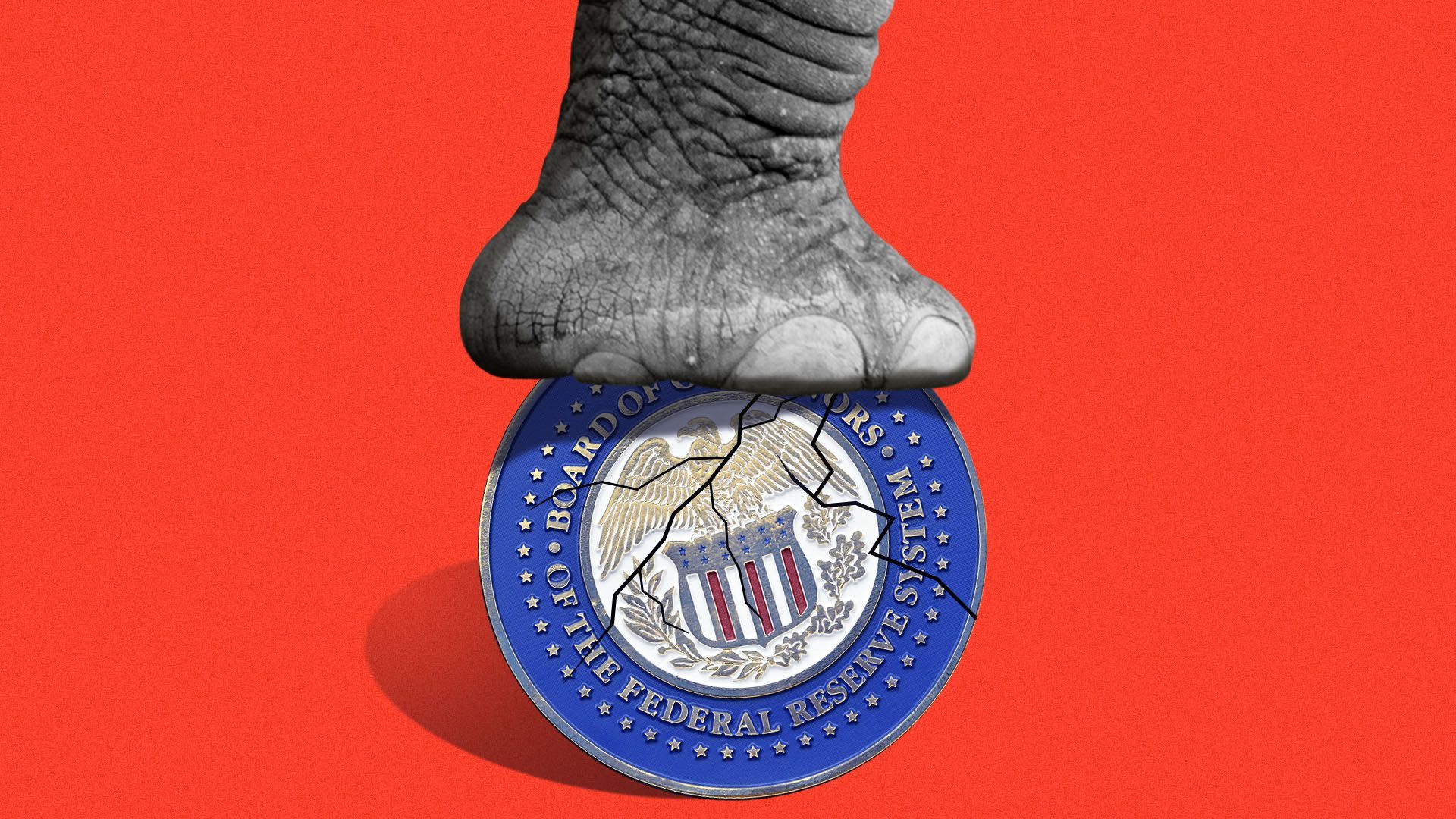
Trump's efforts to more directly control the Fed are coming at a perilous time, given the details of this economic moment.
The big picture: Trump wants the Fed to cut rates, but paradoxically, the more he succeeds at limiting its independence, the greater the risk of inflation expectations and long-term interest rates shooting higher.
- The central policy question right now is whether the Fed should view inflation spurred by tariffs as a one-time shock or one that fuels longer-lasting price pressures.
- If it's a one-time adjustment, the Fed can feel confident cutting interest rates to combat economic weakness — if the central bank maintains its credibility that it will do whatever it takes to keep inflation low in the long run.
- This month, Treasury bonds have sold off amid doubts about the U.S. government's volatile trade policies. If Fed independence came into serious question, it would likely fuel further selling, causing long-term interest rates to rise — contrary to Trump's stated goals.
State of play: Besides Trump's latest social media posts, the Supreme Court is weighing a case that questions the constitutionality of independent agencies like the Fed.
- The Federal Reserve Act states that Powell and other governors cannot be fired except for cause — not over mere policy disagreements.
- The Trump administration is arguing that the president has the authority to fire leaders of similarly structured agencies, including the National Labor Relations Board and Federal Trade Commission.
- Administration lawyers are asking the Supreme Court to overturn a 90-year-old precedent that found the FTC's structure to be constitutional and that the president could not fire an FTC commissioner.
Yes, but: There are some reasons to think that, even if the Supreme Court rules in Trump's favor on the core constitutional question, it could find a way to carve out protection for Fed independence.
- In a case about agency funding last year, for example, Justice Samuel Alito called the Fed "a unique institution with a unique historical background" and that its funding mechanism should be seen as "a special arrangement sanctioned by history."
Flashback: The Fed, created in 1914, was the culmination of America's long wrestling with whether to have a central bank.
- A seminal early Supreme Court case, McCulloch v. Maryland in 1819, was over whether Congress could create a national bank.
- The core domestic issue of Andrew Jackson's populist presidency was a fight over whether to shutter the Second Bank of the United States.
- The Fed's unwieldy structure — with presidentially appointed governors in Washington and 12 countrywide reserve banks with their own boards of directors — was the result of an elaborate compromise balancing many interests: big banks and small banks, agriculture and manufacturing, democratic accountability and dispersed power.
The bottom line: "Fed independence is more important than ever at a time when there is risk to underlying inflation and inflation expectations ... and global portfolio reallocation out of the U.S.," wrote Evercore ISI analysts.
2. Why Europe is cutting rates
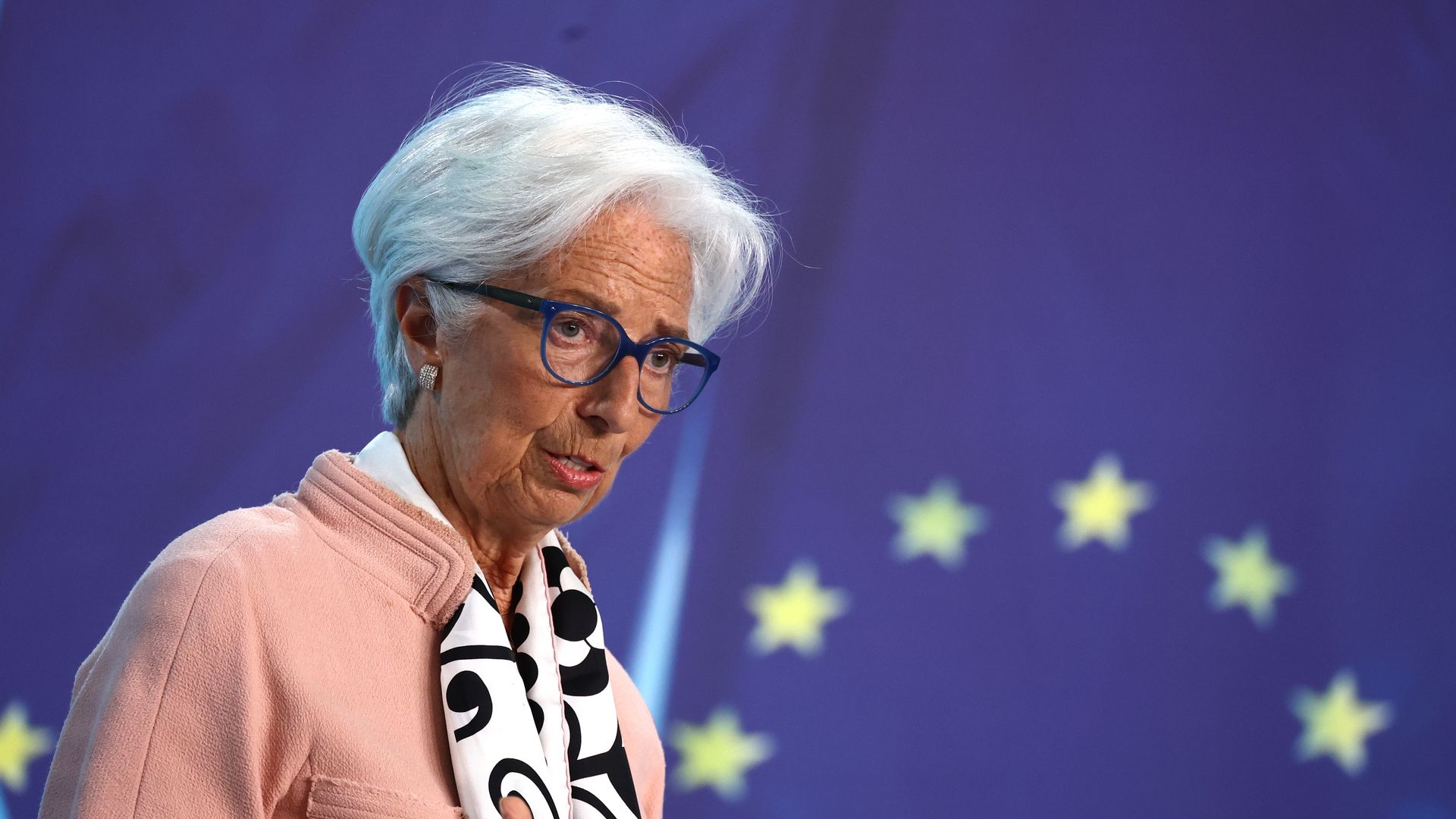
Trump's early morning Fed attack suggested the central bank should be more like its counterparts in Europe, which cut rates today for the seventh time in 10 months by a quarter percentage point.
- But with the ECB's rate cuts come the dreary economic conditions that explain why euro-area officials are lowering borrowing costs.
State of play: The ECB is aiming to shield its already sluggish economy from the tariff impact.
- The euro area grew just 0.7% in 2024. Germany, its largest economy, has contracted for two straight years.
- Europe's productivity prospects are bleak relative to the U.S., as outlined in a damning report last year by legendary European official and former Italian Prime Minister Mario Draghi.
What they're saying: "The major escalation in global trade tensions and associated uncertainties will likely lower euro area growth by dampening exports, and it may drag down investment and consumption," ECB president Christine Lagarde said at a press conference.
- "We are in the presence of a negative demand shock. No question about that," Lagarde said.
The other side: Europe does not have the luxury of the "wait and see" approach the Powell-led Fed has adopted.
- There are concerns that tariffs will weigh on America's economy, but the data suggests hiring and spending remain steady, for now.
- The U.S. economy had been resilient in the face of aggressive interest rate hikes in recent years. That was not the case for Europe.
Lagarde warned the global trade chaos could put downward pressure on inflation, reminiscent of the 2010s when inflation remained persistently below its 2% target.
- "Increasing global trade disruptions are adding more uncertainty to the outlook for euro area inflation. Falling global energy prices and appreciation of the euro could put further downward pressure on inflation," Lagarde said.
- "This could be reinforced by lower demand for euro area exports owing to higher tariffs, and a re-routing of exports into the euro area from countries with overcapacity."
There are bright spots: Germany is ramping up fiscal spending to invest in its economy, namely defense manufacturing — a move prompted by fears the Trump administration will withdraw from NATO.
Sign up for Axios Macro