Axios Macro
April 23, 2026


The global economy's massive AI bet is running into the harsh reality of the 2020s: geopolitical shocks disrupting supply. More below.
- Plus, the latest on Kevin Warsh's confirmation hurdles, with barely three weeks to go before current Federal Reserve chair Jerome Powell's term expires. ⏳
Situational awareness: U.S. business activity rebounded from multiyear lows in April, according to S&P Global's Purchasing Managers' Index — but output prices rose at the fastest rate since July 2022 and supply delays worsened at a pace not seen in four years.
Today's newsletter, edited by Jeffrey Cane and copy edited by Katie Lewis, is 1,049 words, a 4-minute read.
1 big thing: AI boom meets physical reality
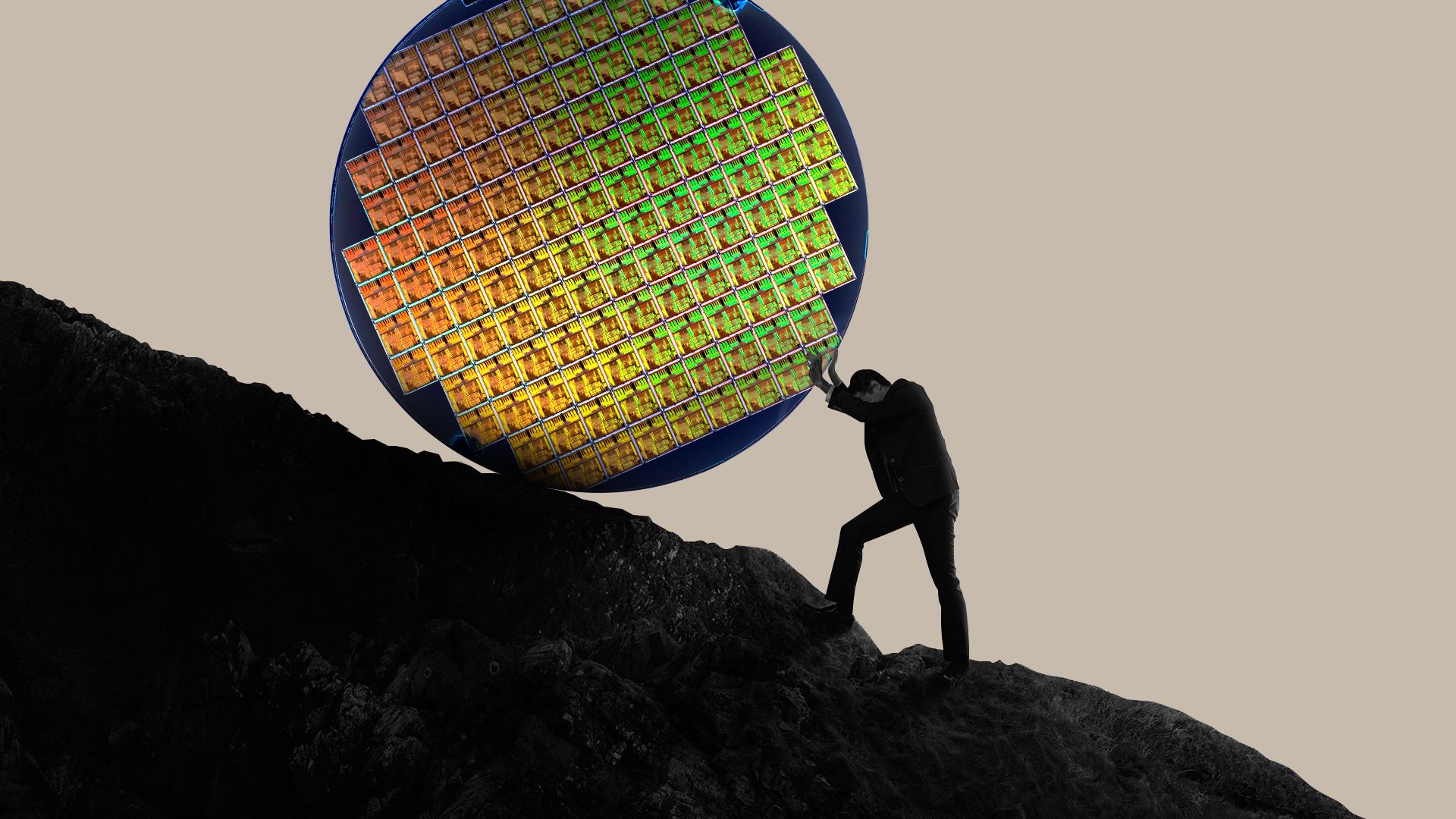
The AI economy is being constrained by the physical world: The Iran war threatens to squeeze the industrial inputs that chip manufacturers depend on, the latest confirmation that once-reliable global chokepoints are now more fragile than ever.
Why it matters: It is part of a growing pattern defining the economic conditions of the 2020s: shocks exposing the fragility of supply chains that the world took for granted.
- The AI buildout is the latest to be throttled by this trend — in this case, the effects of an uncertain Middle East conflict and the Strait of Hormuz's effective closure.
What they're saying: "Hyperscalers are committing roughly $650 billion to U.S. AI infrastructure this year alone. And that investment assumes the supply chain holding it together remains intact," Moody's David Pan tells Axios.
- "The AI economy runs on tokens, tokens run on GPUs and GPUs depend on Qatari helium, Israeli bromine, and [liquefied natural gas] tankers with a single, 21-mile-wide exit from the Persian Gulf," Pan adds.
Zoom in: In a note this week, Moody's flagged the disruptive effects from a shortage of helium, critical for chip production.
- Iranian attacks last month on Qatar's Ras Laffan complex — the source of about 30% of the world's helium supply — left a major supplier saying it can no longer fulfill its contracts.
- Even when the strait reopens and the global flow of critical inputs can resume, damage from the strikes means that helium production can't immediately restart.
- As recently as last year, the helium market was in surplus, with supply outpacing demand and prices falling. The Iran war flipped that dynamic, disrupting Qatari production and pushing spot prices sharply higher.
The big picture: Moody's notes that critical buffers — stored helium, long-term contracts, recycled gases — buy time for semiconductors. But the underlying problem sticks: The physical backbone of the AI economy runs through a region at the center of an uncertain conflict.
- Another complication: AI data centers run on electricity, which heavily depends on natural gas. Roughly 20% of global liquefied natural gas moves through the strait, although the closure of the waterway has created a new bottleneck with no clear relief in sight.
- President Trump earlier this week extended the ceasefire with Iran. That nation's lead negotiator, Mohammad Bagher Ghalibaf, posted on X yesterday that "reopening the Strait of Hormuz is impossible with such a flagrant breach of the ceasefire," referring to the U.S. naval blockade.
What to watch: The AI investment boom is also generating demand-driven price pressure on the physical components that the buildout depends on.
- In a recent note, BlackRock says that global spending on data centers and defense is spurring a type of demand not seen in the chip supply chain issues in the early 2020s.
- "Recent commentary on microchip prices has tended to apply a supply side framing that we view as misplaced. Instead, we see exponential price rises as a natural outcome of exponential demand," BlackRock portfolio managers Simon Wan and Tom Becker wrote in a note titled "The Macro Implications of Chipflation."
The intrigue: They added that prices for these components have risen 17-fold over the past year, a sharp break from multidecade cost declines.
- "Whereas the 2020 jump in microelectronics prices were primarily attributable to supply chain disruptions, we now see a booming global industrial cycle generating excessive demand."
2. Off-ramp obstructed
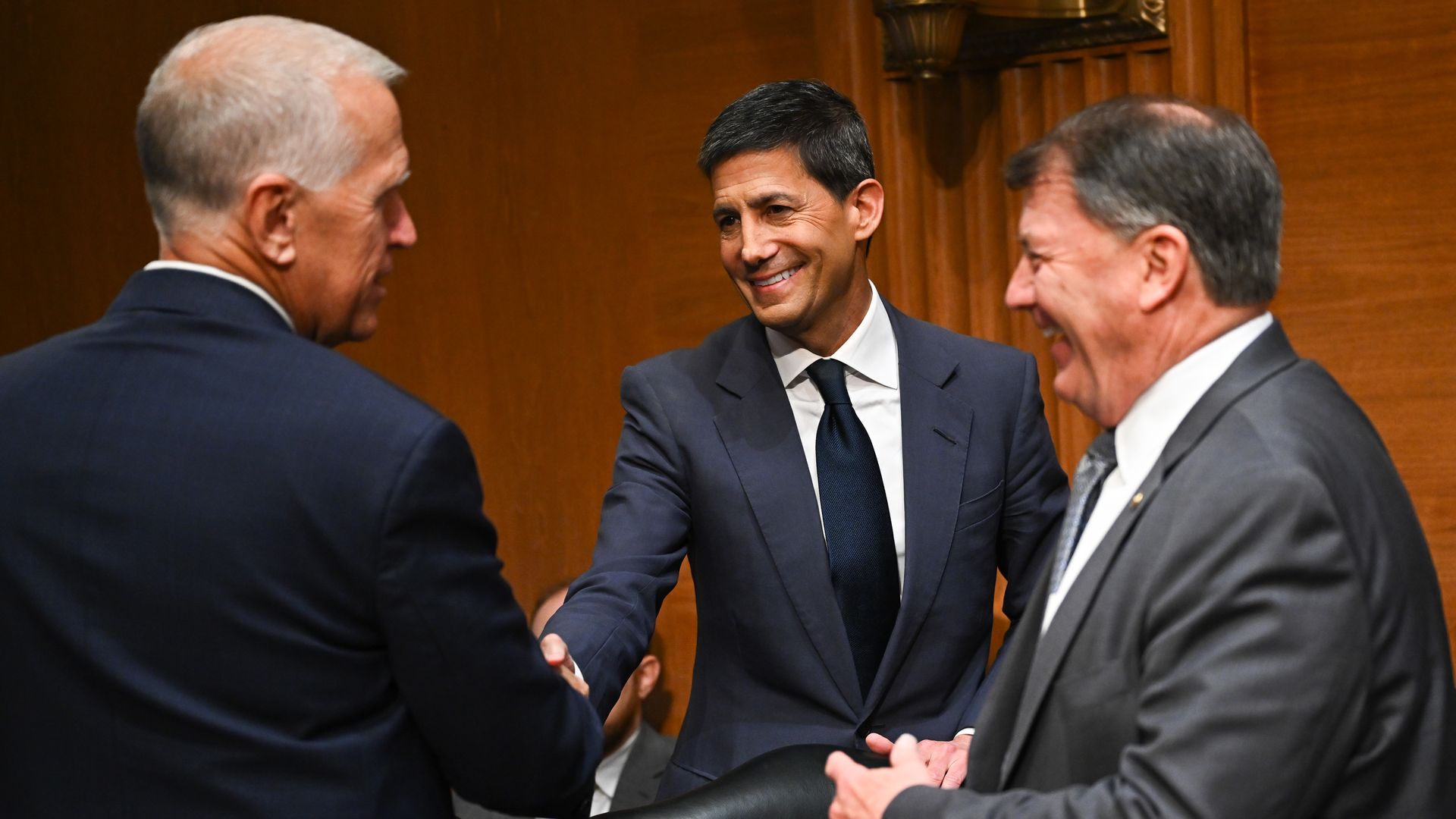
Here's the thing about de-escalating a standoff: Both sides need to want to de-escalate.
- And that doesn't seem to be the case in the dispute holding up Warsh's confirmation as Fed chair.
The big picture: Senate Republicans have been converging toward a strategy to more fully investigate cost overruns on the renovation of the Fed's headquarters without threatening the central bank's policy independence.
- That could pave the way for an orderly transition atop the central bank, from Powell to Warsh.
- U.S. Attorney for the District of Columbia Jeanine Pirro, however, is digging in.
- She said yesterday that she intends to continue an investigation that a key senator — Sen. Thom Tillis (R-N.C.) — sees as a blatant effort to undermine Fed independence and thus grounds to block Warsh's confirmation.
Catch up quick: Senate Banking Committee chairman Sen. Tim Scott (R-S.C.) has floated the idea of a congressional panel to review the Fed's $2.5 billion headquarters project and other construction spending projects by agencies overseen by the banking committee.
- Tillis reacted positively to the suggestion. "I not only think it's a good off-ramp, but I also think it's good governance," he told reporters Tuesday.
- Scott didn't even rule out the possibility that the committee could uncover evidence of criminality.
- "Wherever that leads us, we should go," Scott said Tuesday on CNBC. "If that leads us to a criminal referral, so be it. But give us Kevin Warsh at the Fed so we have access to all the information necessary."
Yes, but: Pirro does not appear to be looking at any off-ramp, even after a federal judge quashed subpoenas, saying that they were driven by political retaliation.
- In a press conference, Pirro said the DOJ will appeal the judge's ruling.
- "The idea that a judge can stand at the door of a grand jury and tell a prosecutor, 'You're not allowed to go in' ... is an order that we think must be appealed, and we are continuing in this investigation."
The intrigue: Powell's term as chair expires May 15, three weeks from tomorrow. Trading on Polymarket currently puts the odds that Warsh will be confirmed by then at only 27%.
- Current prices point to an 82% chance that Warsh is confirmed by June 30.
- In other words, the odds point to Powell staying in place beyond his term, but Warsh taking over the Fed sometime early this summer.
Sign up for Axios Macro