Axios Macro
October 26, 2026


Friday's newsletter — particularly Harvard economist Jason Furman's comments asserting that AI can already do much of the work of the White House's economic policy shop — drove a fascinating online conversation over the weekend. We have highlights below.
- But first, how the midterm politics of tariffs have turned distinctly against President Trump.
Today's newsletter, edited by Jeffrey Cane and copy edited by Katie Lewis, is 1,156 words, a 4.5-minute read.
1 big thing: Trump's midterm tariff test
With the midterm elections eight days away, Trump faces an uncomfortable political dilemma: how to stand by the tariffs at the heart of his economic agenda when Republican voters are less convinced of their benefits.
Why it matters: Since returning to the White House, Trump has moved more aggressively than any modern president to remake the global trading system, with sweeping tariffs at the center of that effort.
- But with Americans already frustrated by high prices — including a wartime surge in energy prices — his signature economic policy threatens to become a political liability for Republicans fighting to retain control of Congress.
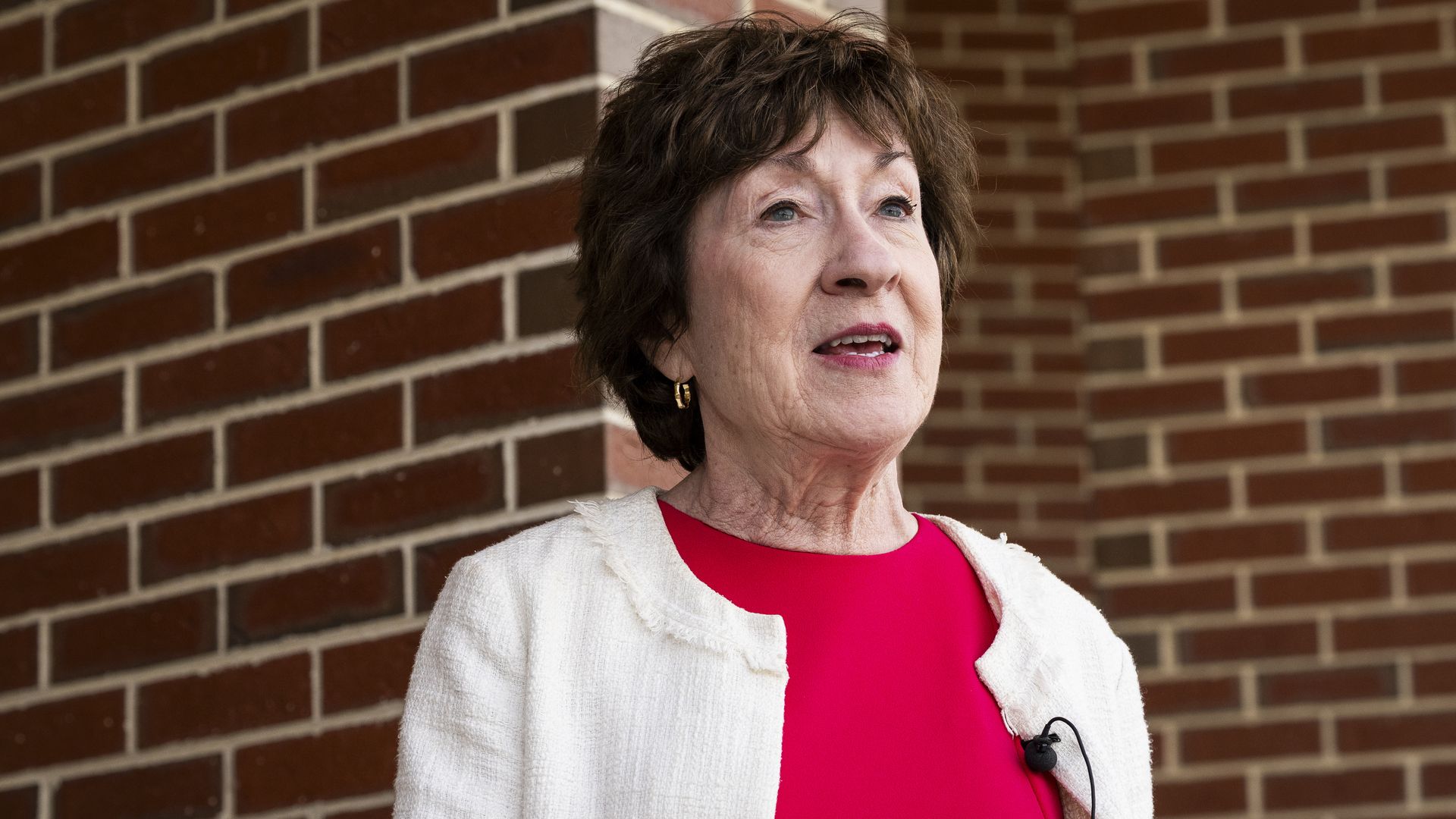
Driving the news: In what is the clearest example yet of how midterm politics are complicating Trump's tariff agenda, the White House exempted certain Canadian imports from 50% tariffs following pressure from Sen. Susan Collins (R-Maine), who faces a tough reelection race.
- The exemptions cover agricultural machinery, plywood and packaging materials — offering relief to Maine farmers and businesses.
- Collins touted her role in securing the exemptions, pledging to seek further tariff relief and a broader trade agreement with Canada.
Of note: The tariffs were not eliminated outright.
- The administration swapped them for 50% duties on other Canadian goods — including carpets, shampoo, paint, cocoa powder, wooden coffins and more — in a bid to keep pressure on the Canadians during the trade spat.
The big picture: Other Republican candidates across the country are walking a fine line — defending Trump's tariffs while distancing themselves from the parts of the trade agenda that are squeezing constituents.
- Iowa: The state's farmers union broke decades of neutrality in federal races to endorse the entire Democratic congressional slate — citing mounting frustration over Trump's trade policies and rising costs, as the New York Times reported.
- Michigan: Republican Senate candidate Mike Rogers told NBC's "Meet the Press" yesterday that the Canadian auto tariffs "worry me a little bit" and pledged to seek relief.
- "There's some good and there's some things we have to work on," Rogers said.
Between the lines: Republicans are less optimistic about the benefits of the president's tariffs.
- Forty percent expected the policies to have a "mostly positive" effect on the country in October — down from 49% in January and 52% in August 2025, according to Pew Research.
- A separate AP-NORC poll earlier this month showed that 64% of Americans believe Trump has gone too far in imposing new tariffs on other countries.
The other side: "We're trying to create another American century here," Trump trade chief Jamieson Greer said in a Bloomberg profile published today.
- Greer noted that public discontent reflects "micro issues" unrelated to tariffs — including housing, health care, education and energy costs.
What to watch: The economic benefits Trump promises from new factories and manufacturing jobs could take longer to materialize, while businesses and consumers are already feeling the higher costs associated with tariffs.
- At a campaign rally in Georgia on Saturday, Trump announced a $4.2 billion Audi factory — the company's first in the U.S. — that is expected to create 4,500 jobs. "Without tariffs, they wouldn't be coming in," he said.
- Audi cited other business considerations in its factory announcement beyond reducing exposure to tariffs, including proximity to U.S. customers and a more competitive production base.
2. About that robot CEA ...

Furman told us that if he were to return to his old job as chairman of the White House Council of Economic Advisers today, he would rely on AI tools over staff economists for much of the council's day-to-day analytical work.
The big picture: Unsurprisingly, this made some waves in the online discourse, particularly the loose-knit community formerly known as Econ Twitter.
- Many veterans of the economic policy trenches see real risks in future policymakers becoming overly reliant on AI — or at a minimum think that Furman is underestimating the importance of human economists in advising the nation's leaders.
What they're saying: "CEA work, at least in my experience, is highly bespoke as you're explaining the data flow (and much else) to very busy people who don't want only market-shop analysis," Jared Bernstein, the CEA chair under President Biden, wrote on Substack.
- "Yes, they want and need that — what will the markets make of this CPI, jobs, GDP, etc. report — but more so they want to know how this report fits into our narrative, our agenda, the president's trip today to Iowa."
- He adds that within a White House, "the human skill of reading-the-room is paramount. I'm far from an AI expert, but my sense is it sucks at that and probably always will, a conclusion that derives in no small part from listening to its creators!"
Zoom in: Claudia Sahm, a former Federal Reserve economist, raised an issue that we've often heard from senior people in fields like consulting and investment banking: If you get rid of junior positions, where will future senior leaders come from?
- Furman's staff "went on to found the Yale Budget Lab, run Treasury economic policy and a Fed institute, serve in later [administrations], and publish research on trade, environment, and taxes. That's what '20 staff' become," she wrote on X. "No model does that."
- Bloomberg chief U.S. economist Anna Wong argues that the "ability to now not depend on anyone, as a senior person, is very, very empowering. Now, with just the idea, a senior person can go far."
Zoom out: "Entering into sci fi speculation," Wong wrote on X, "as humans [we're] not about to replace the aging experts due to low pipeline of young human experts, AI themselves, through the training over the years, became the one spawning the ideas."
- "That seems like a disaster waiting to happen that current social policy needs to address."
Yes, but: Casey Mulligan, who served in Trump's first-term CEA and now as chief economist at the Department of Health and Human Services, said that the implications of AI for human labor in policymaking are not so obvious.
- "I built AI tools at two federal offices," Mulligan wrote on X. "Able to do economic research better and more quickly, we needed more economists rather than fewer due to the added demand for what we do. This pattern is also evident in the small business sector."
- This concept — that labor-saving tools can actually increase demand for labor — is known as Jevons Paradox.
The bottom line: "Be the labor-augmenting technological change you want to see in the world," wrote Stanford economist Neale Mahoney.
- "It's on us olders to build organizations where people and AI complement each other, and to prepare the youngers for a world with better and better AI," he adds.
Sign up for Axios Macro