Axios Macro

November 01, 2022

Hello, Macro world. The Federal Reserve began its two-day meeting this morning as scheduled, just after one last data point on the labor market hit the wires.
- More on that below, as well as a look at a new book about Treasury Secretary Janet Yellen.
Today's newsletter — a 672-word, 2½-minute read — was edited by Javier E. David and copy edited by Katie Lewis.
1 big thing: The job market is still hot hot hot

Illustration: Brendan Lynch/Axios
The tight labor market that has come to define the pandemic-era economy (briefly) appeared to be loosening up this summer, with data suggesting that employers were cutting back on job openings.
- But new figures show that despite all the recession chatter of the last few months, jobs remain abundant and layoffs few.
Driving the news: The number of job openings actually rose by 437,000 in September, and revisions to August data showed a smaller drop than first reported. Overall, it looks like American employers are still seeking more workers than they can find.
- Meanwhile, layoffs edged down, holding at the lowest level on record. Roughly 4.1 million workers quit their jobs in September. That's down from the peak 4.5 million who did the same last November, but there is still more job-hopping than in any other period outside of the pandemic.
- All of it suggests a labor market that is still quite hot. Employers have a huge appetite for more workers and aren't letting go of the employees they do have. The still-elevated level of quits mean workers are confident enough about better job prospects — and, likely, higher pay — to leave their current jobs.
Why it matters: The data is backward-looking and, as we know, subject to notable revisions. But even more up-to-date job market indicators — including low levels of people filing for unemployment — tell a similar story.
- Even with historically aggressive monetary tightening and gloomy vibes, the labor market still has plenty of the features it enjoyed at the height of the economy's boom times.
Yes, but: This is one of those moments when good news = bad news. That's because the new numbers will be viewed with concern by the Fed, a sign that the labor market is still "unsustainably hot," as chair Jerome Powell has said.
- In the Fed's ideal scenario, employers' demand for workers slows, but companies, for the most part, hold on to staff they already have. That would translate into a sharp drop in job openings, alongside a subdued level of layoffs. The opposite happened in September, according to the new data out today.
- The risk is that the labor market is displaying so much momentum that it will take even more aggressive rate increases to slow it down, with all the collateral damage that will entail.
2. Janet Yellen's theory of airports
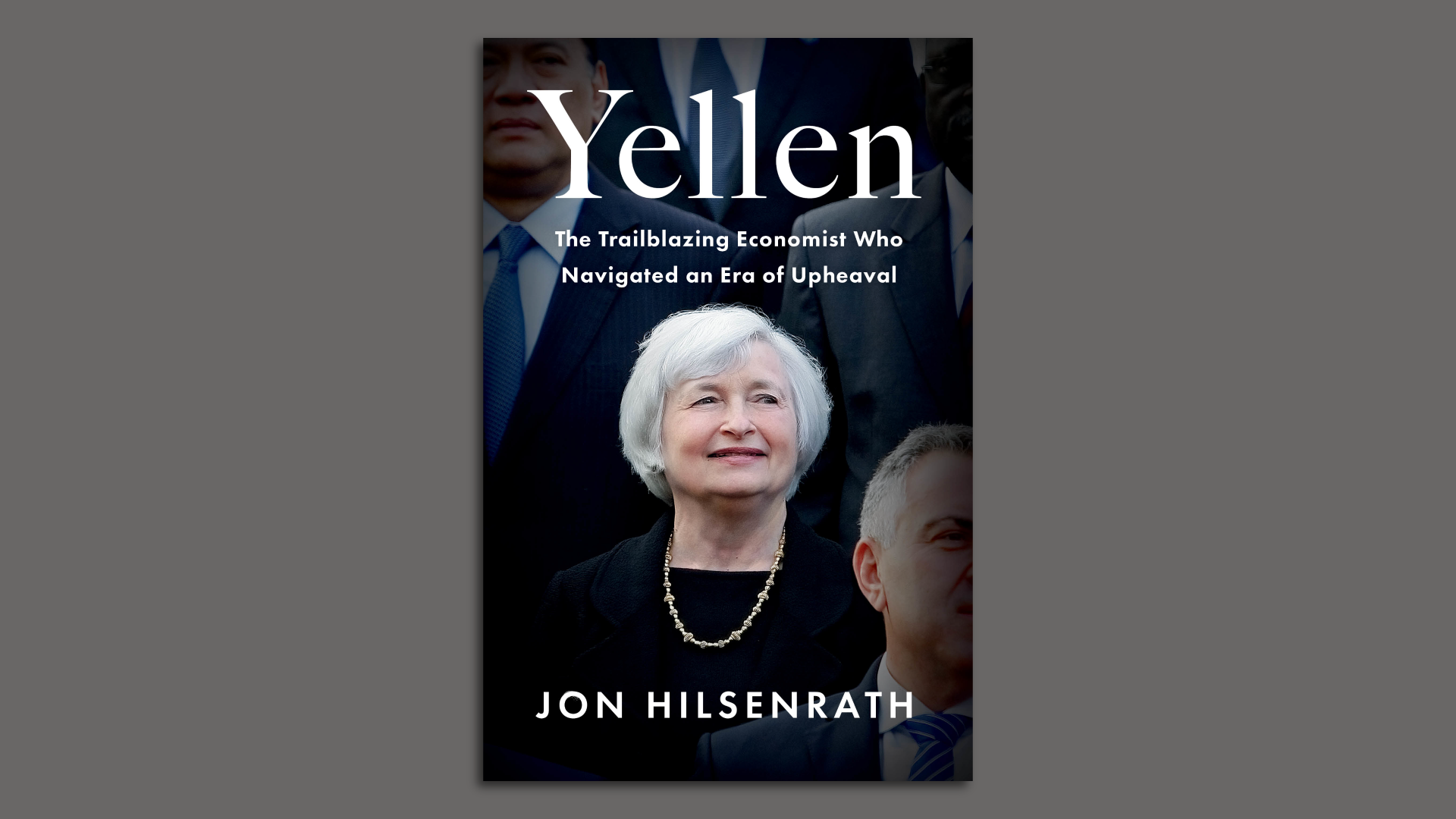
Image: HarperCollins
A new book out today is the most thorough biography to date of one of the most influential economic policymakers of the last three decades. But "Yellen" by Jon Hilsenrath is really three books in one.
- It tells the life story of the current Treasury secretary and former Fed chair, but also offers a narrative of the most consequential intellectual currents in economics over the last six decades. And it is a love story, between Yellen and her Nobel laureate husband George Akerlof.
What stood out to us: The book shows Yellen navigating the worlds of academia and politics as one of the few women of her generation to do so — collaborating and sometimes clashing with powerful men like Alan Greenspan, Ben Bernanke and Larry Summers.
- In particular, the book doesn't sugarcoat the fact that while her public persona is mild-mannered, she can be a demanding boss and a forceful presence behind the scenes.
- "These are f---ing people!" she said in one San Francisco Fed staff briefing on unemployment, pounding the table with her fist, the book reports.
Yellen was famously selected over Summers to be Fed chair in 2013. Hilsenrath, a longtime Wall Street Journal reporter, contrasts the two with this anecdote about their approaches to air travel.
- "Summers found airports annoying and sought to minimize the time he spent in them," Hilsenrath writes. "He often arrived late, hustling to gates. 'If you've never missed a plane, you're spending too much time in airports,' he liked to say."
- By contrast, "Yellen's airport theory was framed around the concept of crisis management. She wanted to minimize the possibility of major disruption, such as missing a flight," so is invariably among the earliest to arrive.
Sign up for Axios Macro

Stay ahead of the curve on the most important economic developments with reporting and analysis on how business, policy, and markets collide.