Axios Macro
April 14, 2026


Busy week! The gears are turning on Kevin Warsh's confirmation hearing to lead the Federal Reserve. More below, including new comments from Treasury Secretary Scott Bessent.
- But first, why the International Monetary Fund offered not one updated forecast for the world economy this morning, but three.
Situational awareness: The Producer Price Index came in cooler-than-expected for March, with overall wholesale prices up 0.5% and only a 0.1% rise excluding food and energy.
🏛️ Join us for Axios Live in Washington, D.C., tomorrow at 7:30am ET for our first News Shapers event of the year, featuring Sen. Dave McCormick (R-Pa.), NEC director Kevin Hassett, Sen. Chris Van Hollen (D-Md.) and former World Bank Group president David Robert Malpass. RSVP.
Today's newsletter, edited by Jeffrey Cane and copy edited by Katie Lewis, is 1,008 words, a 4-minute read.
1 big thing: The good, the bad and the ugly in global growth scenarios

When things get really messy in the world, economic forecasts become less about "here's what we think will happen" and more about gaming out multiple scenarios.
The big picture: That helps explain the IMF's latest update to the World Economic Outlook, which includes a baseline "reference" scenario in which the war de-escalates and energy flows resume, as well as an "adverse" scenario and a "severe" one.
- Right now, IMF chief economist Pierre-Olivier Gourinchas told reporters this morning, conditions are "somewhere in between the reference scenario and the adverse scenario."
- He warned that unlike the inflation surge in 2022, which central banks were able to tamp down without causing recessions in the U.S. and most other major economies, this energy shock could create more lasting pain.
Between the lines: To project how the global economy will do this year is to project how the war will evolve. And wars are always messy, meaning that no one can have great certainty where this goes next.
By the numbers: Even in the baseline, the fund marked down its global growth forecast to 3.1% for this year, from 3.3% in January, while its inflation forecast rises to 4.4%.
- In the adverse scenario, further disruption to energy supplies causes a jump in inflation expectations and bumps in financial markets, pulling global growth down to 2.5% and inflation up to 5.4%.
- The severe scenario assumes energy supply disruptions extend into next year, and growth falls to 2% and inflation tops 6%.
What they're saying: "Very clearly every day that passes where we don't have a resolution, where the flow of oil and gas is more limited through the Strait of Hormuz, we're moving away from" the baseline scenario, Gourinchas said.
- "Precisely because we are in a very fluid environment," with news changing the situation every day, "we felt that we had to, instead of having a baseline, have our reference forecast and then supplement that with other scenarios that would look at more extreme developments in energy markets."
Zoom out: The impact of higher prices for energy and other commodities being throttled by the Persian Gulf supply shutdown is highly variable across countries.
- Those that take it most on the chin are the less-wealthy emerging countries that are oil importers.
Of note: The IMF projects U.S. GDP growth of 2.3% this year and 2.1% next. That's similar to projections from the Congressional Budget Office and the Federal Reserve, but considerably more restrained than the 3.1% growth the Trump administration is projecting.
2. Warsh will face the Senate next week
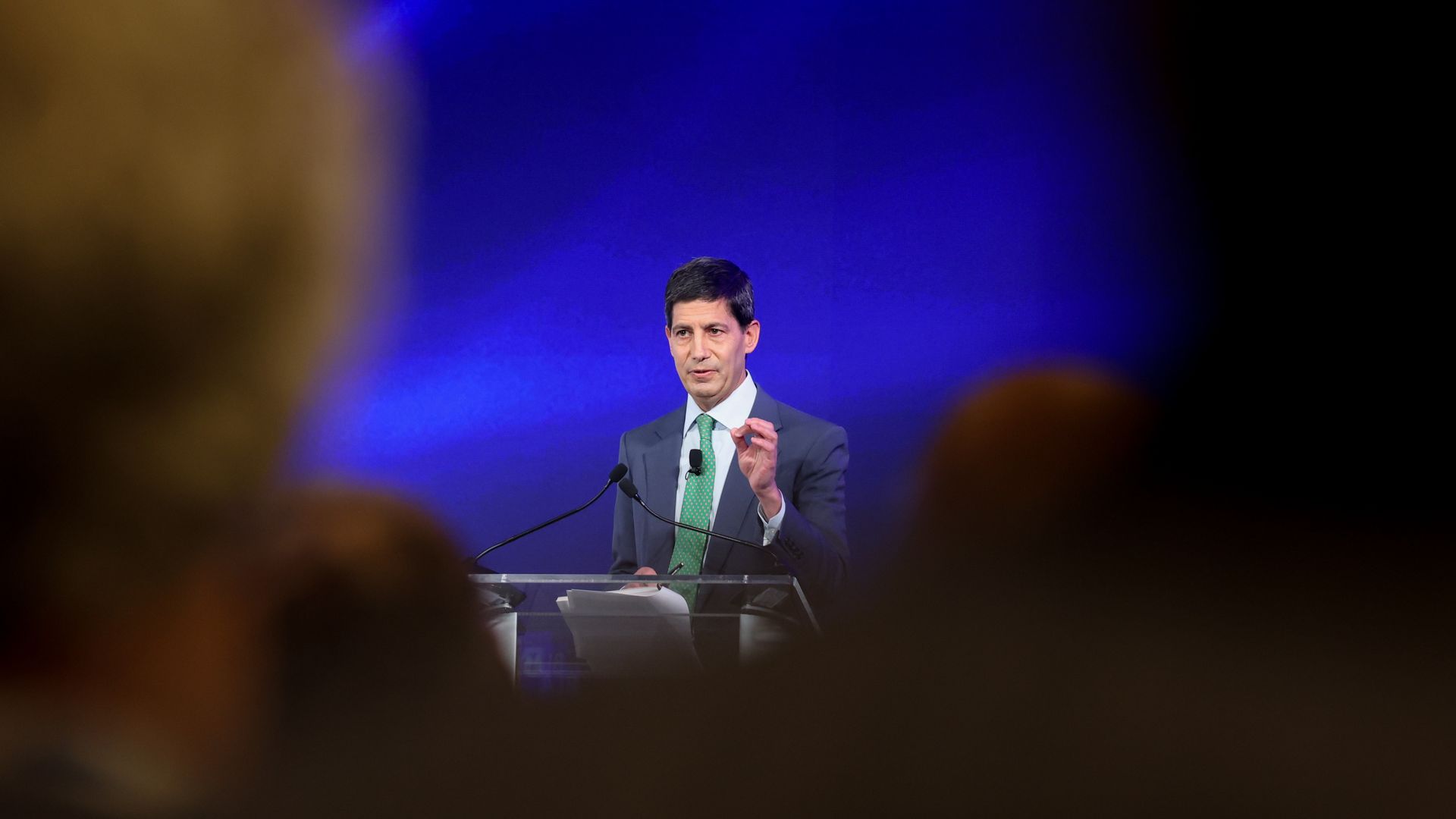
There is new progress on getting Warsh, President Trump's pick to lead the Fed, confirmed to the post.
- The Senate Banking Committee will hold a hearing on his nomination next week, Sen. Tim Scott (R-S.C.), who chairs the committee, confirmed in an interview with Fox Business this morning.
- Warsh has submitted his financial disclosure forms, a key step in the confirmation process. They point to a net worth in the nine figures, which would make him the wealthiest Fed chair on record — even before accounting for the family fortune of his wife, cosmetics heiress Jane Lauder.
- The clock is ticking: Chair Jerome Powell's term is up on May 15. Powell has said he would continue acting as chair if his replacement is not yet confirmed.
Yes, but: Still unresolved is whether Warsh will make it to a full committee vote.
- Sen. Thom Tillis (R-N.C.) has vowed to withhold confirmation until the Department of Justice's Powell investigation is resolved.
- The margins are slim; Warsh's nomination cannot advance through the committee without Tillis' vote, assuming all Democrats vote no. The DOJ vowed to appeal the judge's latest ruling to quash its subpoenas.
What they're saying: "I believe that the DOJ will finish and wrap this up in the next several weeks, and Thom Tillis will be a yes on Kevin Warsh," Scott said in the Fox Business interview.
- Bessent told reporters this morning that "I think Sen. Tillis, at the end of the day, is a reasonable man."
- Asked whether the Trump administration would be OK with Powell staying on as head of the central bank beyond his term's expiration, Bessent said, "We want Kevin Warsh in as soon as possible."
Zoom out: The Treasury secretary, who spoke to a group of reporters following a talk at the Institute of International Finance's spring meetings event, said that he still thought the Fed should cut interest rates, but understands why officials are in pause mode.
- "I believe that [the Fed's] framework had been wrong, I believe it will be proven wrong — but if they want to wait for some clarity, I understand that," Bessent said.
- "The other thing is that I think we should wait for the new chairman, Warsh, and let him lead the next cycle."
The bottom line: While Trump will be certain to pressure Warsh to cut rates, the new Fed chair would face a challenging economic backdrop, with war-related inflation risks.
- Bessent said that he believes the U.S. "will cycle through very quickly," given that the government has held off on subsidies to offset the pain and the lack of evidence that energy pressures are passing through to underlying inflation.
- Bessent said that the IMF's latest forecasts are backward-looking.
- "They probably overreacted, but we'll see," he said.
Sign up for Axios Macro