Axios Macro
May 05, 2025


President Trump had a busy weekend, weighing in on the Federal Reserve chair, those massive China tariffs, who deserves credit or blame for economic conditions, and much more. Below, we look at the president's notion of tariffing overseas film production.
- But first, why we should expect it to take time for the economic shifts set off in the last month to play out.
Situational awareness: Treasury Secretary Scott Bessent implored business leaders to invest in the U.S., saying at the Milken Institute Global Conference that "you'll be glad you did ... because we will soon have the most favorable tax and regulatory environment as well."
💸 Join Courtenay and our colleague Nathan Bomey tomorrow at 8am ET for an event in Washington, D.C., looking at innovations modernizing the future of payments, featuring Rep. Bryan Steil (R-Wis.) and Rep. Ritchie Torres (D-N.Y.). RSVP here.
Today's newsletter, edited by Ben Berkowitz and copy edited by Katie Lewis, is 784 words, a 3-minute read.
1 big thing: The economy doesn't get rewired overnight
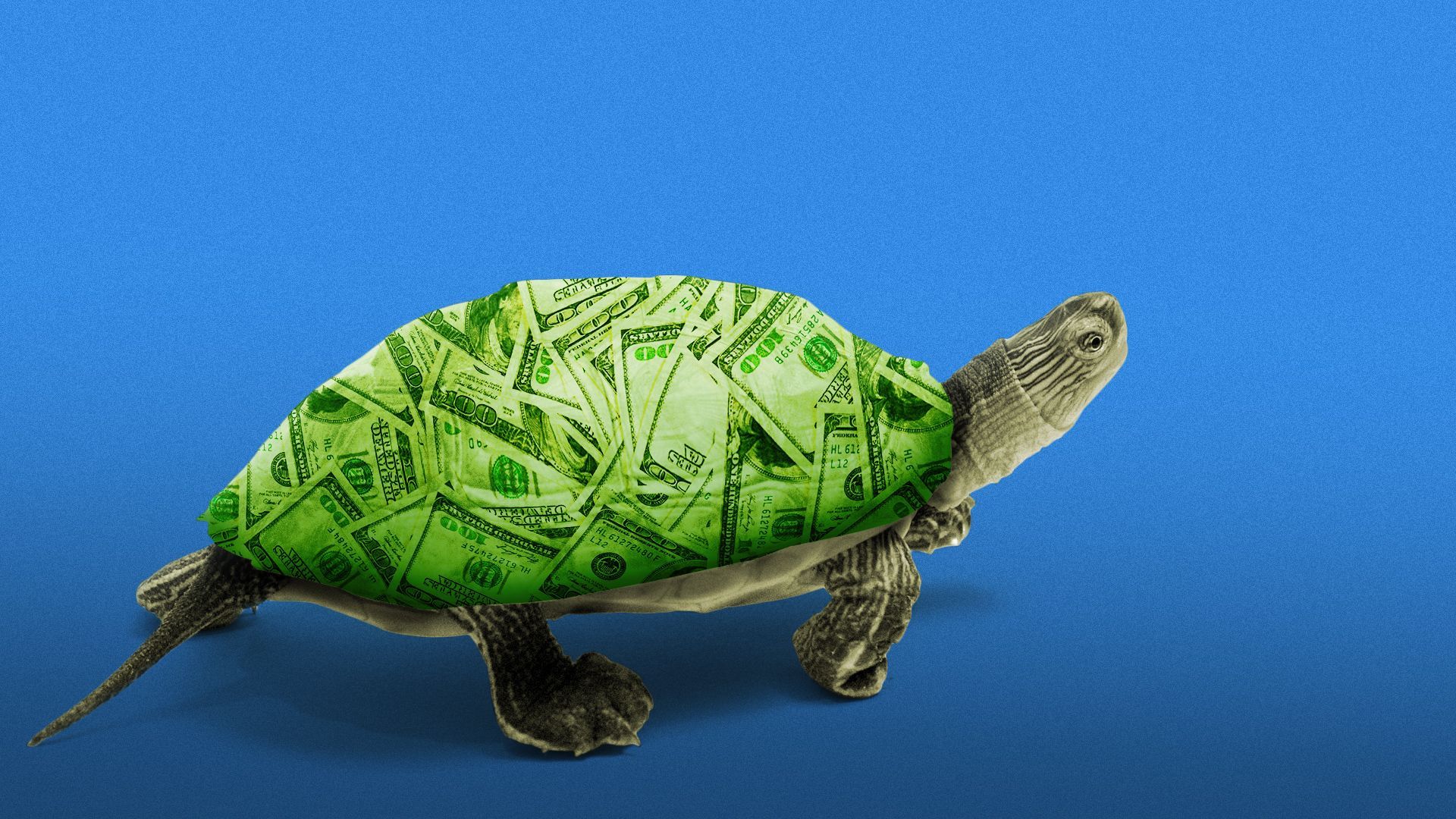
After the economic and market tumult of the last month, it's a reasonable time to take a deep breath. Despite it all, April jobs numbers were solid and the stock market has mostly recovered.
- But it may be a false calm.
The big picture: Seismic economic shifts — of the kind that look to have been set in motion by trade war escalation — usually ripple through the economy only over the course of months, even when the precipitating event is sudden.
- Whether this episode turns out to be a temporary hiccup or a painful recession, we shouldn't expect to see clear-cut evidence in the data for quite some time.
- Similarly, while the stock market rally from the recent April 8 low — and accompanying stabilization in the bond market — has been fast and furious, it's not uncommon for asset prices to retrace losses, at least temporarily, in times of economic disruption.
State of play: Trump announced aggressive reciprocal tariffs on April 2, before announcing a 90-day suspension a week later. It came after global investors dumped dollar assets, including Treasury bonds.
- But it's still an open question how or when there will be de-escalation, particularly with China, where 145% import taxes are in place and inbound cargo is set to plunge in the coming weeks.
- The Trump team is determined to rewire the global economy, arguing that tariffs will lead to more domestic manufacturing and a new stream of revenue to the U.S. government, even if there is pain as Americans adjust to fewer cheap consumer goods.
- Whatever the eventual implications of this agenda, it is unsurprising that it hasn't played out in the economic data overnight.
Flashback: The pandemic's onset might be fresh in mind as a huge economic shift that transformed the economy in an instant. But it is more historically normal for these things to take time.
- What became known as the Global Financial Crisis started in earnest in the summer of 2007 as global money markets broke down. But the stock market reached a new peak in October 2007, and the U.S. economy kept growing through year-end.
- The dot-com bubble peaked in March of 2000, but it wasn't until a full year after that the United States entered a recession.
The same applies to episodes that involved serious financial and economic stress but did not turn into U.S. recessions.
- A rally in the dollar in the summer of 2015 created a global credit squeeze that caused economic distress in China and in other emerging markets. But it didn't create blowback to U.S. agriculture, energy, and manufacturing sectors until early 2016.
The bottom line: Will the trade wars lead to a U.S. recession? That part we don't know.
- What we do know is that it will take months to play out as business and consumers adjust their behaviors to reflect the new reality of global commerce.
2. Why Trump's Hollywood tariff threat matters
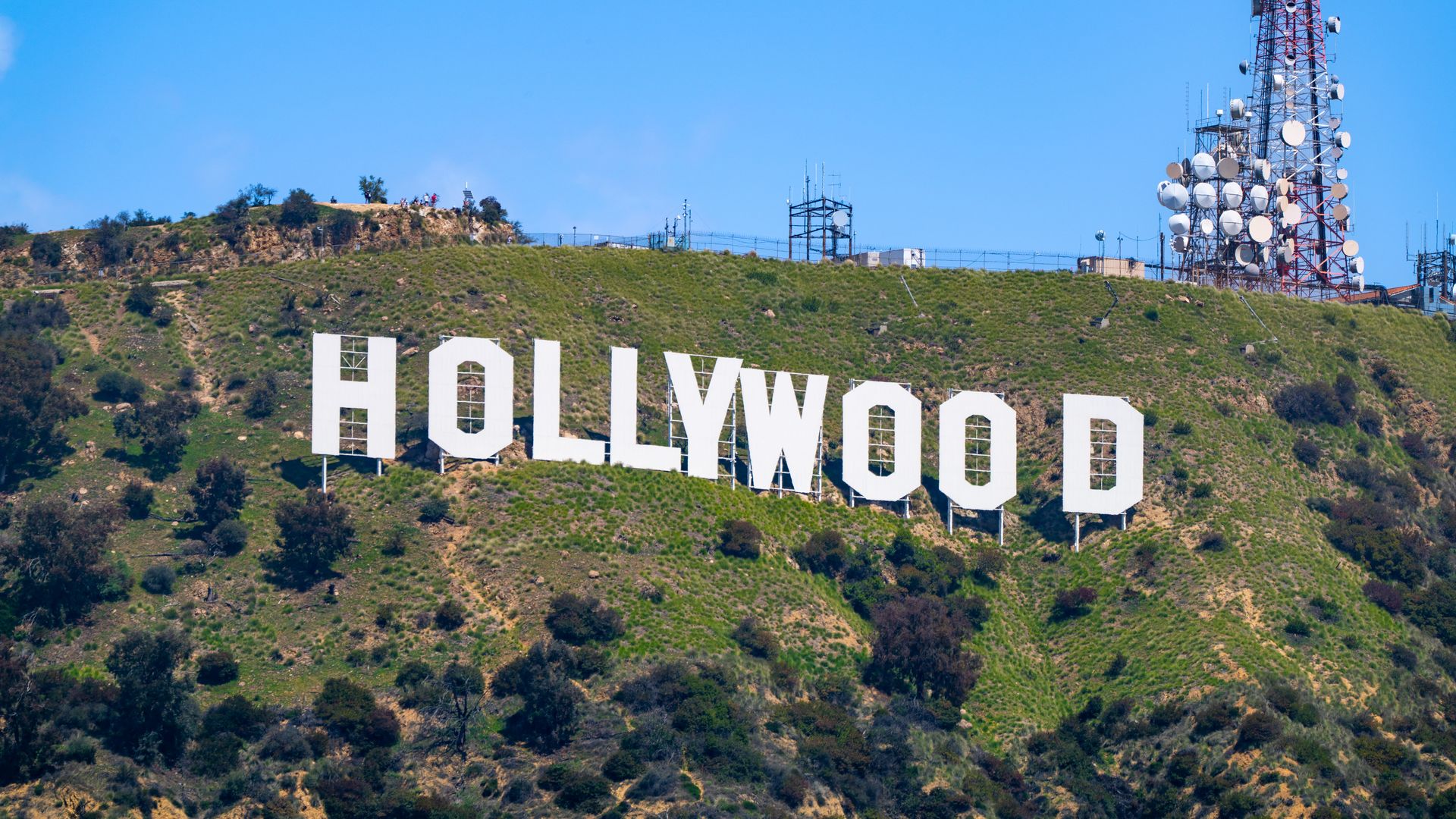
Trump is threatening to open a new front in the global trade war.
- The president will direct trade officials to investigate imposing "a 100% Tariff on any and all Movies coming into our Country that are produced in Foreign Lands," according to a late-night post on Truth Social.
- Up to this point, tariffs have been focused on physical goods.
Reality check: It is unclear how this might work. It is straightforward to slap tariffs on physical goods crossing borders, as the U.S. has done for centuries; less so for intellectual property like movies.
- It raises the question about the extent to which U.S. services will get dragged into the tit-for-tat trade war.
Threat level: The U.S. imports more goods from abroad than it exports. But the nation is the world's largest exporter of services — tourism, video subscriptions, financial services, and more.
- Foreign nations cracking down on their consumption of services could weigh on U.S. industries that employ millions and in which the U.S. runs a trade surplus.
- Private sector service-producing industries are responsible for more than 70% of GDP, while goods-producing counterparts make up about 16%.
What to watch: There are already signs of services retaliation.
- Canadians are boycotting trips to the U.S. in response to Trump's attacks on the country's economy.
- European officials have also suggested they could hit back at the U.S. by targeting U.S. tech firms.
What they're saying: "I think it's a pretty ominous sign for the services sector," Steve Miller, who chairs the Institute for Supply Management services business survey committee, said in response to a question from Axios this morning.
- "If this is a precursor to expanding tariffs to intellectual property between countries, I think that that would have a larger impact on the services sector than some of the tariffs that we're seeing on goods."
Sign up for Axios Macro