
Axios Macro

January 13, 2026

You don't see that every day! Global central bankers issued a rare joint statement this morning defending Federal Reserve chair Jerome Powell from potential criminal prosecution.
- We take stock of how Powell's approach to the investigation seems to be working.
- Plus, we dig into today's inflation numbers that — at least, below the surface — point to a challenge for the White House's push to address affordability concerns. 💵
Today's newsletter, edited by Christine Wang and copy edited by Katie Lewis, is 1,037 words, a 4-minute read.
1 big thing: The Powell pushback is working
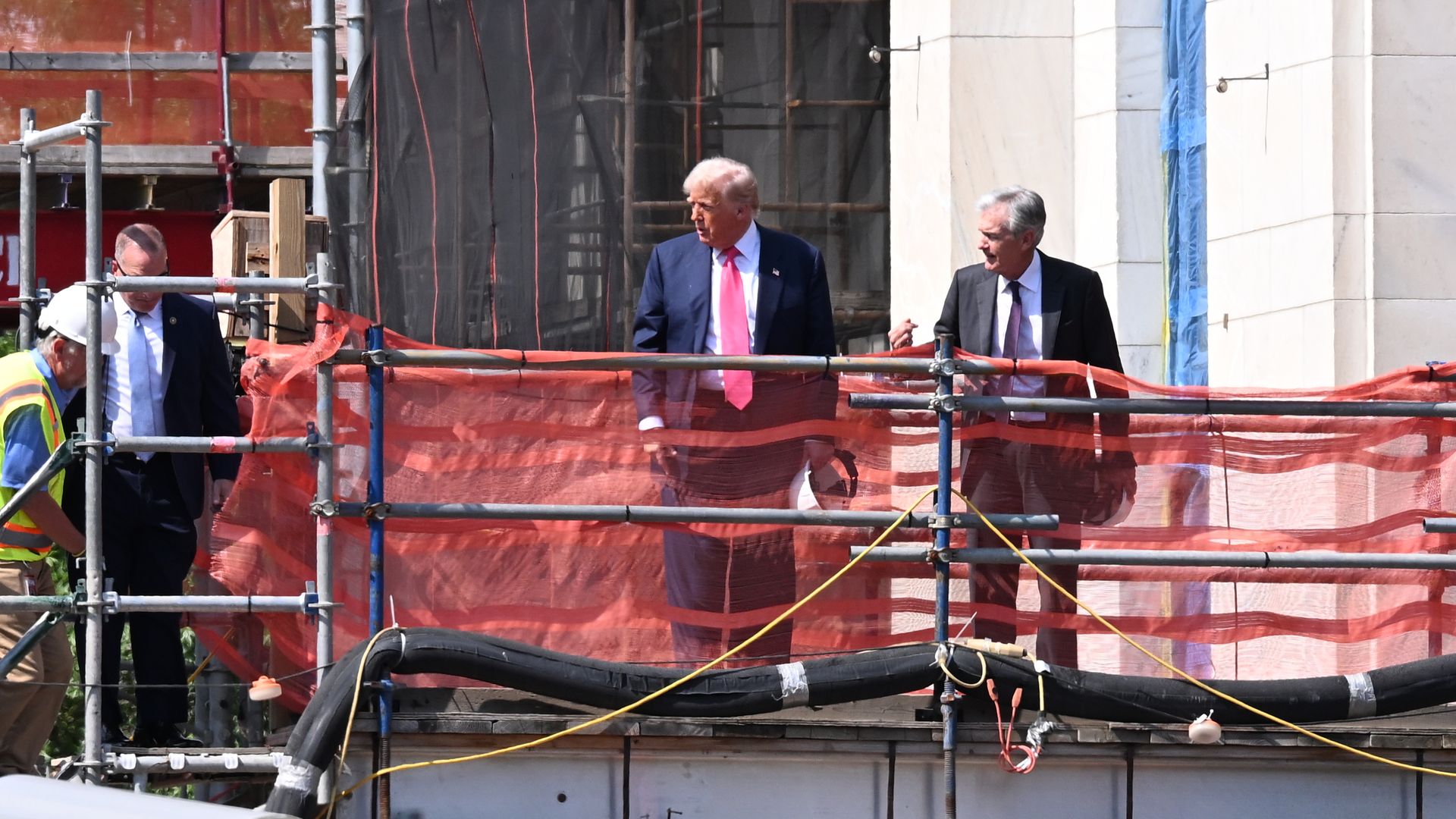
The Fed's modus operandi through years of attacks from Trump has been straightforward: Head down, do your job, don't get sucked into counterattacks.
- Powell tossed that playbook aside in responding forcefully to the prospect of criminal charges over his stewardship of the Fed's building renovation.
The big picture: Some 36 hours after the shocking news broke, the strategy is working. Trump allies within the administration and on Capitol Hill are distancing themselves from a potential Powell prosecution.
- Several Congressional Republicans said that whatever disagreements they may have with Powell, he certainly isn't a crook.
- Other Trump allies point out that it is counterproductive to try to go after an official whose term is up in four months anyway — and who has the ability to muck up Trump's Fed ambitions by refusing to vacate his term as a governor at the central bank until it expires in 2028.
- Our colleague Marc Caputo reported yesterday that Treasury Secretary Scott Bessent described the effort as a mess and wasn't briefed beforehand, and that a source said U.S. attorney for the District of Columbia Jeanine Pirro "went rogue."
Of note: Pirro herself even seemed to throw some cold water on the story, saying on X, "The word 'indictment' has come out of Mr. Powell's mouth, no one else's. None of this would have happened if [the Fed] had just responded to our outreach."
Between the lines: What we've seen in the last two days is, in effect, a rallying around the Fed that has happened before in challenging moments for the central bank.
- There are plenty of complaints to be made about the Fed's policy decisions and the secretive way it makes them. But at the end of the day, there's a deep cross-partisan consensus that you want skilled technocrats in charge of the nation's money supply rather than overt politicization.
- More than his predecessors, Powell has aggressively cultivated relationships in Congress, which has paid dividends in the shows of support that emanated from Capitol Hill since Sunday night — including from persistent Powell critics.
- Moreover, Powell has used the full weight of the Fed as an institution to make his case — unlike governor Lisa Cook, who hired personal lawyers to fight her attempted firing as Powell and the Fed itself have not weighed in.
What they're saying: "I hope this criminal investigation can be put to rest quickly along with the remainder of Jerome Powell's term," said North Dakota Sen. Kevin Cramer in a statement.
- "I think the Federal Reserve renovation may well have wasted taxpayer dollars, but the proper place to fix this is through Congressional oversight," said Pennsylvania Sen. Dave McCormick in a statement. "I do not think Chairman Powell is guilty of criminal activity."
The intrigue: Cramer and McCormick, both Republicans, were among several Senate Banking Committee members to express extreme skepticism of the criminal investigation.
- That's particularly ironic because the root of the inquiry is over whether Powell perjured himself before that very committee last June in addressing renovation cost overruns.
Flashback: If the last couple of days remind us of anything, it's a brief episode in January 2009 when it appeared Ben Bernanke's Senate confirmation for a second term as chair was in doubt amid blowback to financial bailouts.
- Then, Bernanke and allies in both parties aggressively worked the phones, cobbling together enough Senate "aye" votes to avoid an embarrassing and disruptive vote of no-confidence in the Fed's leadership.
The bottom line: The Fed plays the political game more subtly than most Washington institutions. But that doesn't mean it lacks skill.
2. Inflation vs. affordability


Steady as she goes: That's the best way to describe the state of inflation, with the Consumer Price Index rising 2.7% in the 12 months through December, unchanged from November.
- It's a similar story for core CPI, which excludes food and energy costs, that held at 2.6%.
- The monthly gains in December were modest, with CPI rising by 0.3% and core CPI increasing by 0.2%.
Yes, but: Under the hood of the report, however, there was a surge in some of the most salient costs for U.S. consumers: food prices.
Why it matters: The jump in costs highlights the challenge for the White House in the lead-up to midterm elections. Broad inflation relief is little consolation for Americans if they aren't seeing it reflected in grocery bills.
By the numbers: Grocery prices (or "food at home," as the Bureau of Labor Statistics calls it) rose by 0.7% in December, the largest monthly gain since August 2022.
- Grocery prices were up roughly 2.4% in December compared to the prior year, though that masks double-digit price increases for household staples over the past 12 months, including coffee (+20%) and beef (+16%).
- President Trump rolled back tariffs on a slew of household staples late last year. Among them: bananas, which saw prices fall by almost 2% in December. Costs are still up roughly 6% compared to the prior year.
- There is some relief elsewhere in the grocery store: Egg prices, for instance, are down more than 20% from a year ago, with an 8% decline in December alone.
What they're saying: The food price spike signals that "for many consumers, one of the primary inflation pressure points in recent years is still a challenge," Jim Baird, chief investment officer at Plante Moran, wrote today.
- Tariffs are not the lone factor behind food price hikes, Baird says: "A more challenging labor outlook in the U.S. has increased wages for agricultural workers and supply disruptions from disease, weather conditions, and the war in Ukraine have raised food prices globally."
What to watch: It's unclear whether the December jump was a one-off or a sign of more sustained upward pressure on grocery prices in the months ahead.
Sign up for Axios Macro