
Axios Macro

April 17, 2026

Today, we look at the latest from the Middle East, where the single-biggest risk to the global economy — a prolonged disruption of energy supplies through the Strait of Hormuz — has diminished in the last few hours.
- Plus, how markets are reacting to the news.
Today's newsletter, edited by Jeffrey Cane and copy edited by Katie Lewis, is 757 words, a 3-minute read.
1 big thing: The strait is opening for business
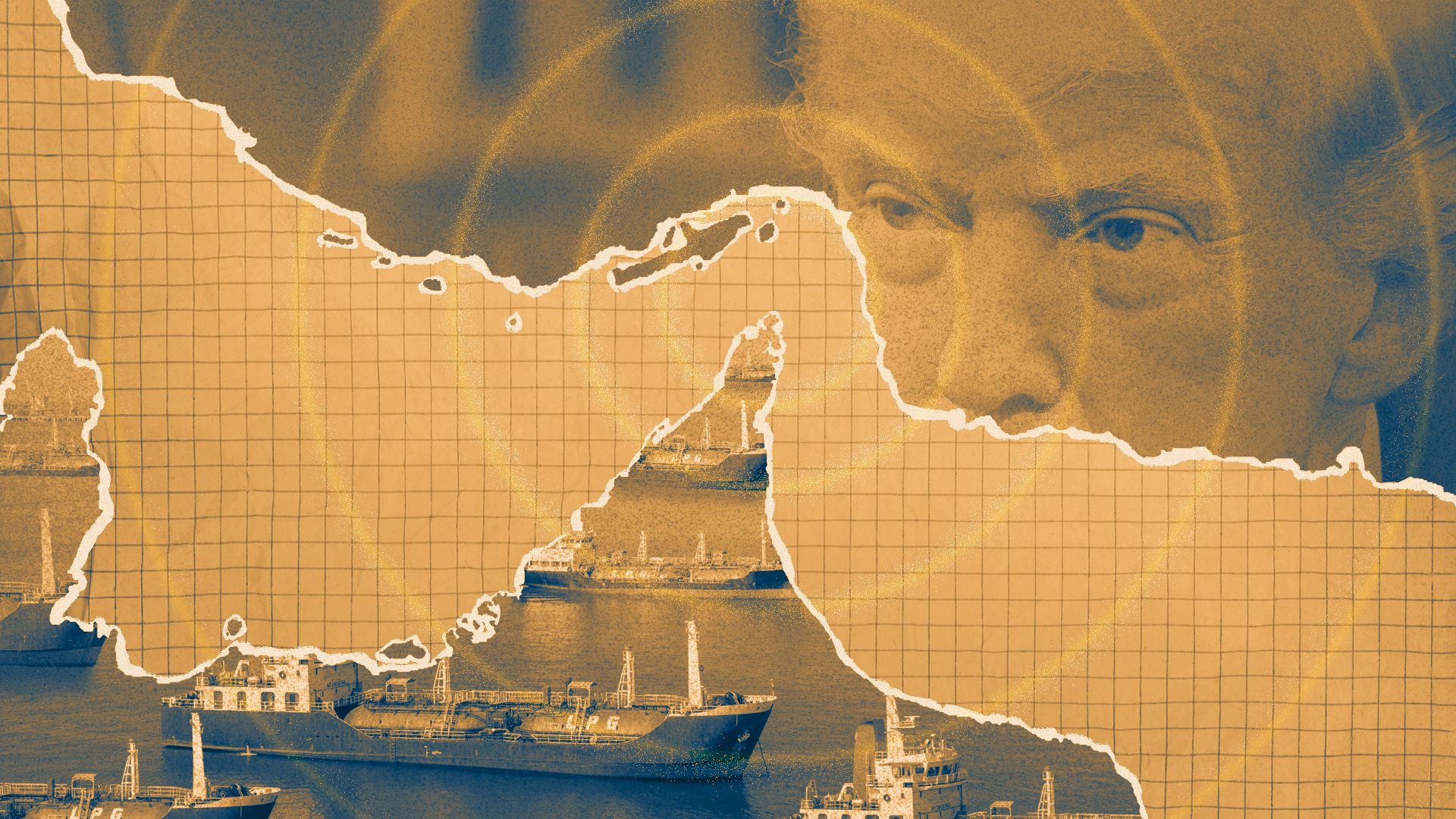
The blockage to energy supplies through the Persian Gulf appears to have ended. If it holds, it takes a massive weight off the world economy.
The big picture: Oil prices plunged, and stock markets around the world are soaring on the news that the Strait of Hormuz is opening. The possibility of a prolonged disruption to the supply of crude oil, liquefied natural gas, fertilizer and other commodities looks to be off the table.
- The Trump administration's strategic move from last weekend — matching Iran's strait blockade for ships that don't pay a toll with a U.S. blockade — seems to have worked, at least for now.
- As we wrote earlier this week, the global economy's outlook for the remainder of this year heavily depends on the outlook for energy supplies through the strait.
Driving the news: Iran's foreign minister said that in light of a ceasefire between Israel and Lebanon, "the passage for all commercial vessels through the Strait of Hormuz is declared completely open for the remaining period of ceasefire."
- President Trump said on Truth Social that Israel is "PROHIBITED " from further bombing of Lebanon.
- He said that the U.S. Naval blockade "WILL REMAIN IN FULL FORCE AND EFFECT AS IT PERTAINS TO IRAN, ONLY, UNTIL SUCH TIME AS OUR TRANSACTION WITH IRAN IS 100% COMPLETE" and that this process "SHOULD GO VERY QUICKLY."
State of play: In the initial weeks after the U.S. and Israel decapitated Iranian leadership, Iran's blockage of the strait worked as a strategic advantage, giving it leverage over the global economy.
- In effect, Iran was able to exact a toll on friendly countries that were in desperate need of oil.
- Events of the last week show that two can play at that game, with a U.S. threat against ships that pass through the strait threatening to choke off a crucial source of funds for the battered Iranian regime.
- Both sides' ability to inflict economic pain on the other led to the apparent de-escalation.
What they're saying: "The US is being very smart about the blockade," Robin Brooks, a senior fellow at the Brookings Institution, wrote on X yesterday.
- "It dangles prospects of peace to markets, which caps oil prices," he adds. "That defangs Iran's main negotiating leverage, which is to cause panic and push oil prices higher. The mullahs are getting pushed into a corner."
Between the lines: There have been signs for weeks that Trump was looking for an off-ramp from the conflict, a way to declare victory and reduce economic shockwaves.
- Strategists can debate whether there has been any lasting achievement of U.S. geopolitical goals. But at least the odds of a global economic slowdown look to be reduced.
2. Markets embrace war relief


Financial markets are spring-loaded for good news on the Iran war. A deal that reopens the strait could help ease pressure on a Federal Reserve already pinned down by pre-war sticky inflation.
Why it matters: The Iran war risked an impossible situation for the Fed: inflation too high to cut rates, despite a softening labor market that might ultimately require looser policy.
- Still unclear is how the consequences of the weekslong closure of a critical route for goods leave an imprint on the economy.
- Supply chains take time to unsnarl. Shipping costs that spiked during the closure won't normalize overnight, and some manufacturers have already made sourcing decisions that won't be easily reversed.
By the numbers: Stocks are soaring, with the S&P 500 up 1.3% this morning, hitting a fresh record.
- Oil prices retreated significantly on the news. West Texas Intermediate crude, the U.S. benchmark, fell about 14% as of 11:45am ET, to $81 a barrel.
- That is well below the peak of $112 hit earlier this month, though still above the roughly $70 and below what prevailed immediately before the war.
Bond yields also fell, reflecting less inflationary pressure and lower borrowing costs.
- The yield on the two-year Treasury note — most sensitive to expectations for Fed interest rate policy — fell roughly 8 basis points this morning, to 3.7%.
- Markets are now pricing roughly a coin-flip chance of at least one Fed rate cut by year-end — up from less than a 30% probability just yesterday, per CME FedWatch.
Sign up for Axios Macro