Axios Macro
March 20, 2024

It's Fed day: The Federal Open Market Committee policy statement (likely to show no change to rates) and economic projections (which could dial back rate cut expectations) are due out at 2pm ET. Chair Jerome Powell's press conference starts at 2:30. Neil will be in the room.
- In today's Macro, we look at the latest comments from the European Central Bank chief, plus a new book on dollar diplomacy.
🗓 Join us tomorrow at 8am ET in Washington, D.C., for an event examining the future of tax policy. Guests include Rep. Beth Van Duyne (R-Texas) and Rep. Brad Schneider (D-Ill.). Register here to attend in person.
Today's newsletter, edited by Kate Marino and copy edited by Katie Lewis, is 693 words, a 2½-minute read.
1 big thing: Europe's three-part rate cut test
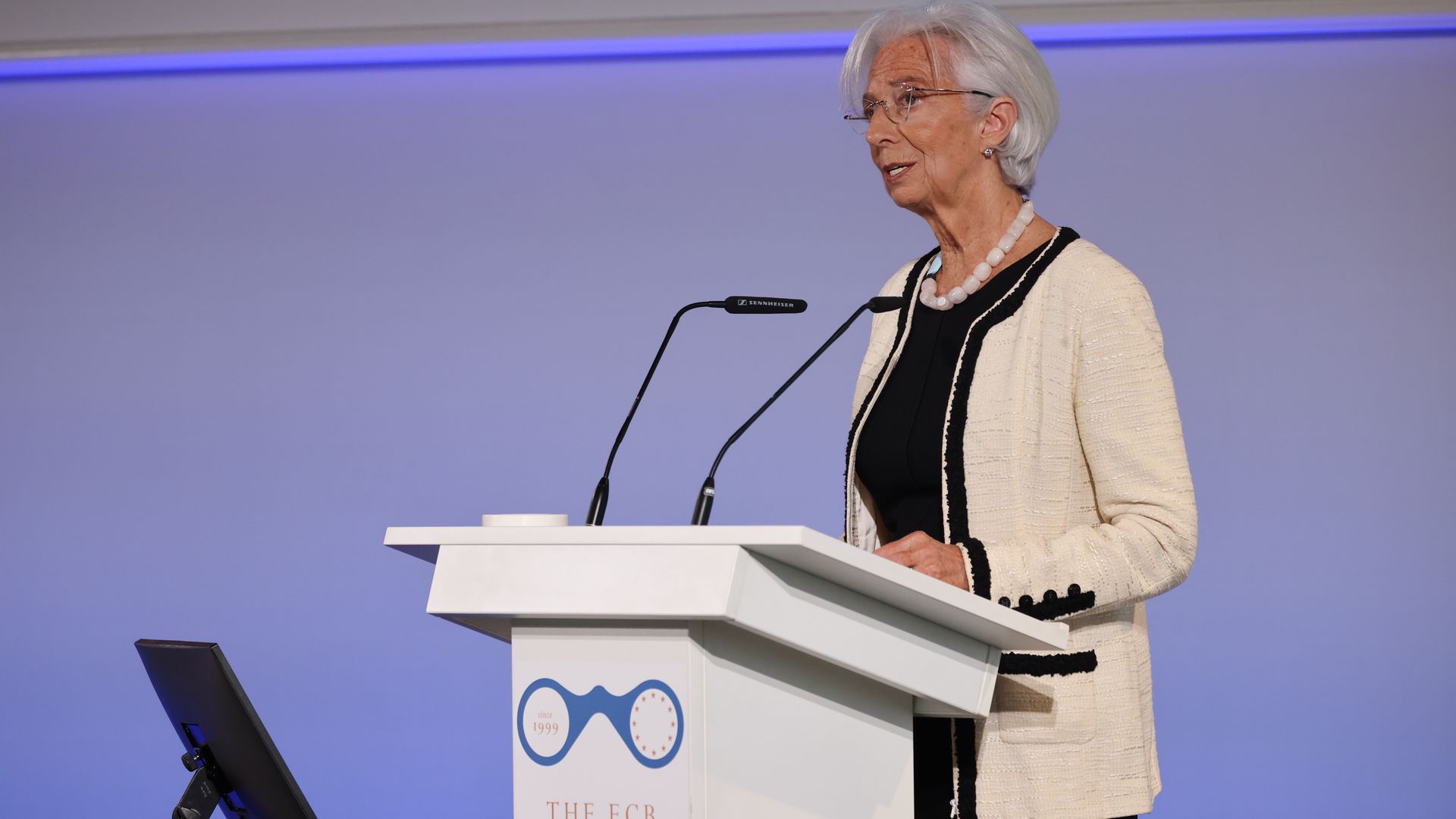
ECB president Christine Lagarde speaks Wednesday in Frankfurt. Photo: Alex Kraus/Bloomberg via Getty Images
In Europe, as in the U.S., interest rate cuts look to be on the horizon — but there isn't enough evidence to definitively say so just yet.
Why it matters: That's the takeaway from a nuanced speech today by European Central Bank president Christine Lagarde, who laid out what she needs to see before easing policy in the 20 countries using the euro.
- It reflects migration away from a period when central bankers on both sides of the Atlantic were more willing to give explicit forward guidance about when to expect a policy move.
- And while the details of the economic challenges in the U.S. and Europe differ, the test Lagarde laid out for potential rate cuts holds lessons for stateside policy, too.
Driving the news: Lagarde, speaking at the ECB and its Watchers conference in Frankfurt, laid out three tests the central bank will apply in deciding when it's time to cut interest rates. "Put simply, we need to move further along the disinflationary path," Lagarde said.
- First is wage growth, with the ECB looking for "data to confirm whether wages are indeed growing in a way that is compatible with inflation reaching our target sustainably by mid-2025."
- Second is whether corporate profit margins compress, allowing inflation to come down without pain in the labor market.
- Third is productivity growth — which could allow the European economy to grow more rapidly even as inflation dissipates.
Between the lines: Some aspects of this framework align with that in the U.S., whereas others don't. Most Fed officials have not emphasized profit margins as a significant driver of inflation, for example (many left-of-center economic commentators have, by contrast).
- And wage growth in Europe is more influenced by formal bargaining with massive sectoral labor unions than is the U.S., which the ECB will be watching closely.
Yes, but: What the U.S. and Europe have in common as their central banks weigh when and whether to cut interest rates is a sense that in these stormy seas of the last few years, it would be foolish to be overly confident about what policy will look like three, six or 12 months in the future.
- Said Lagarde, "our decisions will have to remain data dependent and meeting-by-meeting, responding to new information as it comes in," adding that "even after the first rate cut, we cannot pre-commit to a particular rate path."
- She then ad-libbed to attendees whose job is to predict her next move, "however tempting that is. However much each of you would like to see it."
2. The weaponized dollar
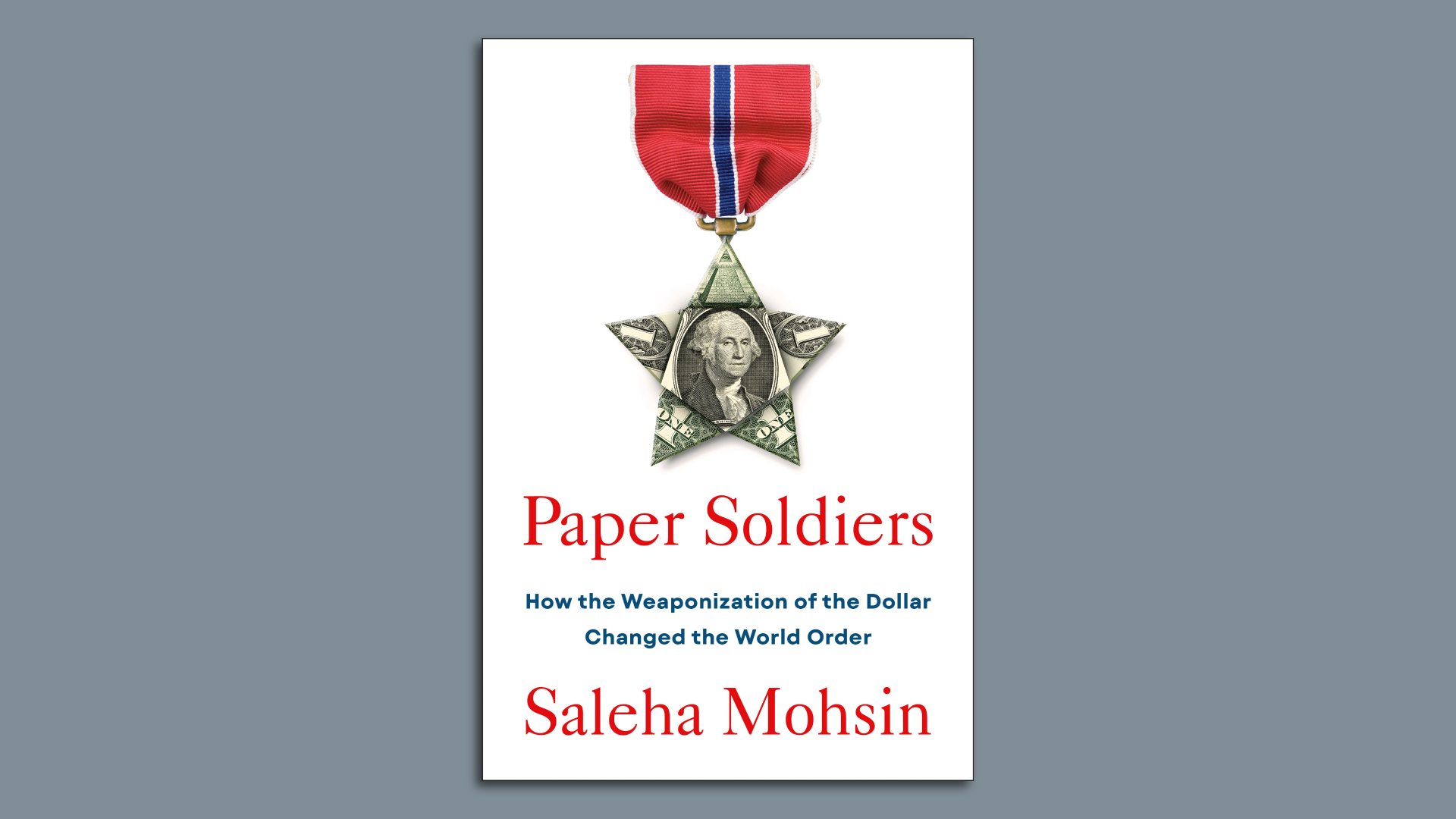
Credit: Portfolio
Some of the most important instruments of U.S. global power are deployed not by the warfighters at the Pentagon or the diplomats at the State Department, but by bureaucrats at 1500 Pennsylvania Avenue — the U.S. Treasury Department.
- A new book out this week brings to life the narrative of how Treasury officials have used the U.S. dollar as a tool of American foreign policy over the last three decades — along with the hazards that has created.
State of play: "Paper Soldiers: How the Weaponization of the Dollar Changed the World Order," by Bloomberg senior reporter Saleha Mohsin, arrives as cracks in that order are starting to appear.
- The aggressive use of economic countermeasures against Russia in retaliation for its invasion of Ukraine — an effort steered out of Treasury — has caused blowback as other nations with tense U.S. relationships seek alternatives to the dollar-based global financial system.
Mohsin delivers the narrative of the recent history of dollar-driven foreign policy, dating to the Clinton administration's dollar policy under Treasury Secretary Robert Rubin.
- Along the way, she tells behind-the-scenes stories of the Treasury secretaries at the helm of those efforts — Larry Summers, Hank Paulson, Tim Geithner and Steve Mnuchin, among them.
- But she also includes vivid tales of featured characters, particularly undersecretary Stuart Levey, who directed the Bush and Obama-era Treasury's pursuit of terrorist financing, and Mark Sobel, who guided U.S. dollar diplomacy for decades.
The bottom line: With the dollar-led global financial order — and the power it attends the U.S. — showing signs of fraying, "Paper Soldiers" is essential reading to understand how we got here.
Sign up for Axios Macro
Stay ahead of the curve on the most important economic developments with reporting and analysis on how business, policy, and markets collide.