Axios Macro

April 18, 2025


The sector President Trump wants to rebuild is on the front line of his trade war. More on the new message from manufacturers below.
- Plus, what we're expecting from big meetings of global financial elites in Washington next week.
Today's newsletter, edited by Christine Wang and copy edited by Katie Lewis, is 664 words, a 2½-minute read.
1 big thing: Manufacturers brace for pain

Manufacturers expect dismal business conditions that could plunge the sector back into a recessionary-like state.
Why it matters: Trump's trade war is intended to revitalize domestic factories by discouraging the consumption of foreign-made goods.
- But for the moment, surveys show manufacturers expect the opposite: less expansion, plummeting sales, job cuts and higher prices. It's a signal that they see high hurdles and economic pain as the White House aims to delink the U.S. manufacturing sector from the rest of the world.
Driving the news: Regional Federal Reserve banks regularly poll manufacturers about their economic outlooks. Those surveys, including some releaesd this week, have turned uniformly gloomy.
- New York factory owners turned "pessimistic about the outlook, with the future general business conditions index falling to its second lowest reading in the more than twenty-year history of the survey," according to the New York Fed's Empire State manufacturing survey.
- Capital spending plans to expand business were flat this month. Respondents anticipate higher input costs and selling prices. They expect supply shortages to worsen in the next six months.
The Philadelphia Fed's survey of manufacturers in Delaware, and parts of Pennsylvania and New Jersey, showed indicators for general activity, new orders and shipments turned negative.
- More firms expect future business activity to pick up than those that anticipate it will slow. Employment is steady now, though an index measuring future hiring intentions fell to its lowest level since 2016.
- Expectations for steepest prices paid and received jumped to the highest since June 2021, the early months of the pandemic inflation shock.
Yes, but: The negativity in the regional surveys, which are very volatile month to month, is not evident in big-picture data — a similar phenomenon to the plummeting economic pessimism among consumers.
- For instance, manufacturing output jumped by 0.3% after rising nearly a full percentage point in February, Federal Reserve data on Wednesday showed. For the second straight month, output of autos helped boost overall production.
- Cars were in high demand last month — dealership retail sales jumped last month, new data this week showed — which economists attributed to a surge in purchases ahead of tariffs taking effect.
Flashback: In recent years, the manufacturing sector was hit by a "rolling recession" that left the rest of the economy relatively unscathed. It felt the pain of the Fed's historic interest rate hiking campaign.
- The sluggishness seemed over, with more optimism as the Fed kicked off interest rate cuts and Trump readied to return to the White House.
- The Institute for Supply Management's index of manufacturing activity, for example, was in contractionary territory for 26 straight months through December, then positive in January and February before flipping negative again in March.
2. A spring chill in D.C. next week
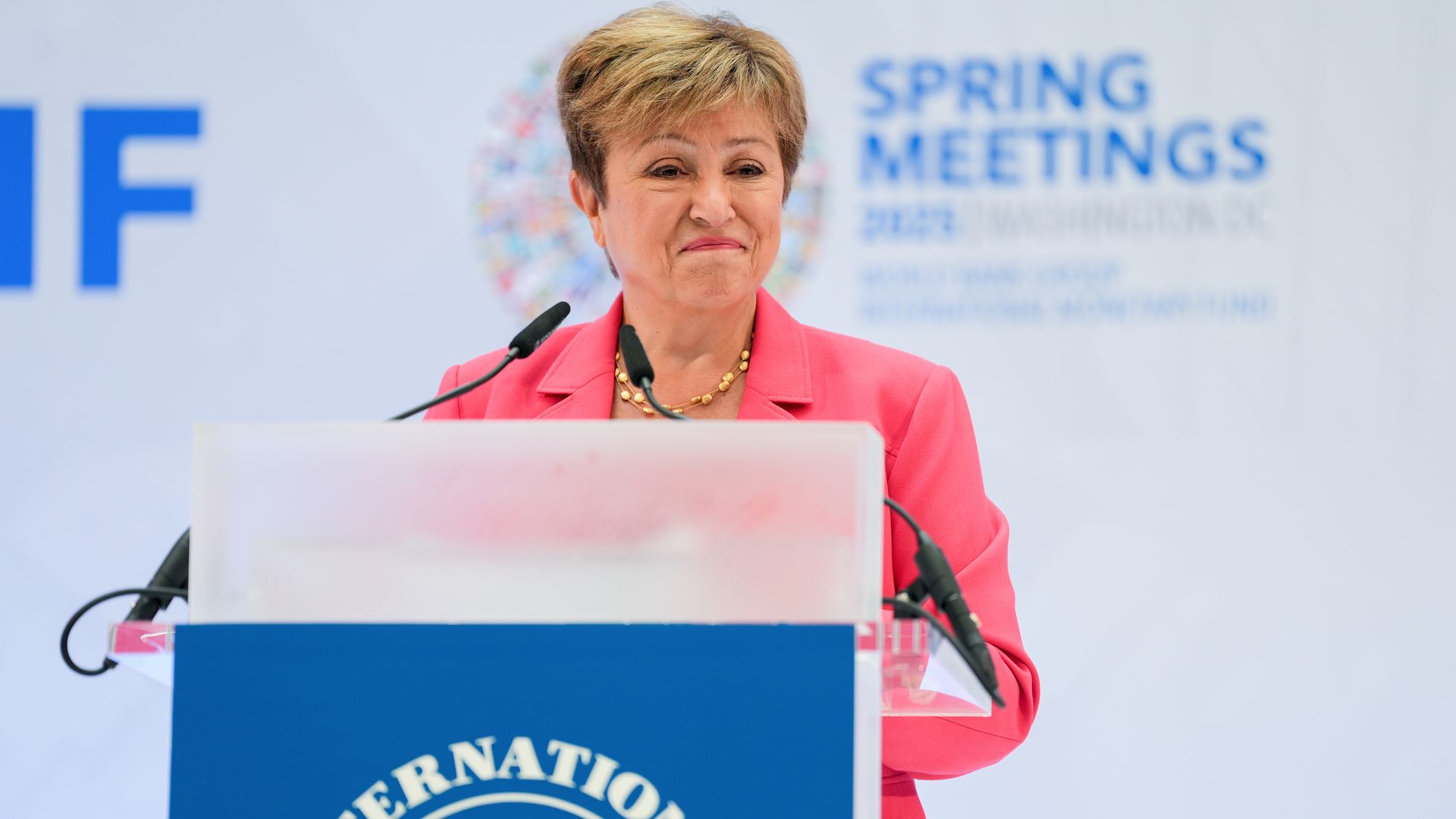
The weather in Washington, D.C., is warming up. But we expect a chill in the air as the world's financial elite descend on the city for spring meetings of the International Monetary Fund and World Bank.
The big picture: The finance ministers and other leaders who have spent generations building a more interconnected world are now watching those economic ties fray.
- "Trade tensions are like a pot that was bubbling for a long time and is now boiling over," IMF managing director Kristalina Georgieva said in a curtain-raiser speech yesterday.
- "To a large extent, what we see is the result of an erosion of trust — trust in the international system, and trust between countries," she said.
Of note: Georgieva then did an interview with event moderator and Trump-aligned Fox Business host Maria Bartiromo. In the past, Georgieva has more commonly been interviewed by CNBC or Bloomberg.
What's next: The IMF's World Economic Outlook forecasts, updated quarterly, are due out Tuesday morning.
- This edition, Georgieva said, "will include notable markdowns, but not recession," along with higher inflation forecasts for some countries.
The bottom line: The world economy is not being shaped by the financiers gathering in Washington's Foggy Bottom neighborhood this week, but by the guy in the big white house a couple of blocks away.
Sign up for Axios Macro