Axios Macro

December 18, 2025


Inflation data is finally here! The headline news was great, though the report has some messy government shutdown effects. More below.
- Plus, a look at central bank actions from the U.K. to the eurozone to Japan. 🇬🇧 🇪🇺 🇯🇵
Don't forget to enter your economic predictions for 2026 to help shape the Axios Macro Consensus.
Today's newsletter, edited by Jeffrey Cane and copy edited by Katie Lewis, is 771 words, a 3-minute read.
1 big thing: Inflation relief, with an asterisk
Inflation has been charging higher for much of 2025. That changed in November: Year-over-year price increases eased, offering much-needed relief for American consumers.
Why it matters: It's too soon to say whether last month was a blip or the start of an inflation cooling streak, especially given government shutdown-related quirks that complicated data collection.
- Still, the easing will be welcomed by White House and Federal Reserve officials, who have, in different ways, been under pressure because of sticky, tariff-driven inflation.
What they're saying: "Scrutiny on the details of this week's CPI report is justified, but it did provide marginal information that inflation is directionally moving in the right direction," Jason Pride, chief of investment strategy at Glenmede, wrote in a note.
By the numbers: In the 12 months ending in November, the Consumer Price Index rose by 2.7%, while the core gauge that excludes food and energy costs increased by 2.6%.
- That is a sharp cooling relative to September, when both comparable measures rose by 3%.
The intrigue: The government shutdown disruption is evident in the report. For regular followers of the report, the release looks astonishingly incomplete — with blank columns across a slew of categories, including groceries, shelter, apparel and more.
- The Bureau of Labor Statistics did not say how much inflation rose on a monthly basis in November, reflecting the lack of October data for comparison.
- The agency canceled the October CPI report as it was unable to conduct surveys to determine how costs changed over the month.
- "For a few indexes, BLS uses non-survey data sources instead of survey data to make the index calculations," according to the release.
Between the lines: The BLS did say, however, that price increases were mild in the two months through November. CPI and core CPI increased by just 0.2% over that period.
- A key category of consumer items, watched closely for signs of tariff-related price increases, barely budged over the two months.
What to watch: It's unlikely that the data will soothe consumers' affordability concerns, especially since Americans care more about price levels, not necessarily how slowly prices go up.
- On that front, prices still look high for some goods. Coffee, for instance, is up a whopping 19% from a year ago as of November, the BLS said.
- Financial markets did not react much to the report, with bond yields falling only slightly after its release — a sign that investors weren't putting too much weight on the data.
The bottom line: Still, the report is better than the alternative combination of high price levels and prices rising at a quick pace — a much-feared outcome earlier this year that has not come to pass.
- The messiness of the report raises the importance of December data to be released next month that will be less impacted by the shutdown.
2. Global central bank roundup
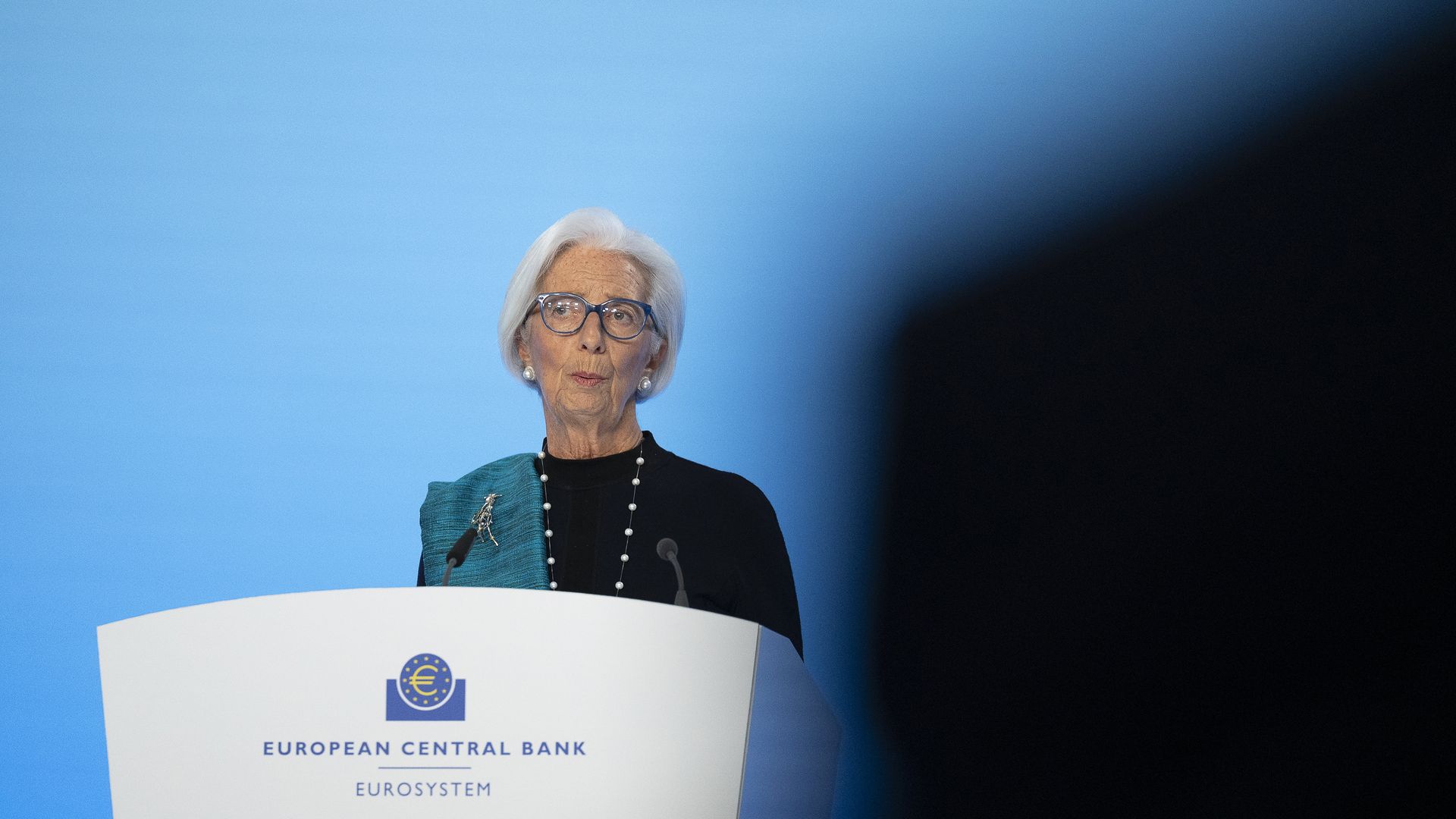
This is a blockbuster week for global monetary policy, with interest rate decisions out this morning from the Bank of England and European Central Bank, and Bank of Japan policymakers gathering Friday in Tokyo.
Yes, but: Unlike in 2022, when the global central banks were tightening policy in concert, or in 2024, when they were united in cutting rates, now the results are all over the place.
- It points to an environment in which each country is dealing with its own unique mix of shocks and catalysts, rather than each major economy facing the same seismic global forces.
State of play: A week after the Fed cut interest rates for the third time this year, the Bank of England joined the party, cutting its target rate by a quarter point, to 3.75%.
- But British borrowers shouldn't count on much more relief on the way, as governor Andrew Bailey said that "with every cut we make, how much further we go becomes a closer call."
- The ECB elected to leave its target rate unchanged at 2%. President Christine Lagarde told reporters that the eurozone economy "has been resilient," and that the inflation outlook is "more uncertain than usual."
What's next: The Bank of Japan is expected to raise its target interest rate to 0.75% when it concludes its meeting Friday (or tonight, U.S. time). That would be the highest for Japanese interest rates since 1995.
Sign up for Axios Macro