Axios Macro

March 21, 2023

A wild week continues as we parse a message from the Treasury secretary this morning, and ponder the rare sense of uncertainty around what the Federal Reserve will do at the conclusion of its policy meeting tomorrow.
🗓 The countdown begins: Axios' second annual What's Next Summit is next Wednesday, March 29, in Washington, D.C.!
- You'll hear from music producer Timbaland, United Airlines CEO Scott Kirby, Whole Foods Market CEO Jason Buechel and more on the issues and innovations shaping our future. Register to livestream the event here.
Today's newsletter edited by Javier E. David, is 644 words, a 2½-minute read.
1 big thing: Yellen's cleanup in the community banking aisle
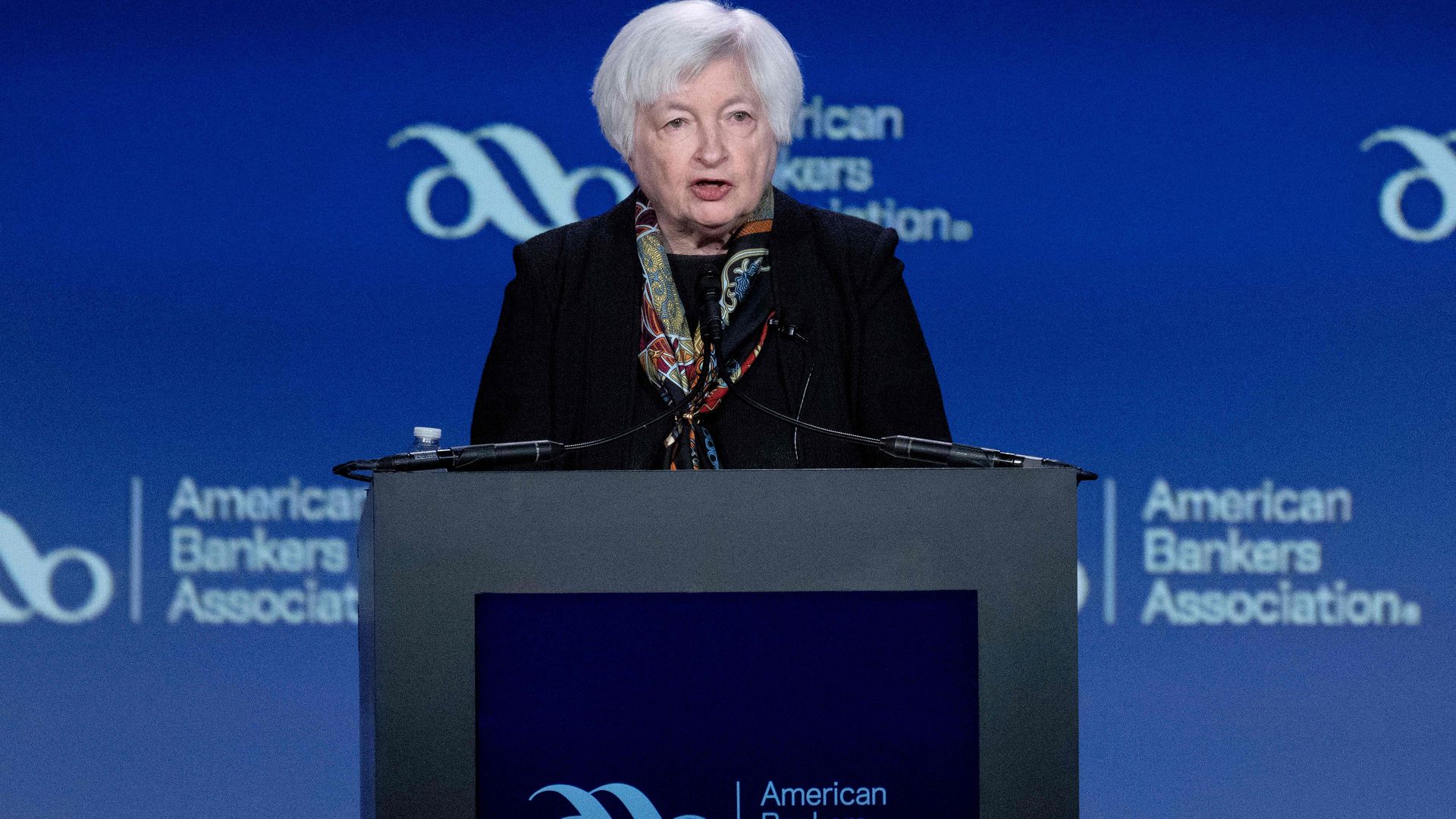
Treasury Secretary Janet Yellen speaks to the American Bankers Association this morning. Photo:Jim Watson/AFP via Getty Images.
Visit any bank branch in the United States, and you'll see a sign with "FDIC" — Federal Deposit Insurance Corporation — in big letters, and the words "each depositor insured to at least $250,000."
- Treasury Secretary Janet Yellen would very much like for you to focus on the "at least" part.
Why it matters: The U.S. government is using a combination of emergency authorities and communications to, in effect, make the legal cap on deposit insurance established in banking law irrelevant. The hope is that the strategy prevents widespread withdrawals.
- The open question now is how far the government will go, in the absence of legislation, to formally raise (or eliminate) the cap — and what it will mean for the future of the banking system.
Driving the news: Speaking to the American Bankers Association this morning, Yellen discussed the government's actions to protect even large depositors in Silicon Valley Bank (SVB). She none-too-subtly suggested that "similar actions could be warranted if smaller institutions suffer deposit runs that pose the risk of contagion."
- She added that "Treasury is committed to ensuring the ongoing health and competitiveness of our vibrant community and regional banking institutions."
- Bloomberg reported yesterday that the agency is exploring potential options to expand deposit protection without Congressional approval.
Between the lines: Yellen's latest remarks help clean up a mess from last week, when Sen. James Lankford of Oklahoma asked her pointedly whether depositors in community banks in his state would receive the same protections that affluent clients in SVB and Signature Bank received.
- Yellen gave an answer that was legally correct but politically tone-deaf, explaining that SVB deposits were protected after regulators declared a "systemic risk exception."
- That would imply that small bank depositors that don't create systemic risk could lose money.
- If that fear triggered large-scale outflows from smaller banks, it could cause credit to dry up, particularly in the smaller cities and smaller businesses community banks serve.
Yes, but: The $250,000 cap is stated plainly in the law (it was even raised from $100,000 as part of the 2010 Dodd-Frank Act). The cap also limits what banks must pay toward the deposit insurance fund.
- U.S. banks are now in a weird limbo where the government is insisting that even the largest depositors need not fear losing their money, but against the backdrop of a legal infrastructure that guarantees no such thing.
Go deeper: Our colleague Emily Peck explored the possibility of raising or scrapping the deposit insurance cap yesterday.
2. The Fed's decision is actually uncertain, for once
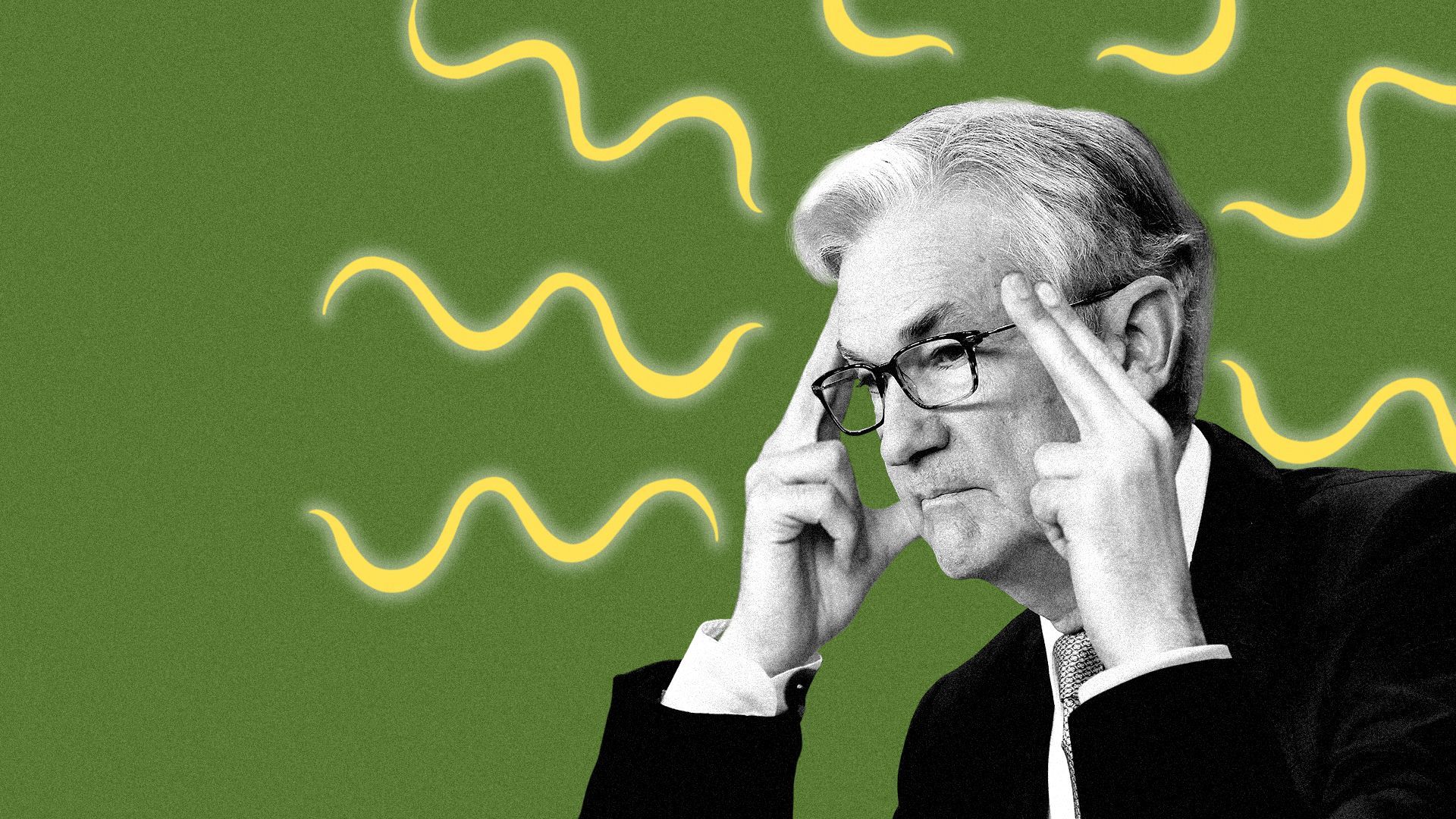
Photo Illustration: Lindsey Bailey/Axios. Photo: Win McNamee via Getty Images
The truth about the Fed's eight yearly policy meetings is, for all the attention they attract, they pretty much never surprise.
- By the time the meetings roll around, Fed officials have usually reached some consensus on what they're going to do; through speeches and other means, they guide the Fed-watching industrial complex to understand what those plans are.
The intrigue: This time, that is not the case. The fast-moving banking crisis — which played out while the central bank was in its "blackout" period before meetings — has created genuine uncertainty about what they will do.
- Do officials believe that the problems in banks are tightening financial conditions, doing their inflation-fighting work for them, so they ought not to raise interest rates again and risk making the banking crisis worse?
- Or do they emphasize the importance of showing resolve in their inflation fight and raise interest rates as has long been telegraphed, counting on their actions to stabilize the banking system working on a dual track with rate hikes to bring down inflation?
Driving the news: The Federal Open Market Committee began its two-day meeting at 10am ET this morning as scheduled. The policy decision will be announced at 2pm tomorrow, alongside new projections for the economy and interest rates.
- Chair Jerome Powell will take questions from the media at 2:30pm. And we have no shortage of questions for him.
Sign up for Axios Macro

Stay ahead of the curve on the most important economic developments with reporting and analysis on how business, policy, and markets collide.