Axios Macro

January 25, 2024

The U.S. economy delivered gangbuster economic growth in the second half of 2023, as the latest GDP numbers show. Today we parse why it happened and why it matters. 💪
- Plus, the latest (non-)move from the European Central Bank.
Today's newsletter, edited by Kate Marino and copy edited by Katie Lewis, is 621 words, a 2-minute read.
1 big thing: Inside the very good GDP report

Illustration: Allie Carl/Axios
Forget the much-discussed prospect of a soft landing for the U.S. economy. In 2023, there was no landing at all.
Why it matters: Big economic rules broke last year. The latest data to confirm that is the new GDP report showing very strong economic growth to conclude 2023, even amid a big cooldown in inflation.
- Mainstream economists and policymakers believed a period of below-trend growth would be necessary to make progress on inflation.
- Instead, above-trend growth in 2023 coincided with inflation falling sharply, reflecting improvement in the economy's supply potential.
Driving the news: The economy expanded at a 3.3% annualized rate in the fourth quarter, well above the 2% forecasters expected. That followed the previous quarter's blockbuster 4.9% growth.
- GDP was 3.1% higher in the fourth quarter than a year earlier.
- That represents an acceleration from 0.7% GDP growth in 2022, and trounced the growth rates of most other advanced countries — and the 1.8%-ish rate that economists consider the United States' long-term trend.
Details: The fourth quarter's hot growth resulted from bustling activity across the economy.
- Consumers spent more on goods and services, with personal consumption expenditures rising at a 2.8% annualized pace. That was responsible for nearly 2 percentage points of the fourth quarter's GDP rise.
- Businesses spent on equipment, factories and intellectual property at a solid pace, with nonresidential fixed investment increasing at 1.9% — up from the previous quarter.
The intrigue: For two years now, Fed officials have spoken of the need for a period of below-trend growth to bring inflation into line. Now, they face the decision of whether to cut rates — to essentially declare victory on inflation — even as below-trend growth is nowhere to be seen.
- A flourishing labor market, strong productivity gains and supply-side improvements — more workers joining the workforce, for instance — has (at least so far) meant the economy can keep growing at a solid pace without risking a pickup in price pressure.
- "[W]e had significant supply-side gains with strong demand," Fed chair Jerome Powell said in his December press conference, adding that potential growth may have been higher than usual "just because of the healing on the supply side."
- "So that was a surprise to just about everybody," Powell said.
What they're saying: "This report feels like a supersonic Goldilocks: very strong GDP reading with cool inflation," Beth Ann Bovino, chief economist at U.S. Bank, tells Axios. "Good news is good news."
- "With high productivity levels, we can have strong growth with less inflation. That was the case during the last soft landing in the 90s," Bovino adds.
2. The ECB stands pat
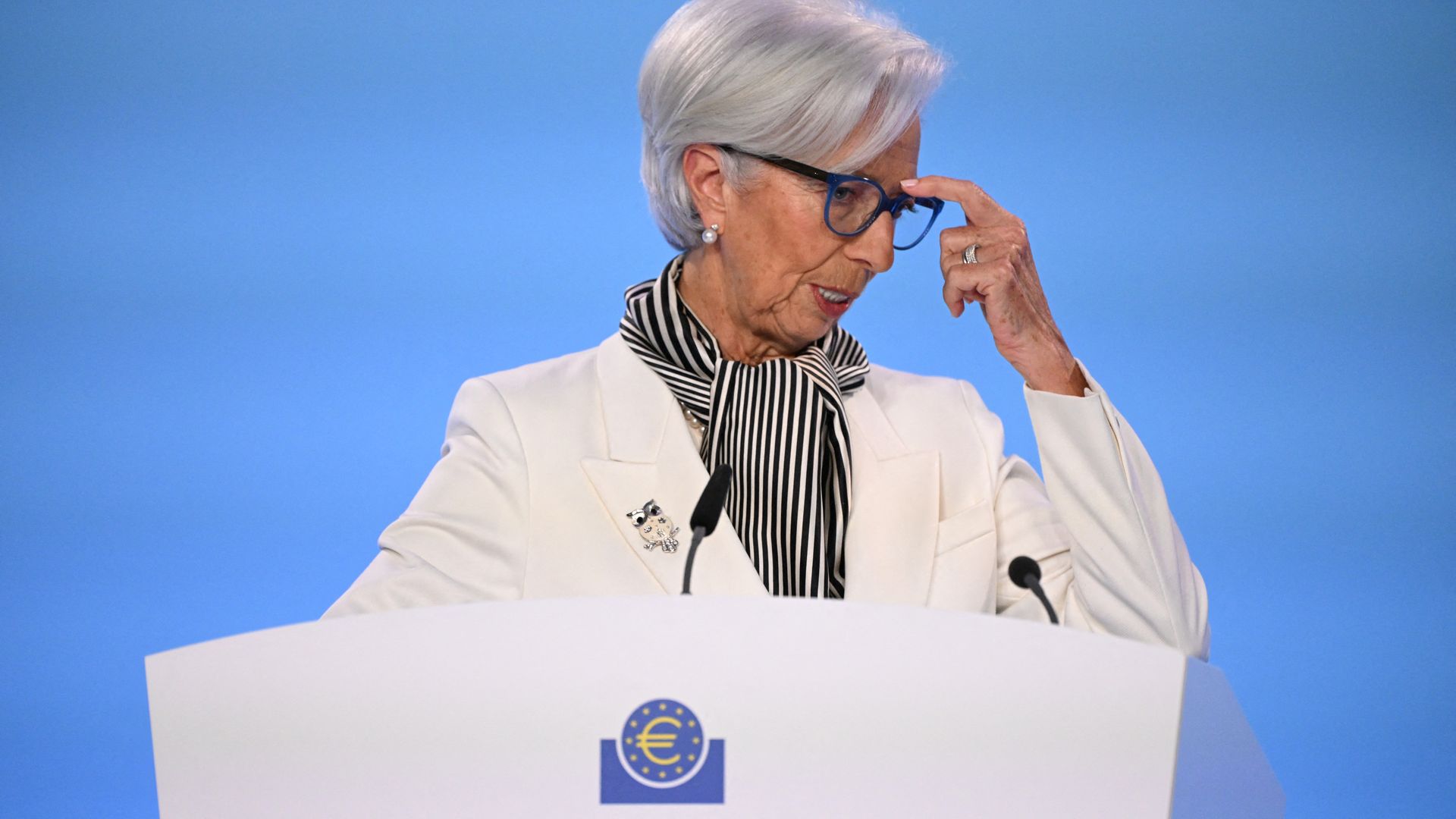
ECB president Christine Lagarde. Photo: Kirill Kudryavtsev/AFP.
Things are looking gloomier in Europe — and that's a key reason the European Central Bank elected not to raise interest rates further at a meeting today.
Driving the news: The ECB's governing council left its key deposit rate at 4%, a record high, at its policy meeting.
- "The disinflation process is at work," president Christine Lagarde said in a news conference. She has previously signaled a rate cut could come this summer.
State of play: Inflation remains elevated in Europe — and faces a new threat, thanks to supply disruptions stemming from attacks in Red Sea shipping lanes. But at the same time, growth has been anemic in the continent's major economies.
- The German economy, the largest in Europe, actually shrank 0.3% in 2023, according to the latest numbers.
- In effect, Europe is not benefiting from the same supply improvements seen in the U.S., with more direct effects from the Ukraine war and now conflict in the Middle East.
Yes, but: Inflation remains high and wage pressures elevated, making the ECB reluctant to move toward rate cuts as quickly as some international counterparts, notably the Fed, appear poised to.
Sign up for Axios Macro

Stay ahead of the curve on the most important economic developments with reporting and analysis on how business, policy, and markets collide.