Axios Macro

October 23, 2026

We spend a lot of time in this space exploring how AI will affect economy-wide productivity. But what does it mean for the business of producing economic research and analysis?
- Harvard economist and Friend of the Newsletter Jason Furman has been thinking about these questions more than most — and launches a new vibe-coded site today that offers a glimpse of what is possible.
- Today, we discuss with Jason the seismic changes ahead for the economic profession.
- Plus, the latest University of Michigan consumer sentiment data.
Today's newsletter, edited by Christine Wang and copy edited by Katie Lewis, is 1,136 words, a 4.5-minute read.
1 big thing: AI economic research is getting really good
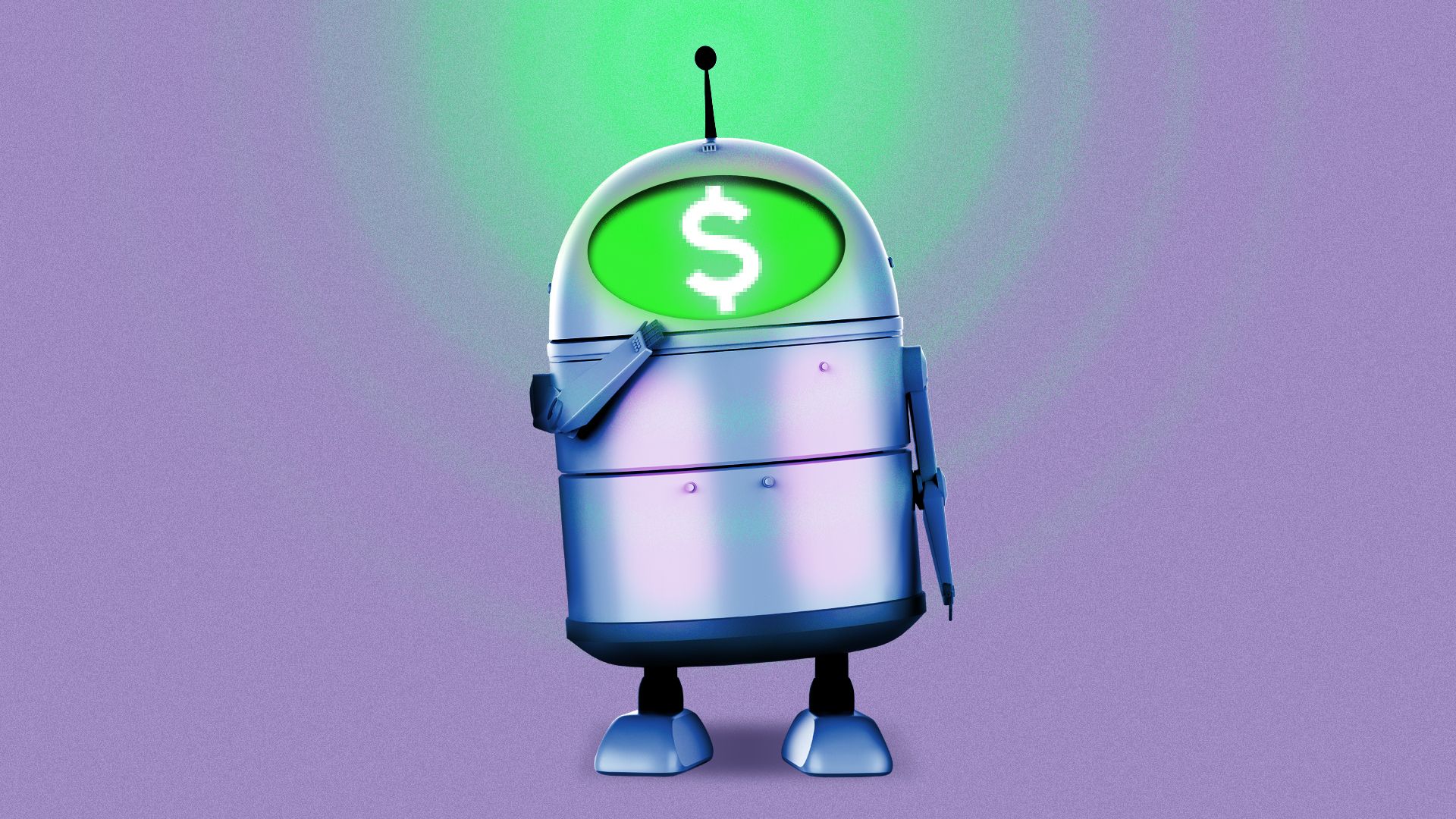
AI tools have become shockingly good at carrying out much of the work produced by the economic profession — from the most elite halls of academia to think tanks, government agencies, consultancies, research shops and humble newsroom economics teams.
The big picture: This fact raises important — and, we confess, unnerving — questions about the role of humans in making sense of the economy.
- It's hard to escape the sense that we are in an uncomfortable moment in which the capabilities of AI models to do economic research and analysis have far outpaced our understanding of how best to deploy and oversee it.
- "Every conversation I have with a colleague at Harvard or a think tanker in D.C. is some combination of excitement, angst and confusion," Furman tells Axios.
State of play: Furman, who was the top White House economist under President Obama and now co-teaches Harvard's signature introductory economics course, has created a site called Econvitals, which goes live today, with a wide array of data and analysis.
- No single component of the site is earth-shatteringly new or cutting-edge. But neither is most economic analysis.
- What is stunning is that this is a site that a busy professor produced in his spare time, with a little help from research assistants and a lot of help from Claude (with some cross-checking by OpenAI's Codex).
- It offers, for free, the kind of expansive number-crunching and analysis that used to require thousands of person-hours and a seven-figure budget to produce.
Zoom in: For example, the site includes AI analysis of speeches by Federal Reserve officials that shows how hawkish or dovish each official is, and how their views have evolved over time.
- Not rocket science, certainly — but it is the kind of work Fed watchers at banks and consulting shops have done in more artisanal fashion for ages, in service to paying clients.
- It produces email notes summarizing interesting economic research and analyzing the latest data that may not have quite the human touch of the better email tip sheets (ahem), but are accurate, efficient and free.
- Furman shows samples of economic papers crafted entirely by AI, using short prompts. It's not the kind of output that would get a young economist tenure, but they are remarkably competent given how little human effort was involved.
What they're saying: "In terms of factual reliability, they are at this stage, if done properly, better than any human," Furman says. "If you have fact-checking agents, what comes out is completely reliable. The hallucination idea is a combination of outdated or incompetent usage."
Yes, but: "It is still not as creative and exciting as the best humans," he adds, and is better at replacing routine analysis than generating groundbreaking ideas. That said, the definition of what counts as routine keeps changing with each new version of the frontier models.
- "It's really exciting how much AI can do for us and empower all of us," he said. "Partly it's scary. I find it is able to do a lot of what I do better than I do it, and I thought I was decently good at what I did, and that can be dispiriting at times."
- "My hope for economic research is we don't see increase in quantity but in quality. Any idiot could write 300 papers a year now, and they'd be fine and factually correct. But I'm hoping that people don't write more papers but write better papers," he said.
The intrigue: Furman says that if he were running the White House Council of Economic Advisers today, he would heavily rely on AI for analysis.
- "If I were running the CEA today and had a choice between 20 staff members who had a combination of current Ph.D.s and future Ph.D.s versus the AI systems that we have today, I would somewhat regretfully and sadly choose the AI systems," he said.
- "You would need people at CEA to interact in meetings, to talk to the press, talk to Congress. There's a lot of things only humans can do, but that was a fraction of what we did at CEA. For the bigger fraction of it, at this point I think machines are faster and more reliable than humans."
The bottom line: So what does Furman tell the undergraduates he teaches, particularly those who aspire to research or shape economic policy?
- "I think people need to figure out how they can have value add and can do something distinctive and unique. Repackaging and reinterpreting data and numbers is not that unique and exciting compared to other things people can do."
2. Pre-election economic doldrums


One of the final snapshots of how Americans feel about the economy before voters head to the polls in the midterm elections shows a nation still deeply frustrated by the cost of living.
By the numbers: The University of Michigan's consumer sentiment index registered 48 in October, virtually unchanged from September's 48.1 and revised higher from a preliminary reading of 46.3.
- That initial estimate was the second-lowest in the survey's history, behind the all-time low hit in May.
- Even after the upward revision, sentiment remains 10% below its level this time last year.
Zoom in: Beneath the flat headline reading, consumers grew more pessimistic about current economic conditions, with that index falling more than 4 points to 46.7.
- Buying conditions for durable goods plunged 18% amid high prices and rising borrowing costs — accounting for the entire decline in consumers' assessment of current economic conditions.
- "Purchasing power continues to dominate consumer views of the economy," Joanne Hsu, director of the survey, said in the release.
- But consumers' outlook for the future improved, with the expectations sub-index rising 2.5 points to 48.8.
The intrigue: Separate data released alongside the index showed that the share of Republicans citing high prices as a drag on their finances has surged roughly 50 percentage points since January, a much larger increase than among Democrats or independents.
- The increase was also especially pronounced among consumers with little or no stock wealth.
The bottom line: Americans don't feel much worse about the economy than they did last month. But their already bleak outlook isn't improving, either.
- The Conference Board releases its October consumer confidence survey Tuesday — one week before Election Day.
Sign up for Axios Macro