Axios Macro

May 29, 2024

The Biden administration is laying out how it is using U.S. economic powers to advance its foreign policy goals. Comments from a top official yesterday offer the best preview yet of what that would look like in a second Biden term. More below.
- Plus, breaking news on the newly appointed president of the Cleveland Fed.
Today's newsletter, edited by Kate Marino and copy edited by Katie Lewis, is 822 words, a 3-minute read.
1 big thing: Biden's economic statecraft playbook

Illustration: Shoshana Gordon/Axios
A top White House official says the world needs to understand how and when the U.S. will weaponize its economic might in global conflict — and offered a sneak peek of what such a doctrine might look like if President Biden wins another term.
Why it matters: Global policymakers warn we may be in the most fragile era in decades, with persistent conflict among world superpowers. There is already evidence that these battles will be waged with economic tools that could spill out across the globe.
What they're saying: "Barring catastrophic miscalculation, direct confrontations are more likely to play out in the theater of economics and technology than direct military conflict," Daleep Singh, who recently returned to the White House for a second stint as deputy national security adviser for international economics, said yesterday during a panel at the Brookings Institution.
- "If that is correct, we have a lot of work to do to communicate to the world the guiding principles that constrain our use of these tools, that give them more comfort that we're not going to fire these weapons in a way that is arbitrary or reflexive," Singh said.
- "It has taken hundreds of years to craft and refine a doctrine for the use of military force and it's still evolving today," Singh said. "We've just started the process of thinking about how to design a doctrine of economic statecraft."
The big picture: Singh, who led the New York Fed's markets group at the height of the pandemic, said the Biden administration needs a "code of conduct" for economic tools, like sanctions — including when to use them and how to avoid global spillover effects.
- Singh said the U.S. should have more balance in its economic statecraft, meaning offering countries tools that would have "mutual economic gain," like debt relief, infrastructure financing and trade agreements.
- If that is the case, it would debunk the narrative that the nation solely designs "tools of economic pain."
- "There a number of moonshots that, if we had a chance to keep working beyond November, we should consider," Singh said, including more frequently guaranteeing the debt of struggling, poorer nations.
The intrigue: Singh's pitch, which he also made earlier this year, came at an event that questioned whether U.S. economic actions had done enough to weaken the Russian economy as its war with Ukraine intensifies.
- "It would feel good to have maximal economic shock-and-awe all the time, spillover effects and second-order consequences be damned," but it wouldn't be the best strategy, Singh said.
Reality check: Biden is trailing former President Trump in major national and swing state polls, and prediction markets now put higher odds on a Trump victory than on Biden's re-election.
What to watch: In Italy last week, Treasury Secretary Janet Yellen and G7 allies said there was "progress" in discussions about whether and how to use Russian assets stored away at financial institutions, including in the U.S., to help Ukraine.
- Singh, in a speech before the panel, said using these assets to plug Ukraine's financing gaps would "deliver an unambiguous signal that we will not fatigue."
2. Goldman Sachs vet to lead Cleveland Fed
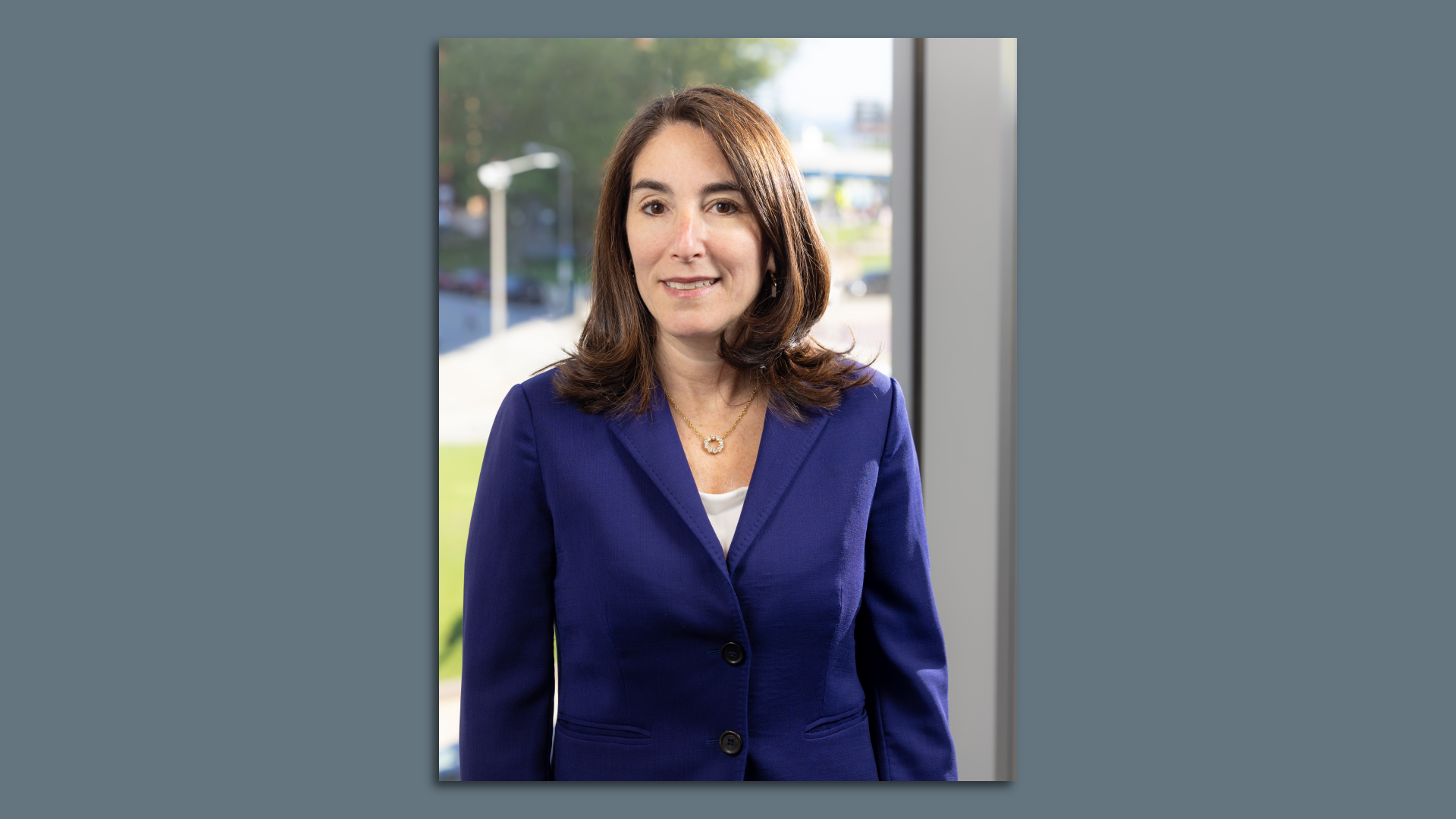
Incoming Cleveland Fed president Beth M. Hammack. Credit: Federal Reserve Bank of Cleveland
The Federal Reserve Bank of Cleveland's next president will be Beth M. Hammack, a former longtime executive at Goldman Sachs, the bank said today.
Driving the news: Hammack replaces Loretta Mester, who faces mandatory retirement at the end of June, at the helm of one of the 12 reserve banks across the U.S. that help set and implement monetary policy.
- Hammack, 52, was most recently co-head of global financing at Goldman and a member of the management committee. She joined the firm in 1993 as an analyst and has also served as global treasurer and head of short-term macro trading, among other roles.
- She was viewed as a potential future chief financial officer of Goldman before her departure earlier this year, one of several high-profile defections.
- Hammack has also chaired the Treasury Borrowing Advisory Committee and participated in other groups through which the government consults the private sector about its debt issuance and financial market developments.
She starts Aug. 21 and will have a vote on monetary policy for the remainder of this year and, under the Fed's rotation system, again in 2026.
What they're saying: "Beth always approached the business with a deep intellect," former Goldman CFO Stephen Scherr told Bloomberg in an article about her departure from the firm earlier this year.
- "She was among a small number of people who worked both as a trader and a banker. There is no doubt that her success at the firm was a product of that versatility."
State of play: The appointment completes an unusual two-year period in which six of the 12 reserve bank presidencies will have turned over (Boston, Dallas, Chicago, Kansas City, St. Louis and now Cleveland).
- Three of the jobs have gone to leaders with deep financial markets expertise: Hammack, the Dallas Fed's Lorie Logan, and the St. Louis Fed's Alberto Musalem.
Sign up for Axios Macro

Stay ahead of the curve on the most important economic developments with reporting and analysis on how business, policy, and markets collide.