Axios Macro
May 14, 2025


Today, we look at a key strategy negotiators used in the House tax cut and spending bill to cram in as many of the president's and business interests' priorities as they could — making many of them temporary.
- The downside: It could also limit any growth boost and create a series of future fiscal cliffs. More below.
Today's newsletter, edited by Ben Berkowitz and copy edited by Katie Lewis, is 811 word, a 3-minute read.
1 big thing: The "big, beautiful bill" trade-off

The signature legislation of this Congress has crossed a key hurdle. But the choices and trade-offs involved in major tax legislation could limit its pro-growth effects.
The big picture: The current version of the "one big, beautiful bill," as President Trump calls it, which moved through the House Ways and Means Committee overnight, would sunset several key provisions after a few years.
- That helps make the legislative arithmetic pencil out, but implies new uncertainty over how the tax code will evolve in the coming years, including on some provisions that business groups view as key to spurring growth.
- Modeling from the Tax Foundation, a right-leaning think tank, finds that positive effects on GDP from the House legislation would be roughly offset by the negative impact from new tariffs.
State of play: We've described before the complex tug-of-war inherent in the efforts to extend Trump's signature 2017 tax cuts.
- Congressional Republicans are looking to encourage growth by incentivizing business investment, while also honoring Trump's campaign trail promises for new tax breaks for individuals, while also cutting spending and limiting the damage to the U.S. fiscal picture.
- One way to finesse those trade-offs is to offer tax breaks that expire in a few years, which lessens their fiscal hit — on paper, at least. Yet it sets up a "fiscal cliff" down the road, as a future Congress must either extend them or allow them to expire, creating a tax hike.
- It's a technique used by both parties, including in Trump's 2017 Tax Cuts and Jobs Act and the Biden administration's American Rescue Plan, which temporarily expanded the child tax credit.
Zoom in: In the version of the big, beautiful bill that's moving through the House, several key provisions that have been high priorities for business lobbyists are included — but only from 2025 to 2029.
- That includes "bonus depreciation" allowing businesses to deduct the full value of investments upfront, immediate expensing of R&D spending, and changing limitations on interest that businesses can deduct.
- A provision that allows immediate expensing of factories and other structures applies only to those for which construction begins before the end of 2028 and is completed by 2032.
By the numbers: The Tax Foundation's modeling finds that the legislation, all in, would increase long-run GDP by 0.6%.
- The group also models the economic impact of tariff policies. The most recent estimate on that side of the ledger is that the trade policies in place or set to be implemented soon will, if sustained, subtract 0.7% from GDP.
What they're saying: "The tariffs imposed and scheduled will counteract all the long-run economic benefit of the House tax bill," Erica York, the Tax Foundation's vice president of federal tax policy, tells Axios.
- "Unfortunately, the bill sunsets the most powerful provisions like bonus depreciation and undercutting the potential benefits and risking that the drag from tariffs and retaliation is the dominating effect on the economy in the long run," she adds.
2. The fiscal cliffs ahead
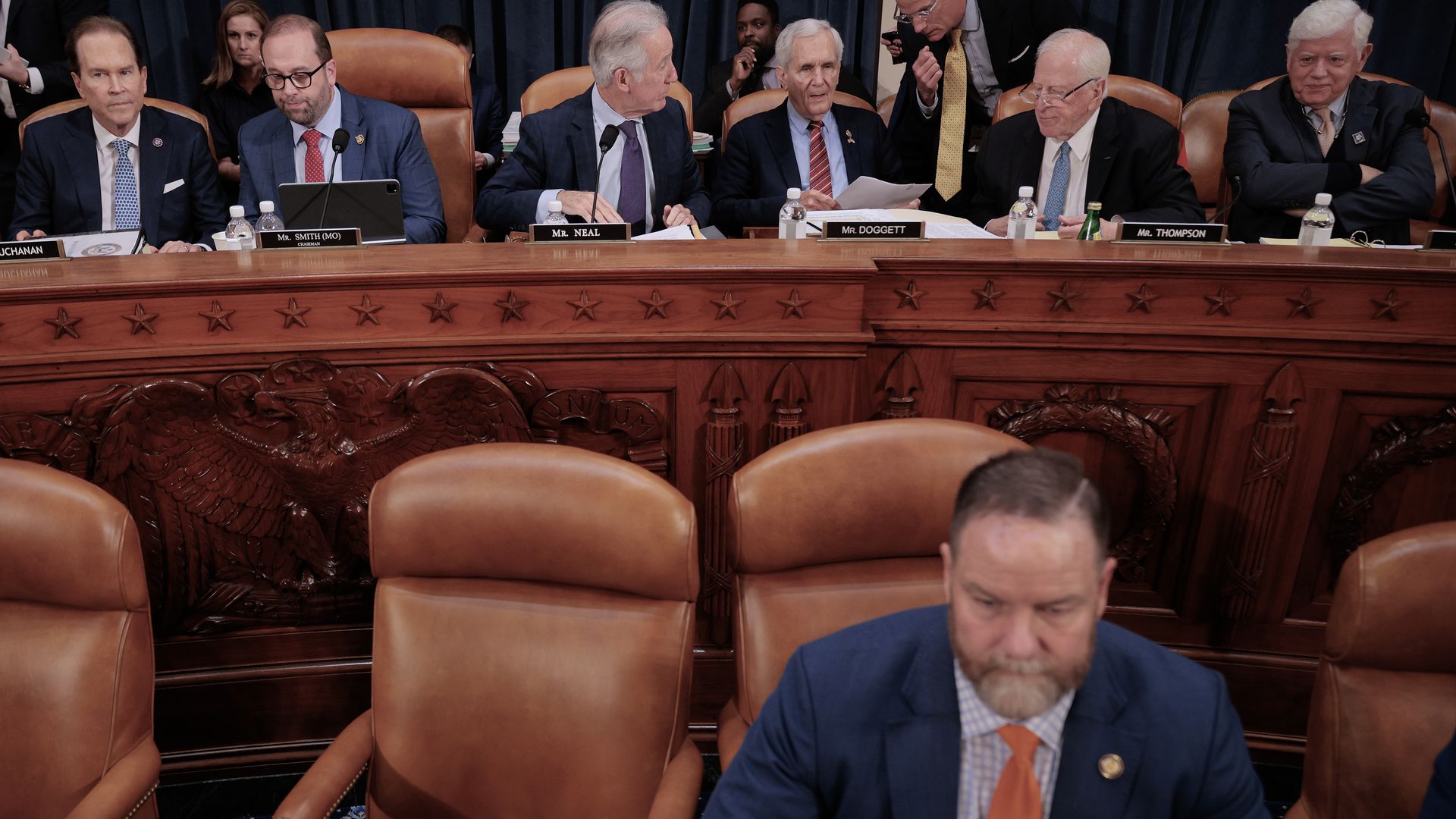
If the reconciliation bill makes it through the full House and Senate in something resembling its current form, it sets up a series of cliffs in the years ahead.
- Future Congresses can either extend the expiring tax provisions, widening already sky-high budget deficits, or allow them to expire, creating tax hikes on businesses and individual Americans alike.
Of note: The business provisions aren't the only ones that sunset. The same is true of key Trump campaign promises. The legislative compromise on these costly populist proposals was, in effect, to include them in the legislation but only temporarily.
- That includes not taxing tip income or overtime pay and making auto loan interest deductible — provisions that expire in 2028, the last full year of Trump's term.
Zoom out: That all implies very different fiscal implications for the legislation, depending on whether these and other provisions are extended when they expire.
- The Committee for a Responsible Federal Budget tabulates that the House legislation would increase deficits by $3.8 trillion over the next decade if the provisions expire, or $5.3 trillion if they are extended.
Yes, but: Other provisions in the bill are permanent — significantly, including making permanent the tax rates and brackets first implemented in the TCJA, a higher standard deduction, a higher cap on state and local tax deductions, and the $15 million estate tax exemption.
- For businesses, it makes a deduction on income from pass-through businesses permanent and increases it to 23% from 20%, a key small business priority.
Reality check: There is still a long way to go, and many policy disagreements among Republican factions to resolve, before anything is enacted. The full House and Senate would need to agree on a bill.
- "Investors should remember that the committee's bill is just the start of an intense process during which the legislation will change numerous times," said Brian Gardner, chief Washington policy strategist at Stifel, in a note.
Sign up for Axios Macro