Axios Macro

December 01, 2025

White House economic adviser Kevin Hassett is looking more and more likely to be President Trump's pick to lead the Federal Reserve. We parse the possibility below.
- Plus, some follow-ups on the looming Social Security funding crisis we wrote about over the weekend.
👀 Situational awareness: Bank of Japan Governor Kazuo Ueda gave a clear signal that an interest rate hike is on the way this month, which sent the yen rallying and global stocks selling off. 🇯🇵
Today's newsletter, edited by Ben Berkowitz and copy edited by Katie Lewis, is 913 words, a 3.5-minute read.
1 big thing: Everything's coming up Hassett
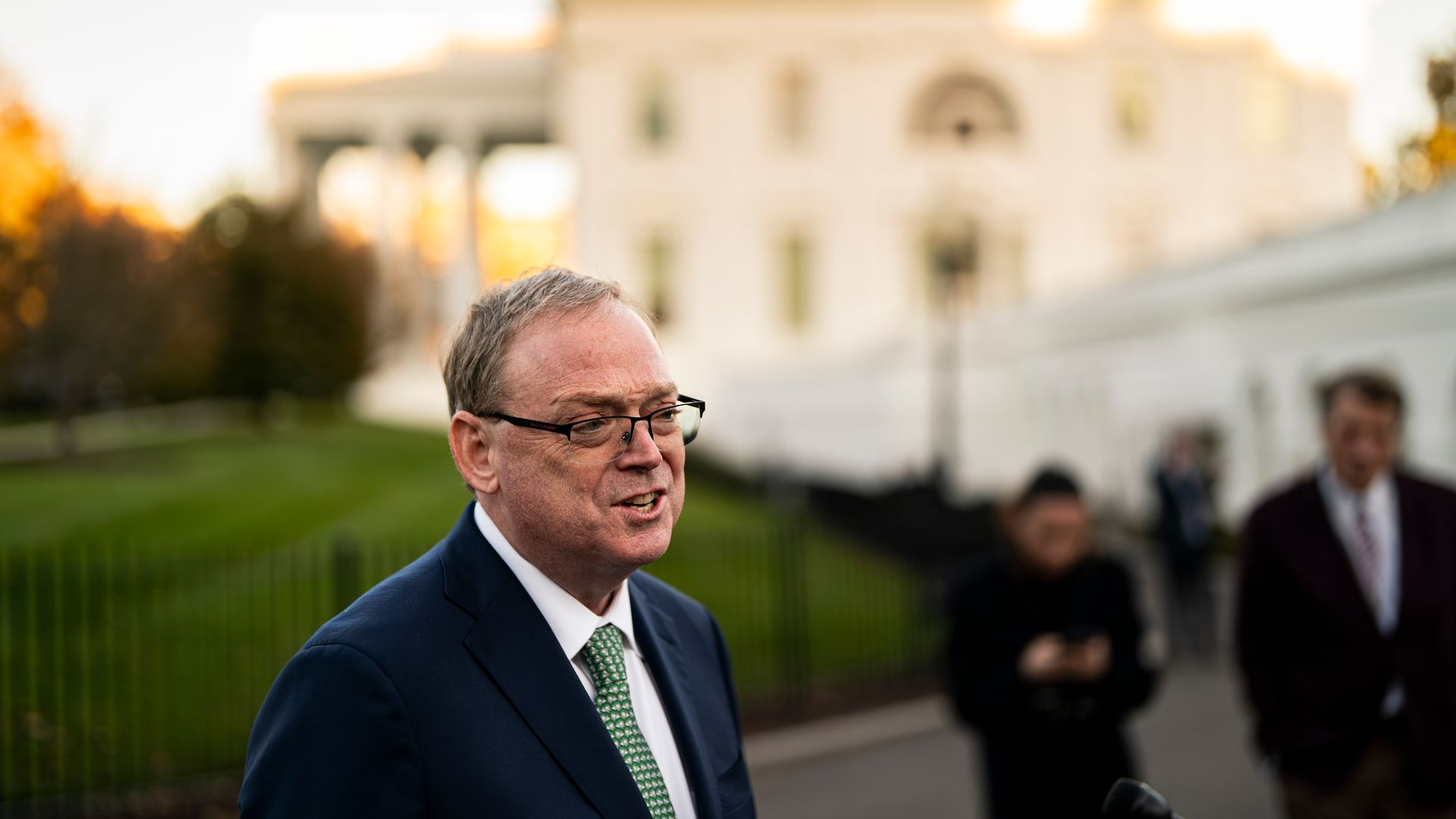
Odds are building that Trump will appoint Hassett as the next Fed chair.
Why it matters: The pick would put a Trump loyalist in the world's most powerful economic policymaking seat, allowing him to push for the much lower interest rates the White House has been demanding.
- Hassett would have closer ties to the sitting president than any Fed chair appointee has had in modern times.
Driving the news: Over the weekend, Trump told reporters that he had decided who will succeed Fed chair Jerome Powell. "I know who I am going to pick, yeah," Trump told reporters on Air Force One. "We'll be announcing it."
- That comes days after a report from Bloomberg that Hassett is seen within the administration as the frontrunner.
- Odds that Trump will nominate Hassett as Fed chair have soared to 80% on Kalshi — up from 40% before the Bloomberg report. The betting site has had Hassett in the lead for months, though never by such a huge margin.
- Kevin Warsh is a distant second, with a 13% chance that the former Fed governor will be nominated.
Between the lines: The Bloomberg report had four co-authors who are deeply sourced at the Treasury Department and White House, and the Trump administration did not push back against the report in any meaningful way.
- Trump's comment that he has already decided also seems to point to Hassett, the lone candidate who's on the White House staff and therefore frequently gets face time with the president.
- Treasury Secretary Scott Bessent, who is leading the interview process, has said that Trump would announce his decision before Christmas — but Trump's comments suggest it is not the wide-open contest that the formal interview process would imply.
- That means that any fallout from the Fed's likely fractured interest rate decision next week might soon be overshadowed by Trump's pick to lead the central bank.
The intrigue: Hassett himself gently pushed back on Bloomberg's reporting in an interview yesterday.
- "I am not sure that Bloomberg has the story right," Hassett told "Face the Nation," before adding that he was "honored" to be among those under consideration.
- But Hassett acknowledged that financial markets had a "very, very positive" response to the reporting, noting a drop in Treasury yields that reflected expectations of lower interest rates in the months ahead.
- "I think that the American people could expect President Trump to pick somebody who's going to help them have cheaper car loans and easier access to mortgages at lower rates — and that's what we saw in the market response to the rumor about me," Hassett said.
Yes, but: Even if the Fed cuts short-term rates, lower long-term rates — those that determine borrowing costs for homes, autos and more — are no sure thing if financial markets believe the Fed is simply doing Trump's bidding, with little regard for inflation.
- That perception might be difficult for a pick like Hassett to shake, given his relationships with the White House.
2. Your Social Security questions, answered
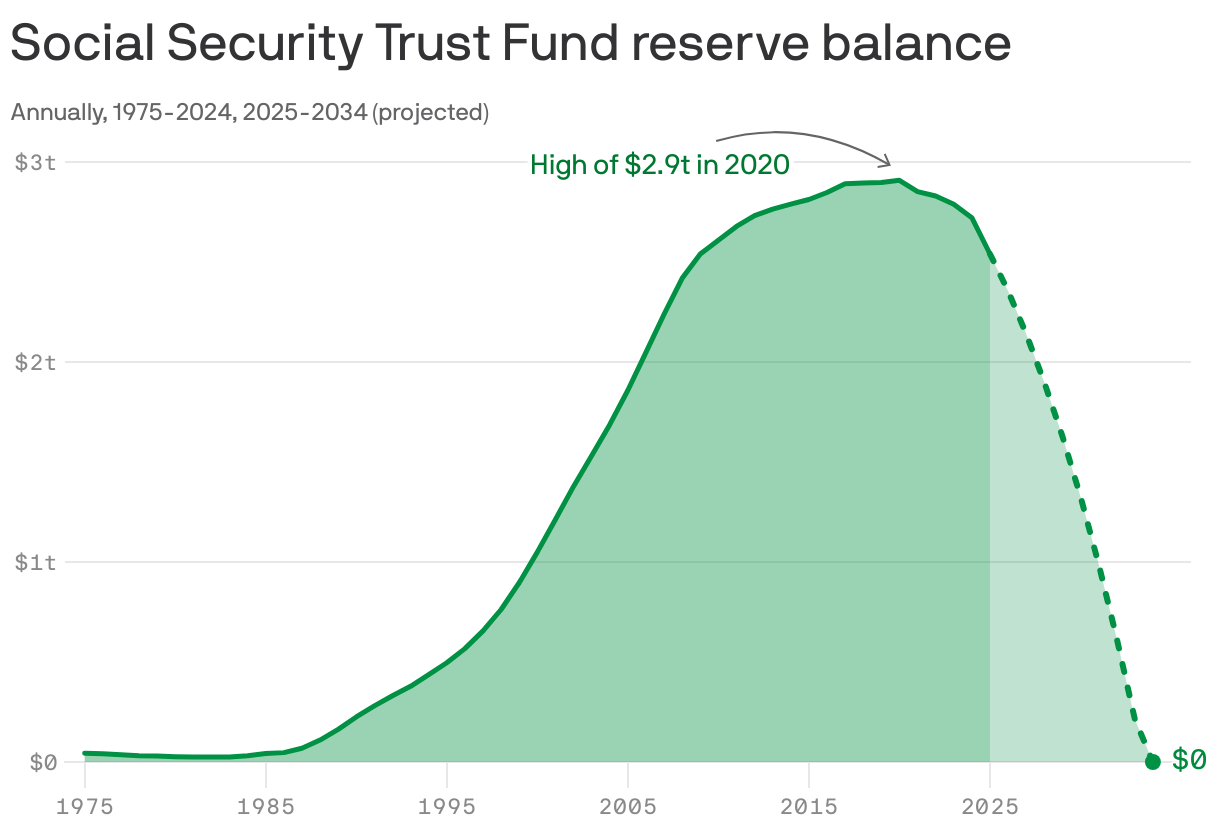
As part of an Axios Deep Dive on the future of retirement, we wrote over the weekend about the looming funding gap for Social Security, which will require Congressional action to avert automatic benefit cuts in 2034.
- We received lots of emails from readers. Here are two oft-made questions and points.
1) Could investing the Social Security Trust Fund in higher-returning assets solve the problem?
- Several readers observed that money is being left on the table because the retirement program's funds are invested only in ultra-safe U.S. Treasury securities.
- They have a point. There's a reason state government pensions, as well as many other nations' public retirement plans, invest in stocks, corporate bonds, real estate, and other assets with higher returns.
Yes, but: It's probably too late for the U.S. government to adopt the same strategy. The Social Security Trust Fund is in a rapid drawdown phase, on track to decline from around $2.5 trillion currently to zero in 2033.
- Even if there were a political consensus to invest the funds in higher-returning assets (which there very much isn't), there's not enough time for the benefits of compounding to bail the program out.
Of note: Opposition to investing the trust fund in private assets has historically been bipartisan. Many Democrats opposed anything that would involve putting the program's finances at risk, while Republicans were wary of the federal government becoming a major owner of private firms.
2) How does immigration policy affect this?
- Many unauthorized immigrants pay into the Social Security program but aren't eligible to receive benefits. That means large-scale deportations stand to make the program's financial problems worse.
- The Penn-Wharton Budget Model estimates that last year, $24 billion in revenue flowed into Social Security from payroll taxes on unauthorized immigrants, with no corresponding benefit obligations due to them later.
- The Penn-Wharton team projects that the trust fund will run out of money two quarters sooner than currently anticipated under three different policies involving large-scale deportations.
Sign up for Axios Macro