Axios Macro

March 12, 2025


That sound you heard at 8:30am ET was a collective sigh of relief. Inflation slowed more than expected in February, though no one knows whether that will last as tariffs start to bite.
- More below, plus how Canada's central bank is reacting to the onset of a trade war. 🇨🇦
ICYMI: That post-election glow has faded, with top CEOs a notch less optimistic about the economy than they were three months ago, per our exclusive first look at the Business Roundtable's quarterly outlook survey.
- CEOs have pulled back hiring plans, in particular. Go deeper.
Today's newsletter, edited by Ben Berkowitz and copy edited by Katie Lewis, is 752 words, a 3-minute read.
1 big thing: Inflation's surprising cooldown, for now
February finally brought a bit of inflation relief following a stretch of elevated readings — a sign that the underlying backdrop for the economy is one of diminishing price pressures.
Why it matters: Disinflation returned in February after months of data that appeared to show progress had stalled. But that relief could be fleeting if widening trade wars reignite higher costs.
- This is the conundrum for keeping tabs on the Trump economy. Even quick-turn monthly data like the Consumer Price Index looks stale against a rapidly shifting policy backdrop.
- Still, further tariffs will happen with inflation on a downward trajectory — which beats the alternative.
State of play: The data "confirms that despite the idiosyncratic price bumpiness, economic fundamentals were and remain disinflationary," EY-Parthenon chief economist Gregory Daco wrote in a note.
- "Looking ahead, however, tariffs, confusion around trade policy and tighter immigration policy mean the risks to inflation are [tilted] to the upside."
By the numbers: The Consumer Price Index rose 0.2% last month, after a 0.5% spike in January. Over the 12 months through February, CPI rose 2.8% — the lowest since November, when inflation data started to heat up.
- Core CPI, excluding food and energy, rose at a similar monthly pace, with a 3.1% gain in the year ending in February. That was the lowest since the inflation shock took off nearly four years ago.
Between the lines: There was a sliver of good news for consumers in the supermarket. Grocery prices overall were flat last month, especially if you shop anywhere other than the egg aisle.
- Overall food at home prices were flat, and dairy, fruit, and vegetable prices were down.
- That was enough to offset another huge jump in egg prices, which were up 10% in February. Over the past year, prices are up 59%.
The big picture: The Federal Reserve wants proof that inflation is moving "sustainably" lower, as chair Jerome Powell said in a speech last week.
- Inflation remains too high for the Fed's comfort. Over the last three months, core inflation is up an annualized 3.6%, down a bit from 3.8% in January, but well above its 2% target.
What to watch: The Fed is assessing how White House policy uncertainty will ripple across the economy — including President Trump's stop-and-start tariff policies that have roiled the stock market and prompted economic growth fears.
- The Fed will likely keep rates on hold when its two-day policy meeting concludes next week.
- Bond yields spiked following the CPI data, and futures now put nearly 60% odds on a rate cut in June, per CME's FedWatch tool, up slightly from yesterday. Odds of at least two rate cuts by year-end top 88%.
What they're saying: "Today's CPI report shows inflation is declining and the economy is moving in the right direction under President Trump," said White House press secretary Karoline Leavitt in a statement.
2. "New crisis" for Canada's economy
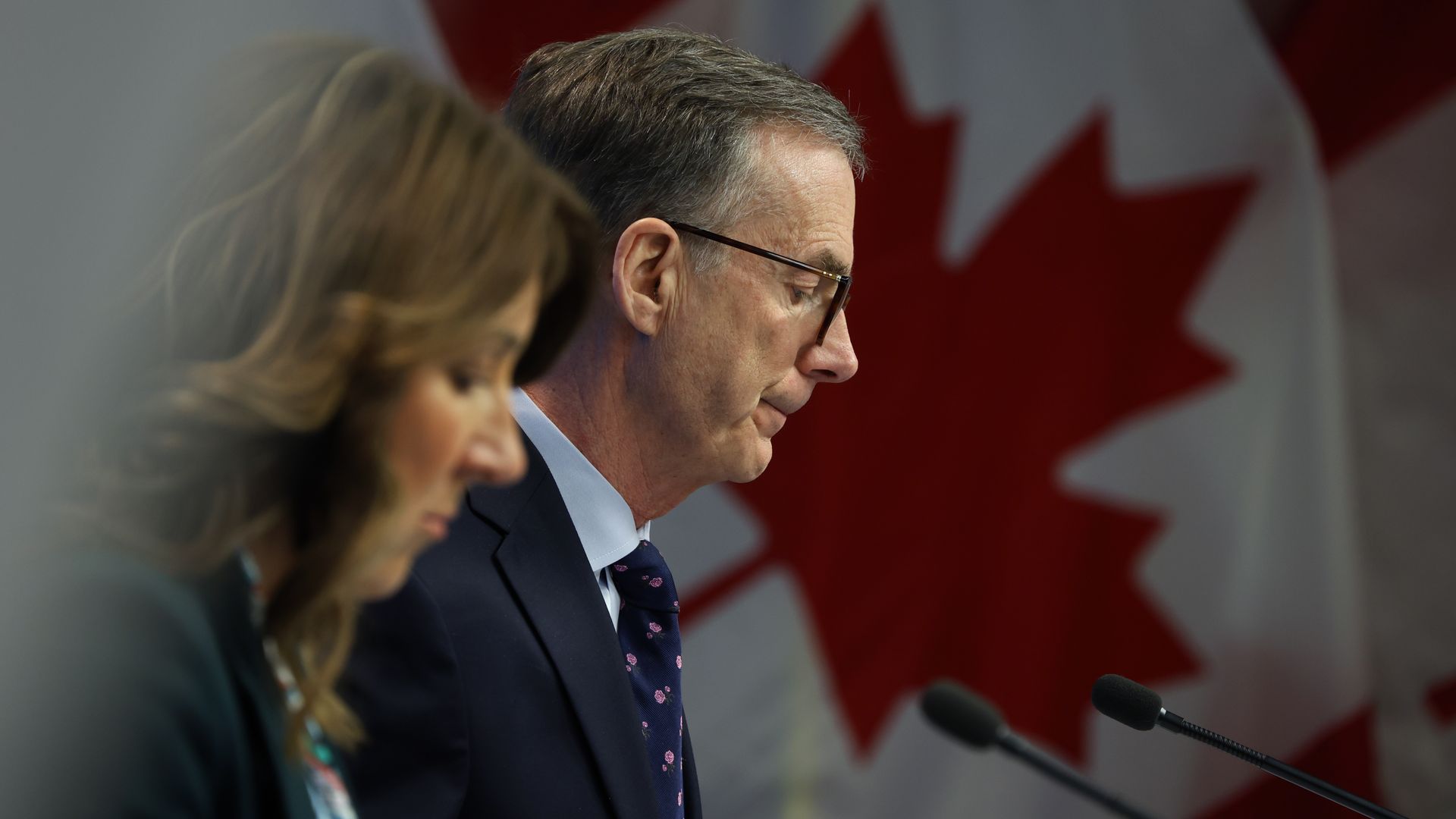
What a week for central bankers in Canada to hold a policy meeting.
- The interest rate decision was expected: a quarter-point reduction, the seventh straight cut. The backdrop was not.
Why it matters: The decision came just after reports that the U.S.-Canada trade war will heat up, with potential retaliatory tariffs on U.S. goods — a response to the steel and aluminum import taxes imposed by Trump.
- The trade war and heightened tensions between the two nations make the Bank of Canada's economic outlook murkier than ever.
- "We ended 2024 on a solid economic footing. But we're now facing a new crisis," governor Tiff Macklem said in a news conference.
What they're saying: "Monetary policy cannot offset the impacts of a trade war. What it can and must do is ensure that higher prices do not lead to ongoing inflation," the Bank of Canada said in its policy statement, released this morning.
- The central bank notes that trade tensions and tariffs will "likely slow the pace of economic activity and increase inflationary pressures in Canada," though it warns the economy is subject to "more-than-usual uncertainty because of the rapidly evolving policy landscape."
The big picture: Inflation has been more well-behaved, and growth weaker, in Canada relative to the U.S. That has allowed officials to try to cushion the economy from any tariff-imposed slowdown.
Zoom in: "Recent surveys suggest a sharp drop in consumer confidence and a slowdown in business spending as companies postpone or cancel investments," the bank's policy statement says.
- "[T]he pervasive uncertainty created by continuously changing US tariff threats is restraining consumers' spending intentions and businesses' plans to hire and invest."
Sign up for Axios Macro