Axios Macro
July 15, 2026


Today, we look at the massive-stakes, big-picture debate that many of the world's top economists are having over the direction and implications of AI, brought on by a short joint statement published this week.
- Plus, day two of Federal Reserve chairman Kevin Warsh on Capitol Hill.
Today's newsletter, edited by Jeffrey Cane and copy edited by Katie Lewis, is 958 words, a 3.5-minute read.
1 big thing: Top economists' AI warning

A new statement signed by hundreds of prominent economists shows how some leading thinkers see the opportunities and risks of artificial intelligence. The debate it has triggered sheds light on perhaps the most crucial economic question of our age.
The big picture: AI — and the positive and negative disruptions it will cause — is emerging as a seismic question for the economic future.
- That part, everybody can agree on. Less settled is how society should grapple with that fact.
Driving the news: The statement, titled "We Must Act Now," was organized by Stanford's Erik Brynjolfsson and other leading economists studying AI. It was published earlier this week with more than 200 signatories, including 16 Nobel laureates. It is now approaching 2,000 signatories.
- They include figures identified with the political left (Paul Krugman) and right (Niall Ferguson, Tyler Cowen), as well as both technologists (Reid Hoffman, Eric Schmidt) and people with experience in policymaking (Jason Furman, Gita Gopinath, Gina Raimondo).
Here's the short statement, in its entirety:
- "AI may become radically more powerful over the next 10 years.
- This could drive an unprecedented transformation of our economy, larger than the Industrial Revolution, but unfolding over a vastly shorter time frame. It could bring risks, including large-scale job displacement, as well as opportunities such as major gains in living standards.
- Economists, policymakers and technology leaders must act now to understand the economics of transformative AI and to build the incentives, guardrails, and institutions needed to steer AI in a direction that complements humans and benefits society."
Between the lines: The organizers were able to get such broad agreement by keeping the statement tight and vague. Some of the pushback they have received points to the crucial unresolved questions as the U.S. and countries around the world grapple with an AI-infused future.
- The counterargument is that the potential of AI to improve living standards is so great that if governments try to act preemptively to head off unknown risks, they risk blocking transformative benefits to humanity.
What they're saying: "You must be kidding," wrote John Cochrane, at Stanford's Hoover Institution, on X. "AI might have big effects. It could have risks. So 'policymakers,' must 'act now,' before they have any idea what they're doing, to 'build the incentives, guardrails and institutions needed to steer AI in a direction that complements humans and benefits society?'"
- "Boy I'm glad no self-appointed 'policy maker' decided to 'steer' the development of the steam engine. The ones who 'steered' nuclear power destroyed it. Preemptive dirigisme is killing tech in Europe."
The other side: "Good AI needs to complement humans, and this requires a redirection, because the current focus on [artificial general intelligence] is, in all but name, an agenda for displacing humans from meaningful work," said MIT's Daron Acemoglu, who signed the statement, on X.
- "That's why steering AI must be a first priority," he added. "I'm happy that many thought leaders have agreed."
The bottom line: Can the pro-humanity benefits of AI be enjoyed while policymakers work to prevent its less desirable side effects? That is the debate that the most prominent names in global economics are having.
2. Warsh, day two
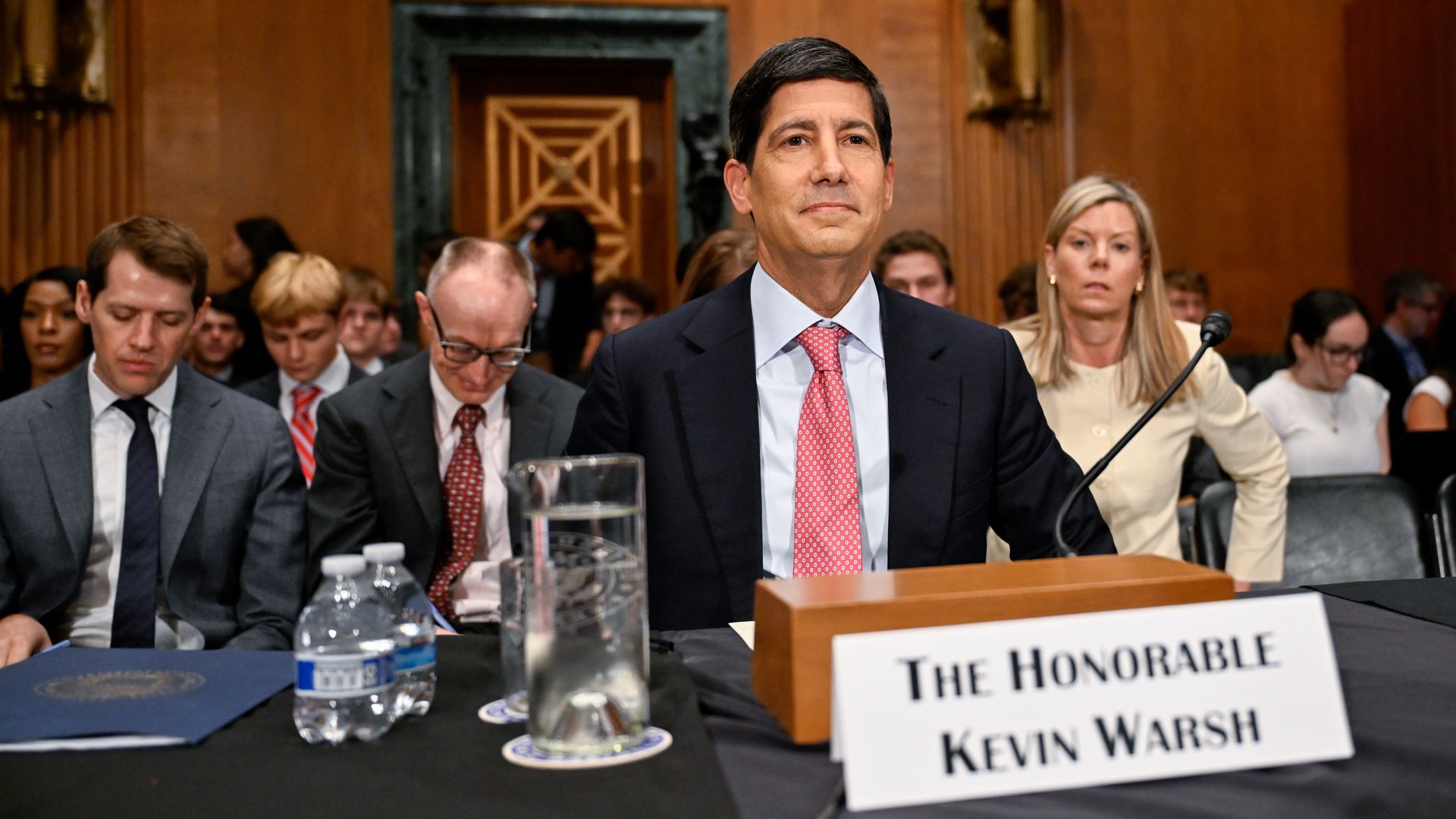
As this newsletter sends, Warsh is testifying on Capitol Hill for the second day, this time before the Senate Banking Committee.
- The combination of a few comments he made in yesterday's hearing before the House and good June inflation data now in hand suggests a rate increase is unlikely at the Fed's meeting in two weeks, while its policy stance the remainder of the year is quite uncertain.
Driving the news: The Labor Department this morning released a favorable reading on the Producer Price Index, showing the overall index fell 0.3% in June, while a core index excluding food, energy and trade services was up a modest 0.1%.
- It came on the heels of a similarly disinflationary Consumer Price Index report yesterday.
State of play: The data has diminished the market odds of any interest rate increases this year, and made the market-priced odds of a rate hike at the Fed policy meeting concluding July 29 remote.
- While Warsh has sought to avoid giving away much about the central bank's planned actions, a comment he made late in yesterday's hearing supports the idea that no policy adjustment is imminent.
- "Over the coming period, I'm going to ask our colleagues to have a good family fight about the extent and timing in which we would need to deploy those [policy tools] to deliver on the promise" of price stability.
Between the lines: That remark came late in a three-hour hearing, when Warsh was surely tired and more prone to diverge from his prepared talking point.
- But it sure doesn't sound like a central banker who has made a decision on what he wants to do and is poised to pull the trigger anytime soon.
Of note: While Warsh welcomed the favorable June inflation data, he tamped down any suggestion it offers an all-clear on the price stability front.
- Regarding the PPI data, he said this morning that "any central bank would be happy to have the data going in the right direction."
- "My view is these are all imperfect measures of the state of underlying inflation," he said, and that a Fed task force will look at how economic data agencies "might think about how they could do a better job in an evolving economy."
Sign up for Axios Macro