Axios Macro
November 04, 2025


Today, we unpack the metaphor that is dividing the Federal Reserve in this time of shutdown-induced data fog.
- Plus, the latest Fedspeak, including what Neil heard from one top policymaker at an event yesterday.
Today's newsletter, edited by Ben Berkowitz and copy edited by Katie Lewis, is 801 words, a 3-minute read.
1 big thing: The fog of metaphor
What should you do if you're driving down the road and dense fog emerges? Slow down? Continue? Pull over and stop?
The big picture: That is the core of a disagreement between Fed leaders who want to proceed with further interest rate cuts and those who think it's better to wait and see what the data reveals once the government reopens.
- It's a conceptual question contributing to differing views on whether the Fed should cut interest rates next month.
Yes, but: There is danger in monetary policy by metaphor, and it's not clear whether the absence of government data should in and of itself change the path of policy.
- That's particularly true when the limited available evidence points to an economy that's evolving about how everybody expected pre-shutdown.
State of play: Chair Jerome Powell discussed the possibility that the data fog could — emphasis on could — imply more reluctance to make a policy move.
- "If you ask me, could [the absence of data] affect the December meeting?" Powell said last week in his news conference. "I'm not saying it's going to, but, yeah, you could imagine that."
- "What do you do if you're driving in the fog? You slow down," he said. "I don't know how that's going to play into things. ... But there's a possibility that it would make sense to be more cautious about moving. ... I'm not committing to that; I'm just saying it's certainly a possibility that you would say, 'We really can't see, so let's slow down.'"
The other side: Hogwash, say some policymakers. "This fog story has just got to stop," Fed governor Christopher Waller said Friday on Fox Business.
- "The fog might tell you to slow down. It doesn't tell you to pull over to the side of the road. You still have to go. You may want to be careful, but it doesn't mean to stop, and that's the right thing to do with policies — to continue cutting."
Between the lines: The committee's hawkish wing was already wary of the rate-cutting campaign set in motion in September, and it looks to be deploying the absence of data as an argument for the more cautious policy it already favored due to still-high inflation.
The bottom line: As Krishna Guha and his colleagues at Evercore ISI put it in a note, "reasoning by metaphor depends on the metaphor."
- "If you are running to catch a football and are temporarily blindsided you keep running to where you thought the ball will land — slowing down means you will miss it."
- "If there are comparable risks on both sides, slowing down is as risky as speeding up," they wrote.
2. The view from two Fed officials
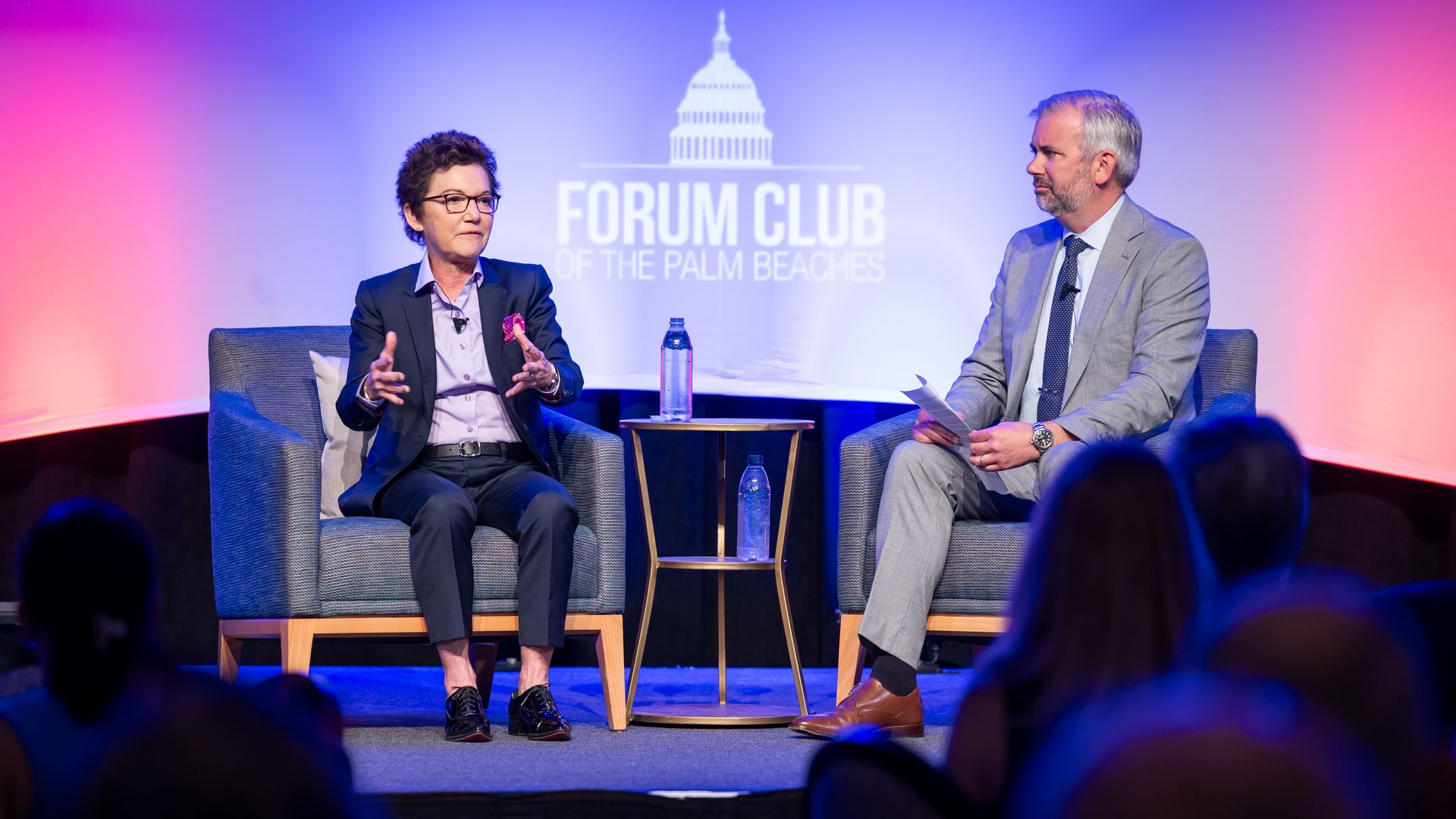
Two Fed officials weighed in yesterday on the lack of government data and whether it would be a hurdle for a decision in December.
What they're saying: "I don't see us as having so little information that we can't make a good decision," San Francisco Fed president Mary Daly told Neil at the Forum Club of the Palm Beaches in Florida.
- "What I see is we have less information than we're accustomed to and we have to work harder to get the information we need," Daly added.
Daly described three pillars of data: the indicators collected by the government; those compiled by the private sector; and nationwide anecdotes gathered by Fed officials through conversations with businesses.
- "Only one pillar is being challenged right now," Daly said.
- "Hopefully, it will open up and we'll get that information. ... But right now, you can learn a lot by looking around," she said.
The intrigue: Fed governor Lisa Cook said yesterday that the Fed has looked to private sector data to help inform decisions, including during the pandemic, when it turned to nontraditional indicators like reservation data from OpenTable.
- Cook suggested the lack of government data does not mean policymakers could not still make a potential rate cut decision: "December is a live event," she told Brookings' David Wessel.
Yes, but: "I think as the shutdown goes on, it will become more difficult," Cook said, noting private sector indicators are often benchmarked to government data.
Of note: It was Cook's first appearance since President Trump attempted to fire her from the Fed.
What to watch: Neither official was explicit about how they will vote in roughly six weeks.
- "The question is, do we need to do further adjustments to further risk manage, or is it a good time to take a breather and actually collect more information?" Daly told Neil.
Sign up for Axios Macro