Axios Macro

April 07, 2026

Today, we look at a provocative white paper from OpenAI that takes the prospect of AI-induced labor market disruption — and the policy responses it might demand — seriously.
- Plus, the latest reading on how the war in Iran is affecting Americans' inflation expectations.
Today's newsletter, edited by Jeffrey Cane and copy edited by Katie Lewis, is 894 words, a 3.5-minute read.
1 big thing: New AI doom scenario proposal
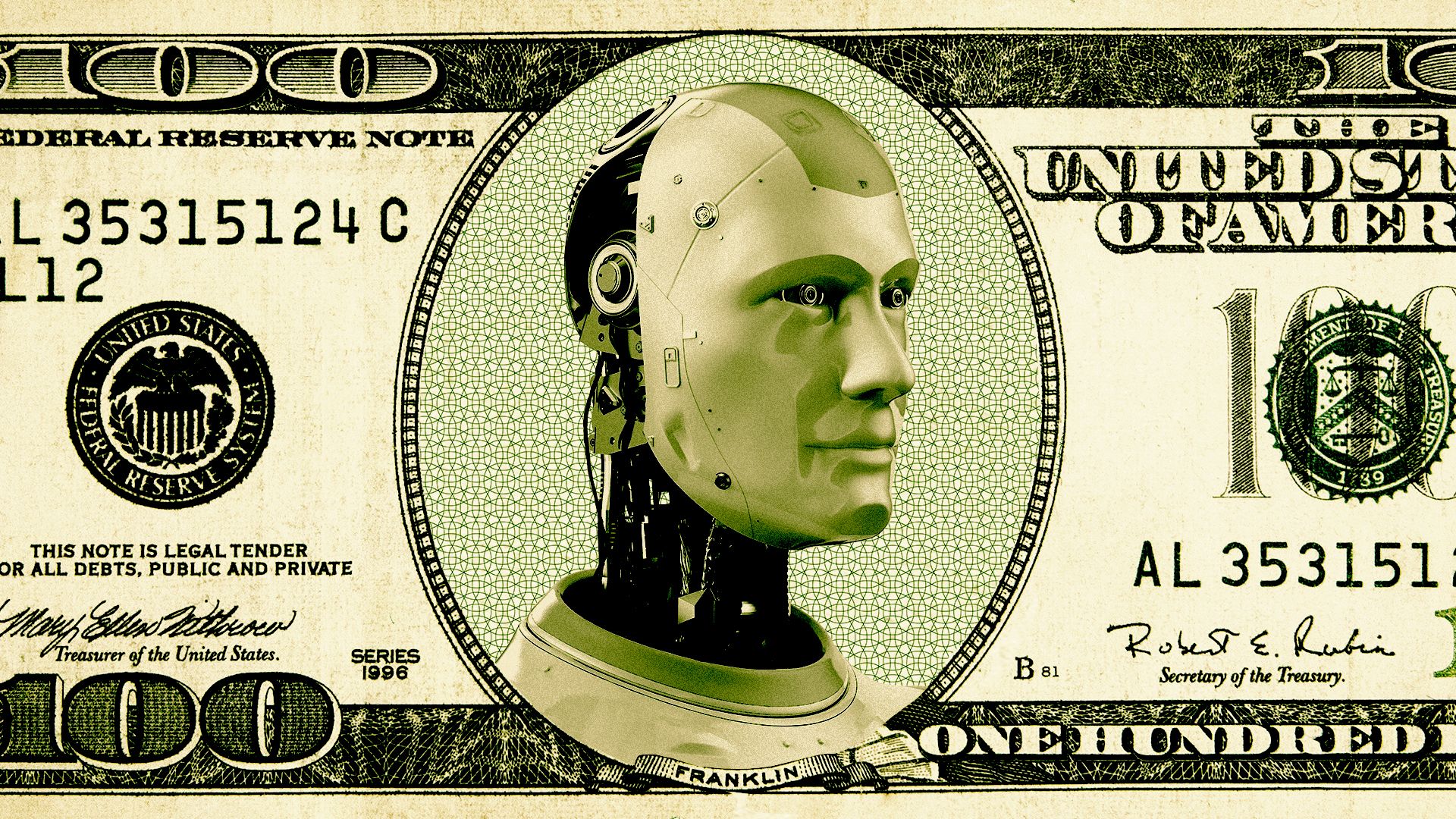
OpenAI has a new plan for how policy might adapt to a world of massive economic disruption. It's a fascinating window into how builders of AI view the likely economic and political fallouts of their technology.
The big picture: The 13-page document released yesterday seeks to lay down a marker for the kinds of policy shifts that might help AI advances create broad prosperity, rather than a divided society with a handful of AI-turbocharged elites and a mass underclass.
- Many of the proposals in "Industrial Policy for the Intelligence Age" are outside the zone of political plausibility right now — and some will seem familiar to readers of white papers from left-of-center think tanks.
- These ideas would become viable only if the disruption from AI is so severe as to profoundly scramble U.S. political coalitions.
Catch up quick: As Mike Allen and Jim VandeHei report, the proposals amount to a policy response to AI akin to the Progressive Era and New Deal policies that smoothed the rough edges off industrial capitalism.
- The paper explores steps to broaden AI's benefits, including creating a national wealth fund, shifting more of the tax burden onto capital instead of labor, and bolstering the social safety net.
- "We want to put these things into the conversation," OpenAI CEO Sam Altman told Mike and Jim. "Some will be good. Some will be bad. But ... we do feel a sense of urgency."
The intrigue: At a time when Sen. Bernie Sanders (I-Vt.) has become perhaps the leading congressional antagonist of the AI industry, many of the ideas are distinctly Sanders-coded.
- Conversely, many would be anathema to the Republican Party and even many centrists.
Zoom in: For example, the conservative movement's central economic policy goal since President Ronald Reagan has been to reduce taxes on capital, seeing it as the pathway to unleash more investment and thus higher growth.
- To that end, the top tax rate on capital gains is 20% (versus 37% for labor income), and a signature accomplishment of the 2017 Trump tax legislation was reducing the corporate income tax rate to 21%, from 35%.
- The OpenAI paper envisions a world where labor income is under stress as machines take over much of the work humans currently do, with the returns going to holders of capital.
- In effect, it would invert the tax code when the problem is not too little productivity growth, but too much of it for comfort.
What they're saying: "This could erode the tax base that funds programs like Social Security, Medicaid," and more, putting them at risk, the document says. "Tax policy should adapt to ensure these systems remain durable," it argues.
- "Policymakers could rebalance the tax base by increasing reliance on capital-based revenues — such as higher taxes on capital gains at the top, corporate income, or targeted measures on sustained AI-driven returns" and to explore "taxes related to automated labor," the paper says.
Yes, but: When extreme economic developments materialize, the rigid U.S. policymaking process has shown a surprising ability to unite and leap into action, overcoming partisan divides.
- The passages of the CARES Act and other pandemic relief measures in 2020 were the most recent example. The same could be said of the Troubled Asset Relief Program bank bailout legislation of 2008.
The bottom line: The ideas advanced by OpenAI might not be on the legislative radar today or tomorrow, but they represent an early effort to take policy implications of large-scale economic disruption seriously.
2. War's inflation jitters


American consumers are bracing for an Iran war inflation jolt, though they don't anticipate the effects will linger.
- That's the upshot of the New York Federal Reserve Bank's March Survey of Consumer Expectations, the first to capture sentiment since the war began.
Why it matters: So far, that is more consistent with a one-time inflation surge than the alternative outcome that might alarm the Fed: signs of unmooring in long-run inflation expectations.
By the numbers: Median one-year inflation expectations jumped 0.4 percentage point, to 3.4%, last month, according to the New York Fed. It was driven by a surge in gas price expectations, to the highest level since March 2022, soon after Russia invaded Ukraine.
- Still, three-year expectations ticked up just 0.1 percentage point, to 3.1%, while five-year expectations held at 3%.
What to watch: Consumers see the labor market and their own financial situations worsening alongside higher inflation in the short-term.
- Americans feel worse about their finances now and don't expect things to improve, with the share of households anticipating a worse year ahead reaching its highest level since April 2025.
Zoom in: On average, consumers increased odds that the unemployment rate would be higher a year from now by 3.6 percentage points, pushing this measure to its highest since April 2025.
- They also saw greater odds of losing their job in the year ahead, but that measure remains below the past year's average.
One bright spot: Consumers anticipated that it would be a bit easier to find a new job if their current gig was lost.
Sign up for Axios Macro