Axios Macro
November 19, 2026


Today, we look at the macroeconomic — and political economy — implications of a major permitting reform bill that crossed a key procedural hurdle in the U.S. Senate this week.
- Plus, what the Federal Reserve minutes tell us about the (near-certain) rate hike on the way next month.
Today's newsletter, edited by George Moriarty and copy edited by Katie Lewis, is 950 words, a 3.5-minute read.
1 big thing: Permitting reform shows a pivot to the supply side

You can't solve a supply-side problem with a demand-side solution. This is the year that a bipartisan majority of Congress came to grips with that reality.
The big picture: The U.S. economy has been held back this decade by inadequate supplies of housing, energy and infrastructure. There's now surprising momentum on Capitol Hill to change that.
Driving the news: The Bipartisan American Affordability and Jobs Act, which reduces permitting burdens for a wide range of projects, passed a key procedural step in the Senate by a 65-31 vote yesterday.
- It follows an overwhelming bipartisan passage of the Road to Housing Act earlier this year, which aims to make it easier to build homes.
Zoom in: The permitting reform legislation reflects a delicate legislative balancing act.
- Most Republicans in the Senate supported it as a regulation-reducing action that will ease the way for more energy infrastructure.
- It has divided Democrats and environmental groups between those who see urgency in reducing red tape to enable more green energy infrastructure and those more inclined to defend the thicket of environmental and other protections that can bog projects down for years.
- Its prospects in the House — and thus to become law in the current lame-duck Congressional session — remain uncertain.
Between the lines: It's taken a long time, but the political system has gradually come to the recognition that the central problems of the U.S. economy in the 2020s boil down to inadequate supply.
- That's in contrast with the post-financial crisis economy of the 2010s, when the predominant problem was inadequate demand.
- Back then, interest rates and inflation were persistently too low, unemployment too high, and stimulus came with little obvious cost. Now, the U.S. faces the opposite dynamics — a reality Congress and the public are starting to catch up to.
Context: A letter supporting the permitting reform legislation, for example, was signed by a long list of former top officials, including Treasury secretaries from the last four administrations (Janet Yellen from President Biden, Steve Mnuchin from President Trump, Tim Geithner from President Obama, and Hank Paulson from President George W. Bush).
What they're saying: "We cannot build if we strangle ourselves with red tape," said Gina Raimondo, Biden's Commerce secretary, at a Fed conference this week. You want the prices of housing and manufacturing to go down, then you have to shrink the time."
- She adds that "these regulations are there for good purpose, but somewhere along the way we got overtorqued because if it takes seven years to put a shovel in the ground, that's a problem and that's expensive and that's bad for America and stands in the way of productivity."
Reality check: The political impulse to address affordability through demand-side measures — stimulus that pumps money into people's pockets — remains alive and well in some quarters.
- Trump promised $5,000 checks to American families if Republicans held Congress.
- Rep. Ro Khanna, a progressive who may run for president, this week called for $1,700 payments to American households to offset higher costs due to the Iran war.
Yes, but: Trump's checks idea only gathered 43%, per an Economist/YouGov poll, and obviously did not prevent a Republican wipeout in midterm elections.
The bottom line: Congress is at least starting to grapple with America's supply-constrained economy, even if the focus is not universal.
2. United on hikes, divided on pace
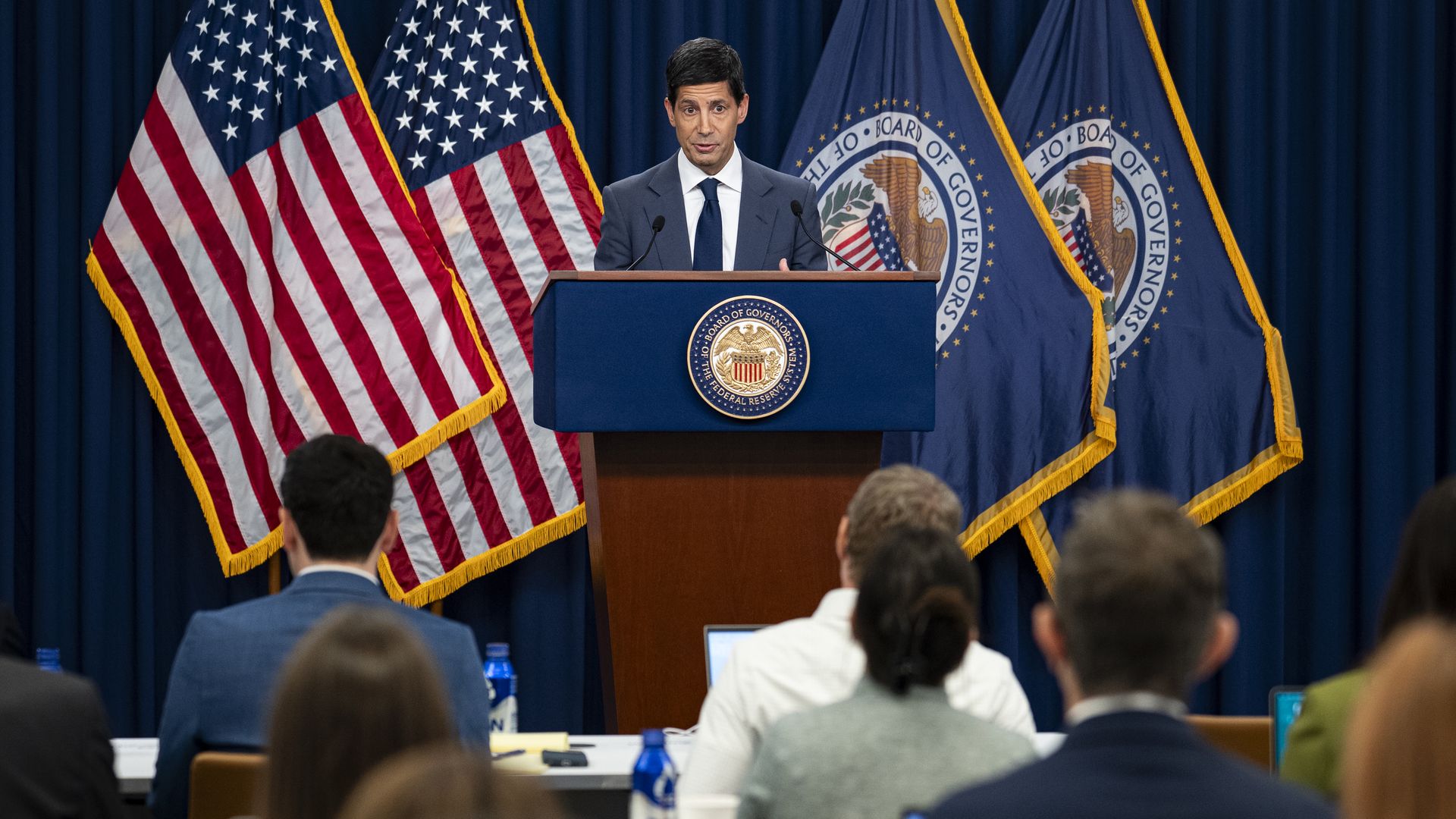
Yesterday, we noted that Fed officials broadly agree on the need for higher interest rates, even as they debate how quickly to raise them.
- Minutes from the Fed's October meeting suggest that was exactly the case.
Zoom in: "Almost all" policymakers expected further rate increases would be appropriate, broadly in line with their September projections.
- Some officials favored raising rates in October, arguing that inflation remained too high and monetary policy wasn't restrictive enough. A few warned that waiting could allow inflation to become entrenched or require more disruptive action later.
- But a few who favored raising rates were willing to accept a pause, provided markets understood that "further tightening was likely."
- "A couple of participants" suggested that an increase of more than a quarter percentage point "could warrant consideration ... if incoming inflation data were unfavorable."
- In other words, Fed governor Christopher Waller is not alone in his support for a potential half-percentage point hike next month.
The big picture: Most policymakers saw risks that inflation could prove higher than expected, even as they ultimately anticipate relief from energy prices, tariffs and AI-related investment.
- Many officials warned that the AI buildout was straining supplies and raising technology-related consumer prices, with some pressures spreading beyond industries directly involved in data center construction.
- A majority warned that higher costs could be passed through "more broadly and persistently" to consumer and business prices.
- Several officials also warned that the AI investment surge "could be excessive," leading to disappointing returns. A couple raised the possibility that it could be "crowding out other types of investment."
What to watch: Fed officials also discussed what could happen if enormous investments in AI failed to deliver the lofty returns investors expect.
- "Almost all" participants discussed the risks of disappointing AI investment returns. Most observed that AI-related debt had grown rapidly through "complex and opaque financing structures."
- Several officials also worried that bank supervisors might not fully capture banks' indirect exposure to those risks — including through credit lines to private credit funds and other financial institutions.
Sign up for Axios Macro