Axios Macro

May 19, 2023

1 big thing: The comeback of low interest rate era


This global economy in the 2020s may look much like the previous decade in one important way: The era of rock-bottom interest rates will return.
- That's the takeaway from research presented at a conference hosted by the Fed this morning. It has big implications for the ultimate level to which Fed officials will need to tighten policy to cool the economy.
Why it matters: Global policymakers have debated what pandemic-era shifts would mean for how central bankers would need to set policy in the long term.
- But despite those unprecedented disruptions, historically low rates that prevailed in years past will eventually make a comeback.
What they're saying: "There is no evidence that the era of very low natural rates of interest has ended," New York Fed president John Williams said in a speech this morning.
- Williams spoke at a research conference dedicated to Thomas Laubach, an influential economist and adviser to both Powell and Powell's predecessor Janet Yellen.
How it works: The "natural rate of interest" is the short-term rate that neither stimulates nor slows the economy. At this level, the economy is in balance, with stable employment and inflation.
- Economists call it r* —or r-star —which, if nothing else, makes the concept sound very fun.
- Following the 2008 financial crisis, economists largely accepted that r* had fallen significantly, introducing a sustained period of lower rates.
Where it stands: After a COVID-related hiatus that complicated these estimates, the New York Fed has started to publish again. The upshot is that r* looks broadly similar to pre-pandemic times — both in the U.S. and in other advanced economies.
- In essence, once inflation returns to target, the Fed might eventually shift rates back down to levels seen before COVID-19.
Between the lines: If r* had gone up over the past couple of years, that might have implied that the Fed needed extra hikes to cool off the economy and slow inflation. The tightness of monetary policy is the difference between the Fed funds rate and r*.
The bottom line: These estimates remain uncertain. But at least one powerful policymaker believes the low-rate era will eventually return.
2. How to fix the banking crisis
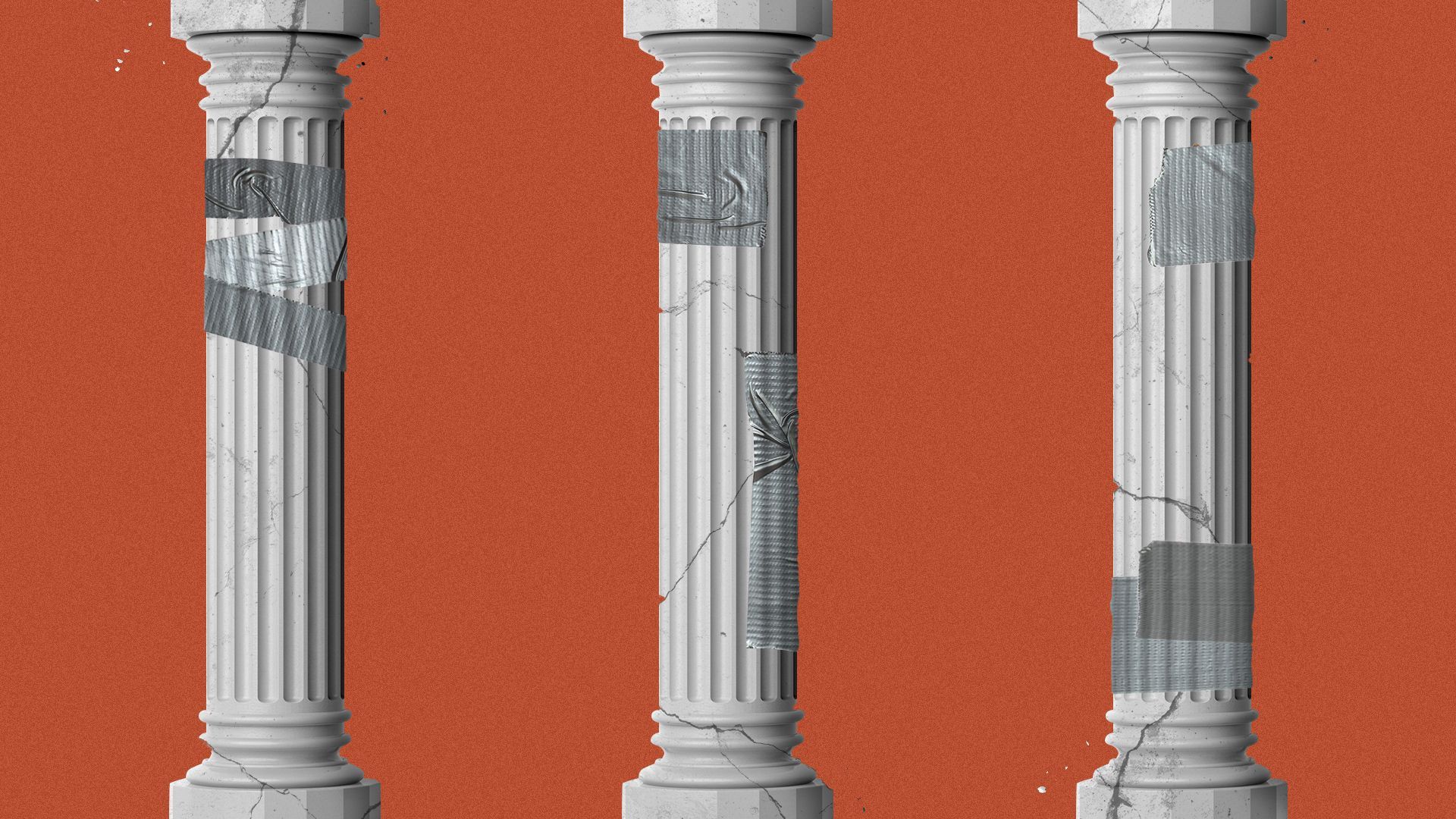
Illustration: Aïda Amer/Axios
Axios Macro

Stay ahead of the curve on the most important economic developments with reporting and analysis on how business, policy, and markets collide.