Axios Macro
June 27, 2025


On this summer Friday, we take you inside fresh data that speaks to the open question of the moment — whether inflation or an economic slowdown presents the bigger threat. More below.
- Plus, Federal Reserve leaders on why tariffs haven't led to meaningful inflation so far, and when rate cuts may be coming (hint: probably not in July).
Today's newsletter, edited by Ben Berkowitz and copy edited by Katie Lewis, is 741 words, a 3-minute read.
1 big thing: Some stag, little flation

Amid Stagflation Watch 2025, the latest data dump shows a little more stag-, but no real sign of -flation.
Why it matters: Mainstream economic forecasts see the trade war leading to both higher prices and more sluggish growth.
- In May spending and income data out this morning, there is more reason to worry about the latter than the former.
By the numbers: The Personal Consumption Expenditures price index targeted by the Fed rose a mere 0.1% in May, with the core gauge — excluding food and energy prices — up 0.2 %.
- While core inflation ticked up to 2.7% year-over-year in May, it has risen at only a 1.7% annualized pace over the last three months. That's the lowest since December 2023, and fully consistent with the Fed's 2% inflation target.
- Tariff-driven inflation remains the dog that won't bite.
State of play: The worrying aspects of the report weren't on the inflation side of the ledger, but in what Americans are earning and spending.
- Adjusted for inflation, consumer spending fell 0.3% after rising by 0.1% in April.
- Real disposable income declined by 0.7% last month, the first time since last August that inflation outstripped pay growth.
- The new numbers brought Atlanta Fed's GDPNow tracker down to an estimate of 2.9% GDP growth rate in Q2, from 3.4%.
What they're saying: "Consumers cut back on outlays last month, making fewer discretionary purchases as they grapple with softer labor market conditions, increased financial uncertainty and the onset of tariff-induced price increases," wrote EY-Parthenon senior economist Lydia Boussour in a note.
Reality check: The drops in consumption spending and incomes can be at least partly chalked up to one-off events, instead of outright evidence of an economic slowdown.
- Consumers are easing spending after a springtime splurge on all sorts of goods, aimed at getting ahead of tariff-related price increases. For instance, the biggest drag on spending was goods, autos in particular — a category that was a key beneficiary of spending earlier in the year.
- The drop in personal income came after a spike in recent months, including a 0.7% jump in April alone from a payout of social benefits for teachers, firefighters and police officers, related to recent legislation. Now it is wearing off.
Yes, but: It's clear that the economy had less momentum coming into the second quarter than initially believed.
- Revisions out yesterday showed the economy weakened at a faster pace in the first quarter, in part due to a slower rate of consumer spending.
- Economic policymakers were reassured that underlying measures of growth held up as tariff front-loading weighed on the headline figure.
- But those measures were also revised lower: Real final sales to private domestic purchasers, the sum of consumer spending and investment, rose 1.9% in the first quarter — down 0.6 percentage point from the previous estimate and well below the 3% figure first reported.
2. Kashkari on why tariffs haven't caused inflation
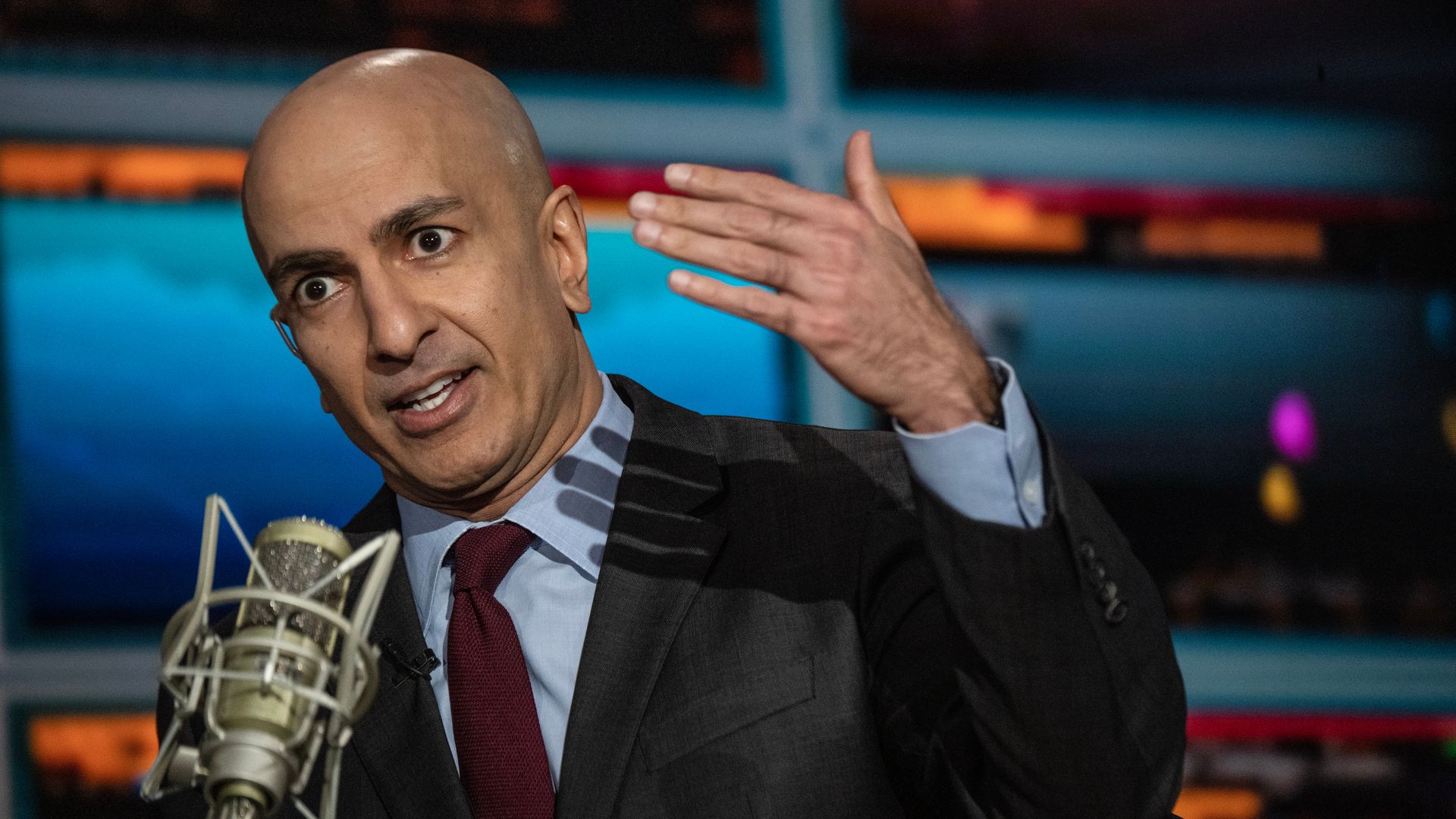
Minneapolis Fed president Neel Kashkari is out with a new essay this morning pondering how tariffs are likely to impact consumer prices — and why there's so little sign of it in the data so far.
The big picture: Kashkari found that businesses have largely not passed higher import costs on to customers, thanks to pre-tariff inventory buildup and the prospect that a wave of deals will make elevated tariffs temporary.
- He envisions cutting interest rates in September, "barring some surprising development before then," and then adapting policy further as data becomes available.
What they're saying: "Our outreach to industry contacts suggests many businesses are reluctant to pass on price increases to customers, especially if trade deals could soon emerge and reduce overall tariff rates," Kashkari wrote.
- "Why anger customers unnecessarily if tariff rates may soon come down?"
Yes, but: He added that if "tariff rates remain high because trade deals do not quickly emerge, those businesses suggest they will then have to pass on price increases to customers."
Of note: Boston Fed president Susan Collins said in an interview with Bloomberg published yesterday that she sees a July rate cut as premature.
- "We're only going to have really one more month of data before the July meeting," she said. "I expect to want to see more information than that."
Between the lines: Fed governors Christopher Waller and Michelle Bowman have talked up the possibility of a rate cut in late July, but it is clear they are outliers on the Fed's policy committee.
- Barring something surprising in the coming weeks, it's see-you-in-September for any interest rate relief.
Sign up for Axios Macro