Axios Macro

March 05, 2026


In today's very global edition of Macro, we look at how the Iran war's effects are starting to ripple through global supply chains. Plus, China lowers its growth target. 🇨🇳
Situational awareness: Initial jobless claims last week were flat, at a low 213,000, the Labor Department said, continued evidence of a stable job market.
- Separately, labor productivity rose at a 2.8% annual rate in the fourth quarter, continuing its impressive run. 📈
🤠 Heading to Austin? Axios House returns to SXSW March 13-14 with a dynamic lineup of events on technology, media, and culture, featuring star athlete and Reckitt Catalyst's "entrepreneur-in-residence" Serena Williams, Tory Burch Foundation president Tiffany Dufu, Jeni's Splendid Ice Creams founder Jeni Britton & more. RSVP here.
Today's newsletter, edited by Jeffrey Cane and copy edited by Katie Lewis, is 951 words, a 3.5-minute read.
1 big thing: Iran war's supply chain stressors
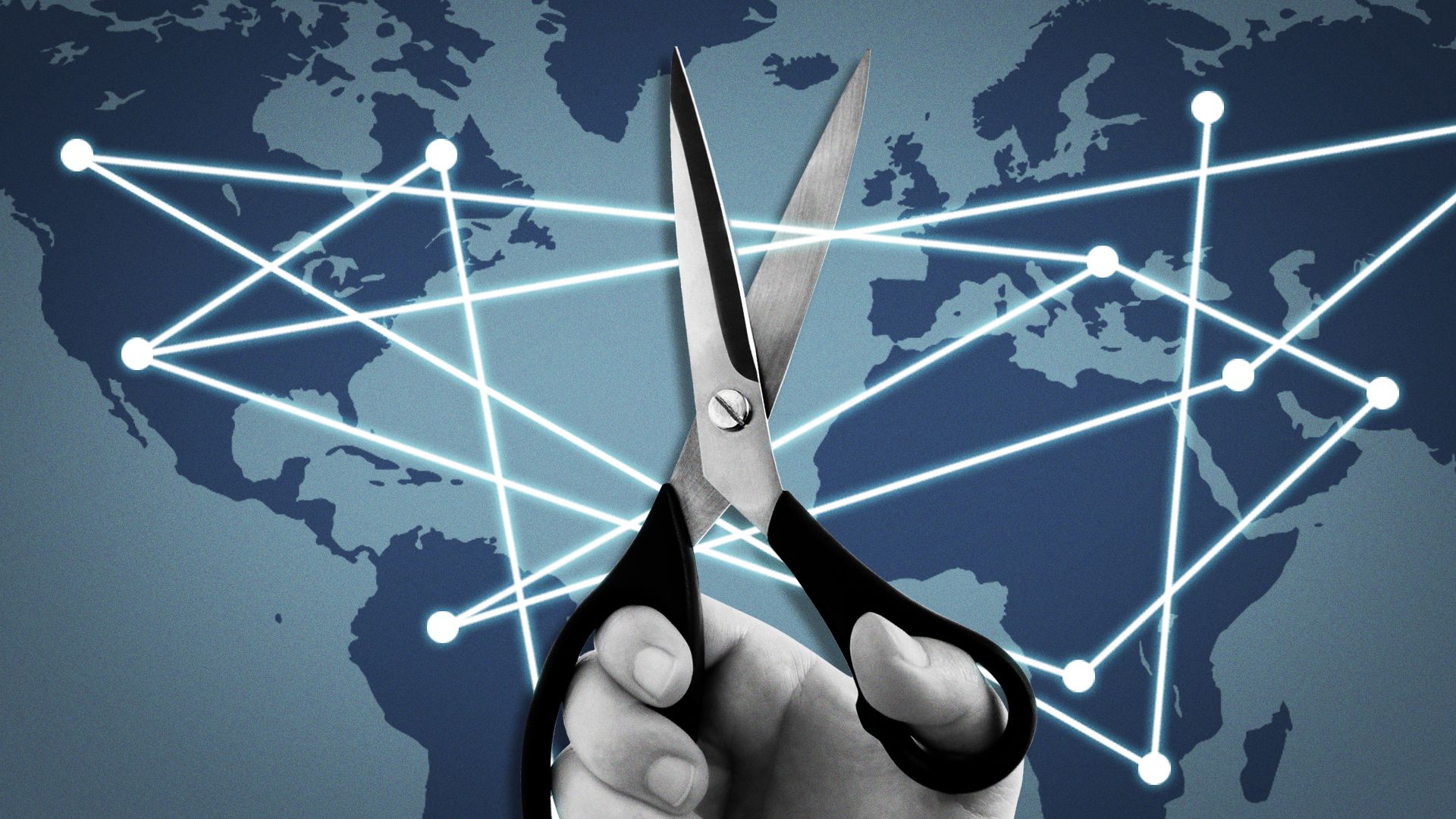
When war breaks out, micro issues have a way of quickly becoming macro issues. Specific blockages and bottlenecks tend to cause broad supply disruptions and price pressure.
- And so it is with the war in Iran.
Why it matters: Global supply chains have already been facing years of stress, first from the COVID-19 pandemic and then from the rise of tariffs and other trade barriers. The Middle East conflagration adds a new layer of stress.
- The good news for American consumers is that the biggest effects on the U.S. economy are likely to be second-order — but that's not the same as non-existent.
State of play: Iran has vowed to attack commercial ships seeking to pass through the Strait of Hormuz, the chokepoint that connects the Persian Gulf to the Indian Ocean, and thus Asia and Europe.
- It has also launched drone strikes that have disabled production of liquefied natural gas in Qatar for export, which reports say will take weeks to restart — thus limiting exports of an important fuel for electricity generation and industrial uses.
- On the other side of the Arabian Peninsula, container ship traffic through the Suez Canal connecting Asia and Europe has already been rerouted around Africa due to attacks by Houthi rebels. The Iran conflict threatens to prolong that disruption.
Between the lines: The direct hit to energy and other supplies falls most heavily outside the U.S., as reflected in stock prices being down much more in Europe, Japan and South Korea than in the U.S.
- Yet markets are global. Disrupted energy supplies to those nations are also likely to mean higher prices for Americans, as the worldwide price of oil and natural gas rises and the production of goods that the U.S. imports is impaired.
- That's all the more true when global supply chains are already under extreme strain.
What they're saying: "I liken global supply chain linkages to financial linkages around the world," Christopher Hodge, chief U.S. economist at Natixis CIB Americas, tells Axios.
- "You can see some direct links, but there are these indirect links you can't necessarily see or predict," says Hodge, a former U.S. Treasury and New York Fed staffer. "One small ripple in one place turns into a tidal wave elsewhere."
- "Shipping costs can ripple across the globe and put upward pressure on costs, even for goods that are not going through the Strait of Hormuz."
Reality check: As the last several years have shown, global supply chains can be surprisingly resilient even when under extreme stress.
- The U.S. government is using targeted actions to try to keep commerce flowing.
- And President Trump said yesterday that the U.S. will offer "political risk insurance and guarantees" for tankers in the Persian Gulf, as well as Navy escorts through the Strait of Hormuz.
Yes, but: That may help avoid disruption in the near term, but isn't a long-term solution for shipping if the Middle East remains a conflict zone.
The bottom line: "Global supply chains are a lot less resilient than they once were," Hodge says.
- "We've gone from a global supply chain that was trying to maximize efficiency to one that is a lot tighter, and I think there's going to be a more direct pass-through from energy shocks to consumer goods."
2. China's reality check
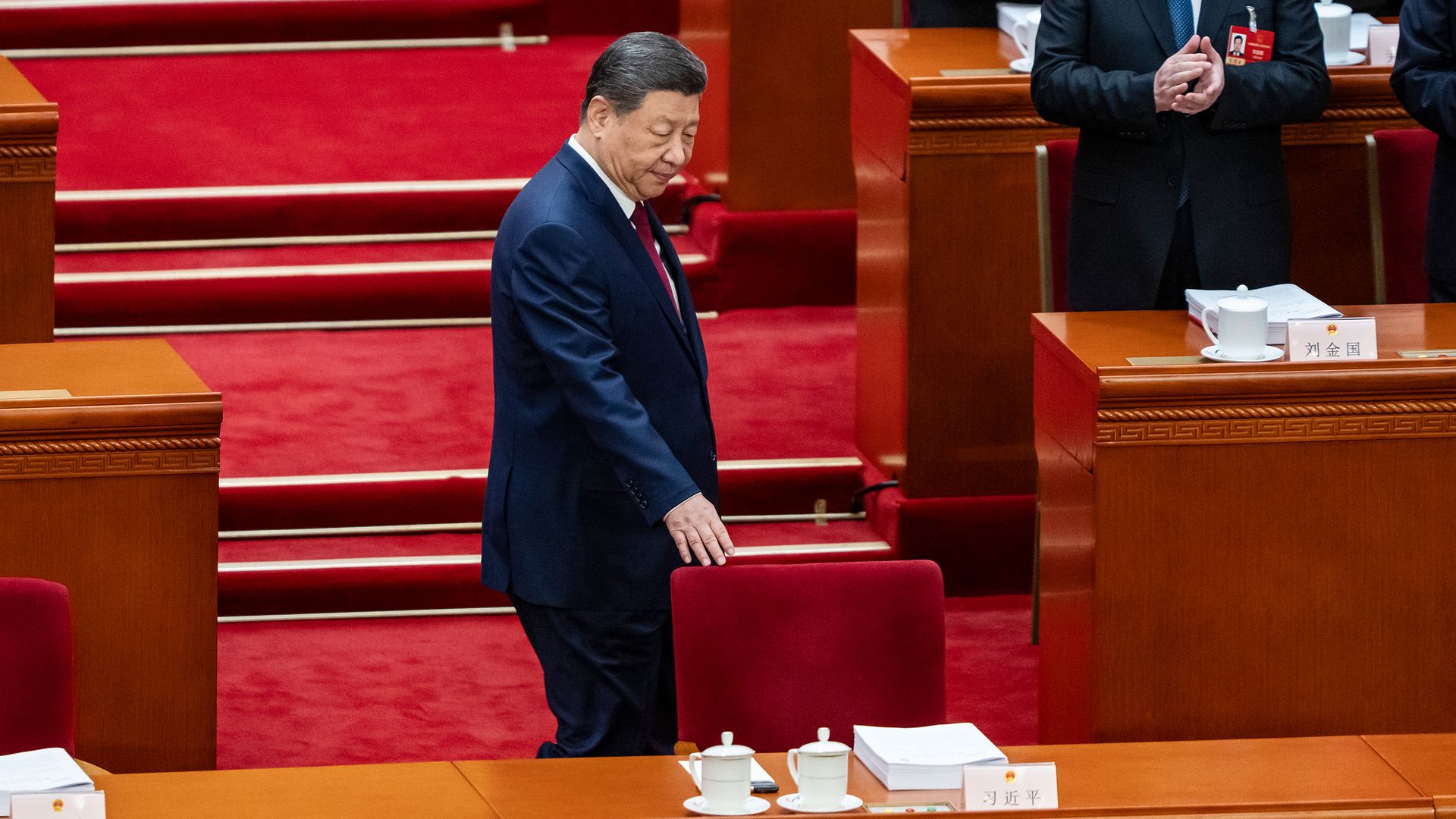
China is scaling back its growth ambitions: The nation set its lowest GDP target since the early 1990s.
Why it matters: It is a subtle but important effect of the enormous global economic shifts underway, many of which have been supercharged by Trump.
- For decades, China's growth machine ran on factories and foreign demand.
- Now, that engine is sputtering as protectionism upends global trade.
What they're saying: "In pole position [for China] is focusing on building a strong domestic market and boosting domestic demand," Lynn Song, China chief economist at ING, wrote in a note.
Driving the news: The Chinese government set a GDP growth target of 4.5%–5% for this year at an annual legislative gathering overnight — a downgrade from the roughly 5% the nation has aimed for since 2023.
- It is the weakest growth target since the 1990s, excluding 2020, when the nation did not set a goal due to the pandemic, according to CNBC.
- Top Chinese officials cited a "dramatically changing international trade and economic environment" weighing on the world's second-largest economy.
- The Middle East conflict is the new wild card. China is the world's largest oil importer.
What to watch: China posted a record trade surplus topping $1 trillion last year. But trading partners are growing more reluctant to absorb its exports.
- Even if some leaders strengthen trade ties to push back on the U.S., China still needs its consumers to spend more to counter chronic weak demand and a prolonged property sector slump.
- Yet China has shown little sign of using its fiscal firepower. Officials actually cut back a flagship consumer subsidy program and held fiscal targets steady, according to ING.
Sign up for Axios Macro