Axios Macro
February 28, 2024

1 big thing: Where economic distress is less
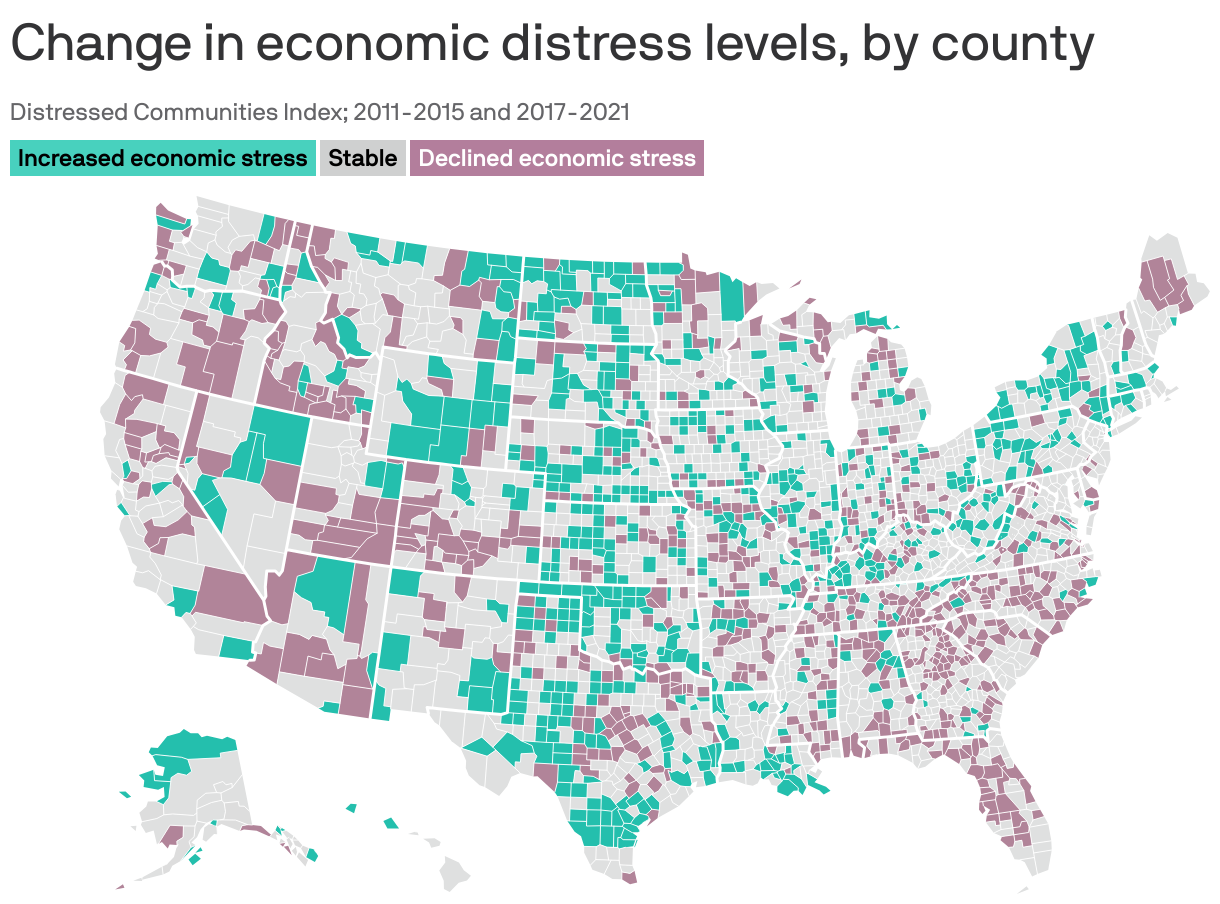
The Southeast has become distinctly more prosperous in just a few years — part of a shift in the geography of economic distress in the U.S., according to new data reported first by Axios.
Why it matters: The latest update of the Distressed Community Index, out today from the Economic Innovation Group, shows large parts of the country are becoming more vibrant.
- The share of people living in prosperous communities has risen most in the mountainous states of the West, most notably Idaho, Montana and Utah.
- By contrast, Louisiana, Oklahoma and New York showed significant growth in the share of the population living in distressed ZIP codes.
State of play: The index is based on seven factors, pulled from U.S. Census data, and aims to capture in a single number whether a given area is rich with economic opportunity or faltering.
- Those factors include the share of the adults who are not working, the housing vacancy rate and growth in the number of businesses.
- The latest edition is based on data from 2017 to 2021.
- Because the new data only goes through 2021, it wouldn't reflect any benefits to distressed areas of the Biden administration's large-scale investments in infrastructure, energy and semiconductor manufacturing, which were enacted in late 2021 and 2022.
Zoom in: In Georgia, for example, the share of residents living in prosperous ZIP codes increased by 6.5 percentage points and the share living in distressed ZIP codes fell by 8.8 percentage points.
- The improvement was driven by declining economic distress in Atlanta's exurbs — a pattern also seen in the Research Triangle of North Carolina, Nashville, central Florida and Phoenix.
- Those shifts reflect both people relocating to more economically vibrant areas and those locations themselves seeing improving economic conditions that drive up incomes and housing demand.
- "The geography of well-being has clearly shifted over the past decade starkly in favor of the Southeast and Mountain West," EIG's Kenan Fikri tells Axios.
Yes, but: There's good news even for the places that show a continued high level of economic distress. These numbers are relative, meaning for each ZIP code that climbs, another must fall.
- In absolute terms, even many places that count as distressed in these rankings are better off by some measures than they were in the aftermath of the 2008 recession.
- "Distressed ZIP codes today have lower poverty rates, fewer adults lacking basic educational credentials, and fewer adults out of work than they did in the years following the Great Recession," Fikri said.
The bottom line: A rising tide may lift all boats — but some communities' boats are rising faster than others.
2. GDP growth powers ahead
Illustration: Megan Robinson/Axios
Axios Macro

Stay ahead of the curve on the most important economic developments with reporting and analysis on how business, policy, and markets collide.