Axios Macro

July 22, 2024


Even though President Biden won't seek re-election, his economic legacy may still play a role in the 2024 race.
- More on how the Biden-era economy might be remembered — and what an economic pitch from Vice President Kamala Harris might look like — below.
Situational awareness: This week brings important updates on the economy. The GDP report out on Thursday will be the first look at growth in the second quarter. The Fed's preferred inflation gauge, out on Friday, will show whether price pressures kept receding in June.
Today's newsletter, edited by Kate Marino and copy edited by Katie Lewis, is 624 words, a 2½-minute read.
1 big thing: The legacy of Bidenomics

The Biden-era economy will be remembered for an extraordinary rebound from the pandemic that was stronger than almost anybody expected. But that came alongside an inflationary surge that caused deep economic discontent.
Why it matters: Biden, who said yesterday he would step back from seeking re-election, presided over the worst inflation shock in a generation. But workers also experienced some of the most favorable labor market conditions on record.
- Inflation has plunged from its peak, but everything from groceries to housing still feels more unaffordable than ever before.
The big picture: No one knows how the economy will evolve between now and January's inauguration of the next president. But for now, it looks like the economy has achieved a "soft landing," cooler inflation without a spike in the unemployment rate.
- Still, the economy is slowing, unemployment is creeping higher — and there's uncertainty about whether we'll avoid a downturn altogether.
Flashback: When Biden won the presidency in November 2020, the unemployment rate was 6.7%. A survey of forecasters that month projected that rate to be 5.8% at the end of 2021.
- In fact, in December 2021, the jobless rate had plunged to 3.9%, and complaints of labor shortages were widespread.
- The jobless rate has held at or below 4.1% every month since November 2021, a track record achieved by no other modern president.
However, high inflation has caused significant economic pain, and generated a response by the Federal Reserve. The Fed raised rates after it became clear inflation was not as fleeting as officials (including Biden himself) thought.
- Wages rose quickly — especially for low-paid workers in industries with worker shortages — but inflation rose faster. Even though employment was plentiful, some workers got a pay cut in real terms.
- For the last 15 months, though, wage growth has exceeded price growth. Consumer sentiment has rebounded from the rock-bottom levels in 2022 but remains historically low.
The intrigue: Prices soared as tangled supply chains disrupted the flow of goods. Many economists admit Biden's pandemic-era fiscal package was at least partly to blame for inflation — a fact that might spook lawmakers in the next crisis, whenever it may come.
What's next: Biden's key economic legacy might be the revival of industrial policy. His policies laid a roadmap for large-scale investment in manufacturing more goods in America and relying less on other nations, especially China.
- Biden embraced protectionist trade policies in a way that showed it was not only a Trump phenomenon. The question now isn't whether the next president will embrace that position; it's how and to what length they will do so.
2. What the Harris economic agenda might look like
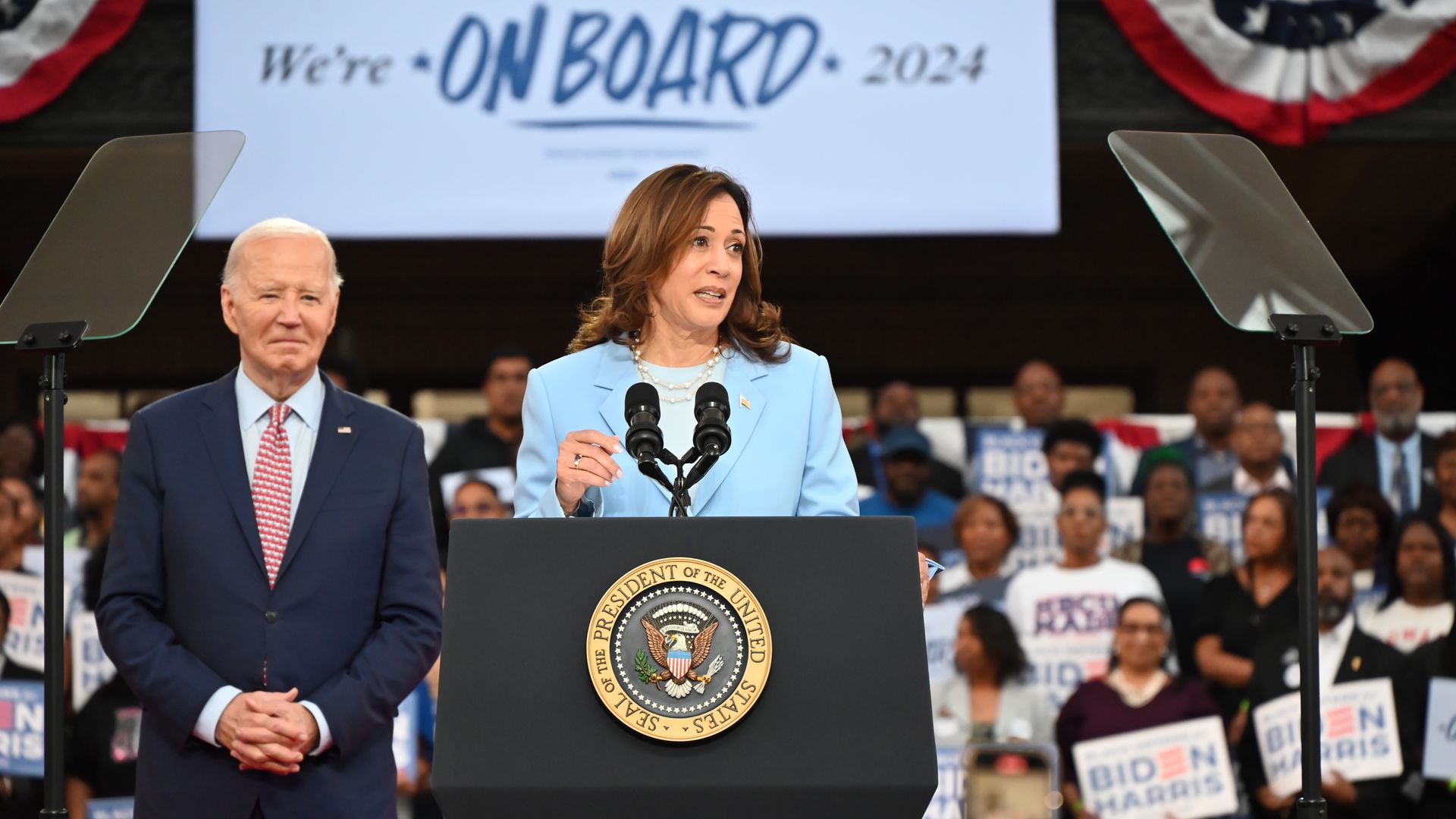
Harris, who looks likely to be the Democratic nominee, will face the same dissatisfaction that challenged Biden's economic pitch to voters.
Why it matters: Still-high prices are a daily reminder of the negatives associated with the Biden presidency, though it's unclear if voters will associate that with Harris, too.
- The question is whether Harris' economic messaging mirrors that of Biden — and whether her pitch is one that suggests a continuation of the policies that shaped "Bidenomics," should she be elected president.
What they're saying: "We would not expect the Democrats' fiscal and trade policy agenda to shift meaningfully in the event that Harris is the nominee," economists at Goldman Sachs wrote in a note today.
Between the lines: Unsurprisingly, Harris has been a staunch defender of the Biden administration's approach to economic policy.
- "President Joe Biden and I have created nearly 800,000 new manufacturing jobs, so much so, it's been described as a 'manufacturing boom,'" Harris said last week at a political event in North Carolina.
- She said Trump's tariff proposal would hike everyday costs for Americans while the Biden administration has taken on corporate America "to bring costs down."
Sign up for Axios Macro