
Axios Macro

June 18, 2024
🛍️ We have gone a long stretch without having to worry about the health of the consumer. That is changing. More below, plus a surprisingly buoyant report on the U.S. factory sector.
đź—“ Situational awareness: We are off tomorrow for Juneteenth. We'll be back in your inbox Thursday.
Today's newsletter, edited by Kate Marino and copy edited by Katie Lewis, is 624 words, a 2½-minute read.
1 big thing: The fading U.S. consumer
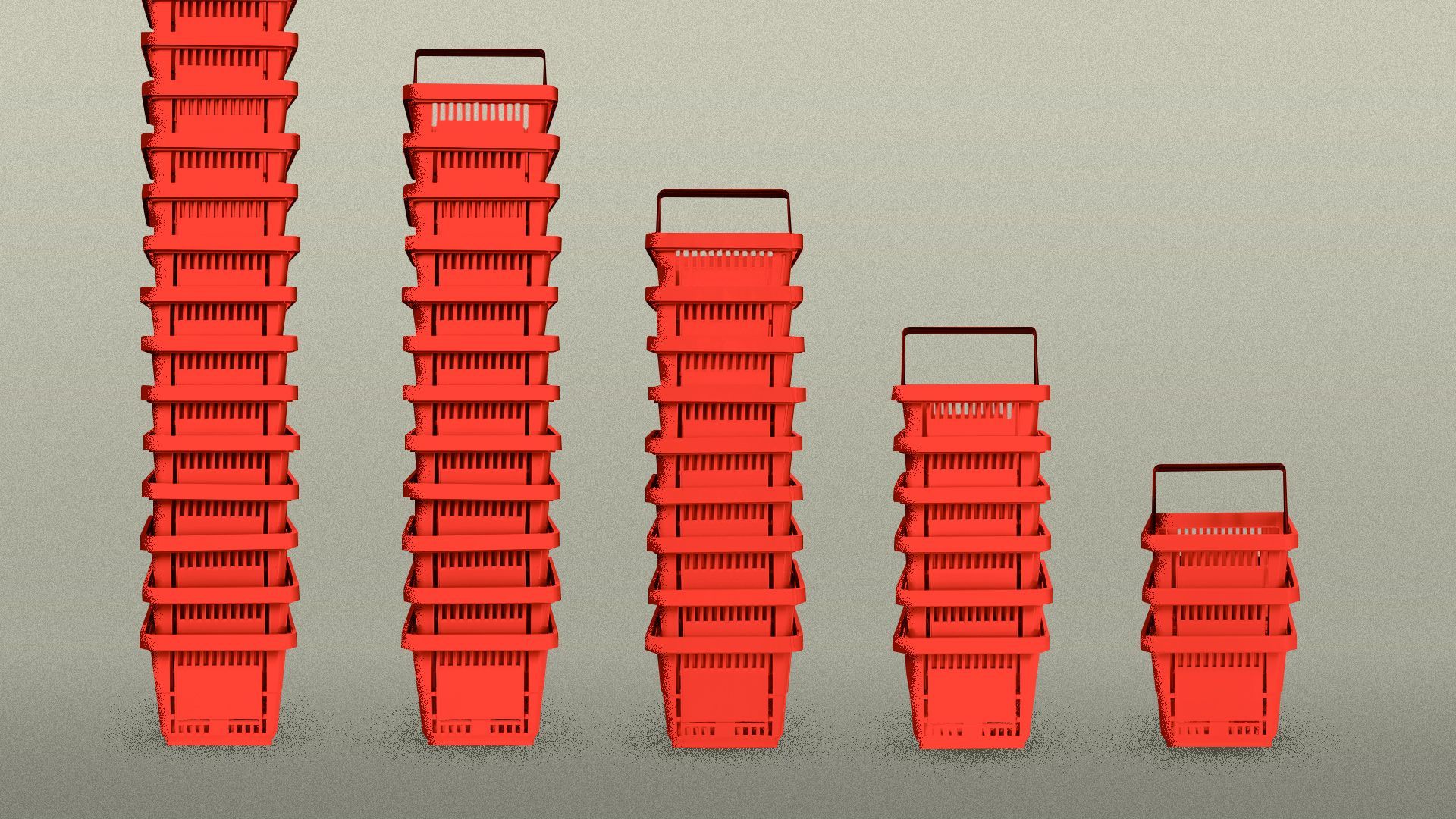
Illustration: AĂŻda Amer/Axios
The booming consumer looks to be no more. Shoppers have steadily slowed spending growth this year — a crack in what has been a resilient economy.
Why it matters: This might be the type of cooldown the Fed has longed for in its fight against inflation. But it risks snowballing into the kind of economic weakness that would be difficult to undo.
- "Ebullient post-pandemic retail sales lasted for longer than many expected, and that streak now looks to be finished. We are returning to a normal economic environment," Oren Klachkin, a financial market economist at Nationwide, wrote in a note today.
Driving the news: The latest retail sales report shows spending barely rebounded in May after April numbers that were even worse than initially thought — a 0.2% drop, not the flatlining first reported.
- May retail sales were up 0.1%, held down by plunging sales at gas stations as prices fell. Excluding gas stations, sales were up 0.3%.
- Spending in housing-related categories, including furniture shops and building stores, also declined. The report is not adjusted for inflation.
- Among the categories where spending jumped: hobby shops (like music or bookstores), clothing shops and e-commerce stores.
The intrigue: Economists watch a narrow section of data from this report that feeds into the consumer spending category of GDP.
- The so-called "control group," which strips out autos, building supplies, food service and gasoline," rose 0.4% in May — a tick lower than expected. In April, it contracted by 0.5%.
The big picture: As we have previously noted, anecdata from big retailers and fast food companies suggest a spending slowdown — particularly among lower-income consumers who can no longer splurge as they did when sitting on pent-up pandemic savings.
- There are other indicators that suggest financial stress among households. More borrowers are falling behind on credit card and car payments, with delinquency rates on the upswing.
- "You've still got a household sector that's in pretty good shape, but nonetheless, it's not in the kind of shape it was in a year or two ago," Federal Reserve chair Jerome Powell told reporters last week. "We're carefully watching that."
Powell said that the Fed, too, sees "increasing financial pressures" on lower-income Americans.
- "The best thing we can do is to foster a very strong jobs economy, which we think we have done," Powell said, adding that it was also important to get inflation under control. "Those people experience inflation very directly, very painfully."
2. Surprising surge in factory output


America's manufacturing sector powered ahead in May — or at least it did if you just look at the month in isolation.
By the numbers: Industrial production surged 0.9% last month, the Fed said, the sharpest gain since last July. Factory output also powered ahead 0.9%.
- A 1.6% surge in output by utilities — fueled by power demand from data centers — also contributed to the gain.
- There were particularly strong gains in output of appliances, furniture, carpeting (up 3.9%) and energy (up 2.8%).
Yes, but: Revisions to March and April industrial production numbers were negative, and year-over-year expansion in factory output remains soft, up only 0.4% since last May.
- Other indicators don't point to a similar spring industrial surge. In particular, the May reading of the Institute for Supply Management survey of manufacturers fell from April levels, and has been in contraction territory for 18 of the last 19 months.
What they're saying: "The big picture is that the industrial sector has been running cooler over the last year and a half," wrote Bill Adams, chief economist of Comerica Bank, in a note.
- "American consumers have shifted their spending priorities toward experiences and away from things, weighing on demand for goods, and high interest rates are restraining business capital spending and demand for construction materials," he added.
Sign up for Axios Macro

Stay ahead of the curve on the most important economic developments with reporting and analysis on how business, policy, and markets collide.