Axios Macro
July 14, 2025


Fun fact: Neil started his career more than two decades ago covering Washington, D.C., real estate and economic development. It's come full circle now that the future of the Federal Reserve has become a D.C. real estate story. More below.
- Plus: unpacking President Trump's busy weekend of large-scale tariffs on Europe and Mexico.
Today's newsletter, edited by Ben Berkowitz and copy edited by Katie Lewis, is 927 words, a 3½-minute read.
1 big thing: The threat to fire Powell is getting real
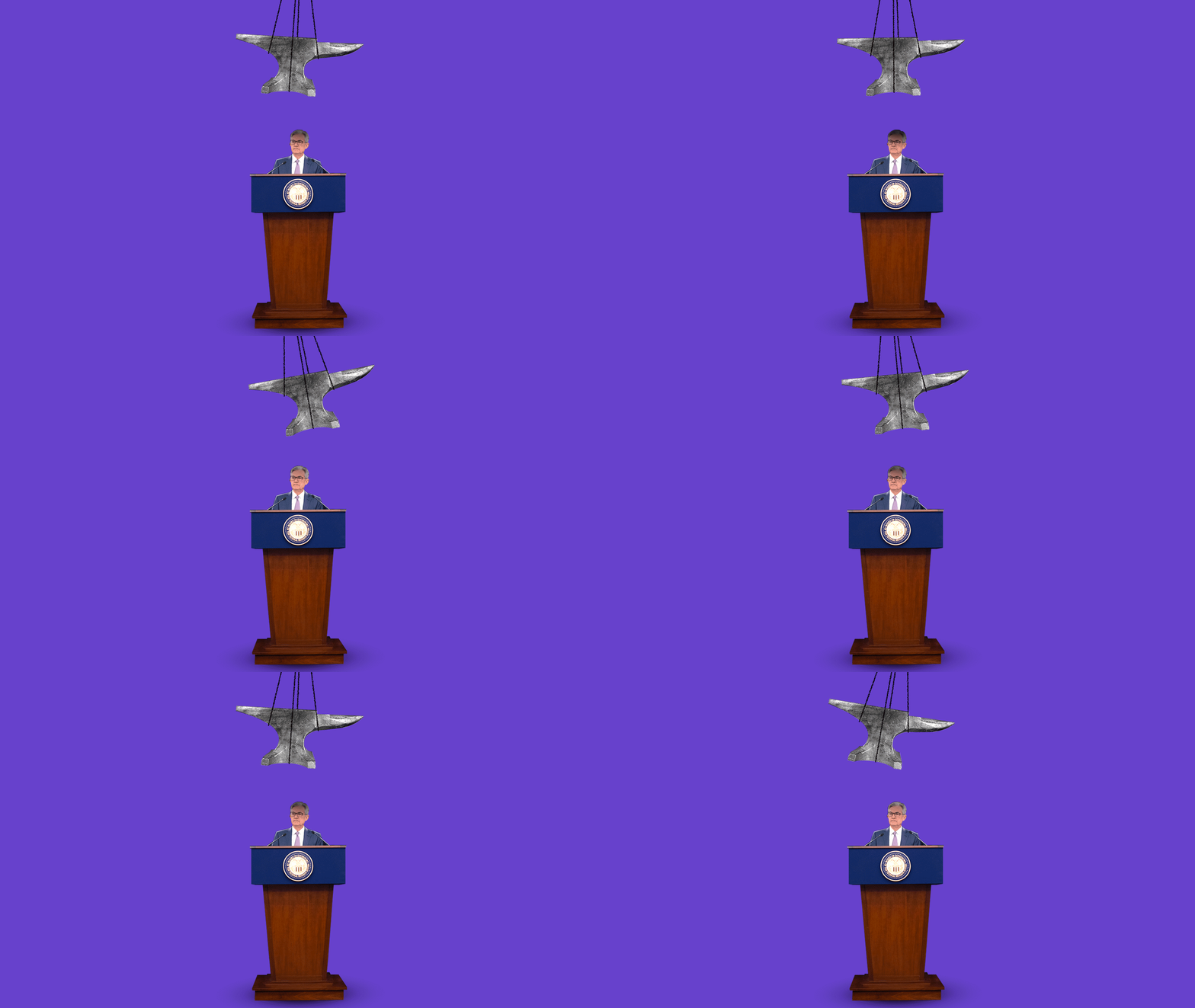
Trump's war on the Fed is taking a more concrete, legally actionable form — putting the central bank's independence in the crosshairs.
Why it matters: For months, Trump's exasperation with Fed chair Jerome Powell over not cutting interest rates has taken the form of increasingly angry comments and social media posts.
- That pressure has entered a new phase that, if successful, could shock the global financial system.
- It would also set a new precedent for a president's ability to bend the leader of the world's most important central bank to his will.
The big picture: Trump's appointees are trying to lay out legal predicates to fire Powell for cause — specifically, that the Fed's $2.5 billion headquarters renovation project has included changes not approved by a federal planning authority, and/or that Powell lied to Congress about the project.
- That was the subtext of Office of Management and Budget director Russ Vought's letter to Powell last week.
- Powell denied to Congress last month that the project contains several luxury features. Vought's letter suggests that the Fed had changed plans that were blessed by the National Capital Planning Commission in 2021, thereby violating the National Capital Planning Act.
- Also last week, the president installed allies, including the White House staff secretary, to that very commission — normally the province of architects and historical preservationists.
State of play: The new NCPC members have been quick to toe the White House line on the Fed's project.
- The new NCPC chair, Will Scharf — also a former personal lawyer to the president — said at an NCPC meeting last week that the Fed project includes "serious deviations" from plans the NCPC had approved.
- It looks like a "Taj Mahal near the National Mall," fellow Trump-appointed commissioner Michael Blair said, per reporting from Axios D.C.'s Cuneyt Dil.
The other side: The Fed, as is its style, is responding in a restrained and legally precise way. It published an FAQ over the weekend to explain why its leaders believed the project was necessary and how it got so expensive — and looking to correct the record on some exaggerated reports of luxury features.
- The FAQ articulates the Fed's position that the Board of Governors alone controls its real estate decisions under the Federal Reserve Act, and that its cooperation with the NCPC is voluntary.
- Also this morning, as Axios first reported, Powell asked Fed inspector general Michael Horowitz to review the cost overruns and any other matters involving the building he deems appropriate.
Yes, but: That's typical of the Fed's quiet, circling-the-wagons approach when it is in the thick of political disputes.
- It also may amount to bringing an FAQ to a gunfight, given the Trump administration's willingness to ignore norms and play legal hardball.
Reality check: The building project has been underway — and cost overruns public knowledge — for years. There is little doubt that the administration's focus on the renovation is driven by the president's fury at Powell for not cutting interest rates.
- The reason the Federal Reserve Act gives the Board of Governors such sweeping authority over its real estate to begin with is precisely to ensure its independence from the political tides.
The bottom line: We don't know if the president will attempt to use the legal strategy his aides are charting out to fire Powell, and if he does, we don't know if he will succeed.
- But if that were to happen, it would create a new world in which the president can use an obscure planning commission to coerce the world's most important central bank.
2. Fallout from the wild trade weekend

A top European official says Trump's threatened tariff rate would kill trade with the U.S. — devastating for partners that exchange more than $975 billion worth of goods.
Why it matters: It's a fresh warning of the global economic consequences if the White House makes good on its threat to slap 30% tariffs on European goods in less than three weeks.
What they're saying: "It will be almost impossible to continue trading as we are used to in a transatlantic relationship," EU trade commissioner Maroš Šefčovič told reporters this morning, according to the FT.
- "Thirty per cent or anything above 30 per cent — any additional counter-reaction from the United States — it has more or less the same effect. So practically, it prohibits trade," Šefčovič, who has led trade talks on behalf of Europe, added.
Catch up quick: Šefčovič said that he would speak with Commerce Secretary Howard Lutnick in the bloc's latest bid to reach a deal.
- Trump posted a letter early Saturday threatening to impose 30% tariffs on European imports by Aug. 1. He also published a notice threatening the same levy on Mexican goods.
The intrigue: It doesn't appear that either nation plans immediate retaliation.
- "I have always said in these cases, it's important to keep a cool head," Mexico's President Claudia Sheinbaum said on Saturday.
Europe once again delayed retaliatory measures that might infuriate Trump.
- "We have always been very clear that we prefer a negotiated solution. This remains the case, and we will use the time that we have now till the 1st of August," EU commissioner Ursula von der Leyen said at a news conference on Sunday.
The bottom line: For all of Trump's criticism of the U.S.-EU trading relationship — at one point, he said Europe was "nastier than China" — the tariff threat largely reflected the cordial language seen in other letters.
- "Donald Trump's letter to the EU is not a love letter but also not a hate letter. It's a letter to increase pressure in the ongoing negotiations," economists at ING wrote in a note.
Sign up for Axios Macro