Axios Macro

February 17, 2026


Europe is taking advantage of dollar angst in a Trump-dominated world. Its pitch for the euro gained new traction over the weekend. More below. 🇪🇺
- Plus, comments from the Federal Reserve's top bank cop hint at efforts to make home mortgages more affordable.
Today's newsletter, edited by Jeffrey Cane and copy edited by Katie Lewis, is 1,039 words, a 4-minute read.
1 big thing: The euro's big moment

The euro — its future in disarray barely a dozen years ago — is back.
Why it matters: European leaders are trying to carve out a bigger global role for their currency in a Trump-shaped world order. If they are successful, it could chip away at America's biggest economic advantage: the outsize demand for dollars and U.S. debt.
- Other dollar alternatives look less likely, since the world generally distrusts China.
- Squeezed by Russia, China, and an increasingly belligerent United States, Europe is reacting by bolstering its common efforts in both national security and monetary affairs.
- Even if the euro's shift doesn't dethrone the dollar as the global reserve currency, its broader influence could narrow America's margin of financial power.
Driving the news: The European Central Bank is launching a permanent facility that allows eligible global central banks to borrow euros when needed, a step to strengthen the currency's role in the financial system.
- The move expands crisis-era arrangements that aimed to prevent international funding strains from spilling back into the eurozone.
Between the lines: The facility will help the euro "move from a regional to a global perimeter," ECB president Christine Lagarde said in a speech at the Munich Security Conference over the weekend, adding that it also "reinforces the role of the euro."
- "The availability of a lender of last resort for central banks worldwide boosts confidence to invest, borrow and trade in euros, knowing that access will be there during market disruptions," Lagarde said.
Flashback: The ECB's move echoes the Federal Reserve's dollar swap lines, deployed at massive scale during the 2008 financial crisis and revived in 2020 when pandemic panic triggered a global dash for dollars.
- The Fed opened standing lines with major central banks and a temporary backstop with others. That helped cement its role as the lender of last resort to the world, reinforcing the dollar's dominance in trade and finance.
- Now, Europe is taking a similar step, a sign of more favorable attitudes toward the euro. That's a huge turnaround from over a decade ago, when a sovereign debt crisis in Greece and other southern European countries pushed member states to the brink of default and cast doubt on whether the currency union itself would survive.
What they're saying: "Greater international comfort in holding the euro in [currency] reserves should ... support greater use of the euro in trade invoicing," ING currency strategists wrote yesterday.
- That would "reinforce our view of a gradual transition from a unipolar dollar world to a multipolar world of dollars, euros and renminbi," they added.
The big picture: Lagarde's speech over the weekend was among many by European leaders calling for the bloc to chart a more economically independent path, with less reliance on America.
- For years, European policymakers — including Lagarde — warned of a world more vulnerable to shocks than before the pandemic. That risk intensified when President Trump returned to office and imposed the steepest tariffs in over a century, while wielding trade threats as geopolitical leverage.
- "As industrial policy becomes more assertive, geopolitical tensions rise and supply chains are disrupted, financial market stress is likely to become more frequent," Lagarde said Saturday.
- Trade concerns, along with other factors like worries of eroding Fed independence, have spooked global investors. The dollar is down roughly 9% over the past year — a decline that has pushed the euro to its highest level against the dollar in about three years.
The intrigue: Swedish lawmakers are debating adopting the euro. If it happens, the nation would be one of the largest economies to adopt the euro in many years.
- Such a move would show that the Nordic nation is looking to bolster its European integration into the financial and defense realms.
- Sweden joined NATO after Russia's invasion of Ukraine.
The bottom line: Europe is trying to persuade the rest of the world of the euro's attractiveness in ways that could gradually reshape the balance of power in global finance.
2. Bowman: Get banks back in the mortgage business
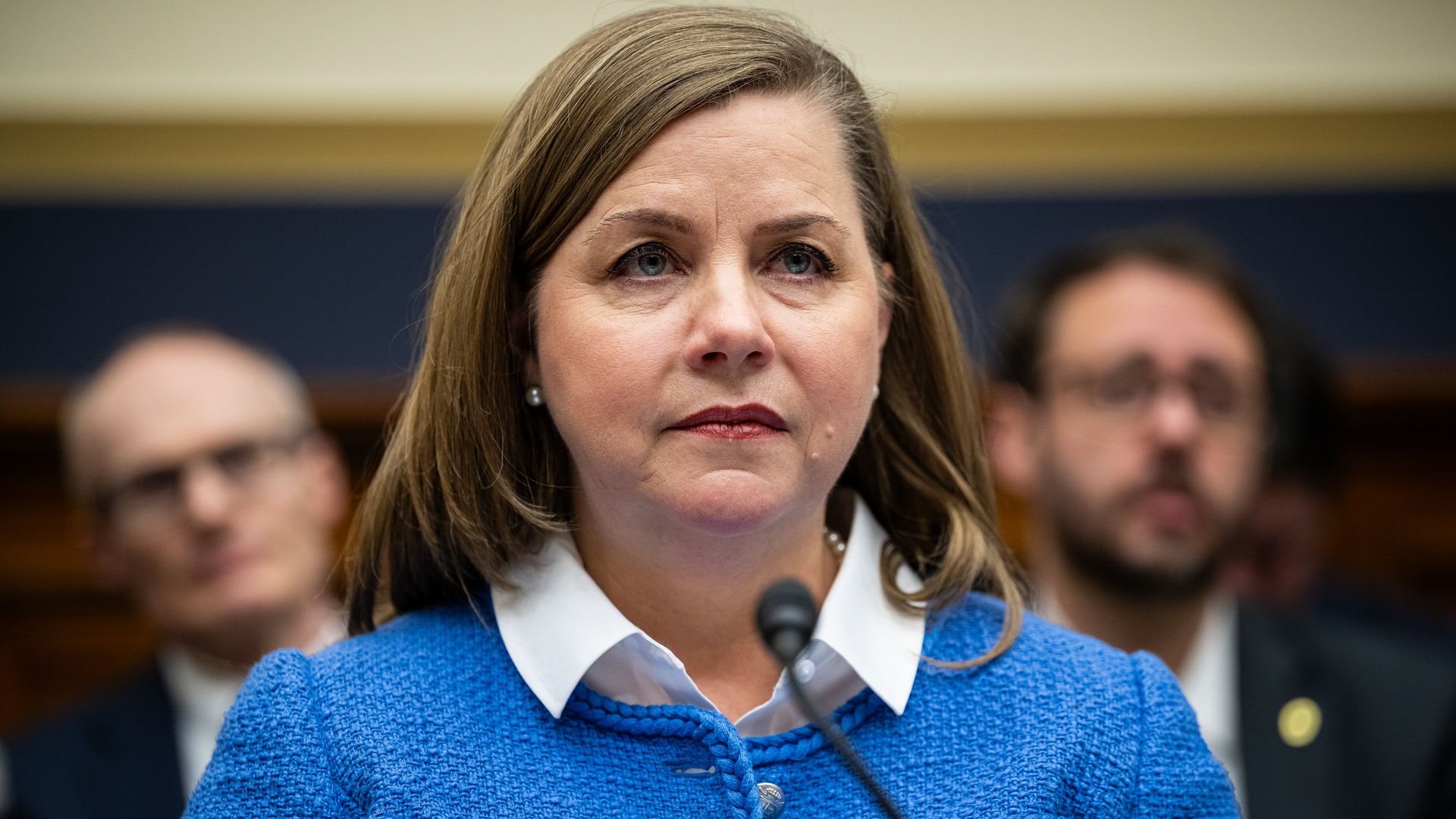
The Fed's top financial regulator wants banks to reclaim their role as major providers of home mortgages — consistent with a broader effort across the Trump administration to encourage greater availability of home lending.
Driving the news: Michelle Bowman, the vice chair for supervision, said in a speech yesterday that two regulatory proposals are coming that will lighten the capital requirements for mortgage loans held by banks.
- "By creating a resilient mortgage market that includes robust participation from all types of financial institutions, we can deliver affordable credit and high-quality servicing to borrowers regardless of economic conditions," Bowman told an American Bankers Association conference in Orlando.
Catch up quick: Before the financial crisis, banks accounted for 60% of mortgage loans and 95% of mortgage servicing in 2008, per Bowman.
- That's now down to 35% and 45%, respectively. Nonbank lenders like Rocket Mortgage have taken a greater share.
- Part of that may be a result of choices by the banks themselves, which discovered in the crisis that home loans were riskier than they had assumed and that servicing loans could create gnarly, expensive problems, especially amid a wave of foreclosures.
- But it may also be due to more stringent capital requirements that mean banks must hold more capital against mortgage loans, making them more costly.
Between the lines: The spread between longer-term Treasury bond rates and consumer mortgage rates has been persistently wide in recent years, suggesting market frictions that more bank mortgage lending might reduce.
- Moreover, Bowman argued, banks seem to deliver better service to consumers than nonbank mortgage lenders, especially in times of financial distress.
- "During COVID-19, borrowers with bank servicers were more likely to receive forbearance on their mortgage payments than those with nonbank servicers," she said.
Yes, but: For banks, mortgages do come with credit risk and duration risk that might be less than appealing, regardless of regulatory requirements — particularly in a world where deposits can vanish overnight in times of strain.
Sign up for Axios Macro