Axios Macro
December 15, 2025


Out: Economists and large businesses trying to project the impact of tariffs.
In: Trying to understand the impact if the duties have to be refunded.
- Below, we dig into the potentially chaotic tariff refund fight that appears to already be underway, even without a Supreme Court ruling.
- Plus, we look at a key divide among Federal Reserve policymakers — how much the inflation of the recent past should weigh on decision-making.
👀 Situational awareness: President Trump told the Wall Street Journal late Friday that he is seriously considering Kevin Warsh, as well as Kevin Hassett, to be the next Fed chief. Betting markets that previously had Hassett as the overwhelming favorite now price it as close to a coin flip. 🤷♂️
Today's newsletter, edited by Ben Berkowitz and copy edited by Katie Lewis, is 1,057 words, a 4-minute read.
1 big thing: Tariff refund confusion
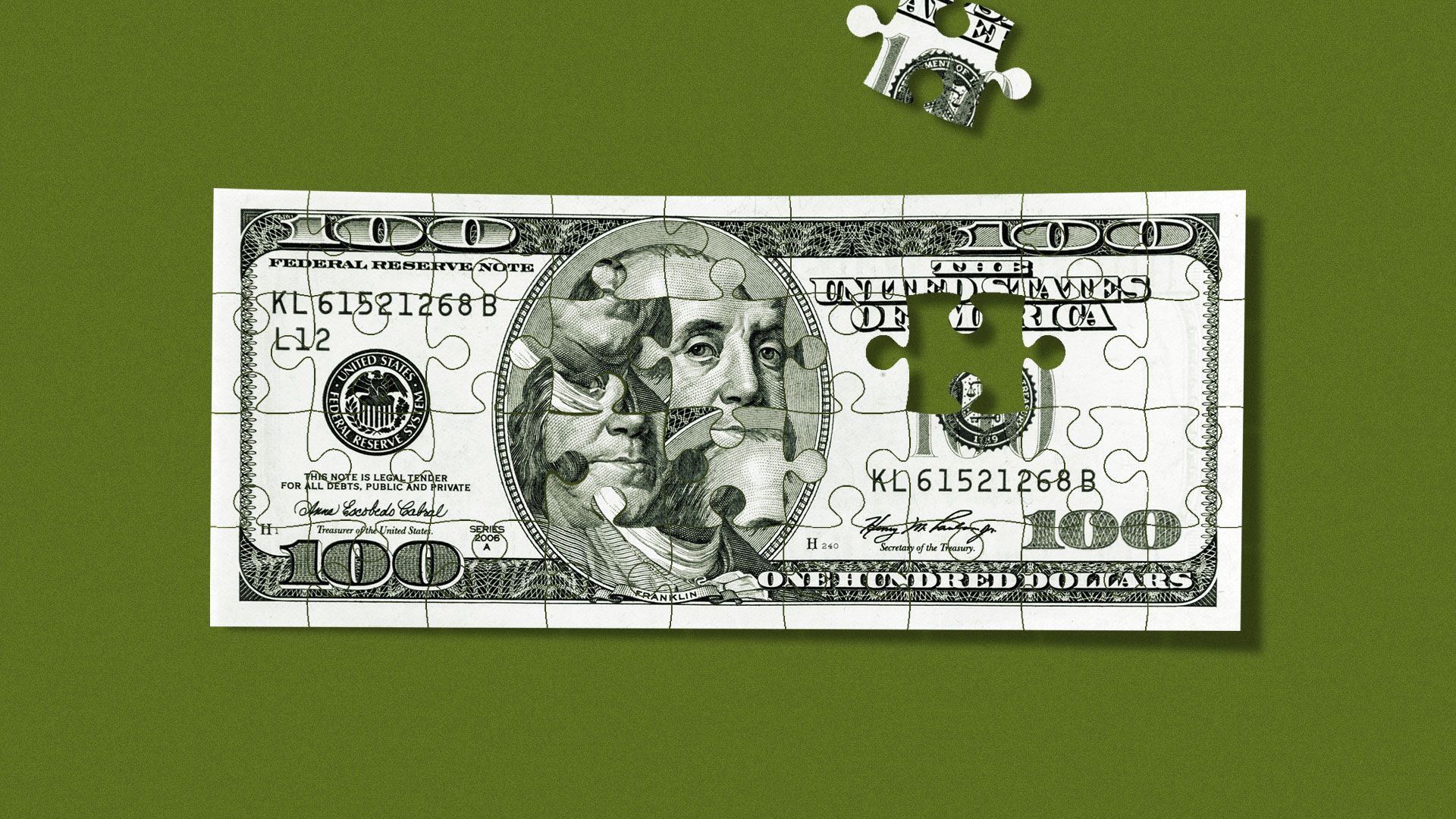
Companies are suing to lock down the billions of dollars they might be owed if the Supreme Court rules against Trump's tariffs.
Why it matters: Implementing the sprawling levies at the center of Trump's economic agenda looks simple relative to the chaos of trying to undo it.
- This is one of the side effects of the White House's unprecedented approach to imposing economically significant tariffs: Rolling it back could be chaotic, with potential economic consequences.
Driving the news: In recent weeks, a slew of household-name firms — Costco, Revlon, Bumble Bee Foods, and the maker of Ray-Ban — have sued in the U.S. Court of International Trade to secure refunds, in the event that the highest court strikes down Trump's tariffs.
The intrigue: It is a milestone moment in a legal battle fought entirely by small businesses up until this point, as larger firms try to avoid the administration's ire.
- Even if the Supreme Court rules in their favor, there is no guarantee that the high court will issue guidance on how the refund process will work — or who is entitled to them.
Between the lines: Companies like Costco are worried that a technical deadline might prevent them from receiving refunds at all: Tariffs paid are due to be liquidated by the government, making it that much more difficult for them to issue refunds.
- "This year, [Customs and Border Protection] has been fast-tracking the tariff dollars to Treasury, which puts the question of potential rebates into question," policy analysts at TD Cowen wrote in a note this morning.
- The analysts note that the agency usually allows 314 days after goods are imported into the country to liquidate the payments and send the money to the Treasury.
- That window ends today for the first set of tariffs imposed on a slew of Chinese goods.
What they're saying: "What law firms are saying to companies is, 'Look if you want to be in the front of the line for refunds, we should get these cases filed now because the court is going to deal with these cases in the order they come in,'" Tony Gulotta, a principle at the business tax firm Ryan, tells Axios.
By the numbers: In a legal filing on Thursday, the Department of Justice hinted at the scale of potential refunds. Lawyers said that, as of last week, roughly $130 billion in tariffs had been collected under the International Economic Emergency Powers Act, the law Trump used to impose the tariffs now under scrutiny.
- Roughly 301,000 importers paid those tariffs, with 34 million entries for goods submitted to CBP.
- DOJ lawyers said that "contrary to plaintiffs' speculation, liquidation will not affect the availability of refunds after a final decision."
The other side: The Trump administration has latched on to the potential refund chaos that would ensue as reason for allowing the tariffs to stand.
- "Tell me what kind of refund Costco is due if the foreign producer lowered their price" for the imported goods, Treasury Secretary Scott Bessent said at the New York Times DealBook conference. "They've taken a deduction on having paid the tariffs."
The bottom line: Companies and financial markets have spent months trying to acclimate their businesses to a slew of higher import duties, ones the administration says it will replace if the Supreme Court rejects tariffs.
- Now these businesses are bracing for the prospect that duties might be overturned.
2. Fed divide: Does past inflation matter?
How much does the high inflation of the last several years matter in setting policy for the future? The answer has become a core division among Fed policymakers.
The big picture: Two dissenters from last week's rate cut said Friday that they did so partly out of fear that the half-decade of high inflation may be shaping Americans' psychology as a new normal.
- The third dissenter at last week's meeting, who preferred a bigger rate cut, argued this morning that policy needs to be calibrated for the economy of the next couple of years, not hung up on what happened in 2022.
What they're saying: "Given that inflation has been above our target for four and a half years," said Chicago Fed president Austan Goolsbee in a statement, and further progress has been "stalled for several months," he said that he "felt the more prudent course would have been to wait for more information."
- "My conversations suggest that we are at risk of moving away from a situation where, to quote former chair Alan Greenspan, 'inflation is so low and stable over time that it does not materially enter into the decisions of households and firms,'" said Kansas City Fed president Jeff Schmid.
The other side: In a speech this morning, governor Stephen Miran argued that rent and other inflation dynamics are trending downward, and so in setting policy for the future, it would be a mistake to over-index on what happened in the last few years.
- "Shelter inflation is indicative of a supply–demand imbalance that occurred as much as two to four years ago, not today," Miran said at Columbia University. "Given monetary policy lags, we need to make policy for 2027, not 2022."
- "Keeping policy unnecessarily tight because of an imbalance from 2022, or because of artifacts of the statistical measurement process, will lead to job losses," he said.
- "There was a large bout of inflation that resulted in an increase in prices after the pandemic," said Miran. "While American families are still rightly distraught with that experience and unhappy with affordability, prices are now once again stable, albeit at higher levels. Policy should reflect that."
Sign up for Axios Macro