Axios Macro
April 22, 2025


The U.S. economy has been the bright spot among G7 nations for the last couple of years. Now it's expected to be the source of a global slowdown. More below, plus a trade reality check.
👀 Situational awareness: Yet another regional Fed bank survey points to a pullback in manufacturing.
- The Richmond Fed's index fell to -13 in April, from -4 in March, signaling a pullback underway at factories in the region that stretches from South Carolina to Maryland, following similar readings from Fed banks in New York and Philadelphia.
Today's newsletter, edited by Ben Berkowitz and copy edited by Katie Lewis, is 674 words, a 2½-minute read.
1 big thing: America weighs on the world economy
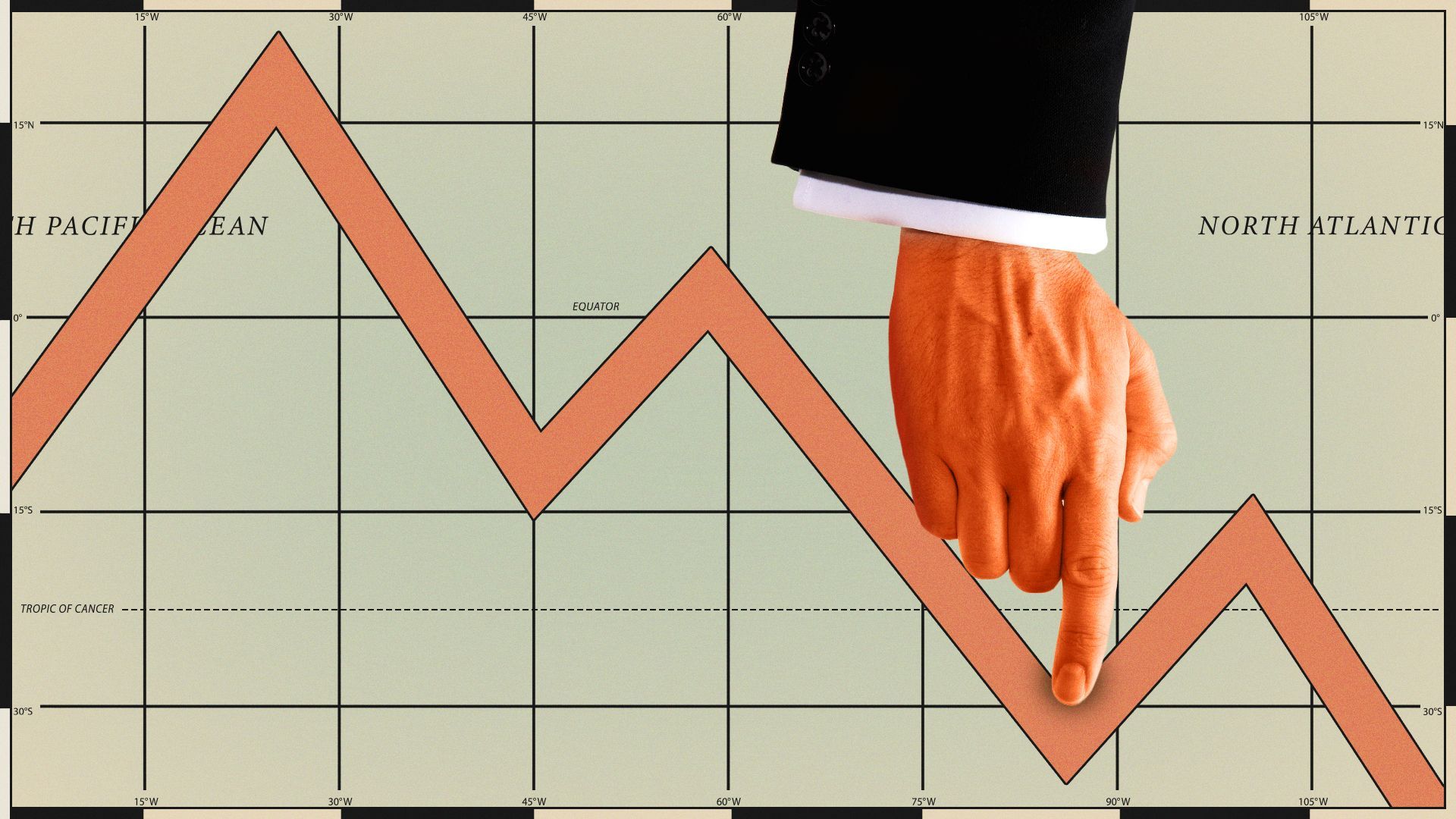
For years, the U.S. has propelled global economic growth. Now it is acting as a disruptor to the world economy.
Why it matters: The great unraveling of U.S. exceptionalism and anticipated slowdown in U.S. growth prospects — already shaking financial markets — is likely to reverberate around the world, according to new International Monetary Fund projections.
- The fund's World Economic Outlook projects that a U.S. tariff-induced economic slowdown will weigh on growth across most major economies.
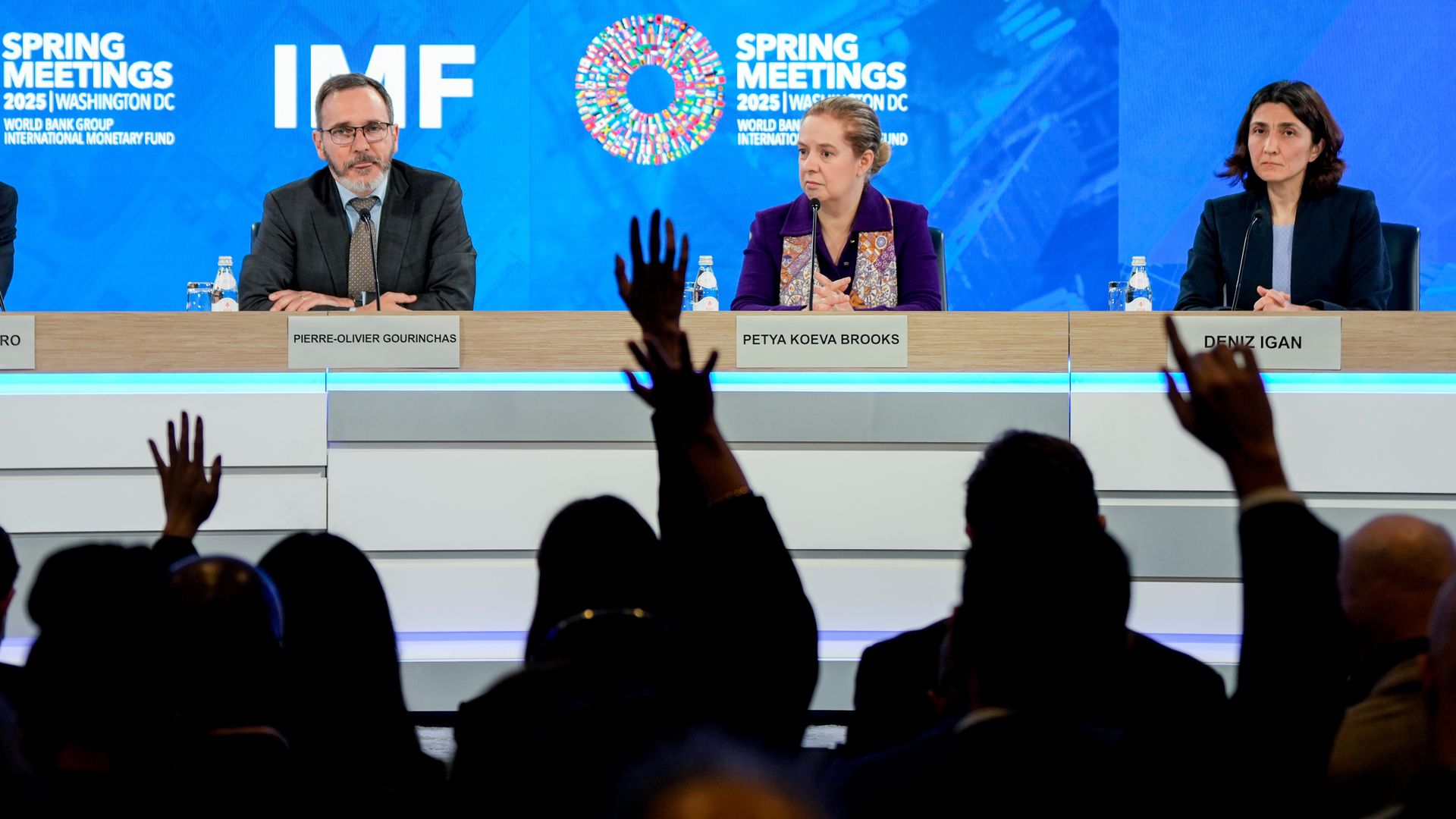
What they're saying: "While global growth remains well above recession levels, all regions are negatively impacted this year and next, and the global disinflation trend is continuing, but at a slower pace," IMF chief economist Pierre-Olivier Gourinchas told reporters today at a press conference.
By the numbers: No advanced economy saw a bigger growth downgrade than the U.S.
- The U.S. is on track to grow 1.8% in 2025, slowing by a full percentage point from last year's growth rate, the quarterly outlook says.
- That's a sharp downgrade from what the IMF expected at the start of the year: The estimate is 0.9 percentage point below its January forecast.
- The slowdown will continue into next year: The U.S. will grow by 1.7% in 2026, the IMF projected — slashing its most recent forecast by 0.4 percentage point.
The big picture: The tariffs will be a negative supply shock for the U.S., one that slows productivity growth and output permanently and increases price pressures temporarily, the IMF told reporters.
- Alongside weaker growth, inflation will be roughly 3% this year — roughly 1 percentage point above January estimates, the IMF said.
- While inflation is revised up for U.S. trading partners, tariffs will mostly squeeze demand and slow price growth, the group added.
The intrigue: President Trump's tariff policies account for roughly 0.4 percentage point of the IMF's downgrade of U.S. growth this year. But there are other factors, including already slowing economic momentum before trade policies were announced.
- "This was an economy that was doing very, very well, but was self correcting and cooling off a bit on its own," Gourinchas said.
Between the lines: The downgrades are gloomy, though the IMF expects the U.S. economy will continue growing this year and next. But recession risks are rising.
- The IMF puts the probability of a U.S. recession at 40%, up from 25% odds in October.
Yes, but: The group's forecast does not reflect Trump's decision to pause reciprocal tariffs or the significantly higher tariff rates imposed on China since April 2.
- The freeze on reciprocal tariffs — even if it's indefinite — would not materially change the IMF's gloomy forecast, given the high levies on Chinese imports.
The bottom line: The U.S. economy boomed as economic shocks slammed other nations in recent years. Trump's tariffs might bring the resiliency era to an end.
2. Reality check on global trade reset
Trump unleashed a global trade war that taps into many Americans' frustrations about the negative economic effects of free trade. The IMF's chief economist says it isn't quite that simple.
What they're saying: "In many advanced economies, there is an acute perception that globalization unfairly displaced many domestic manufacturing jobs," Gourinchas wrote in a blog post.
- "There is some merit to these grievances, even if the share of manufacturing employment in advanced economies has been in a secular decline in countries running trade surpluses, like Germany, or deficits, like the United States," he added.
Technological progress and automation is the "deeper force behind this decline" of manufacturing employment, Gourinchas wrote.
- In both the U.S. and Germany, employment has withered, but each nation's share of manufacturing output has held steady.
What to watch: "This requires that policymakers think well beyond the reductive lens of compensating transfers between 'winners' and 'losers,' be it of technological revolutions or globalization," Gourinchas wrote.
- There has been a "zero-sum worldview" that the gains of some countries come at the expense of others, he says.
The bottom line: The IMF says Trump's attack on globalization is not totally baseless. But steep protectionist policies — like tariffs — risk permanently undoing the gains from more trade.
Sign up for Axios Macro