Axios Macro

October 24, 2023

1 big thing: The pandemic recovery's racial balance
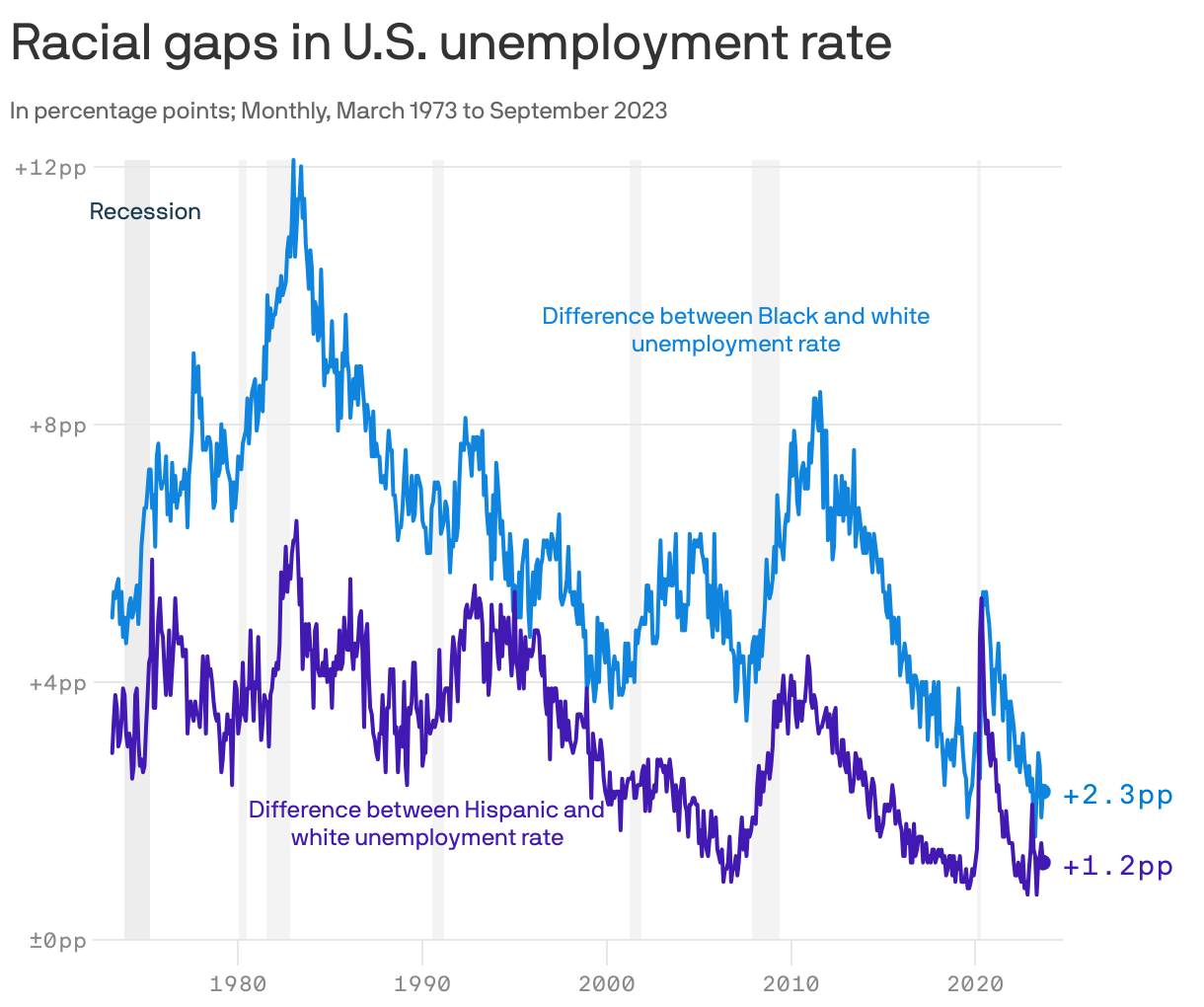
An unfortunate pattern in modern recessions has seen Black and Hispanic workers bear the disproportionate brunt of the downturn. Those groups experience sharper and longer-lasting rises in unemployment and lost wealth.
- That didn't happen during the pandemic's recession and recovery.
Why it matters: The gap in economic results among racial groups has narrowed in the last three years, making this recovery "the most equitable in recent history," as a new Treasury Department report puts it.
By the numbers: The median net worth of Black and Hispanic families rose 60% and 47%, respectively, from 2019 to 2022. That compares to 31% for white families, according to inflation-adjusted data from the Federal Reserve.
- It reflects lower wealth levels entering the pandemic among Black and Hispanic households, which meant the same cash transfers from the government resulted in higher percentage gains in median net worth.
- Within 20 months of the recession's spring 2020 peak, the gap between Black and Hispanic unemployment rates and that of white workers had fallen back to pre-pandemic levels.
- In fact, the spread between the white and Black unemployment rates reached a record low this past April, and the gap between the white and Hispanic jobless rate a record low in November 2022.
Flashback: In past recessions, Black and Hispanic workers have been more likely to lose their jobs than white workers, and the damage has been much longer-lasting.
- For example, in the 2008-2009 recession, the gap between jobless rates among Black and white workers more than doubled, shooting up from 4 percentage points to 8.4 percentage points in the spring of 2011.
- The racial gap didn't return to its 2007 level until 2016, seven years after the recession had technically ended.
What they're saying: "The report shows the progress we're making on building a more equitable economy, narrowing the racial wealth gap, and addressing enduring inequities in wealth accumulation," said deputy secretary of the treasury Wally Adeyemo in a statement.
- The Biden administration will "remain committed to capitalizing on the progress made during the recovery and investing in the people, places, and infrastructure that have been too often left behind," he said.
Between the lines: The more equitable results reflect the power of fiscal policy to channel money to those who most need it in an economic downturn.
- That stands in contrast to the blunter instrument of monetary policy that's more typically the go-to tool for economic stabilization.
2. Early signs point to solid fall growth

Illustration: Maura Losch, Lindsey Bailey/Axios
Axios Macro

Stay ahead of the curve on the most important economic developments with reporting and analysis on how business, policy, and markets collide.