Axios Latino

¡Buenos dĂas! ÂżO tardes ya? Axios Latino focuses on the stories that affect the U.S. Latino and Latin American communities.
- Today's newsletter is 1,296 words, about a 5-minute read.
Send us your feedback (chismes also welcome) by replying to this email. And if you are not already subscribed, sign up here. Read the Spanish version here.
1 big thing: U.S. and Mexico seek solutions on Central America
Illustration: Eniola Odetunde/Axios
U.S. politicians and Mexico’s president are making a case for new development initiatives that could curtail the exodus from Central America.
Why it matters: Border enforcement measures do little to contain migration if not accompanied by work to improve the conditions that force many people to flee their homes, experts say.
- These include the usual culprits of violence, corruption, and poverty, which have worsened during the pandemic. There were also the two hurricanes in November, when entire towns, and livelihoods, disappeared in days.
Hispanic U.S. representatives are calling for a project similar to the Marshall Plan, the U.S. program that rebuilt Western Europe following World War II.
- Rep. Joaquin Castro (D-Texas) told Axios that without a development plan “we are doomed to repeat the same cycles over and over.”
- Rep. Veronica Escobar (D-Texas) told Axios a "hemispheric" outreach that included countries like Canada and Panama was required to reshape Central America and the burden shouldn't just rest with the U.S.
Mexican president Andrés Manuel López Obrador is advocating a temporary agricultural and tree planting program that he says will provide jobs and reduce the urgency of migrants to get to the U.S. while authorities clear the immigration backlog.
What’s next: The White House’s spending plans for next year include $800 million to combat violence, poverty, and corruption in Central America.
- The Biden administration is in the process of changing the terms to refer to migrant people, retiring the use of “alien” and adopting “undocumented.”
The government has also been paying for people who’ll be caretakers of unaccompanied minors to go pick them up in shelters.
2. Looking for justice, a year on

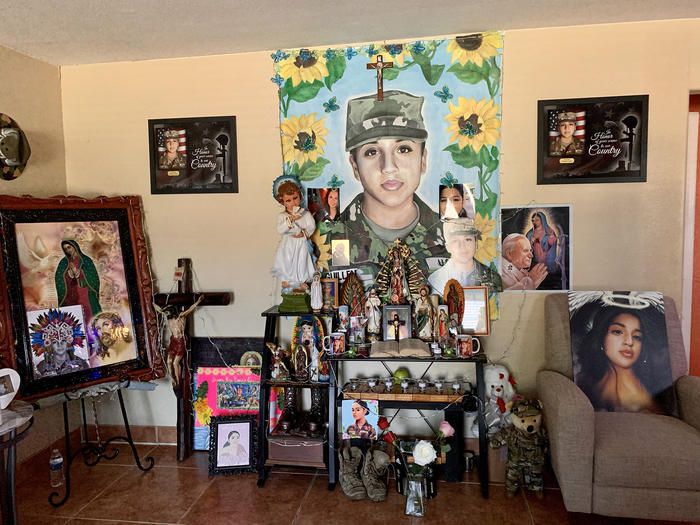
Exactly a year has passed since Army Spc. Vanessa Guillén went missing from Fort Hood in Texas, a case that brought intense scrutiny to the base and led to a damning report of its “permissive environment” toward crimes.
Driving the news: Guillén’s family are in Washington today trying to urge lawmakers to pass a House bill set to be voted on May 10.
- The "I Am Vanessa Guillén Act" would modify how the armed forces investigate cases of sexual assault and harassment, so that the process is not led by those in the victim’s direct chain of command.
Background: Vanessa Guillén, 20, went missing from her base last April after telling her mother that she was being accosted by a superior.
- Guillén’s body was found months later, only after her family insisted on the search and repeatedly denounced inaction from the authorities. No motive has been established and the main suspect, 20-year-old Spc. Aaron Robinson, was free for weeks before taking his own life.
- The search also uncovered the bodies of other missing soldiers.
The bigger picture: Guillén’s case has made the armed forces start to acknowledge the mistreatment that women and people of color face on their bases and promise reform.
- Another Latino soldier, 20-year-old Juan Muñoz, has been reported missing since February from his base in New Mexico.
3. Food assistance for Venezuelan kids
Venezuela’s government and the United Nations’ food program have reached a deal for the international agency to directly provide meals for children in the South American country.
Why it matters: School children have been acutely affected by the food scarcity and high food prices in Venezuela. Some have fainted or even died from hunger or from eating poisonous tubers when they try to forage for meals.
- But Nicolás Maduro’s regime refused to take food aid for years, trying to prop up its own food subsidy program, called CLAP.
- CLAP boxes have been found to contain powdered milk that isn’t actually milk, while the program has been denounced by the U.S. Treasury Department as a front for profiteering from food imports.
By the numbers: One third of the population in the South American country does not get enough to eat, according to the World Food Program, and on average poor Venezuelans have lost 28 pounds because they have to skip meals, per an academic survey of living conditions.
4. Demands for federal probe into Adam Toledo shooting
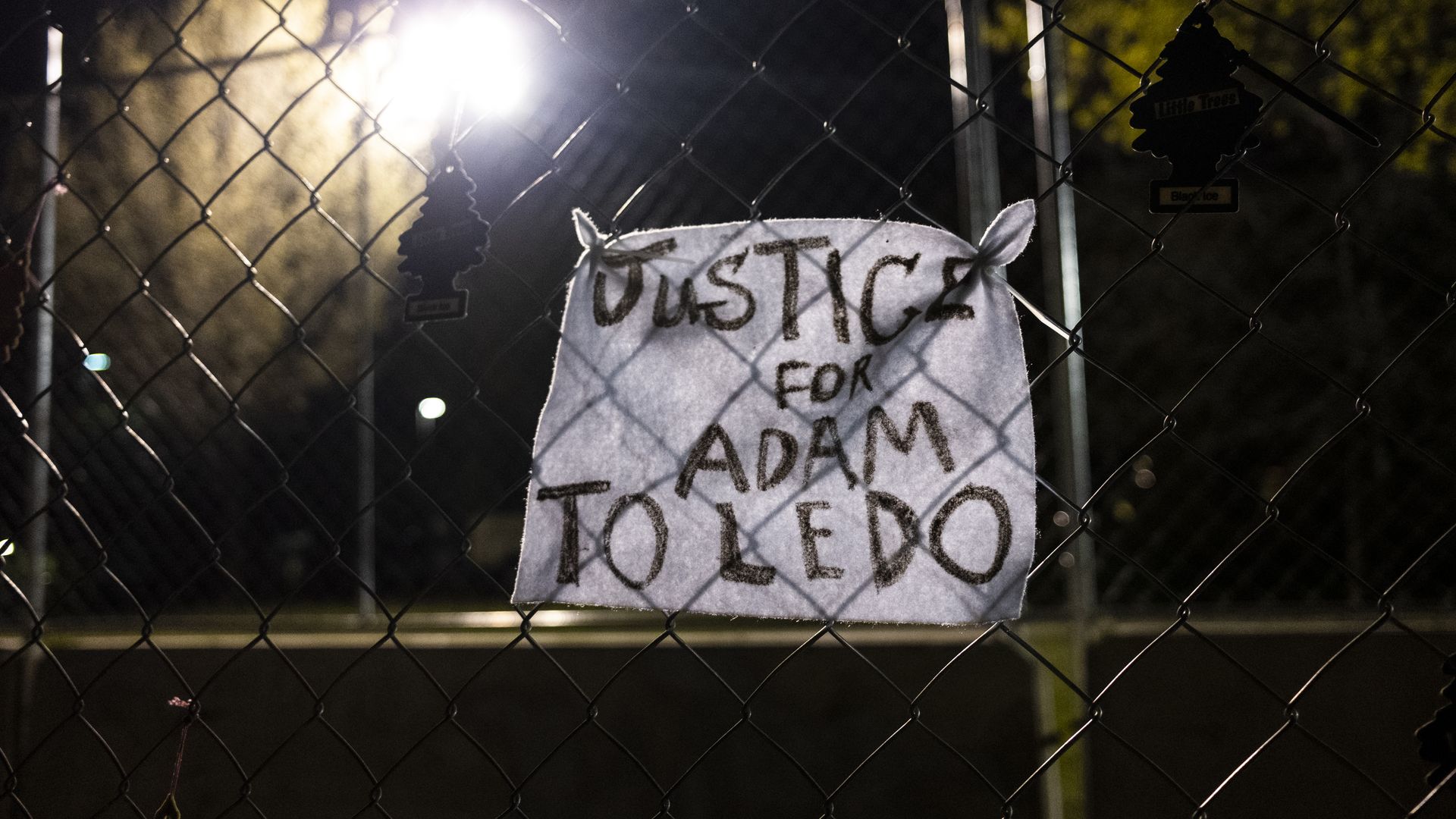
A piece of cloth tied to a fence in Brooklyn Center, Minn., demands justice for Adam Toledo. Photo: Stephen Maturen/Getty Images
Attorneys and advocates in Chicago are asking the U.S. Department of Justice to intervene in the city as the video of an officer shooting a 13-year-old of Mexican descent who had his hands up makes waves.
Why it matters: Activists are asking that Latinos not be forgotten among the discussions of changes to policing that have been prompted by cases like George Floyd’s.
- After Black Americans, Latinos face the second-highest rate of death by law enforcement, according to data analysis from the Washington Post.
- The 13-year-old, Adam Toledo was shot March 29 during a police chase in the Little Village neighborhood of Chicago, where the majority of the population is Latino. Bodycam footage shows him empty-handed when the shot was fired, even though officers had claimed it had been an “armed confrontation.”
5. Poll reveals broad Latino vaccine hesitancy
Half of the Latinos who have not been vaccinated against COVID-19 say they don’t plan on getting immunizations, as disinformation about the shots spreads on social media.
Why it matters: Latinos are three times likelier to be hospitalized and twice more likely to die from a coronavirus infection, but their barriers to getting the vaccines remain high and vaccine hesitancy is growing with poor or misleading information.
- 51% of Latinos surveyed said they didn’t trust the proven safety of the vaccines, while 32% said they distrust the manufacturing companies, according to data from grassroots group Voto Latino.
- That number rises amongst Latinos who speak Spanish at home: two-thirds of them are unsure of getting vaccinated partly because of information against the vaccines on Facebook.
Details: The falsehoods on social media compound a historical distrust in medical authorities.
- A bilingual campaign with artists like Benicio del Toro and Zoe Saldana seeks to motivate more people to get to their vaccination centers.
- Many Latinos who might otherwise be getting vaccinated have been unable to do so due to difficulties with online tools for making appointments, which are usually only available in English, or with getting to vaccination centers.
What they’re saying: “If we care about the health of our loved ones and neighbors, if we want to return to a normal life, then we do need to get vaccinated,” urged Health and Human Services Secretary Xavier Becerra in an appeal to the community through Noticias Telemundo.
6. A downward slide in press freedom


Press freedom worldwide had its worst regional decline in the Americas during the past year, according to the newest index from Reporters Without Borders.
Why it matters: Censorship has been on the rise in Latin America for several years, with special warning signs in countries like Mexico, where journalists sometimes even censor themselves to avoid being killed.
- But the situation is also worsening in countries like El Salvador, with police seizures of reporters’ materials, and Guatemala, where the president threatened to put the media “in quarantine.”
Between the lines: Reporters Without Borders points to Brazil as the worst offender in the region, with President Jair Bolsonaro threatening to punch reporters in the face and accusing newspapers of creating “social chaos” for their coverage of the real death tolls from COVID-19.
Go deeper: See the interactive chart
7. 🎼 No treble breaking barriers
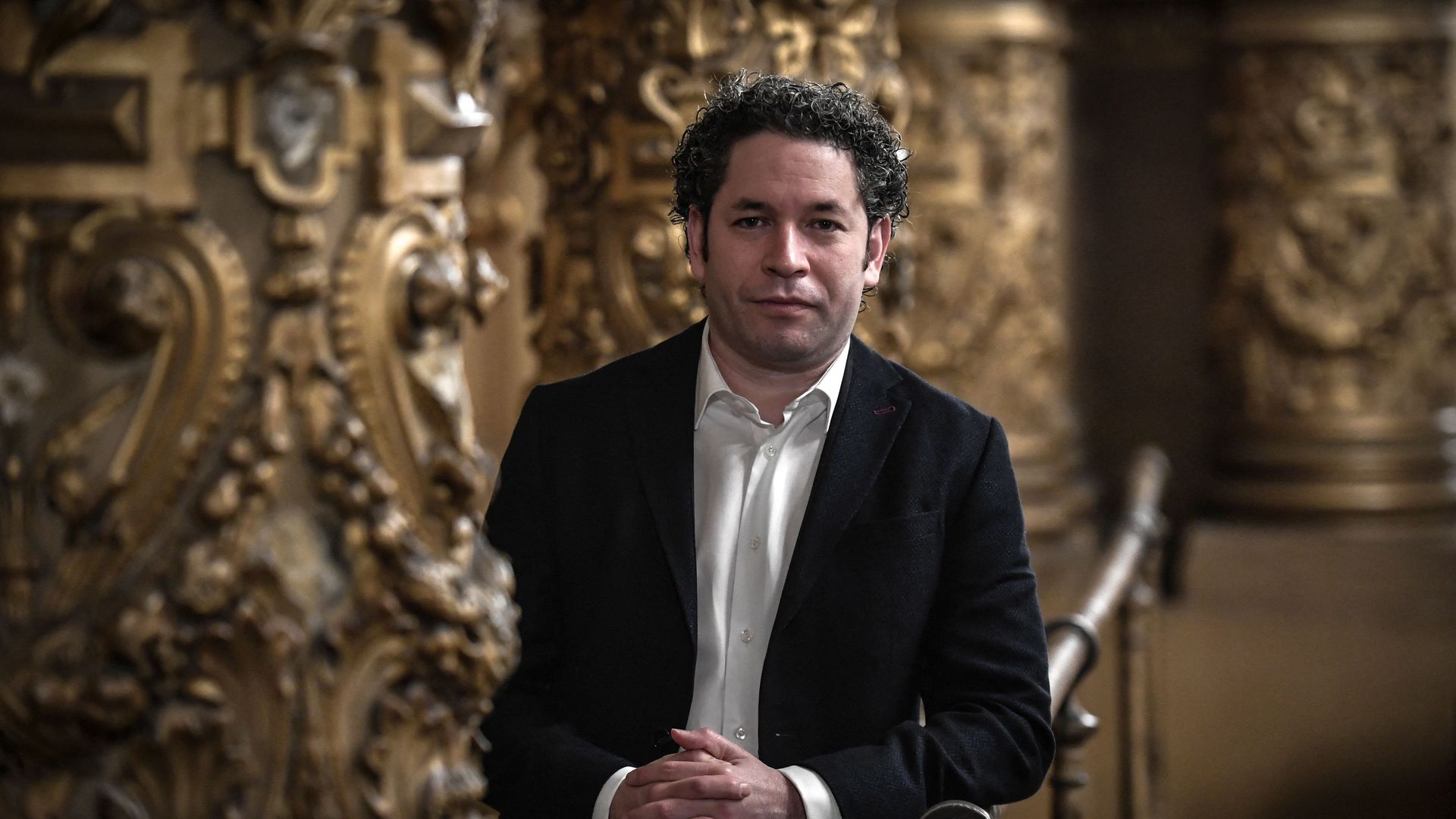
Gustavo Dudamel at the Palais Garnier in Paris on April 15. Photo: Stephane De Sakutin/AFP via Getty Images
Venezuelan conductor Gustavo Dudamel has just been named music director of the Paris Orchestra, a first for any Hispanic musician and a show of diversification from one of the most renowned cultural sites in the world.
- He will also remain artistic director of the Los Angeles Philharmonic and continue his work mentoring and directing the same Venezuelan youth orchestras that trained him, in a country where music is sometimes the only respite for thousands of kids.
For reference: Dudamel, the first Venezolano with a star on the Hollywood Walk of Fame, moves easily between classic culture spaces and pop culture ones, be that guest-conducting for “Star Wars: The Force Awakens,” joining Coldplay for the 2016 Super Bowl halftime show, or doing this.
8. 1 smile to go: Renovations from up above

Christ is getting a face-lift in Rio de Janeiro.
One of the most recognizable statues in the world is under renovation, with a project led by architect Cristina Ventura. The refurbishment is to be completed by October, for the 90th anniversary of the Christ the Redeemer.
The team has been rappelling the statue, found at the peak of a 2,700- foot-high mountain.
- They start at dawn, working to fix small fissures caused by rain corrosion and to re-waterproof the stone, all before wrapping each day at 8am, when the site opens for tourists.
Hasta la prĂłxima semana, have a safe one.
Sign up for Axios Latino

Keep tabs on the stories that most affect the U.S. Latino community on both sides of the border, a collaboration with Noticias Telemundo.