Axios Latino

November 09, 2021
¡Muy buen jueves! Today we celebrate the contributions of Latinos who served in the military in honor of Veterans Day.
📅 Don’t miss it: Russ will go one on one with Rep. Ruben Gallego (D-Ariz.) and Colonel Lisa Carrington tomorrow 12:30opm ET. Register here.
🚨 Job alert: Axios Latino is looking for a senior editor to lead the newsletter to its next milestone. If you have journalism experience and ideas to make this newsletter even better, apply here.
Send us any feedback (quejas, sugerencias, chismes) by replying to this email. Sign up if you aren’t yet subscribed, and remember you can read the Spanish version here.
This newsletter — edited by Michele Salcedo — is 1,419 words, about a 5.5-minute read.
1 big thing: Vets in exile
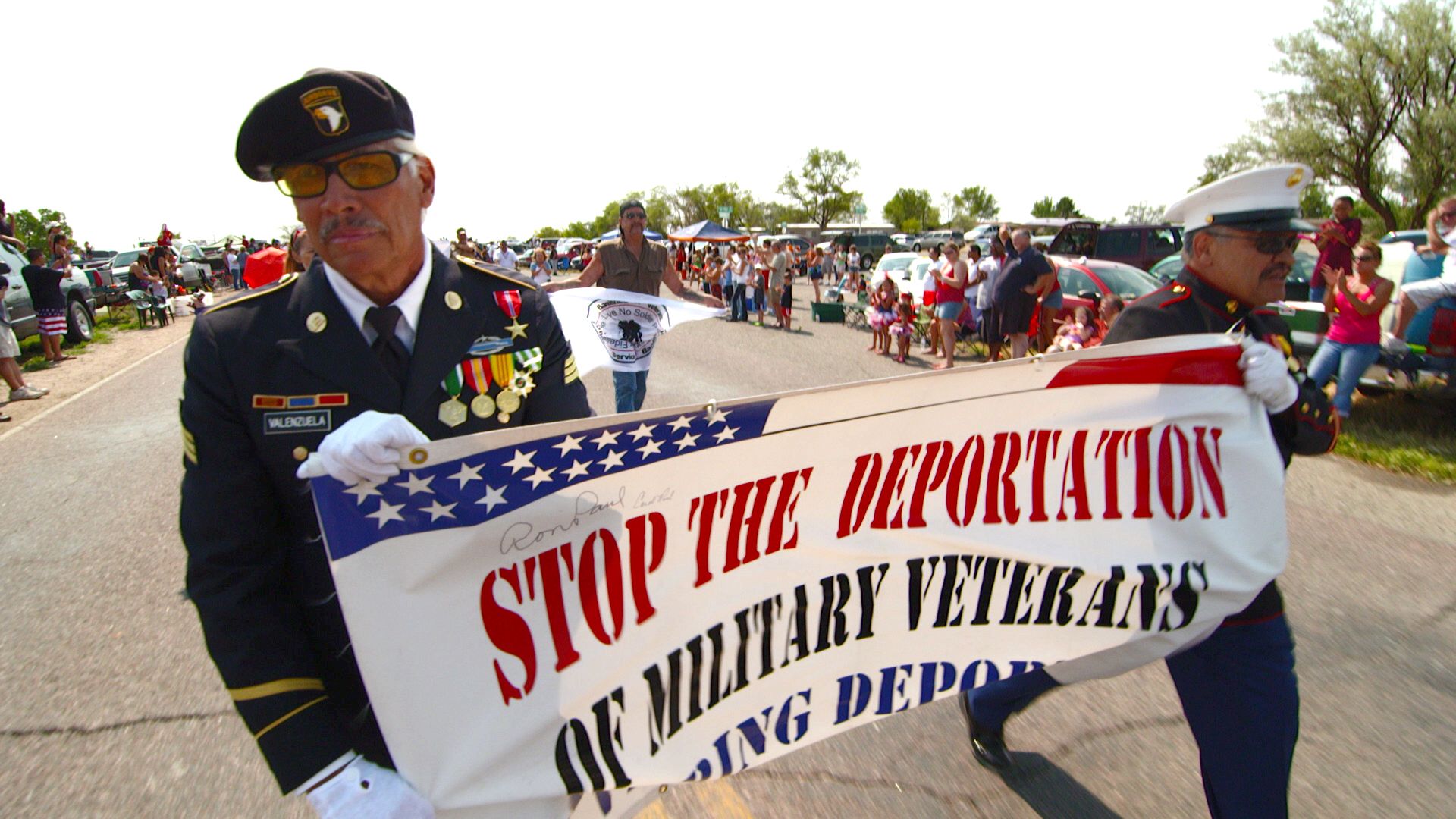
Mexican immigrant veterans Valente and Manuel Valenzuela marching in the July 4th parade in Pueblo, Colo. Photo: Elia Lyssy/Voces
About 1,000 U.S. military veterans — many Latino — live in foreign lands, their return to the country they defended in limbo because of their immigration status.
The big picture: A new VOCES/PBS documentary scheduled to air on most PBS stations this week focuses on two brothers, both Mexican immigrants, who fought in the Vietnam War on behalf of the U.S. and were honorably discharged. They now face deportation because of minor crimes.
- "American Exile" follows retired U.S. Marine Lance Cpl. Manuel Valenzuela and former U.S. Army Sgt. Valente Valenzuela as they fight removal orders and help other veterans who have been deported.
Details: An immigration bill signed by President Bill Clinton in 1996 and aggressively enforced by President Barack Obama retroactively sought to deport immigrant veterans even if convicted just of a misdemeanor like driving under the influence.
- Many of the veterans targeted for deportation saw combat and have post-traumatic stress disorder.
Don't forget: In July, the Biden administration announced a plan to allow immigrant veterans who have been deported to return legally to the U.S.
But, but, but: Rebecca Sheff, an attorney at the ACLU New Mexico, said the Biden administration's order can be reversed by another administration and only new legislation can protect immigrant veterans.
2. A reckoning on military abuse
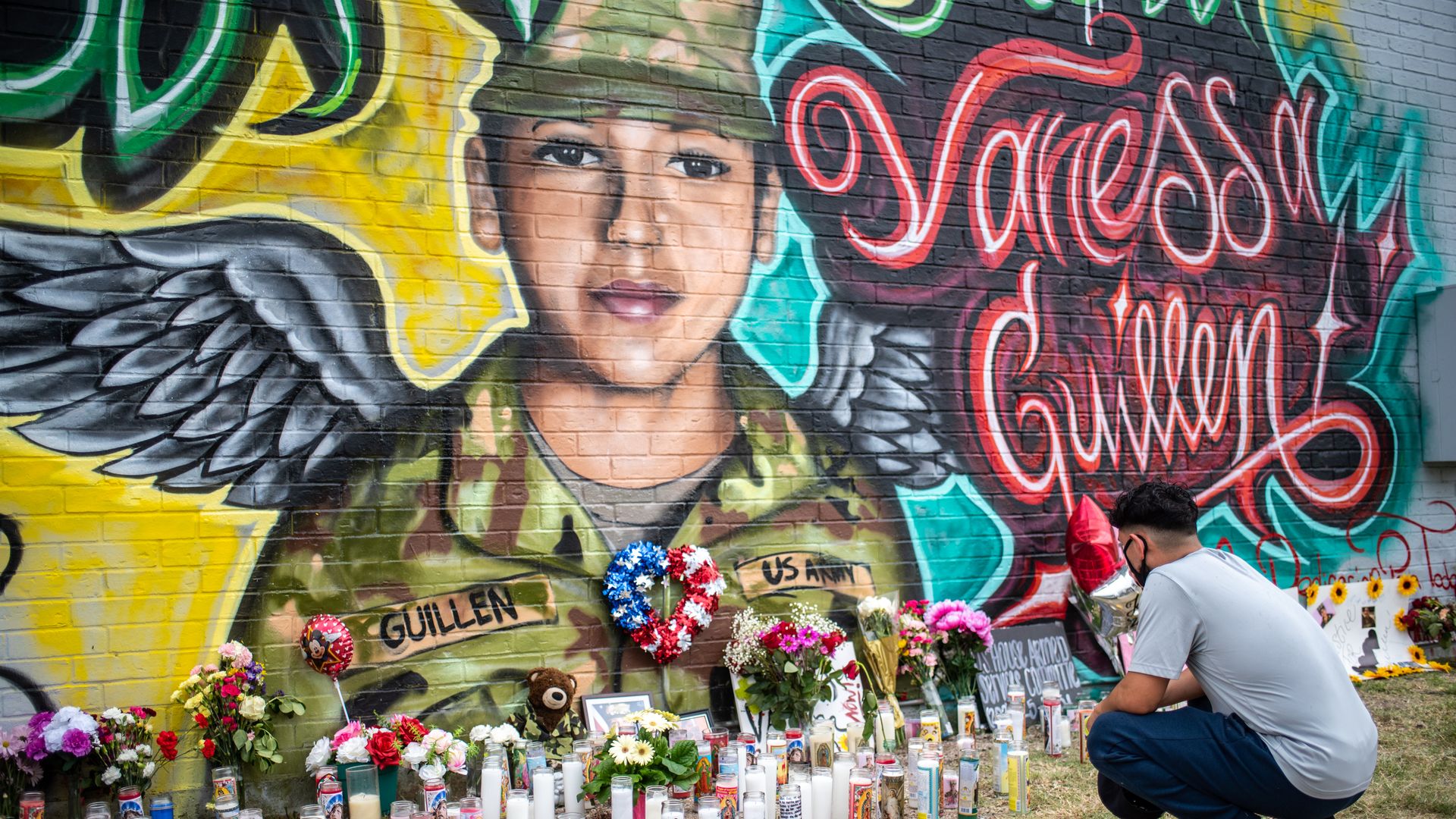
A mural in Austin, Texas, in honor of Army Spc. Vanessa Guillén. Photo: Sergio Flores/Getty Images
The U.S. Army has launched a pilot program for service members to have an alternative route to report sexual harassment and abuse, over a year after Latina soldier Vanessa Guillén was killed.
The big picture: Army investigators found that Guillén had informed “leaders” at her base, Fort Hood, that she had been sexually harassed. Her death brought attention to sexual assault, harassment and murder at Fort Hood, which had the highest number of such incidents in the Army, then-Secretary of the Army Ryan McCarthy said in August 2020.
- The Army investigation laid bare the many other cases of violence against and disappearances of Latino soldiers in Fort Hood, as is shown in a new podcast from Noticias Telemundo and Story Lab.
- A report commissioned after the Guillén case found the rate of sexual assault on female soldiers at Fort Hood alone is 8.4%, about 1 in 12 women service members. The incidence rate for all women in the Army is 5.4%.
- Male soldiers, such as Sgt. Elder Fernandes, are also victims of sexual assault at Fort Hood. He was found dead in August 2020 after reporting harassment.
- On average since 2019, 1 in 5 male and female Army recruits have been of Hispanic origins.
Driving the news: The incidents at Fort Hood, along with the Black Lives Matter movement, also strengthened calls to rename military bases, especially those currently named after confederate soldiers.
- The Hispanic Congressional Caucus recently suggested Fort Hood’s name be changed to honor Gen. Richard E. Cavazos, a Korean and Vietnam War vet who was the first Hispanic four star.
- The “I Am Vanessa Guillén Act,” introduced this past summer in the Senate and House, would remove the reporting and investigation of sexual assault and harassment from the chain of command and move it to the military branch’s Office of the Chief Prosecutor.
Go deeper: Family of murdered soldier seeks justice a year on
3. Finding U.S. Latino heroes in Germany
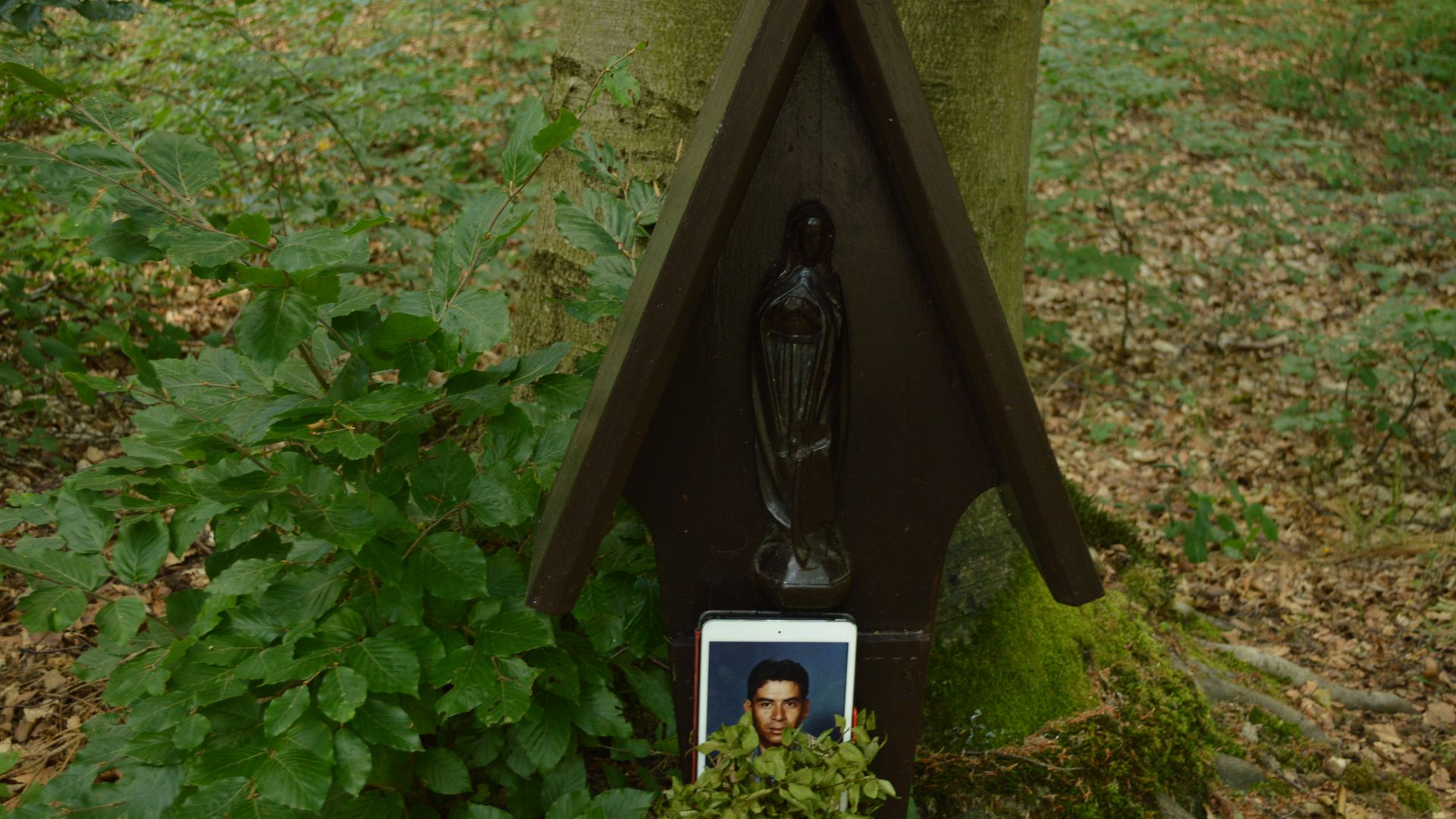
A photo of World War II Medal of Honor recipient Macario Garcia on an iPad Mini sits in front of a carving of the Virgin Mary in Germany's Hürtgen Forest. Photo: Russell Contreras/Axios
Deep in Germany’s Hürtgen Forest visitors can retrace the paths of Mexican American soldiers on their way to help defeat the Nazis.
The big picture: Returning Latino veterans of World War II played a pivotal role in creating the first large-scale Hispanic middle class in the U.S. and helped spark the Latino Civil Rights Movement.
- But their actions still are relatively unknown to the public.
In Germany's North Rhine-Westphalia region, visitors can hike a Hürtgen Forest trail to see firsthand the area where U.S. Army Pvt. Macario Garcia earned the Medal of Honor for his battlefield heroics.
- In November 1944, Garcia destroyed two German encampments and captured four prisoners by himself after his pinned-down infantry regiment ducked bullets and bombs near Grosshau, Germany.
- Life magazine wrote about Garcia's bravery.
- President Harry Truman presented the medal to Garcia, who soon after was denied service at a segregated Texas restaurant.
Between the lines: Today, just a handful of historic markers in the U.S. honor Latino veterans, but in Germany, one can hike along the quiet trails of the Liberation Route Europe — a network that connects important sites of the Allied Invasion.
- The wooded area once saw some of the fiercest fighting in World War II.
4. A vote marred by jailings and absenteeism
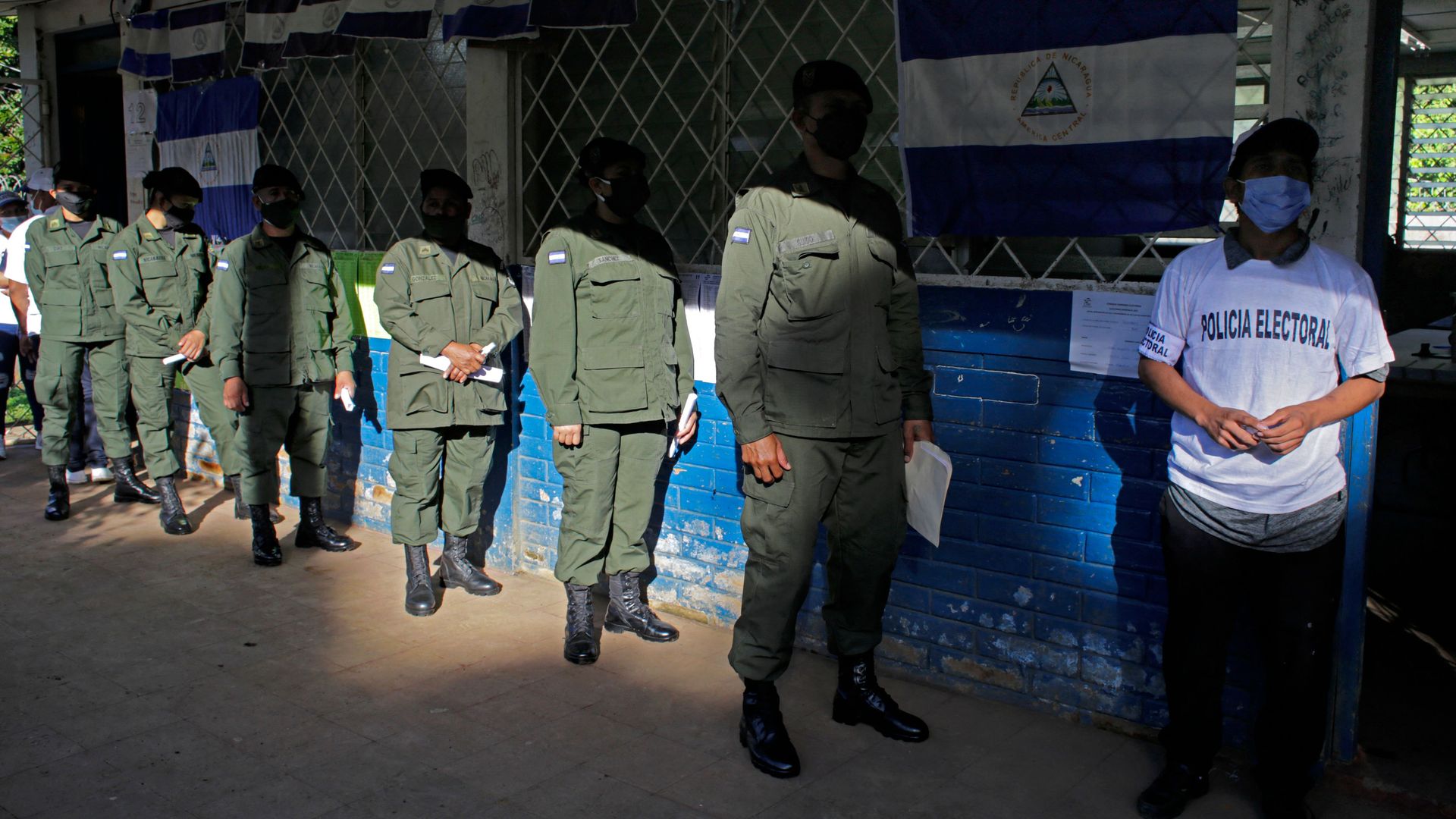
Nicaraguan soldiers in line to vote Nov. 7 in Managua. Credit: Oswaldo Rivas/AFP via Getty Images
Nicaragua’s electoral authorities have declared Daniel Ortega the winner of a fourth consecutive presidential term in a vote that President Joe Biden called a “pantomime” and many in the international community condemned.
Why it matters: Human rights abuses have been on the rise in the Central American country since 2018, when Ortega clamped down on mass protests. His re-election will significantly worsen the situation, Amnesty International warned yesterday.
- A record number of Nicaraguans have headed for the U.S. in the past few months, after years of fleeing toward Costa Rica.
- Ortega’s FSLN party controls Congress, and loyalists are in charge of the electoral body and the justice system.
What’s next: The U.S. State Department indicated it would consider new sanctions and unspecified “coordinated regional actions” against Ortega and Rosario Murillo, the first lady who has served as vice president since 2007 and was recently named “co-president” by Ortega.
- In a statement, the department said Ortega and Murillo had “deprived Nicaraguans of any real choice” by jailing the other candidates or forcing them to flee.
- However, Nicaraguans were still able to make one choice: whether to vote or abstain. Most ballot places looked empty on Sunday, and a CID Gallup poll from last week showed 78% thought the election was illegitimate.
- Ortega and Murillo are set to start their new five-year term in January.
5. Stories we’re watching
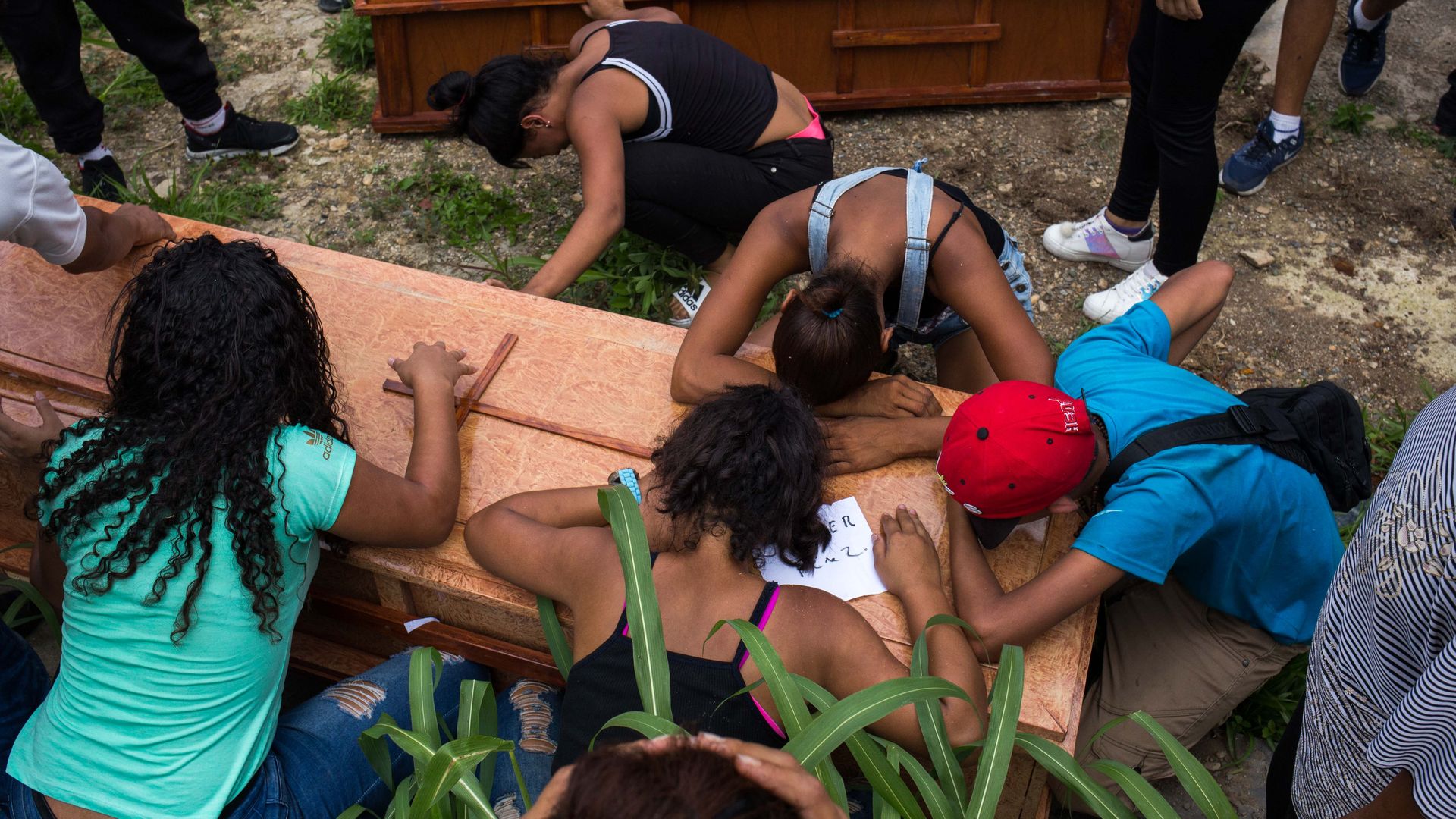
The funeral of Johander Pérez in November 2019. Pérez was shot in a Caracas slum by the Special Action Forces (FAES), a military wing accused of extrajudicial killings. Photo: AFP via Getty Images
1. The International Criminal Court has opened an investigation into allegations of physical and sexual torture, arbitrary arrests and extrajudicial killings in Venezuela.
- The claims stem from a dozen cases reported during anti-government protests in 2017, though research from the Organization of American States and the UN Human Rights office estimates extrajudicial killings since 2014 could range between 2,500 and 18,000.
- The ICC investigation is the first of its kind for a Latin American country, after several similar inquiries into African nations.
2. Chile's opposition-held lower house early this morning voted for an impeachment trial of President Sebastián Piñera that could result in his removal.
- The Senate will now act as an impeachment jury over the accusations that Piñera inappropriately intervened in the sale of a mining project from his family's company.
- Chile is holding presidential elections on Nov. 21 that could move to a second round if none of the seven candidates get more than 50% of the vote. Piñera can't run for reelection.
6. 1 smile to go: A Marine, once deported, is now a citizen
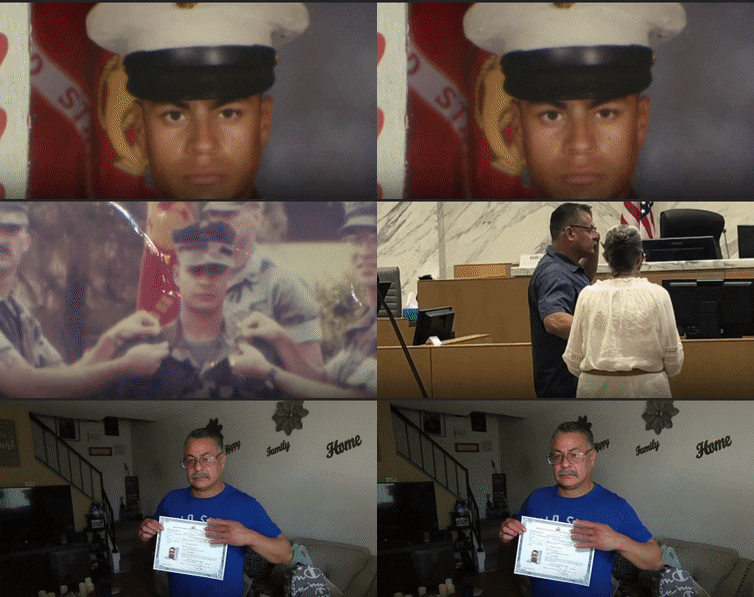
Héctor Ocegueda spent years in the Marine Corps before U.S. authorities deported him over a DUI charge in 2009. After a decade, he is back in the U.S. and has become the first in his family to become a U.S. citizen.
Details: Ocegueda swore the oath of allegiance in July, when the Biden administration launched a program that allows deported veterans and military families to return to the U.S. and continue the citizenship process.
- Immigrant vets are eligible for a fast track to citizenship, though Ocegueda had to file a lawsuit to get his naturalization interview.
- Ocegueda served in the Marines from 1987 to 1991, when he was honorably discharged. He says he wants to train to be a nurse assistant to help other veterans.
Between the lines: At least 93 veterans were unduly deported between 2013 and 2018, according to a report from the Government Accountability Office.
We’re off Thursday for Veterans Day. See you on Tuesday, have a safe one.
Sign up for Axios Latino

Keep tabs on the stories that most affect the U.S. Latino community on both sides of the border, a collaboration with Noticias Telemundo.