Axios Latino

¡Buenos días! ¿O tardes ya? Axios Latino focuses on the stories that affect the U.S. Latino and Latin American communities.
- President Biden urged Congress to pass measures supporting Dreamers, undocumented agro-workers and beneficiaries of Temporary Protection Status.
- Today's newsletter is 995 words, about a 4-minute read.
Send us your feedback (chismes also welcome) by replying to this email. And if you are not already subscribed, sign up here. Read the Spanish version here.
1 big thing: Heavily Latino states lose political clout
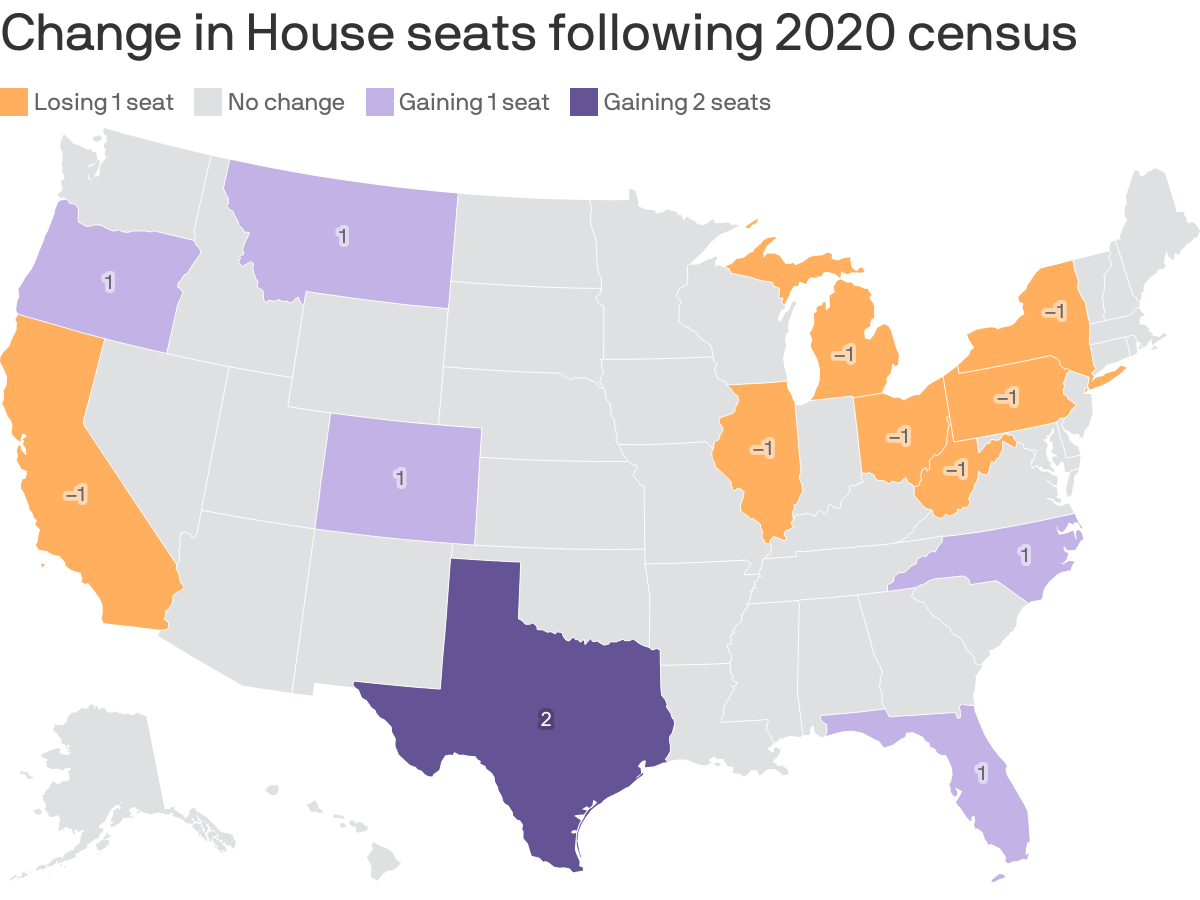
The 2020 census results are raising the spectre of possible miscounts of Hispanics.
- Arizona failed to pick up a seat, while Florida and Texas picked up fewer than expected, Cook Political Report's Dave Wasserman tells Axios.
Why it matters: Latino people in the U.S. have accounted for around half of the country’s demographic growth for the last decade. This was not reflected in the census numbers.
- Congressional apportionments determine access to budget funds and issues of taxation for up to a decade.
Between the lines: The U.S. Census Bureau originally had a delayed schedule to carry out the questionnaires due to pandemic logistics. But the Trump administration ordered the counting to end early.
- Census takers reported they were sometimes instructed to enter false information in order to meet deadlines.
Experts also sounded the alarm in 2020 that there could be an undercount because there was insufficient outreach for minority communities in certain states.
- Immigrants were fearful of filling out the form, since the previous government sought to exclude non-citizens from the final tallies.
What’s next: More in-depth census results, including a demographic breakdown, will be available come September.
Go deeper: The next census fight is over reapportionment.
2. Central America faces U.S. carrot and stick
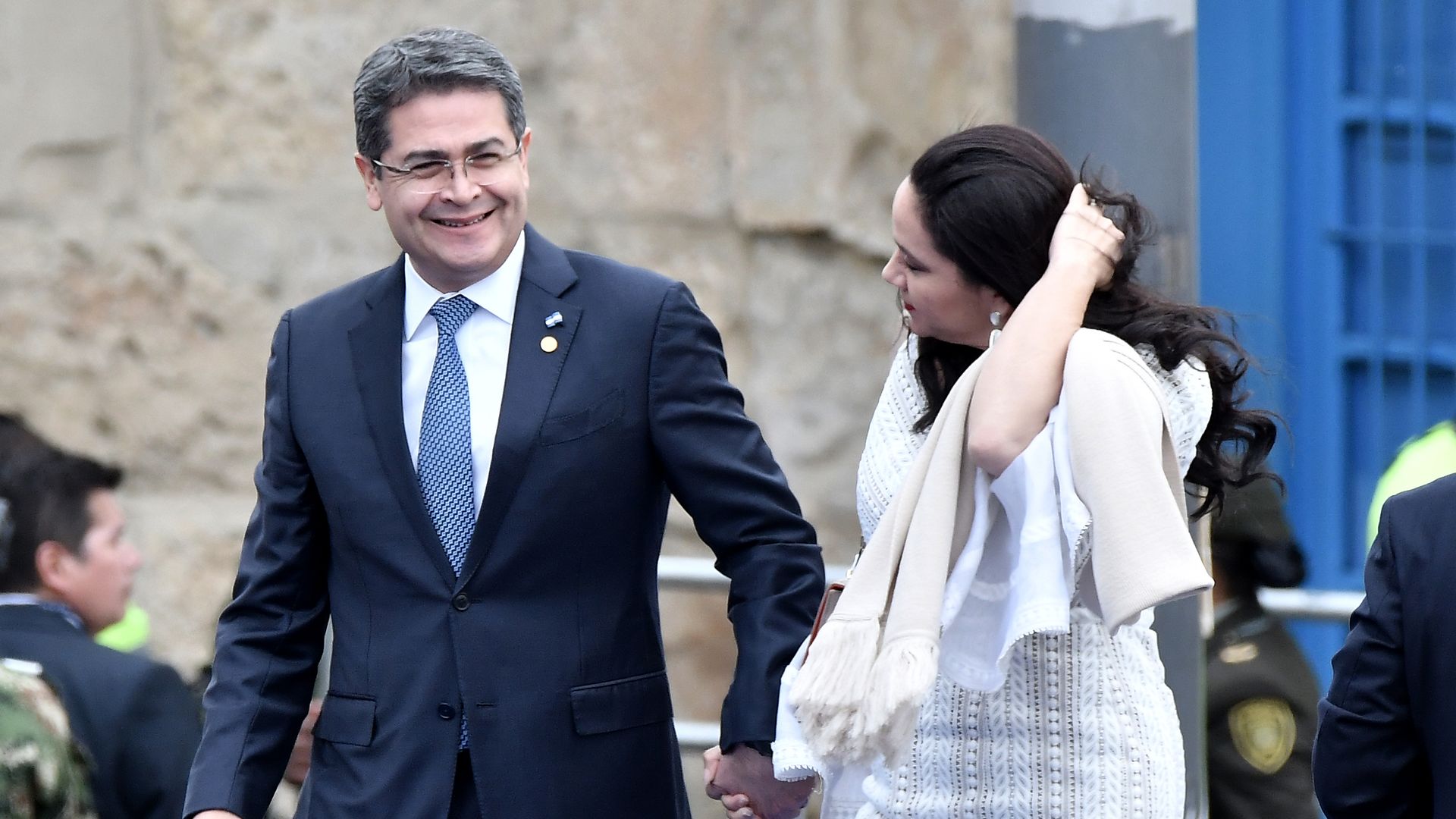
Presidet Juan Orlando Hernández of Honduras and his wife, Ana García, in Bogotá, Colombia, in 2018. Photo: Gabriel Aponte/Vizzor Image/Getty Images
The State Department announced plans to give $310 million in humanitarian aid to cover the “immediate needs” of migrants across Central America, as part of a plan to combat the root causes of rising migration from the region.
Why it matters: Those funds will partly go through the very Central American governments that the U.S. has punished for having corrupt officials.
Driving the news: Members of Congress tell Axios they’re pushing a bill for sanctions and restrictions against Juan Orlando Hernández, the Honduran leader.
- He is under investigation in the U.S. for purported links with drug-traffickers. The president’s brother, former Honduran Congressman Tony Hernández, got a life sentence for cocaine dealings in March.
Between the lines: Mismanagement of resources and embezzlement of public funds have long created deep problems in these Central American countries.
3. In Mexico, 88,000 reported forcibly disappeared
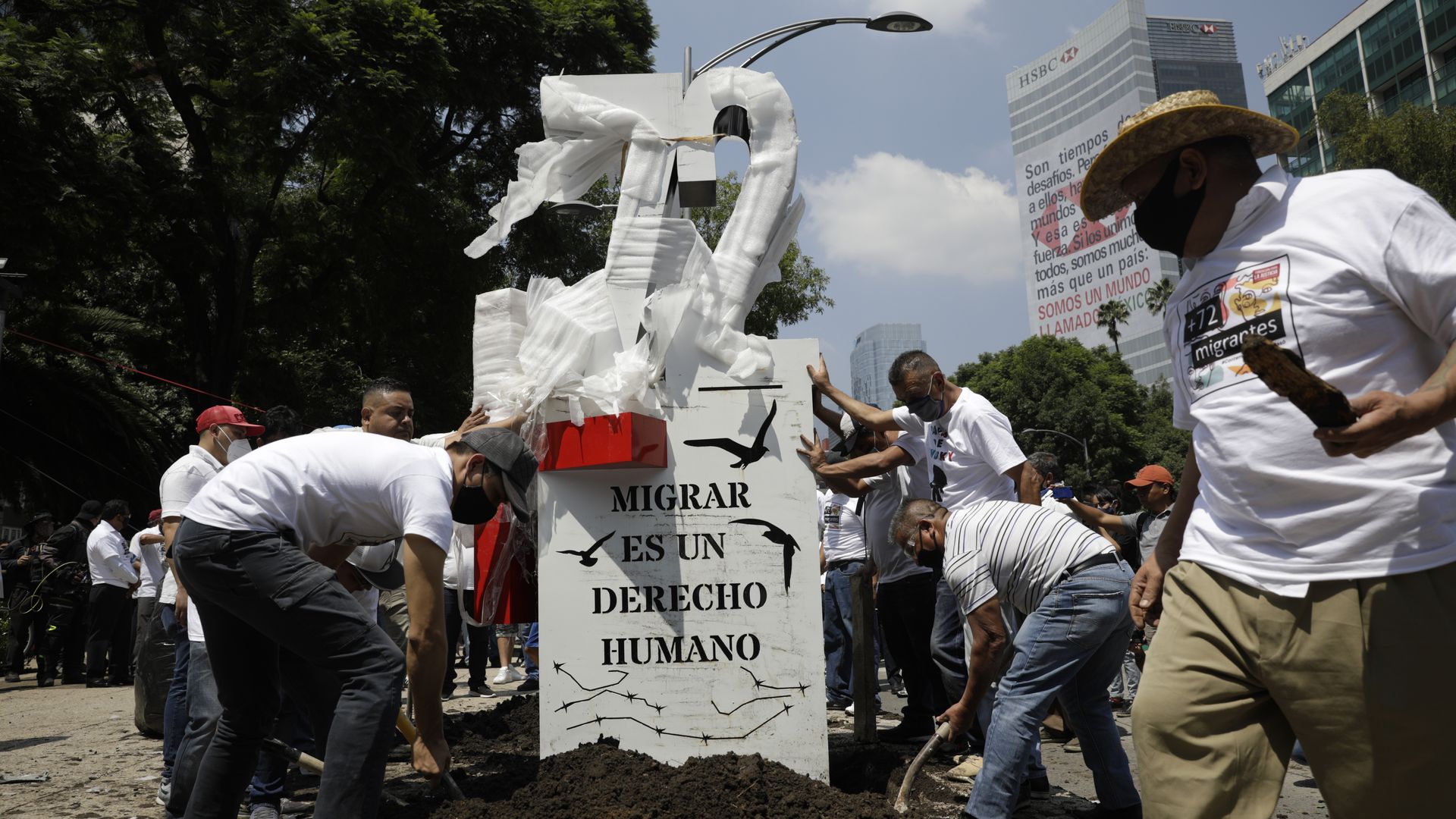
Relatives of 72 disappeared migrants and those who died in 2010 in Tamaulipas state demonstrate in front of the U.S. embassy in Mexico City. Photo: Mariana Bae / Eyepix Group/Barcroft Media via Getty Images
At least 2,000 people who were migrating through Mexico have been reported as missing or forcibly disappeared in the past few months, according to a coalition of Mexican states’ human rights officials.
The bigger picture: Migrants have increasingly fallen prey to criminality in Mexico, as cartels kidnap them to extort their families or try to forcibly recruit them to work drug crops and labs, under penalty of death.
- Three migrant massacres occurred near the U.S.-Mexico border in the past decade, involving beheadings, charred bodies and unmarked graves.
- Those massacres tend to happen when coyotes, people hired to smuggle the migrants to the U.S., don’t pay cartels for the “right of way,” a smuggler told Noticias Telemundo.
The bottom line: Almost 88,000 people, either Mexicans or foreigners, are reported forcibly disappeared in the whole country.
4. 🏠 More Latinos are now homebuyers
Up to 750,000 more Hispanics in the U.S. became homeowners during 2020, the only demographic to increase its homeownership rates during each of the past five years, according to an analysis from the National Association of Hispanic Real Estate Professionals.
Why it matters: Over 50% of growth in homeownership in the U.S. has been driven by Latinos in the last decade, even though the community as a whole has a harder time accessing credit.
- Last year’s increase was motivated by years-long savings and lowering interest rates, despite the economic losses for Latinos.
- Half of Latinos polled said the pandemic made them accelerate plans for purchasing a home, as many Hispanic renters fear evictions.
What they’re saying: “The majority of Latinos that were considering pursuing homeownership or had the means to do so weren’t as affected by the pandemic,” Gary Acosta, the Hispanic group's director, told the WSJ.
5. What comes next in Venezuela
Tomorrow marks the 2-year anniversary of an attempted regime change in Venezuela, Axios World editor Dave Lawler reports.
- Juan Guaidó and Leopoldo López — Venezuela’s U.S.-backed interim president, and the man who until that morning had been Venezuela’s most prominent political prisoner — stood together and declared the end of Nicolás Maduro’s regime.
The walls were closing in. A plane, U.S. officials would claim, was waiting on the tarmac to escort Maduro to Cuba.
- Two years later, Guaidó’s star has fallen, López is in exile and Maduro remains in the Miraflores Palace.
Axios spoke with key figures in the effort to oust Maduro, and witnesses to the events that day, in a look back at what went wrong and a look ahead to where the failure that day leaves Venezuela.
Read it later today in the Axios World newsletter.
6. Nicaragua looks to the stars
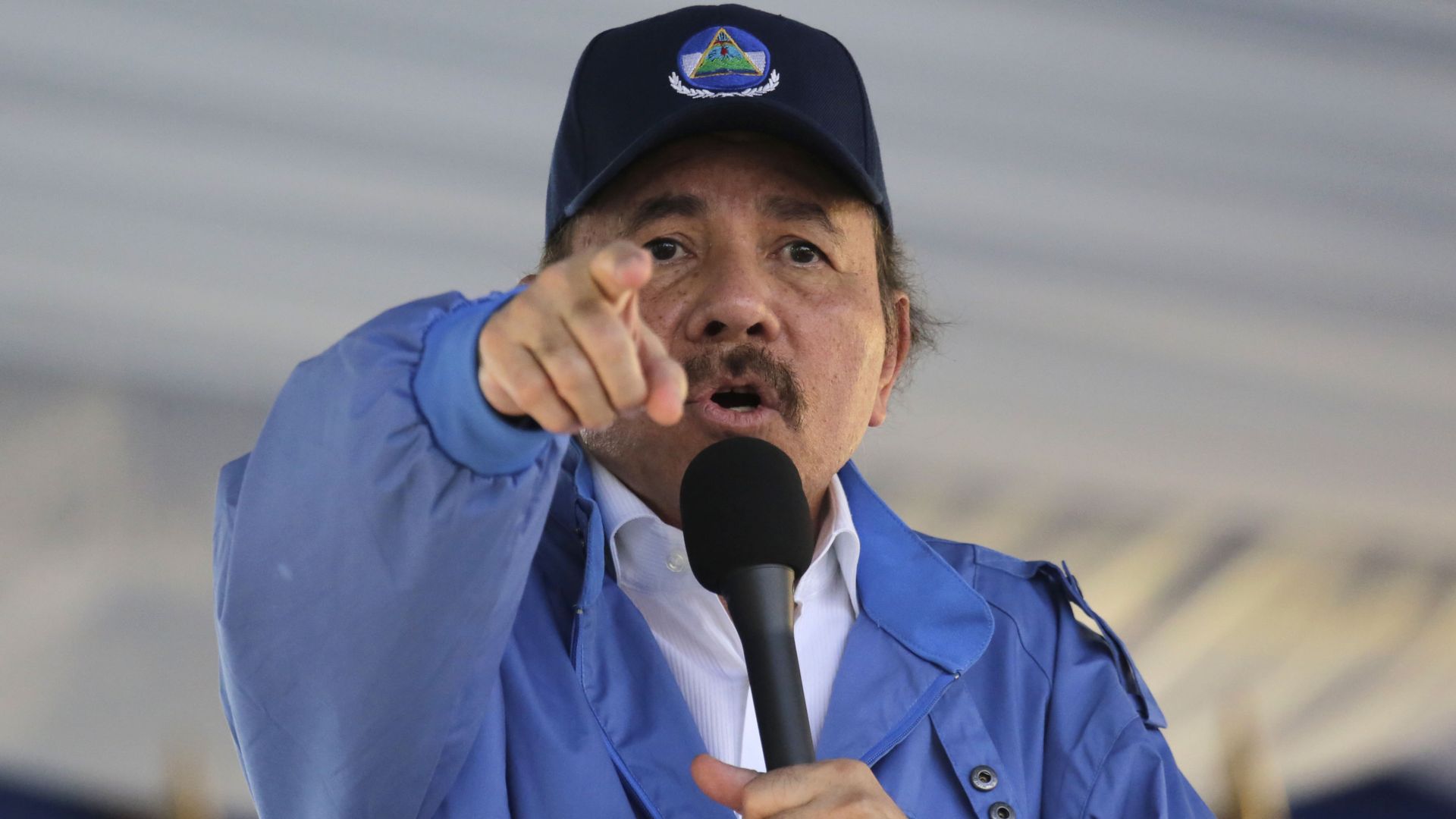
Nicaraguan President Daniel Ortega in 2018. Photo: Inti Ocon/AFP via Getty Images
The Nicaraguan government is creating a Ministry for Ultraterrestrial, Moon and other Celestial Bodies Affairs, a proposal first put forward by president Daniel Ortega in February.
Why it matters: The plan comes as the Central American country marks three years since an April popular uprising against Ortega, which was violently quashed and has made thousands flee political prosecution.
- The new ministry seems to be an attempt to attract funding through purported scientific and satellite development, say Nicaraguan analysts.
- Ortega’s regime is sanctioned by the U.S. for its repression of the mass protests.
The bigger picture: The Nicaraguan government faces a May deadline from the Organization of American States to implement electoral reforms.
- This is amid uproar from a law that would bar opposition candidates in November’s upcoming presidential vote and calls to free over 100 people deemed political prisoners.
7. An award for a new book on Boricua activists

A new book on a legendary Puerto Rican activist group that shook up Chicago and New York City in the 1960s has won the Frederick Turner Jackson Award from the Organization of American Historians.
The big picture: The Young Lords: A Radical History, by Baruch College history professor Johanna Fernandez, tells of how advocates organized Puerto Rican neighborhoods, held sit-ins and protests, created free food programs and health clinics, and pushed for political power.
8. 1 smile to go: solar-powered and delicious

At 71, Maximino Antonio Piedad has become an inventor, and a viral sensation, for a stove top that uses the sun’s rays.
- Piedad, who grew up speaking only the indigenous language Náhuatl, says he came up with the idea after noticing how many people in his neighborhood, in the outskirts of Mexico City, didn’t have access to gas.
He takes discarded satellite TV antennas, wraps foil around the dish and positions it to reflect sunshine towards a base that holds a pot or pan. “You can broil meat, make eggs or even a broth,” boasts Piedad.
- Another benefit: “No need for firewood or coal any other thing that just pollutes our planet even more”.
Hasta la próxima semana, have a safe one.
Sign up for Axios Latino

Keep tabs on the stories that most affect the U.S. Latino community on both sides of the border, a collaboration with Noticias Telemundo.