Axios Latino

October 07, 2021
¡Muy buen jueves! Today we offer insight into enterprises starved for venture capital, Latino voter registration drives, and dolls that help children with severe chronic illness.
Send us any feedback (quejas, sugerencias, chismes) by replying to this email. Sign up here if you aren’t yet subscribed, and remember you can read the Spanish version here.
This newsletter — edited by Michele Salcedo — is 1,048 words, about a 4-minute read.
1 big thing: Latino businesses get scant VC money

Illustration: Aïda Amer/Axios
Less than 1% of funds from the top 25 venture capital and private equity firms are invested in Latino-owned businesses, despite the fast pace of Hispanics opening new enterprises, a study found.
Why it matters: The meager VC and PE investment highlights the lack of capital available to Hispanics as they try to launch businesses. The result: Stymied growth in one of the fastest-growing segments of the U.S. economy.
Details: Fewer than 1% of Latino businesses received any of the $487 billion invested across a sample of the top 500 largest venture capital and private equity deals in 2020, according to a study by Bain & Company, the Stanford Latino Entrepreneurship Initiative, and the research nonprofit firm Latino Donor Collaborative.
- Even so, Latino entrepreneurs are responsible for about 50% of net small business growth in the U.S. over the past decade, according to data from 2007 to 2017.
- Those Latino-owned businesses are growing in annual revenue faster than white-owned businesses, the study said.
Yes, but: Researchers found that as Latino-owned businesses approach $1 million in revenue, the companies struggle with profitability and cash flow. That makes it difficult for them to scale and accelerate their growth.
2. Heritage imprint: Happy Meals migrated from Guatemala
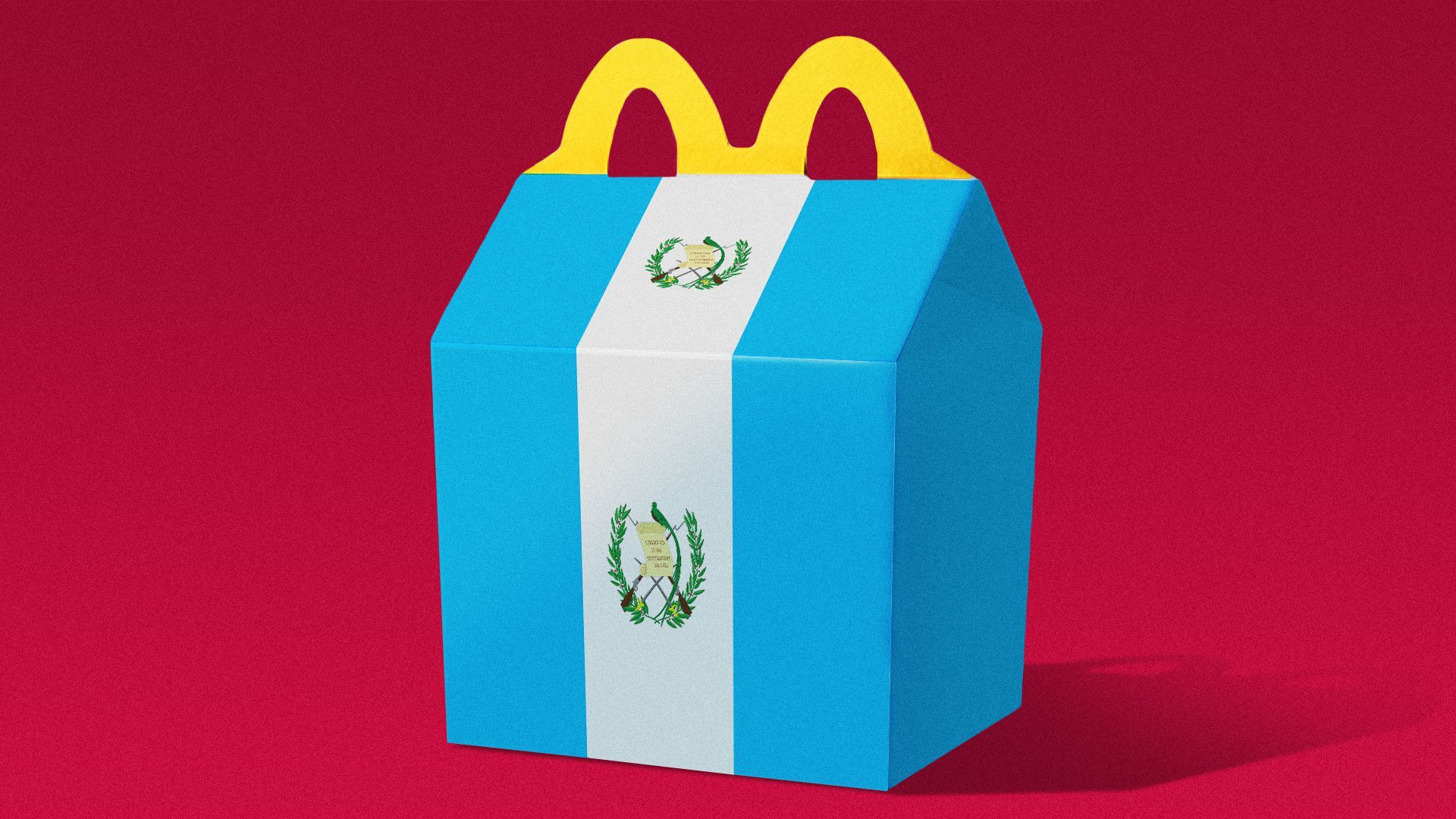
Illustration: Shoshana Gordon/Axios
The McDonald's Happy Meal has become a childhood staple around the world, but few know the marketing idea began in Guatemala as "Ronald's menu," Axios' Oriana Gonzalez reports.
What happened: José MarÃa Cofiño and Yolanda Fernández de Cofiño founded Guatemala's first McDonald's in 1974. Fernández de Cofiño noticed that children were not able to finish the meals the restaurant offered, so she came up with the idea of offering smaller portions for kids and including a toy to make the meal more fun.
- Fernández de Cofiño named the offering Ronald's menu, after Ronald McDonald, the company's clown mascot.
- She included toys in the Cajita Feliz, or happy little box, that she would buy at a local market.
The intrigue: Cofiño did not ask permission from McDonald's executives to create the menu, but the positive feedback she received motivated her to introduce the menu during the 1977 World Franchisee Convention.
- McDonald's corporate officials adopted Cofiño's idea and implemented it worldwide in 1979 as the Happy Meal.
Don't forget: Fernández de Cofiño died in early September at age 87. McDonald's released a statement, saying her death was "without a doubt, one of the most difficult and sad moments for the family, the company and its thousands of collaborators in Guatemala ... Her light will live in our hearts forever."
Go deeper for Hispanic Heritage Month:
How a Colombian neurosurgeon saved our brains
Chilean R&D to vanquish viruses
Argentina’s hand in crime-fighting
3. Voter summit features Huerta and Abrams
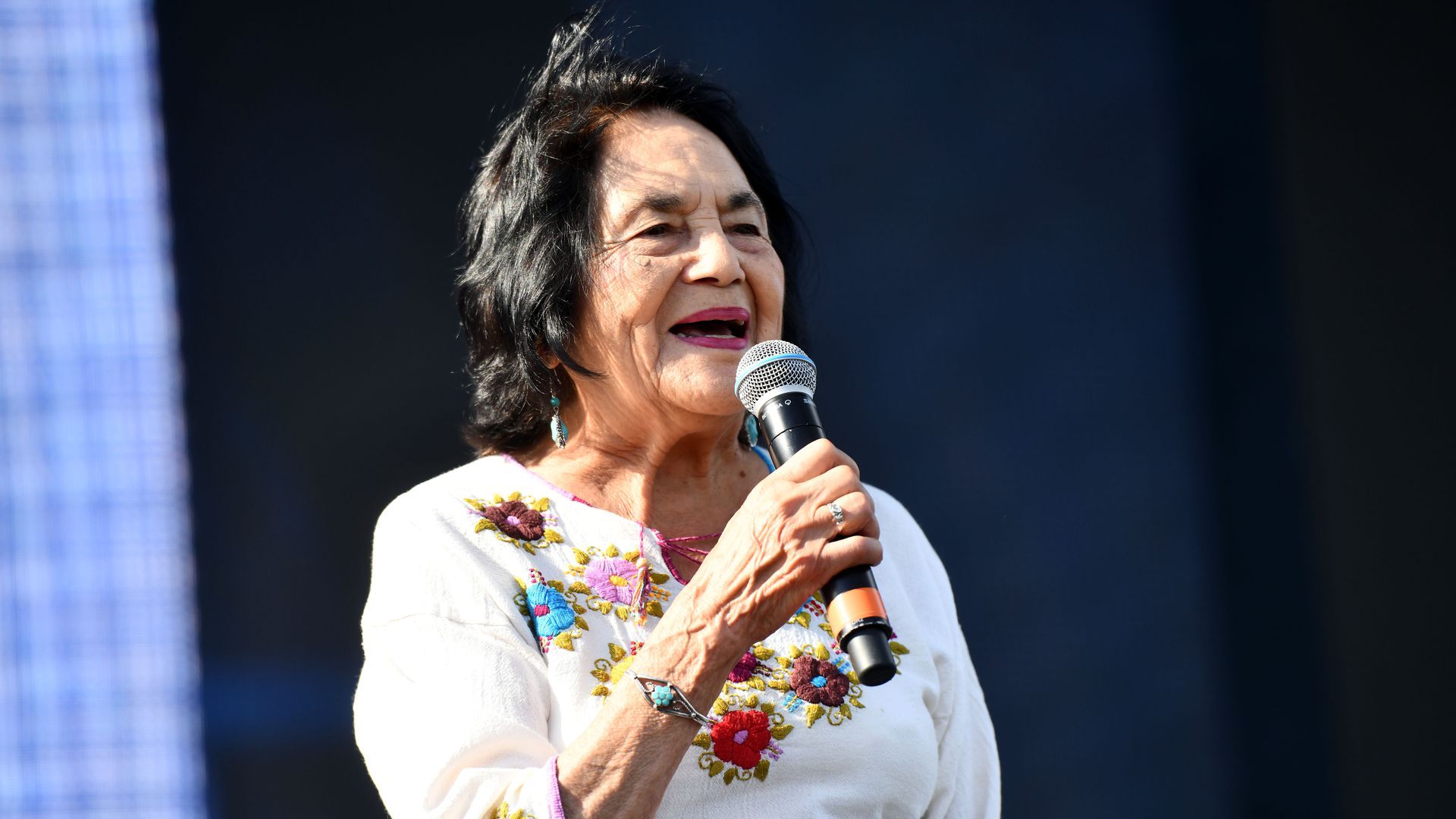
Mexican American Civil Rights pioneer Dolores Huerta. Photo: Scott Dudelson/Getty Images
Mexican American civil rights leader Dolores Huerta and Georgia voting rights advocate Stacey Abrams are headlining a summit this week on Latino voters.
Why it matters: The 13th annual Power Summit organized by the left-leaning advocacy group Voto Latino comes as advocates nationally are trying to get a jump on engaging Latino voters after Republicans surprised them with gains among Hispanics in 2020.
Details: The virtual summit is offering training sessions around voting rights and storytelling for activists designed by Voto Latino.
- Sessions will also focus on organizing, health care access and equity in the workplace.
- Huerta spoke to activists on Wednesday, and Abrams is scheduled to address advocates on Thursday.
- Both are fighting Republican-backed voter registration proposals they feel discriminate against Black Americans and Latinos.
4. Racing game speeds through Mexico
Forza Horizon 5. Photo: Xbox Game Studios
Mexico is the setting for a racing game that spotlights several Mexican artists and characters throughout the experience.
Why it matters: "Forza Horizon 5," scheduled for release Nov. 9 by UK-based Playground Games, is the latest game to hire consultants and local artists to craft a culturally sensitive experience around Latino themes.
Details: FH5 is the fifth "Forza Horizon" title and 12th main installment in the simulation racing game "Forza" series, which is set in fictional representations of real places.
The intrigue: Developers sent reference crews to Mexico for landscape, weather, and audio capture for the game.
- But with travel restrictions due to the pandemic, developers relied on consultants and writers like Lalo Alcaraz, a Mexican American cartoonist and movie consultant.
- Developers also enlisted artists like Farid Rueda, born to a family of farmers in the state of Morelos, who weaved Indigenous-inspired images into murals that are seen throughout the game.
- Muralist Raúl Urias also integrated art for his home state of Chihuahua in pieces that are seen during races.
5. Stories we're watching
The logo for Petroleos de Venezuela S.A., the state-owned oil company. Photo Illustration: Pavlo Gonchar/SOPA Images/LightRocket via Getty Images
1. Oil spills off the coast of Venezuela have not been cleaned up since they began in September and are threatening what little fishing there still was, Reuters reports.
- The publicly unreported spills follow years of neglect at Petroleos de Venezuela, the state oil company known as PDVSA. Its exports were once the largest contributor to the battered economy.
2. Mexico and the U.S. will hold a high-level meeting tomorrow on security, and Foreign Affairs Minister Marcelo Ebrard of Mexico has asked for greater collaboration against arms trafficking.
- The U.S. side will be represented by Homeland Security Secretary Alejandro Mayorkas and Attorney General Merrick Garland.
1 smile to go: A doll of their own

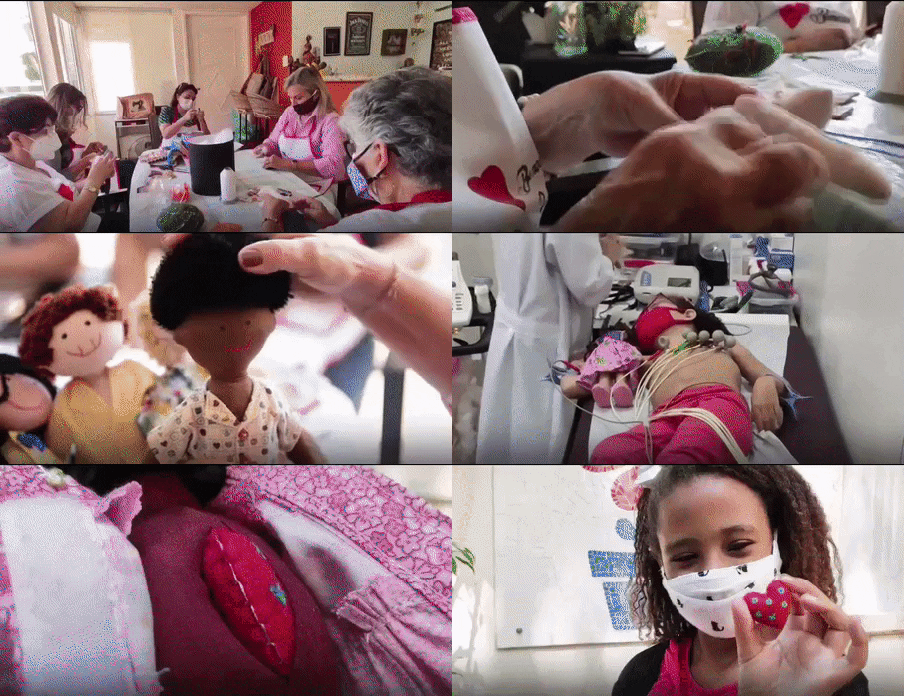
Children in Brazil with chronic diseases are getting dolls to help them feel more at ease with their condition, thanks to a volunteer program.
Details: The group Bonecas de Propósito (dolls with a purpose) knits custom dolls that resemble the kids in appearance and health condition.
- They are donated, in alliance with pediatric wards in Brazil.
- The knit product has removable kidneys for renal patients or exchangeable wigs for cancer patients.
- Fernanda Candeias created the project after meeting a girl crying over the loss of her hair following leukemia treatment.
- The dolls are also used in the pediatric wards to explain to the children elements of their treatment in a play-based way.
Hasta el martes, have a safe one.
Sign up for Axios Latino

Keep tabs on the stories that most affect the U.S. Latino community on both sides of the border, a collaboration with Noticias Telemundo.