Axios Indianapolis

October 14, 2026


Wednesday, already. You love to see it!
🌧️ Today's weather: Chance of showers and thunderstorms with a high of 83.
🚗 Situational awareness: Expect slowdowns on I-70 through downtown this week during overnight paving projects.
Today’s newsletter is 1,109 words — a 4-minute read.
1 big thing: Partisan school board races
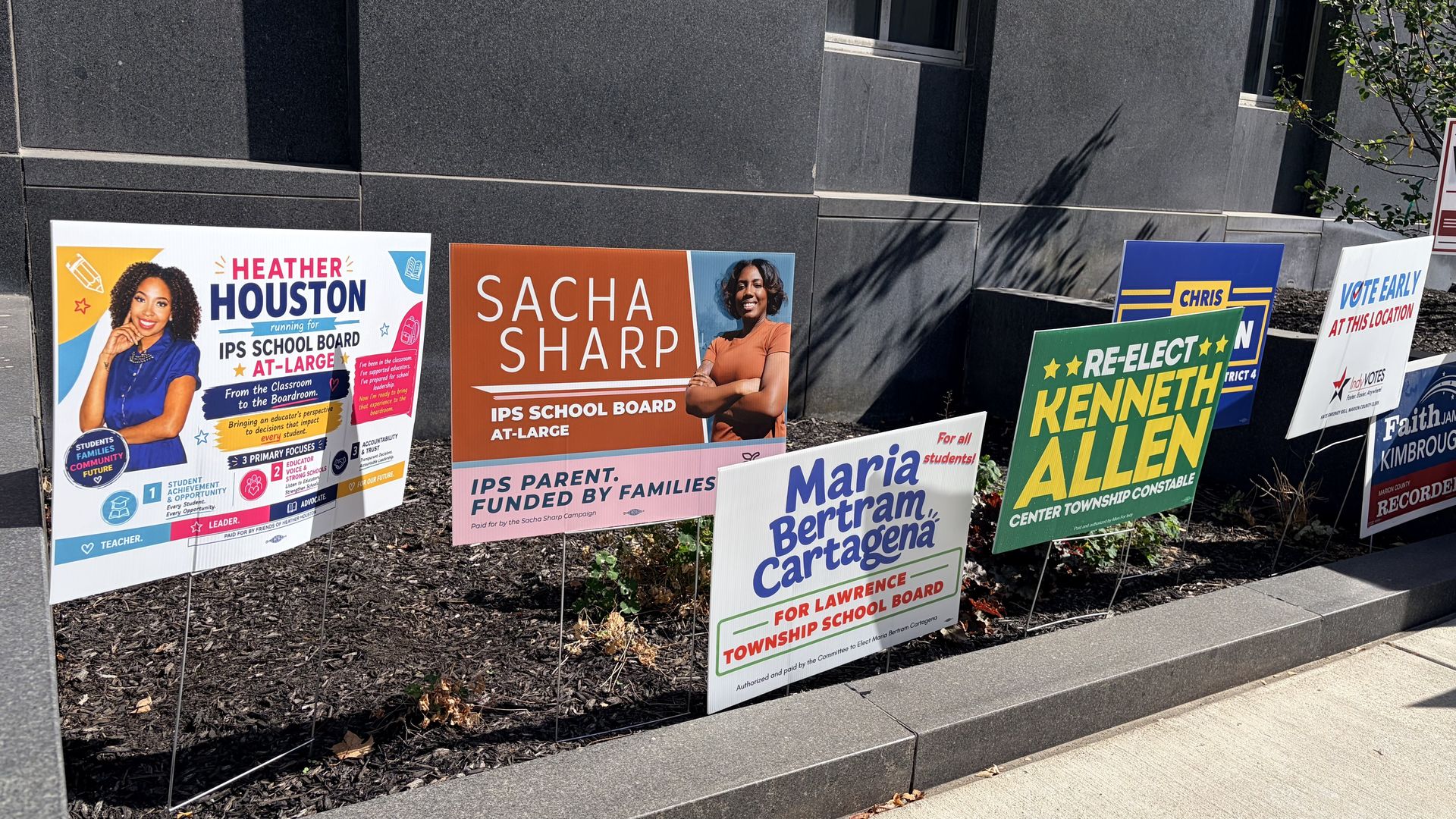
You may see something new on your ballot this election cycle — school board candidates with a political party affiliation.
Why it matters: Indiana's school board races are partisan for the first time, testing the impact of a change made by lawmakers last year.
By the numbers: Statewide, about half of school board candidates did not declare a political affiliation, according to Indiana Election Division filing records analyzed by Axios.
- More than a third of candidates are affiliated with the GOP, about 7% registered as independent and about 6% as Democrats.
How it works: When filing their candidacy, school board candidates must now indicate their political affiliation.
- They may choose Democrat, Libertarian, Republican or independent. Candidates may also write in a party or choose no affiliation or decline to disclose their affiliation.
- To affiliate with the Democratic or Republican Party, the candidate must have voted for that party in the last two primary elections in which they participated.
- Otherwise, they must get consent from the party's county chair.
Yes, but: Straight-ticket voting does not include school board candidates, even if they're affiliated with one of the major parties.
- You'll still need to vote separately in those races.
Context: Some lawmakers and education advocates warn the move to partisan races would turn people away when some communities already struggle to find enough school board candidates.
- So far, it doesn't seem to have decreased interest by much. The number of candidates this year is stable compared to the general election two years ago, according to records analyzed by Axios, and down roughly 10% from the previous few election cycles.
Zoom in: In Marion County, most candidates are running as Democrats or without a party affiliation, meaning voters will still be parsing issues to find distinction between candidates.
2. Indy's best week for homebuyers
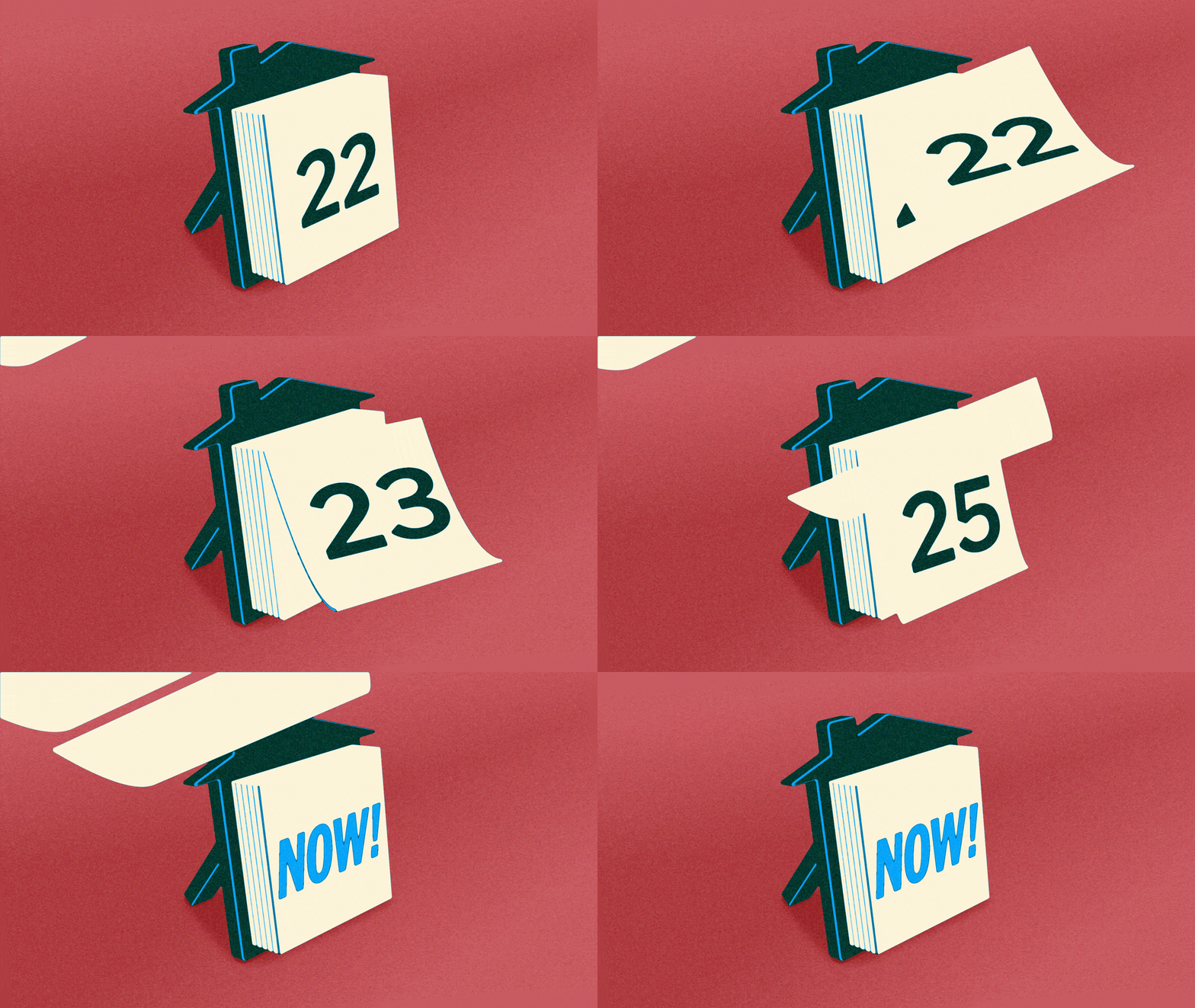
Warm-weather house hunting is over, and the Circle City is entering the best time of the year to buy a house, according to a Realtor.com report.
Why it matters: This seasonal sweet spot gives shoppers a break from the bidding war, but rising rates and prices still put homeownership out of reach for some would-be buyers.
By the numbers: The week of Oct. 25 offers some of the best conditions for buyers in the Indianapolis metro, per Realtor.com.
- There are 26% more listings than an average week.
- Prices fall more than 9% below peak season.
- Homes stay on the market 15 days longer.
What they're saying: "Home shoppers heading into fall will find an opportunity that has been hard to come by in recent years: more choices and less urgency," Realtor.com senior economist Hannah Jones said in a press release.
Yes, but: These are still tough times for homebuyers, especially first-timers.
- Mortgage rates are near 7%, up from 6.25% a year ago.
- The Indy metro's three-month rolling median sale price reached $325,000 in September, up 2% from $320,000 a year earlier.
Case in point: The Indiana Association of Realtors estimates a median-priced metro home now requires a $2,546 monthly payment. That assumes a 10% down payment and includes estimated property taxes, insurance and private mortgage insurance.
- Just 27.7% of listings are affordable to a household earning $75,000.
State of play: While the market is becoming more balanced — in fact, the supply of homes on the market in August was the deepest for an August since 2017 — it's still tilted toward sellers.
3. FEMA aid deadline approaching
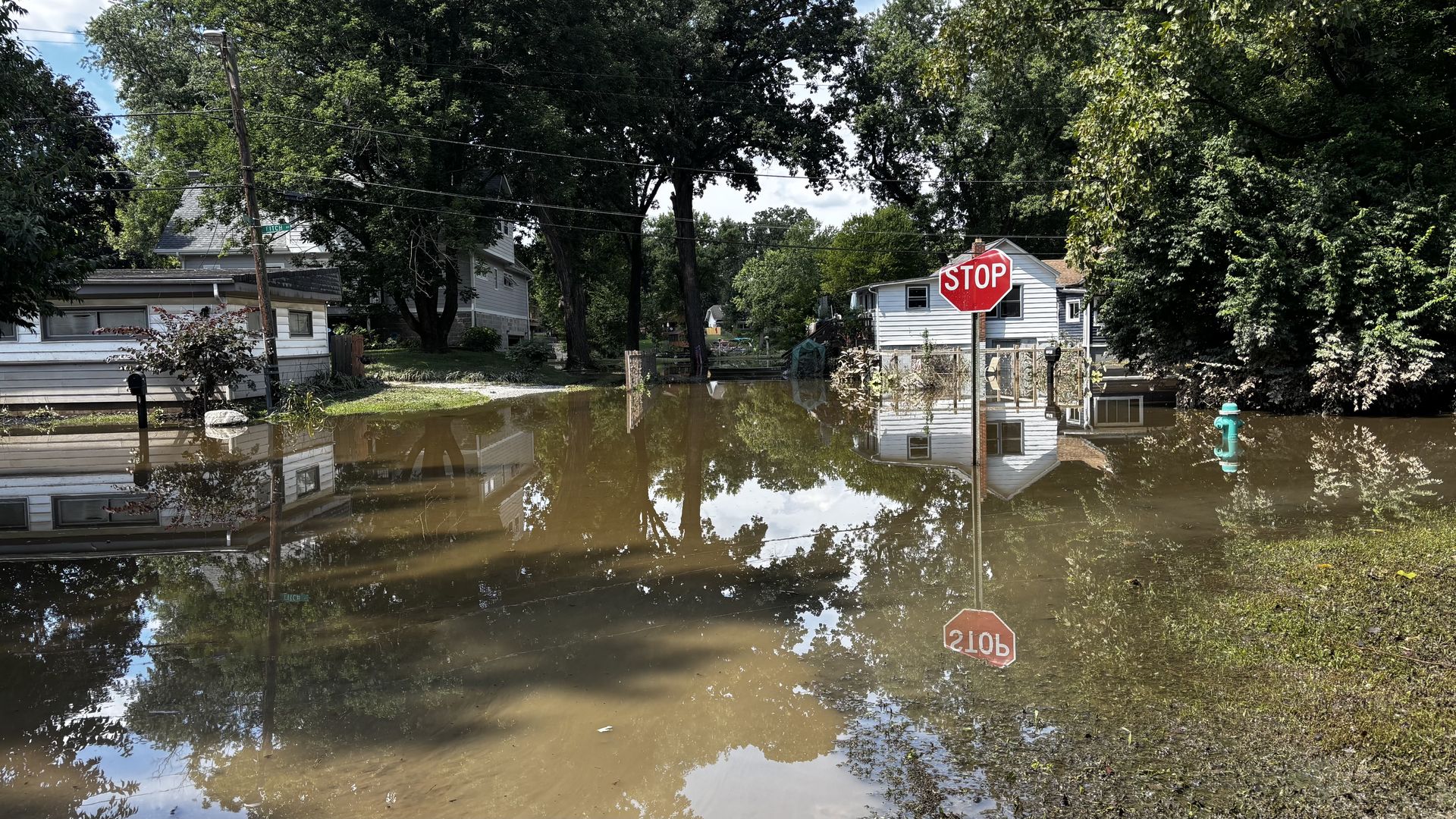
Time is running out for Hoosiers impacted by August's storms and catastrophic flooding to apply for federal aid.
Why it matters: There are less than two weeks left before FEMA's assistance application closes on Oct. 25 and state officials say they expect some storm survivors haven't applied yet.
The big picture: It's been two months since storms ripped across the region, leaving hundreds of thousands without power, and historic flooding devastated communities along the White River in central Indiana.
By the numbers: Total damage is expected to approach $1 billion, said Jonathan Whitham, executive director of the Indiana Department of Homeland Security.
- More than 60,000 Hoosiers have applied for individual assistance so far.
- FEMA has already awarded more than $142 million in disaster relief.
The latest: The state has contracted with disaster services company Tidal Basin, which will reach out to Hoosiers who are still displaced from their homes.
The bottom line: Anyone who thinks they may need help or be eligible for assistance should apply by Oct. 25.
4. Pit stop: Vision Zero work at Mass Ave

🚧 Pedestrian safety improvements are being made at the College and Mass Ave intersection as part of a repaving project, which started this week and is expected to be finished next month. (FOX59)
⚖️ Indiana death row inmate Jeffrey Weisheit has asked for a two-week stay in his planned Nov. 5 execution, so experts can analyze brain scans that his lawyers say could reveal more information about injuries that may have contributed to his behavior in the 2010 murders of two children in a fire at their Evansville home. (Indiana Capital Chronicle)
✈️ Indiana Commerce Secretary Chuck Goodrich is taking his second international trip in as many weeks.
- He's in Japan this week to meet with automakers and other companies that do business with the state. (IBJ)
5. Old News: When JFK backed Bayh
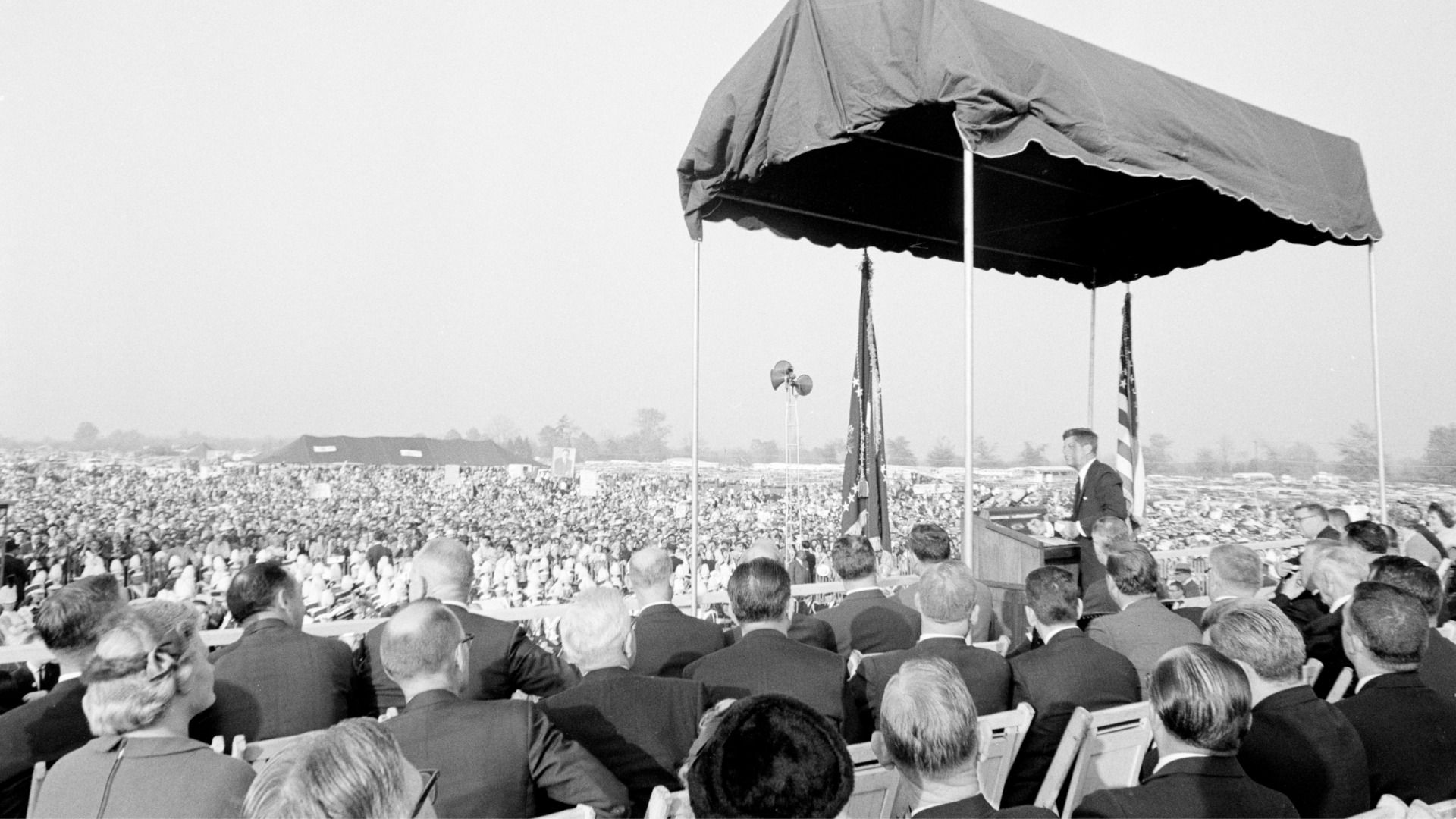
This week 64 years ago, President John F. Kennedy spoke in Indianapolis to rally support for Democratic candidates and build congressional backing for his administration's agenda.
Why it matters: The pitch he made at Weir Cook Airport helped an underdog Hoosier politician by the name of Birch Bayh become one of Indiana's most influential senators.
Driving the (old) news: Kennedy's visit on Oct. 13, 1962 was one of many he made during a broader campaign swing to support Democratic candidates ahead of the Nov. 6, 1962 midterm elections.
- Bayh, the party's challenger to incumbent Republican Sen. Homer Capehart, spoke before Kennedy.
Zoom in: Bayh ultimately defeated Capehart by just 10,944 votes out of 1.8 million cast. Bayh received 50.3% of the vote to Capehart's 49.7%.
- The narrow victory launched a Senate career that lasted until 1981.
The latest: Indiana Democrats are looking for another upset this November as Birch Bayh's grandson Beau Bayh runs for Indiana secretary of state.
😡 Arika is over record-high temps and ready for a cooler weekend. Give us sweater weather!
📺 Justin is excited about Ryan Coogler's "X-Files" reboot but bummed that he has to keep forking over money to Hulu to watch it.
Sign up for Axios Indianapolis
