Axios Generate

April 24, 2025

🎙️ A major power CEO goes on the record to open today's edition, and then we roam far and wide, all in just 1,294 words, 5 minutes.
🎹 At this moment in 2002, R&B great Ashanti had just begun 10 weeks atop the Billboard Hot 100 with today's intro tune...
1 big thing: A power titan calls transmission key to Trump's agenda
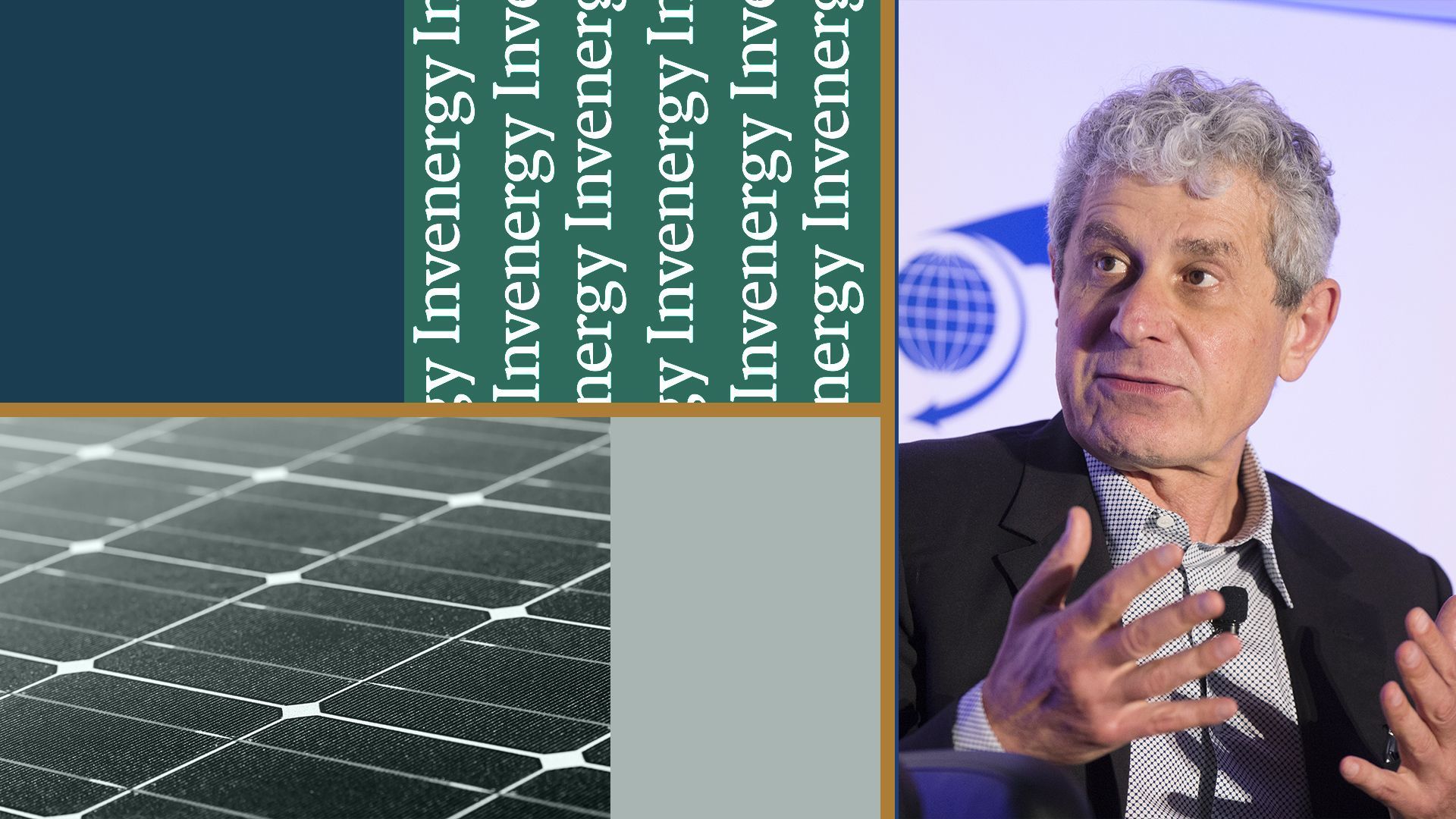
Michael Polsky, founder and CEO of independent power giant Invenergy, has plenty on his plate. But one priority stands out.
- "If I could only be allowed to give one [piece of] advice to the administration, what to do, what's most important, I would say 'support transmission development. Everything else will come,'" he tells Axios.
Why it matters: The breadth of the privately held firm's assets and plans gives Polsky a wide-angle view as the U.S. faces newly rising power demand.
- Invenergy is among the country's largest renewable and storage developers.
- Its assets and pipeline also include large transmission and gas projects, and solar panel manufacturing.
Driving the news: Polsky called interregional transmission a tech-neutral key to unlocking and moving power needed for supporting AI and other large industries, and re-shoring manufacturing.
- That dovetails with the heavy White House emphasis on energy infrastructure including grid updates, but Polsky has some specifics in mind.
What we're watching: In late November, the Biden-era DOE announced a conditional $4.9 billion loan guarantee for phase 1 of Invenergy's proposed five-gigawatt Grain Belt Express line from Kansas to Indiana.
- The first 2.5 gigawatt phase would run nearly 600 miles from Kansas to Missouri, but faces some political opposition, notably from GOP Sen. Josh Hawley (R-Mo.).
- Invenergy is talking with the administration about the loan financing, a spokesperson said.
"President [Trump] said we want to unleash American energy, we want to have abundance, low cost, independence. This is what Grain Belt is all about," Polsky said.
- Asked about other policy goals, he said FERC historically hasn't been "proactive" on large-scale transmission.
- "Perhaps the politicians have to take things in their hands and create some political enablers, legislation to support these initiatives," he said.
The big picture: Permitting help is key, but not enough, Polsky said.
- Independent developers need access to cost-recovery mechanisms to make the economics work — and reflect the resilience and reliability benefits the lines provide, he argues.
Catch up quick: The multinational Invenergy's 209 generation and storage projects total 33 gigawatts of capacity to date, mostly in the U.S.
- Roughly 20% comes from natural gas, according to a spokesperson.
- Its project pipeline has an estimated value of $150 billion, private equity giant Blackstone, a major investor, told the WSJ.
- Gas is playing a growing role thanks to customer demand from data centers and other factors, the Invenergy spokesperson said via email.
Threat level: Polsky warned that nixing IRA incentives could raise consumer costs for two reasons.
- One is that it makes solar, wind and storage more expensive.
- And it would lessen competition with fossil fuels at a time of rising demand, which would be inflationary, he said.
The bottom line: "Dominance has to be with multiple resources...dominance means we have got to dominate in both renewables and fossil fuels," he said.
2. 🛢️ Petro-notes: risks are everywhere edition

😰 Today's oil prices put the industry on the edge between driving with caution and slamming on the brakes, per a new Wood Mackenzie analysis.
- Why it matters: Brent crude at $65 per barrel means that "margins are dented but not enough to force dramatic budget or development plan changes," the research firm and consultancy finds.
- Follow the money: It sees companies likely to delay growth capital and discretionary spending. Uncertainty about tariffs, near-term oil demand and OPEC+ plans will cause a dip in upstream development capex this year, the first since 2020, it projects.
- What we're watching: "US tight oil operators would be among the first to curb investment if prices slide further, given their inherent activity flexibility," Ryan Duman, Woodmac's Americas upstream head, said in a statement that adds international projects are also "feeling the pinch."
- The bottom line: "More significant budgetary action would occur if oil settled below US$60/bbl for a month or longer," he said. Brent is trading at $66.83 this morning.
🤝 U.S. upstream dealmaking started 2025 with a bang and an asterisk, according to Enverus Intelligence Research.
- Why it matters: M&A trends are a window into wider dynamics in the oil patch.
- Driving the news: Q1 saw $17 billion in deal value, the second-highest since 2018, but over half was driven by Diamondback Energy's busy quarter. Beyond that, "buyers were already feeling the pressure of limited acquisition opportunities and high asking prices for undeveloped drilling inventory," it finds.
- What's next: There are "significant headwinds" from the decline in oil prices and equity values. They see a decline in M&A going forward. Full analysis.
3. ↪️ Trump's global climate shift: updates on two fronts
/2025/04/23/1745448680187.gif?w=3840)
💵 Treasury Secretary Scott Bessent is pressing the World Bank and International Monetary Fund to back off their climate work.
- Why it matters: The U.S. is the largest shareholder in both, wielding lots of voting power and more informal sway.
- The big picture: In a statement on the annual spring meetings, he urged the Bank to be "responsive to countries' priorities and needs rather than trying to meet poorly defined and arbitrary climate financing targets." Its approach should include support for gas, he said yesterday.
- Driving the news: The IMF "devotes disproportionate time and resources to work on climate change, gender, and social issues," Bessent said in separate remarks to the Institute of International Finance. He also welcomed bank plans to drop prohibitions on nuclear support.
- What we're watching: How Trump officials throw their weight around at the institutions. Bessent's wider remarks, while calling for reforms to what he calls mission creep, said the U.S. is "doubling down" on engagement with the bodies.
✂️ The State Department is eliminating the Office of the Special Presidential Envoy for Climate, which John Kerry held in the Biden era after its formal 2021 creation.
- Why it matters: The office played point on U.S. climate diplomacy, including always-fraught talks at annual UN summits.
- Friction point: "This climate office has long been captured by ideology instead of common sense policy," a State Department official told Axios. The move is part of State's wider reorganization.
- What we're watching: State didn't comment on the fate of the Office of Global Change, the main climate branch of the umbrella Office of Oceans, Environment, and International Scientific Affairs.
4. 🏃 Catch up quick on policy: Interior and EPA

🚨 The Interior Department said it will use "emergency permitting procedures" to speed approvals of projects for coal, gas, oil, geothermal and critical minerals and other sources.
- Why it matters: It will "take a multi-year process down to just 28 days at most," the agency said of new policies around NEPA and more, because "energy security is national security."
- The other side: Interior wants to "silence the public's voice" around projects that threaten water, land, and public health, the group Oil Change International said. The NYT has more.
👀 Via Politico, internal emails show that Trump administration lawyers "knew they were on uncertain legal ground" as they tried to block the Biden-era EPA's awards under the $20 billion Greenhouse Gas Reduction Fund.
5. 🎽 Catch up quick on tech deals: CCS, solar, metal
🤝 Exxon inked the sixth customer for its planned industrial carbon capture and storage business via a CO2 transport deal with gas-fired power giant Calpine. Hart Energy has more.
☀️ Solar startup Omnidian raised $87 million in Series C funding and aims to be IPO ready in 2027, Axios Pro Deals' Alan Neuhauser scooped yesterday (subscribe for a steady diet for exclusives!).
🤘 Via Bloomberg, the startup Electra has raised another $129 million to "continue developing technology that can produce iron needed for steel at temperatures below boiling water and without planet-warming emissions."
6. 🧮 Number of the day: 74%
That's the share of Earth's population living in nations that are net importers of fossil fuels, per new analysis from the clean energy think tank Ember.
Why it matters: There's a strong energy security case for boosting reliance on renewables, it says.
What we're watching: Whether trade wars and geopolitical friction will push nations to prioritize fuels that aren't traded on global markets.
- That's the basic thesis of veteran Carlyle analyst Jeff Currie's recent paper.
📧 Did a friend, colleague or an AI chatbot send you this newsletter? Welcome, please sign up.
🙏 Thanks to Chris Speckhard and Chuck McCutcheon for edits to today's edition, along with the brilliant Axios Visuals team.