Axios Generate

May 07, 2025

🐪 Let's get over the hump with a quick but informative 1,064 words, 4 minutes.
🎙️ Bulletin: Google will provide early-stage capital — it didn't say how much — for advanced nuclear developer Elementl Power to prepare three potential U.S. project sites.
- Why it matters: It's preliminary stuff but nonetheless highlights big tech efforts to spur next-wave nuclear projects as data center power demand rises. Blog post...CNBC coverage.
📻 At this moment in 1981, Sheena Easton was No. 1 on Billboard's Hot 100 with today's delightful intro tune...
1 big thing: Methane pledges collide with methane reality
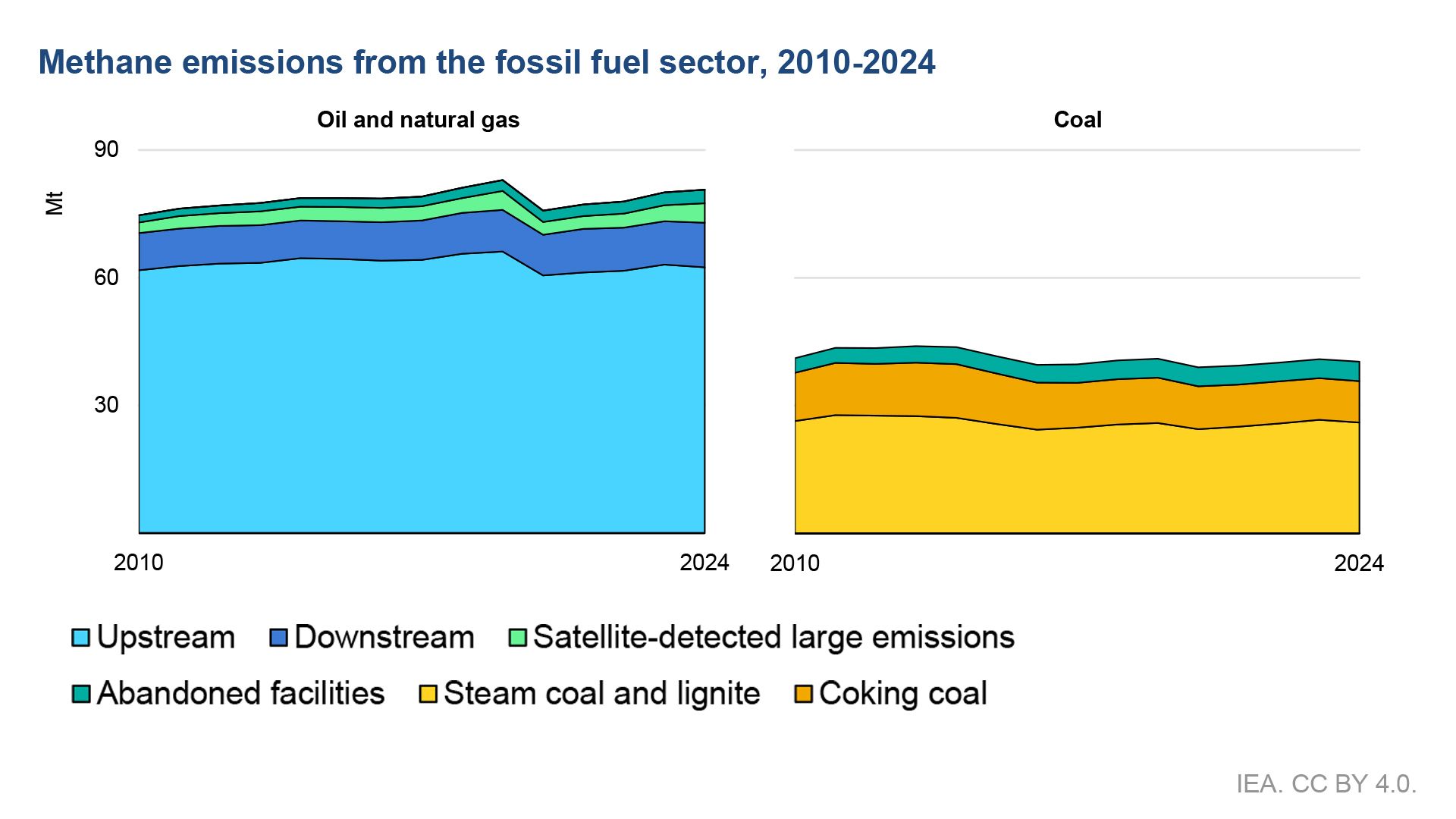
Countries' pledges to cut methane aren't translating into nearly enough on-the-ground action to send emissions downward, the International Energy Agency finds in a new report.
Why it matters: The powerful planet-warming gas is responsible for nearly one-third of global temperature rise since the Industrial Revolution, IEA said.
- The energy sector accounts for over 35% of methane from human activity.
The big picture: Recent years have brought moves like the Global Methane Pledge, a multinational effort launched at the 2021 UN climate summit to drive a 30% cut in human-induced emissions by 2030.
- Another is the Oil and Gas Decarbonization Charter in 2023.
Reality check: While a number of oil and gas companies are curbing methane, their efforts are not yet game-changing on a global basis.
- "[S]o far, few countries or companies have formulated real implementation plans for these commitments, and even fewer have demonstrated verifiable emissions reductions," IEA notes.
State of play: Record oil, gas and coal production, combined with "limited" mitigation, have kept emissions above 120 million metric tons annually, IEA said.
- Agriculture is the biggest human-caused source, and waste is large, too. But energy has the greatest potential for near-term, cost-effective cuts, IEA said.
- Democrats included a fee on oil and gas industry methane emissions in the 2022 climate law, but both chambers of Congress this year voted to overturn it.
Friction point: The IEA study wades into whether natural gas has a climate edge over coal on a lifecycle basis, i.e., including methane emissions in the value chain.
- IEA's answer? Generally yes, but comparing gas only to coal "sets the bar too low."
- The report also reveals that IEA's working on a big analysis of LNG-linked emissions and options for cutting them.
Stunning stats: This year's tracker has first-time IEA estimates of methane from abandoned infrastructure.
- Former coal mines released 5 million tons last year, while another 3 million came from abandoned oil and gas wells.
- "Combined, these sources would be the world's fourth-largest emitter of fossil fuel methane," IEA finds, behind operational sites in China, the U.S. and Russia.
- IEA estimates around 8 million abandoned oil and gas wells globally, with many in the U.S., though they note that properly-plugged wells emit little.
What we're watching: The latest version has other new features, like an interactive tool to explore international initiatives.
2. 💬 What Chris Wright will tell Congress, and more policy notes
While we await Energy Secretary Chris Wright's grilling before House appropriators at 10am ET, his written comments offer some nuggets in advance.
🛢️ He wants progress "immediately" on refilling the Strategic Petroleum Reserve, so keep an eye on what this could mean for specific solicitations.
⚛️ "Commercialization" will be the focus of DOE's nuclear energy office as he seeks over $400 million in spending cuts there.
- More broadly, the focus on deployment means using "all available tools," like direct funding and loans.
What we're watching: Whether Wright provides any clarity on how DOE is approaching specific Biden-era grant and loan commitments.
🏠 Elsewhere in policy, EPA plans to end the longstanding Energy Star appliance labeling program, per CNN and other outlets.
3. 👀 Exclusive: White House preps nuclear push
The White House is planning executive action soon to try to speed nuclear reactors' deployment, Axios has learned.
Why it matters: One or more orders will likely lean heavily on the departments of Defense and Energy as a way to meet soaring energy demand.
- The orders could seek to leverage those two agencies to avoid any licensing delays from the Nuclear Regulatory Commission, one source involved with the plans told Axios.
Driving the news: More than half a dozen sources familiar with the White House's plans described their general components. The sources — from government and industry — all spoke on condition of anonymity.
- The orders view DOD — with its deep pockets, massive energy demand, and ability to absorb risks in ways the private sector can't — as a "key enabler" for nuclear.
- DOD's Army Reactor Office and DOE both have authority to regulate reactor development.
Inside the room: "The idea now among those who want to keep the NRC out of the mix is: Why don't we just use a partnership between the DOD and the DOE?" the source said.
What's next: The plans have been in the works for weeks and could drop any day, all of the sources said.
🔓 Unlock the whole story, and if you need smart, quick intel on energy and climate policy for your job, get Axios Pro Policy.
4. 🛢️ "Drill, baby, drill" takes another hit
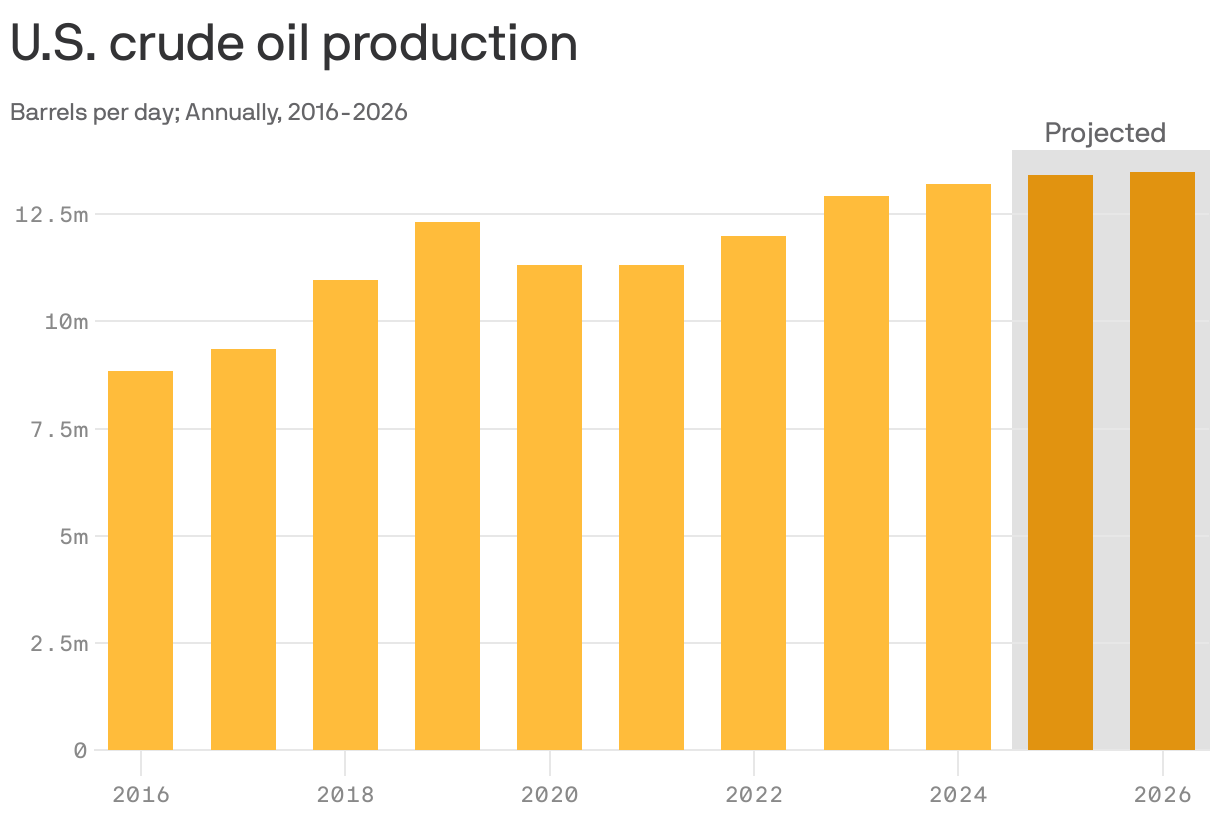
The Energy Department's independent stats arm just shaved a little more off its already-modest outlook for U.S. oil output growth this year and next.
Why it matters: The price slide, tariff uncertainty and relatively muted demand growth are all making companies cautious.
State of play: Crude production is slated to grow 1.6% from already world-leading levels in 2025 and 0.6% in 2026, it projects.
- EIA's latest monthly outlook again lowered their 2025 and 2026 oil price forecasts.
What we're watching: What actually happens with White House tariff policies and their macroeconomic fallout.
- These EIA look-aheads are valuable — but written in faint pencil by necessity.
5. 📉Tesla's deepening European woes

Tesla's European sales crisis deepened in April.
By the numbers: Tesla sales fell 81% year-over-year in Sweden, 74% in the Netherlands, 67% in Denmark and 62% in the U.K., according to industry association figures compiled by Bloomberg.
- They also fell 59% in France, 55% in Belgium, 46% in Germany and 36% in Spain.
The big picture: European customers are turning away from the brand after CEO Elon Musk became an outspoken ally of President Trump.
- Musk acknowledged last month that the company was facing "some unexpected bumps this year" and blamed the "blowback" on people who are "receiving fraudulent money or they're the recipients of waste largesse."
💭 Nathan's thought bubble: Tesla's brand image is deteriorating at the same time that Chinese EV rival BYD is becoming a serious global competitor for the company.
- BYD outsold Tesla in Germany and the U.K. in April, according to EV news site Electrek.
6. 🤝 One tech thing: Google and Shell extend offshore wind project
Google's new power purchase agreement with a Shell offshore wind farm in the Netherlands is the first time a corporate PPA has extended the life of such a project, the tech giant said. Blog post ... Offshorewind.biz coverage
Yes, but: A reminder that offshore wind faces big hurdles in the U.S. and elsewhere.
- This morning Ørsted halted plans for a major U.K. project, citing supply chain cost increases and other problems.
📧 Did a friend, colleague or an AI chatbot send you this newsletter? Welcome, please sign up.
🙏 Thanks to Chris Speckhard and Chuck McCutcheon for edits to today's edition, along with the brilliant Axios Visuals team.
Sign up for Axios Generate