Axios Generate
September 18, 2025


☕ Good morning! We're getting closer to the weekend with a newsy 1,281 words, 5 minutes.
🌎 Axios House returns to NYC for Climate Week Sept. 22-24 with a stellar lineup of newsmaking conversations. RSVP.
🚨 Reminder: We're rebranding Generate as Future of Energy starting next Monday. We'll focus even more on the people, tech and resources shaping our energy mixes of tomorrow.
- We'll still do what Generate has done for years: Keep you updated on the energy and climate news that matters most.
🎹 At this moment in 2011, Adele was No. 1 on Billboard's Hot 100 with today's beautiful intro tune...
1 big thing: Exxon CEO says EU mandates could stifle energy buys
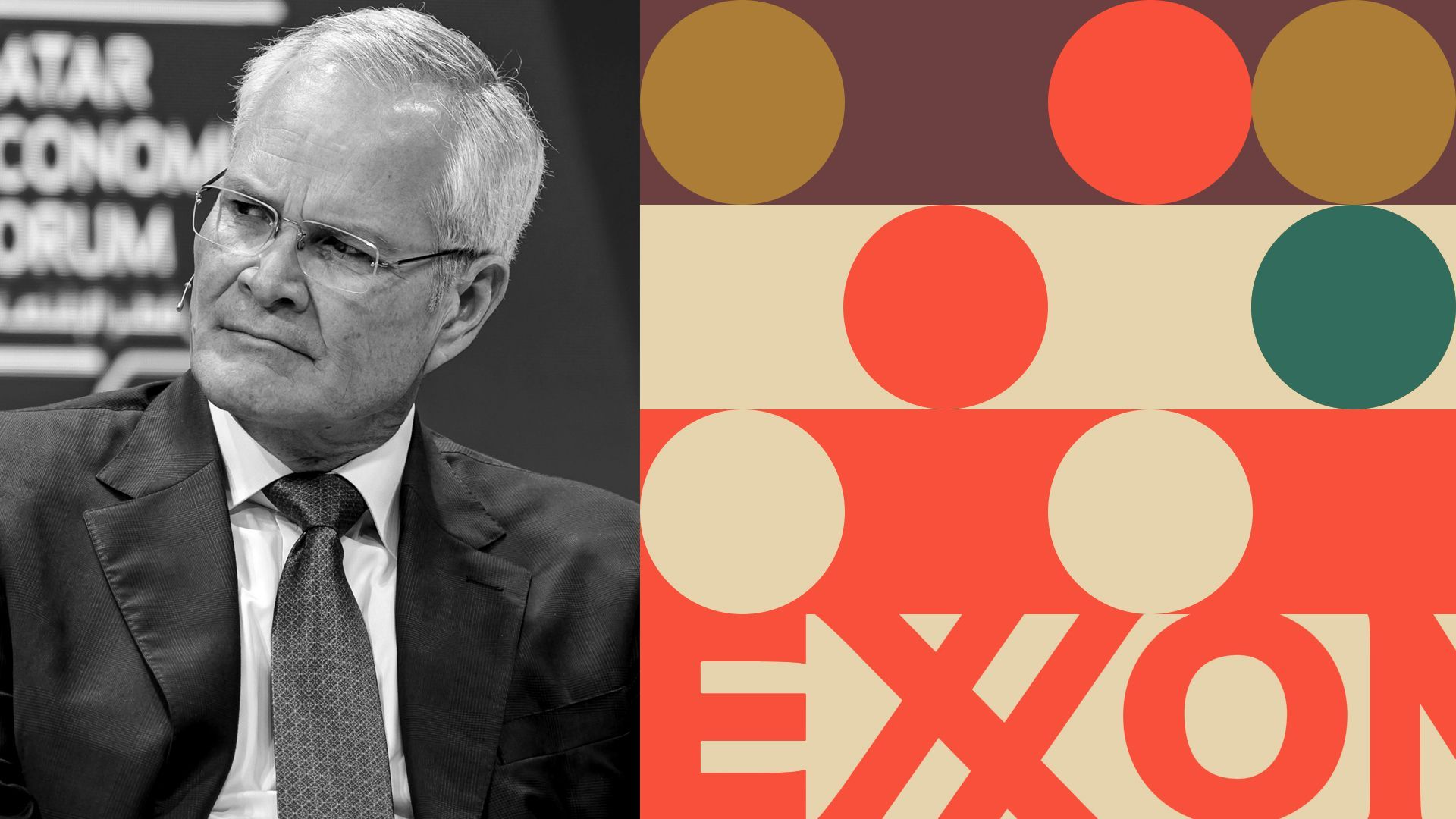
Exxon CEO Darren Woods had a short but newsy chat with Axios. A few highlights ...
⚔️ EU green rules will "challenge" the U.S.-EU energy deal. He's pushing back hard on looming ESG standards for companies based or doing business in the bloc above certain revenue threshold levels.
Why it matters: Woods said the Corporate Sustainability Due Diligence Directive (CS3D) — which he calls unworkable — could hinder EU pledges to buy $750 billion worth of U.S. energy products over three years.
- That target is in the August U.S.-EU trade package.
Friction point: "The challenge is going to be that the companies who supply that energy will clearly exceed the threshold, and so will be subject to this law," Woods said.
- "And since it's not technically possible to implement the law, they're all going to be challenged with putting together plans that aren't achievable, and then open themselves up to challenges in court, and what I call bone-crushing potential penalties."
Zoom out: Exxon has an extensive footprint in Europe, and Woods said the CS3D is among the policies hindering industrial competitiveness there.
- The CS3D also effectively creates requirements for companies' operations and value chains worldwide, he said, calling it a "disastrous law, the worst I've seen in my tenure in this job."
State of play: He's working with Trump administration officials who are also pushing back against EU mandates including CS3D.
- EU leaders, in a joint U.S.-EU statement in August, pledged work to ensure CS3D and the related Corporate Sustainability Reporting Directive "do not pose undue restrictions on transatlantic trade" and make other changes.
What we're watching: Woods said European officials have a "growing recognition and acceptance" of CS3D's problems.
But he added: "We've been ... pretty disappointed with the response, the lack of urgency, and frankly, the steps they've taken have created more confusion than they solved."
⚡Elsewhere, Woods hedged on plans for a final investment decision this year on Exxon's potential low-carbon hydrogen and ammonia project in Baytown, Texas.
- He said federal tax credits remain in place that would support the project, but added that it's unclear whether the wider market will develop enough in the U.S. and overseas.
The bottom line: "We're not interested in having a successful project. We're interested in having a successful project as part of a growing new industry," he said.
2. 👀 Tom Steyer's Galvanize launches new strategy with $1.3B in tow
Galvanize, the climate-focused asset manager co-founded by Tom Steyer, today unveiled a "Credit and Capital Solutions" strategy that has already raised $1.3 billion.
Why it matters: The firm is bullish on the business case for clean tech despite the U.S. pullback, but sees needs for "flexible capital across power, manufacturing, efficiency, and resilience."
The big picture: The business will provide "structured non-bank and special situations credit," as well as preferred equity, and "opportunistic capital" to companies and projects, the announcement states.
- Target regions for the effort — led by Galvanize execs including former congressman John Delaney and DOE loan office vet Chris Creed — include the U.S., Canada, and Europe.
- It's focused on the "full energy transition value chain" — renewables, storage, fleet electrification, efficiency, advanced materials manufacturing, and more.
The bottom line: "[W]e're positioned to finance complex and underserved segments of the energy ecosystem, from mid-market developers and operators to large-scale infrastructure rebuilds, at compelling risk adjusted returns," Creed said in a statement.
3. 🧁 Bonus tech finance notes: Batteries and SAFs
🔋The Energy Department has begun doling out a $1.3 billion loan approved in the Biden era for Entek Lithium Separators' plan to build an Indiana manufacturing plant.
- State of play: DOE's loan office dispersed a first installment of $77 million. It will be the "only U.S.-owned and based producer of 'wet-process' lithium-ion battery separator materials" that can be used in data centers, energy storage, electronics and more, DOE said.
- The intrigue: The department's announcement yesterday steered clear of citing the tech's use in EV batteries, which the Biden-era loan team highlighted in 2024.
🛫 American Airlines, Alaska Airlines, and the Bill Gates-led Breakthrough Energy Ventures are leading a new, early-stage investment fund to speed development of sustainable aviation fuels.
- Why it matters: The fund, with a first close of $150 million, lands as SAF's uptake remains small and limited by supply and cost hurdles. The WSJ has more.
4. 🚘 Congress moves toward requiring AM radio in EVs


A bill that would require AM radios in cars and trucks won overwhelming support yesterday from a House committee, as lawmakers brushed aside EV industry arguments that it poses a technological problem.
Why it matters: Proponents cited their constituents' reliance on AM — especially in rural areas — to provide alerts and news about severe weather and other emergencies.
Driving the news: The House Energy & Commerce Committee voted 50-1 to advance the bill, which has 300 cosponsors.
- It would require the Transportation Department to issue a rule requiring AM radio capabilities to be standard in all new passenger vehicles.
- AM is "a lifeline to critical and life-saving information," said Rep. Gus Bilirakis (R-Fla.), the House bill's sponsor.
Catch up fast: Most cars today have AM, but some EV makers have foregone it.
- They have asserted that their vehicle models' electronic equipment interferes with the reception of AM broadcast signals, distorting broadcasts.
The other side: Rep. Jay Obernolte (R-Calif.), who cast the lone dissenting vote, cited the interference issue and said he generally opposed mandating AM's use.
- "It forces consumers to buy a product that they may or may not want," he said.
- The Zero Emission Transportation Association and other EV industry groups have argued that Americans have other ways to get emergency news, including cell phones, FM radio, internet-based radio and satellite radio.
What's next: The bill heads to the full House. The Senate Commerce, Science and Transportation Committee advanced a similar bill in February.
5. 🏃 Catch up quick on climate: EU, Australia, endangerment finding

🇪🇺 The EU will likely miss the UN deadline for submitting new, non-binding emissions-cutting pledges amid "internal divisions," per Reuters.
🦘 But Australia did unveil fresh targets under the Paris Agreement, vowing to cut emissions by 62–70% below 2005 levels by 2035. Go deeper.
🧑🔬 The National Academies issued a report supporting EPA's 2009 conclusion that greenhouse gases threaten humans, calling it "beyond scientific dispute."
- Why it matters: EPA under the Trump administration is proposing to rescind the formal "endangerment finding" that provides the legal underpinning for regulating emissions under the Clean Air Act.
6. ⚛️ Quote du jour: U.S. fusion peril edition
"It feels more and more like it is the U.S. fusion industry versus China in the race to deploy and scale fusion... The next decade of fusion breakthroughs and scientific discovery is going to happen in China, not in the U.S., with the investments I am seeing."— Commonwealth Fusion Systems CEO Bob Mumgaard
That's a snippet of what Mumgaard, who leads a major U.S. fusion player, will today tell a House committee exploring the federal government's role in U.S. development.
7. 📈 Number of the day: +50%
That's projected electricity demand growth by 2035 in the Middle East and North Africa region, per new IEA estimates.
- Why it matters: That means "adding the equivalent of the current demand of Germany and Spain combined — with significant implications for global energy markets," it states.
🙏 Thanks to Chuck McCutcheon and Chris Speckhard for edits to today's edition, along with the brilliant Axios Visuals team.