Axios Gaming

July 15, 2021
Welcome back to Axios Gaming with Megan Farokhmanesh and Stephen Totilo.
Today's edition is 1,422 words, a 5-minute read.
1 big thing: Moving beyond Arab stereotypes
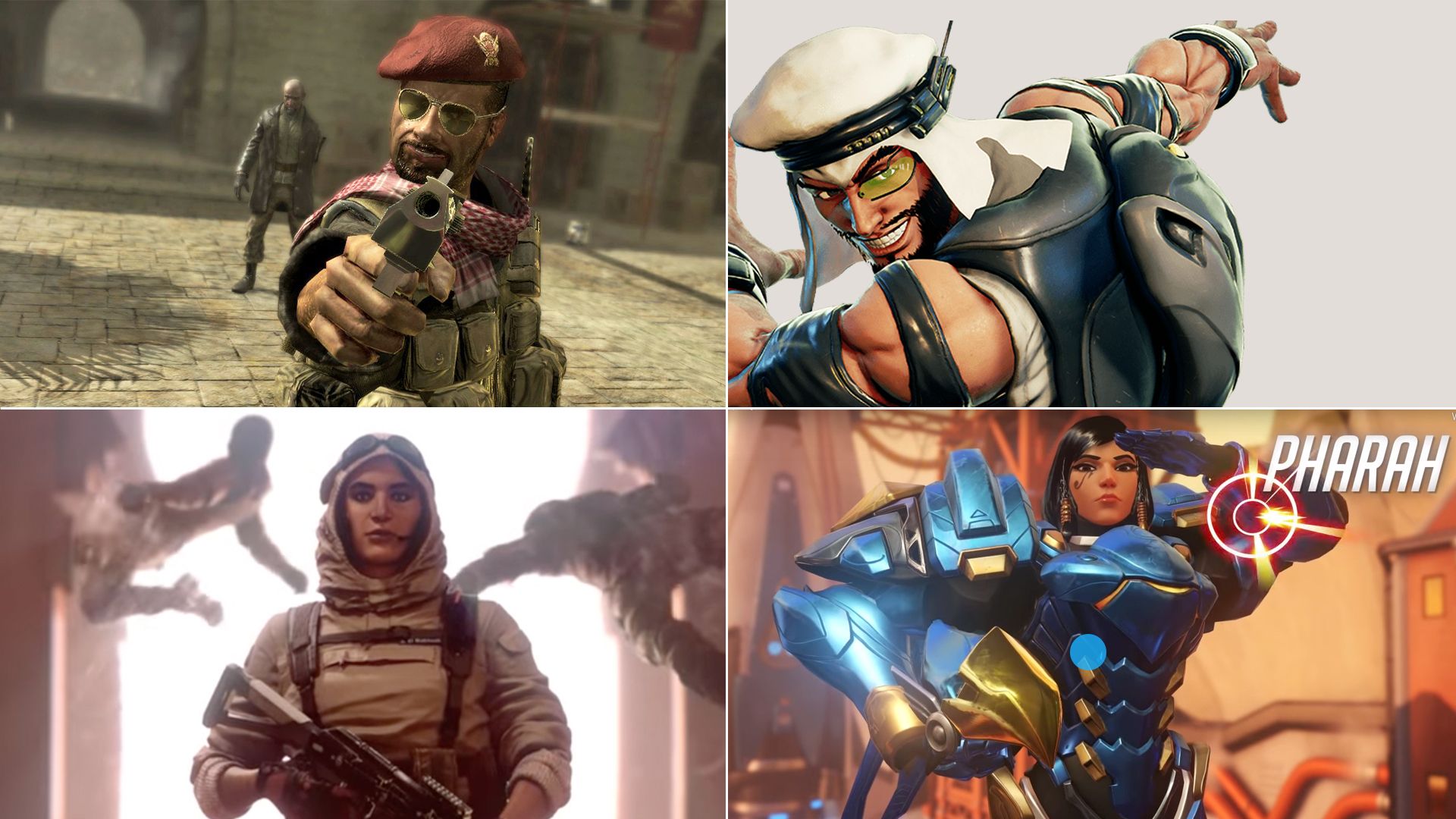
Clockwise, starting from top left: "Call of Duty 4," "Street Fighter V," "Overwatch," and "Rainbow Six." Images via Engadget, Blizzard, Ubisoft and Capcom. Image credit: Shoshana Gordon/Axios
There's been a major shift in recent years in how video games represent Arabs, but developers are still struggling to find their footing and not rely on problematic stereotypes.
Why it matters: Arab cultures have been coded in harmful stereotypes in games for decades.
- During a recent Games for Change panel called, "Arab Voices in Games" four developers discussed Arab/Amazigh/Mena-Indigenous representation in video games and the problems they still face.
- These vary from more benign mistakes, like bad translations or presenting Arabic writing as left to right. More seriously, it reduces Arab characters to terrorists and enemy fodder.
The big picture: The game industry is getting better at creating diverse characters, including Pharah in "Overwatch" or Nomad in "Rainbow Six Siege."
- But the panelists feel like there's a need for video games to normalize Arab cultures and voices in more meaningful ways. That means moving away from this idea they are "sandy villages with jeeps, with machine guns, and really there's nothing in the region besides fights," said developer Rami Ismail.
- "I would like spooky Arabs. I would like happy Arabs. I would like silly Arabs. I would like funny Arabs. I would like overly serious Arabs, I would like unlikable Arabs."
- For now, he says, developers still have to fight to make games about Arab cultures in a way that doesn't use stereotypes. If you're making a game about Egyptian culture, for example, you might have to explain "yeah, no, there's no pyramids."
Final thought: Ubisoft head of communications and localization Malek Teffaha, imitating the stereotypical ululating vocals video games use in their games with Middle Eastern locations, had one request: "Just please get rid of that soundtrack. Please, please, everyone just stop."
2. Diversity doesn't come cheap
If developers and investors want to make impactful change in the game industry, Perfect Garbage co-founder and studio director Son M. had some simple advice: "Money. Give me your money."
Why it matters: Creating meaningful change in the gaming industry's makeup requires both creating space for marginalized creators and throwing support behind them.
- Although there are funding initiatives for smaller creators to tap into, Son says these diversity inclusion funds "are capped all the time" and developers ultimately have to find additional ways to fully fund their projects.
- "Without that kind of money, you can't have teams you can support, like a growing studio," they said during the Games for Change panel. "I really think that at least pouring money into these initiatives, it's a great start."
The big picture: The indie and AAA spaces often differ in their approach.
- This is "because a lot of devs who are coming from our cultural backgrounds are making games and are putting themselves in the forefront," according to Son.
- They added that they haven't seen that attitude fully bleed into AAA games, as the industry "still isn't fully receptive yet."
- "There's kind of the subtle three-strike rule when you're pitching a game, what is risky. And apparently brown and Black characters as main characters in some genres are a risk factor."
What's next: In order to move the industry forward, big studios will have to do their part.
- "I think AAA actually has a really important part to play in using the resources that they have to get these things of representation right and to normalize getting these representations right," said Ismail.
- "The push is definitely coming from indie," he added. "But in AAA, that's where a lot of the fight feels like it is right now."
3. Netflix has a gaming boss
Photo: Netflix
Netflix has tapped gaming veteran Mike Verdu to serve as VP of game development, a hire first reported by Bloomberg.
Why it matters: This is the first move in its new gaming initiative that the company Netflix has acknowledged specifically.
- Last spring, The Information and we here at Axios reported that Netflix was expanding into gaming with a site of downloadable games.
- At the time, the company only said "we're excited to do more with interactive entertainment."
Between the lines: Verdu's 36-year career in tech and games includes stints as head of EA's mobile division, chief creative officer at Zynga and most recently, head of developer outreach for Facebook/Oculus' VR and AR initiatives.
- But Netflix isn't talking just yet about what he's doing for them.
Obligatory mention: Netflix's interest in games is seldom written without a copy and paste of CEO Red Hasting's 2019 quote that "We compete with (and lose to) "Fortnite" more than HBO." (Done!)
4. Valve's Steam Deck, another Switch competitor
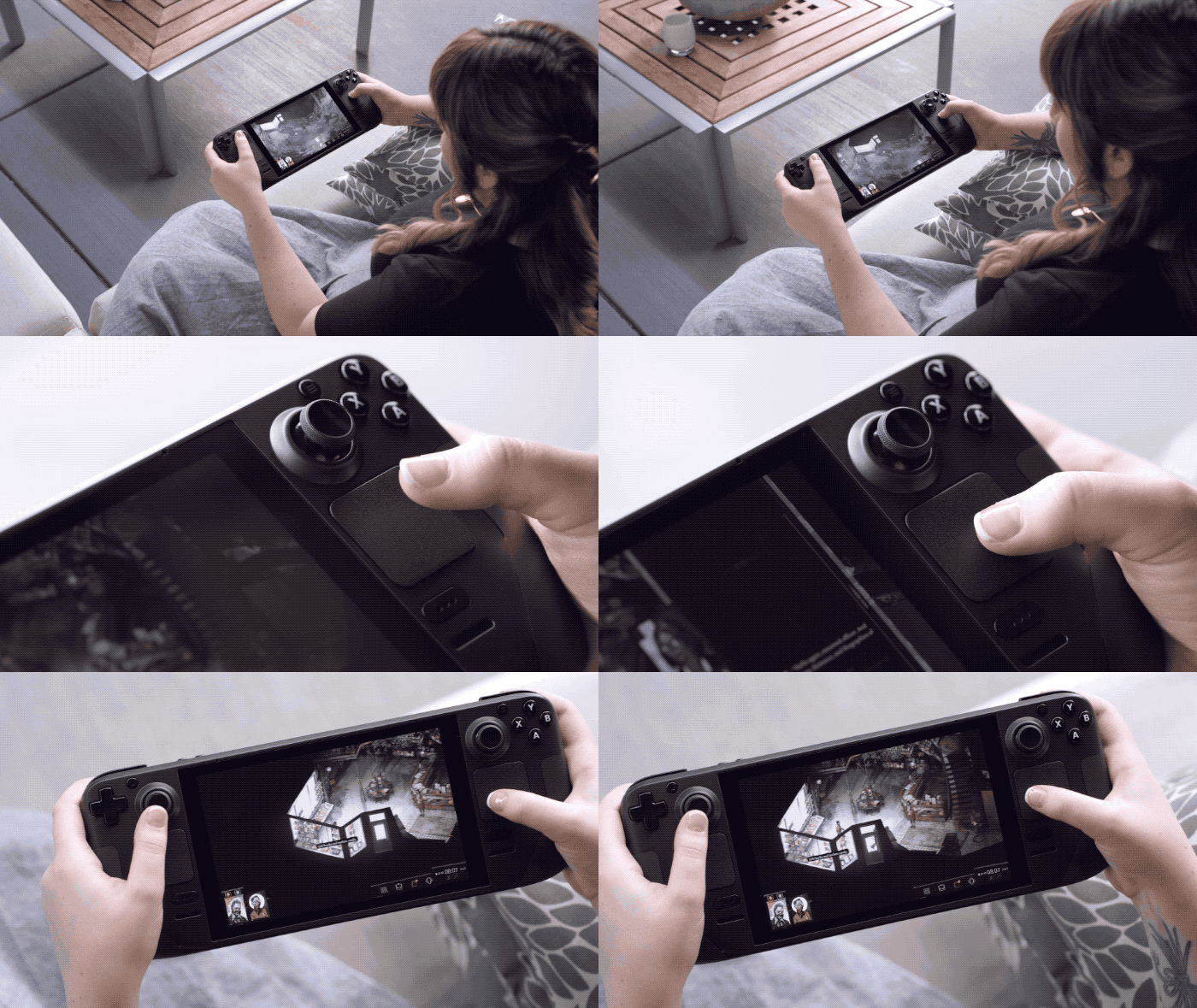
Valve is officially entering the crowded market of Switch-like portable gaming PCs with the unveiling of the Steam Deck, a system stuffed with impressive features.
Why it matters: Valve's device is the latest effort to tap into an audience who likes the idea of the hybrid Switch but would prefer to play PC games and won’t mind missing Mario.
- It's set to start shipping this December and will run games from Valve's Steam marketplace while also supporting, Valve says, the ability to run any other PC-based store.
Between the lines: The $399 (and up) Steam Deck appears to be a capable portable PC, running at a beefier spec than the Switch. (Official specs)
- Like the Switch's upcoming $350 OLED model, it has a 7-inch screen.
- Its control sticks are touch-sensitive, and it sports two front-facing trackpads designed to allow for mouse-like movement for games not designed to be run with sticks and buttons.
- The device is also larger and heavier than Nintendo's and won't come with a bundled dock, though it does connect to monitors and TVs.
To ward off scalpers, Valve is requiring anyone who pre-orders the system to put down a deposit.
- It will also only permit initial pre-orders this Friday to people who have bought something on Steam prior to June. Everyone else has to wait until Sunday.
5. Need to know
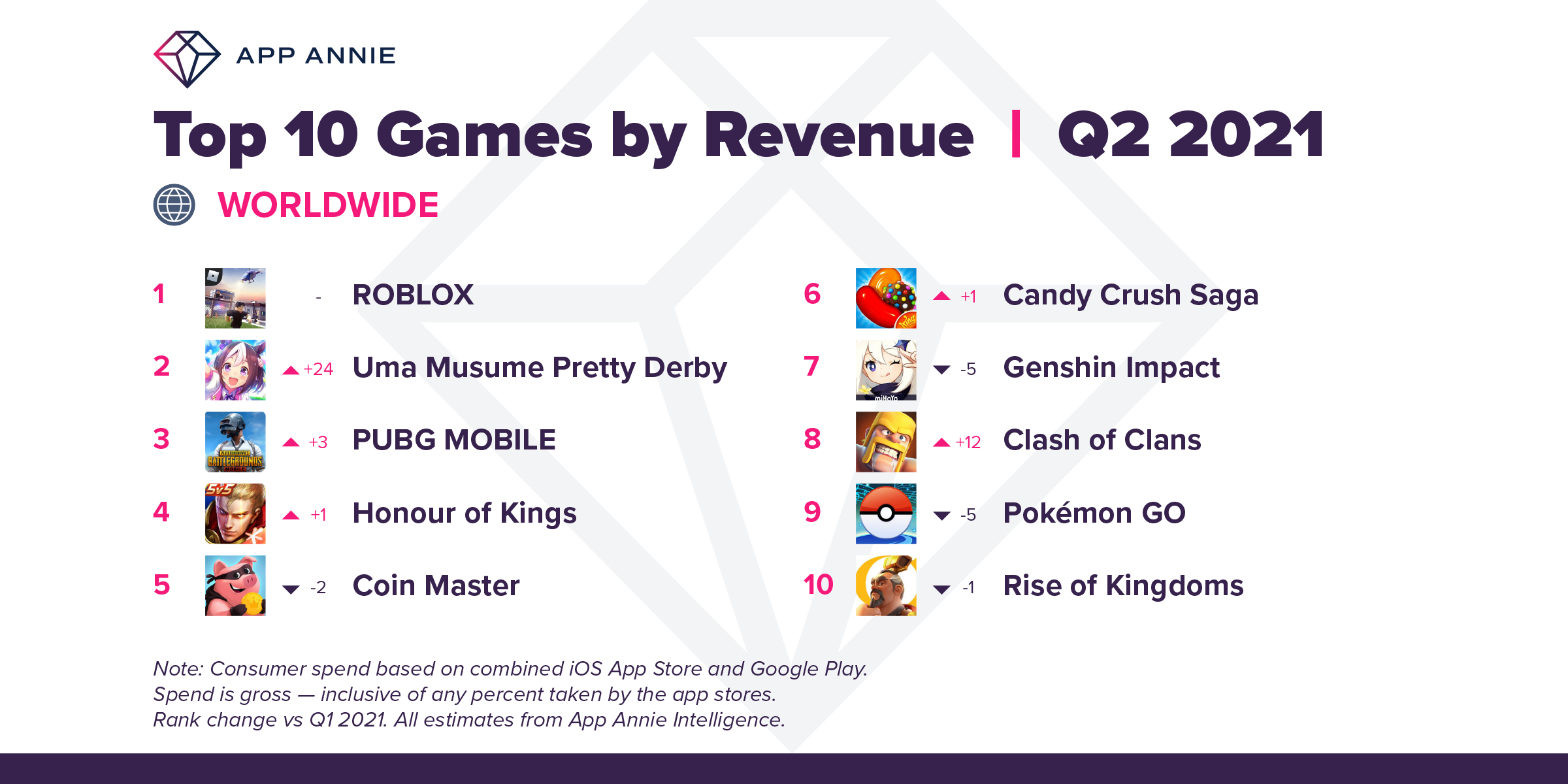
"Roblox" was the biggest money-maker in mobile gaming for the second quarter of the year, according to App Annie's latest revenue charts. In second is Japan's "Uma Musume Pretty Derby," an anime spin-off about horses that have turned into human girls.
A proposed change to Japanese copyright law could make it easier to release old games whose ownership is ambiguous, according to Japanese outlets Game Spark and the Yomiuri Shimbun (via Kotaku).
Voting rights group the New Georgia Project will hold a three-day game jam in late September to encourage young people to make games that promote civic engagement.
Game For Cures is a series of Twitch charity streams running the next two weekends in July to raise money to fight rare childhood diseases.
Genvid has raised $113 million in its latest round of funding as it positions itself as a premiere creator of large-scale virtual events. Think virtual concerts and game shows, but also, according to a new Genvid concept trailer, millions of people watching and influencing a virtual horror movie.
Quakecon will be online this year, happening Aug. 19–21. Host Bethesda says it "will include livestreams featuring updates on existing and upcoming games" as well as tournaments, fundraisers and more.
Shipments of virtual reality hardware will reach 2.7 million units in 2021, according to a forecast by the Consumer Technology Association (the group that produces CES.)
Next week is shaping up to be unusually loaded with releases for late July:
- July 20 brings intriguing indies "Death's Door" and "Cris Tales" as well as a car-centric expansion to "Grand Theft Auto Online."
- July 21 has "The Witcher: Monster Slayer" (think "The Witcher" + "Pokémon Go"), "Pokémon Unite" (think "League of Legends" + "Pokémon"), and "Genshin Impact" 2.0.
6. Worthy of your attention
Come hang out with LeBron James and all your favorite IP — an excoriating review of "Space Jam: A New Legacy" (Joshua Rivera, Polygon)
It's "Kingdom Hearts," but without any genuine feeling. And while the excuse of having a desperate need to entertain children with a feature film's worth of "Family Guy"-style references may hold water, watching it without that excuse in hand feels vulgar. Because "Space Jam: A New Legacy" is only really satisfying to people who care about marketing and company profits, people who approach it as a product that's successfully been sold.
7. Get some old gaming magazines
Image: The Video Game History Foundation
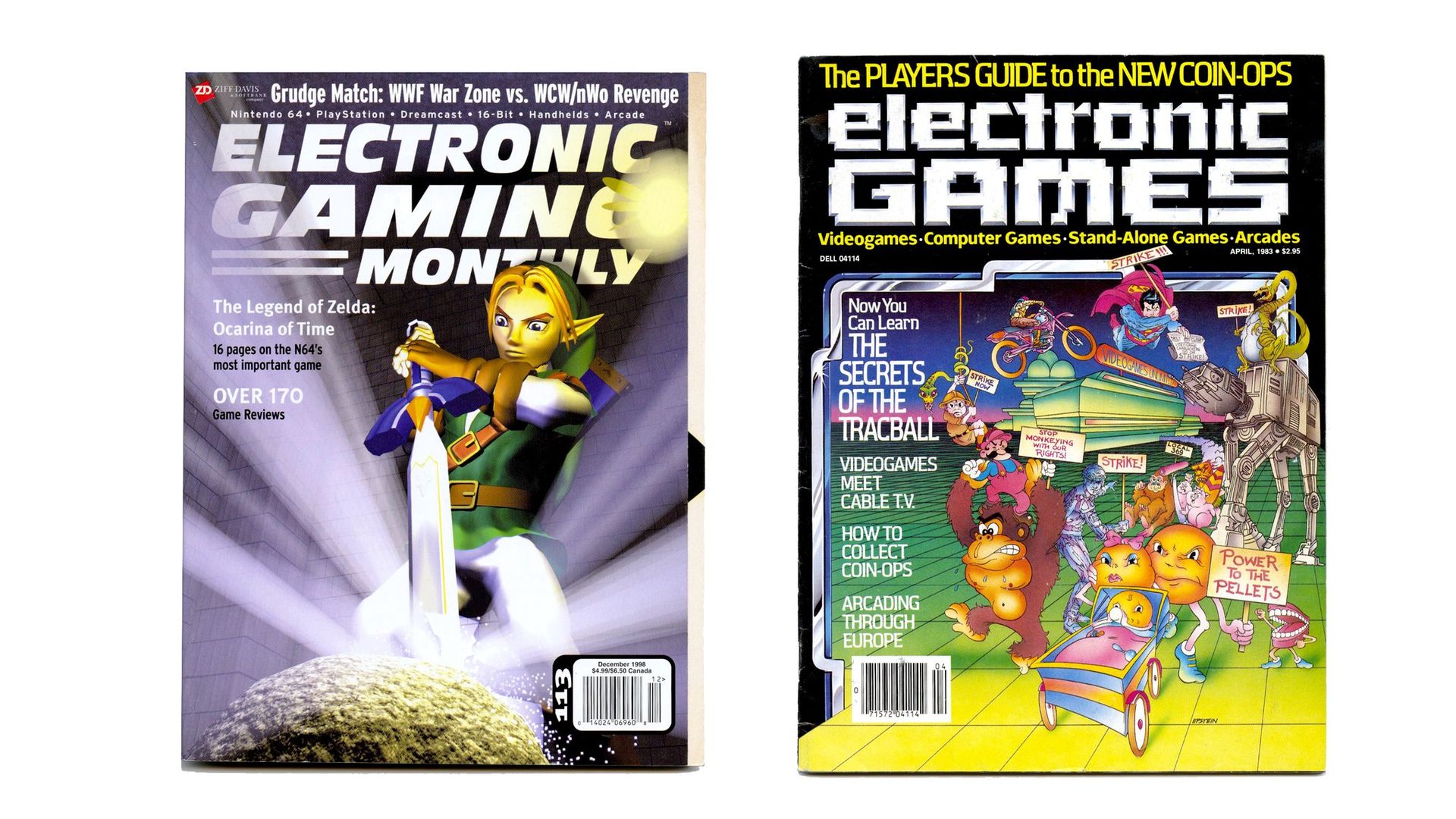
For $15 a month, the Video Game History Foundation will send subscribers random vintage video game magazines.
- The program has been around since December, and the option to just get magazines from the '80s and '90s proved so popular that the VGHF had to discontinue the option in favor of a mix that includes '00s issues, too.
- Founder Frank Cifaldi tells Axios that the foundation has shipped about 3,000 issues to 500 subscribers. Proceeds go toward the group's work preserving gaming history.
🎁 Like the newsletter? Refer Axios Gaming to your friends to spread the word and get free stuff in the process. Follow the link here to begin.
🐦 Find us on Twitter: @megan_nicolett / @stephentotilo
It's the year 2060, and this very newsletter is part of your vintage gaming newsletter subscription. Just $300/month.