Axios Future of Mobility

June 24, 2026

😎 Hello summer! Nothing beats Michigan's long summer nights.
- 🚙 Fender bender? Today we're exploring why repairs cost so much.
- Plus, a reality check on new car prices. 🤑
🏗️ Please join Axios Live in D.C. on Wednesday, July 1, for Building America's Manufacturing Edge, a conversation about ways the U.S. can strengthen its industrial base, build a skilled workforce and stay competitive. Register here.
Today's newsletter is 1,676 words, a 6.5-minute read.
1 big thing: Repairing high-tech cars
When your high-tech car gets in a crash, the repair bill could easily top $5,000, in part because electronic sensors often need replacement or recalibration.
Why it matters: As vehicles become more software-driven, sensor accuracy is increasingly critical to safety — and it's driving up the costs and wait times of repairs.
The big picture: Most new cars are equipped with advanced driver-assistance systems (ADAS) such as blind spot detection or lane-keeping assistance.
- Repairing ADAS technology is expensive not only because the sensors are pricey, but also because they need to be carefully calibrated in controlled environments by trained technicians whose labor rates are higher than those of typical body mechanics.
By the numbers: A 2023 study by AAA found that ADAS systems can add nearly 38% to the total repair cost after a crash.
- A simple side mirror replacement on a 2023 car, for example, cost roughly $1,500 — 70% of which is for the tiny camera built into the mirror assembly, AAA found.
What they're saying: "After a crash, even a slight shift in a sensor can compromise how a vehicle detects risks on the road," says Janet Ruiz, a spokesperson for the Insurance Information Institute.
Friction point: As vehicle technology becomes more complex, traditional repair shops are struggling to keep pace with standards required by insurance companies and auto manufacturers.
- Many shops lack the expertise and equipment needed for labor-intensive, high-precision recalibration, often forcing them to rely on mobile providers or outsourcing to specialists.
Zoom in: A Silicon Valley startup called Kinetic is looking to streamline ADAS calibration using AI-enabled robotics.
- It just opened three new service hubs — two in Phoenix and one in Los Angeles — for a total of 11, with plans to open 100 calibration hubs nationwide.
- CEO and co-founder Nikhil Naikal characterizes his company as "a high-tech version of Jiffy Lube."
How it works: Kinetic, which counts Allstate and Liberty Mutual as investors, works closely with insurance carriers and body shops to speed up repairs and lower costs.
- First, its scanner passes over the vehicle to assess physical or digital damage and produce a repair estimate.
- The body shop then picks up the car to complete physical repairs, before returning it to the Kinetic hub.
- Kinetic's robots then scan the vehicle again on a turntable while recalibrating the sensors.
A human technician needs about 90 minutes to do the calibration manually, Naikal says; Kinetic's robots do it in less than 10 minutes.
- Insurers save as much as $750 per vehicle, and drivers get their car back up to four days faster, the company says.
What we're watching: Even when a vehicle hasn't been in an accident, sensors can drift out of calibration over time, notes Tech Probe columnist Junko Yoshida.
- Calibration could go from being a one-time repair procedure to an ongoing maintenance issue, creating a potential safety risk when ignored.
That creates opportunity for tech-oriented repair shops like Kinetic and others, like Germany's Obsurver.
- Obsurver's software can detect the silent degradation of a car's sensors and let the driver know when the calibration has drifted beyond a certain threshold.
- Kinetic is focused for now on restoring factory calibration settings for ADAS vehicles, but longer term the company is eyeing ongoing maintenance for autonomous vehicle fleets.
The bottom line: For decades, keeping a car safe mostly meant maintaining its mechanical parts. Increasingly, it could mean maintaining its sensors.
2. You get what you pay for — and more
New car payment shock is real, but it's not the car — it's the cost of financing that hurts so much.
Why it matters: Everyone complains about vehicle affordability, but car prices, adjusted for inflation, haven't changed much in a decade, according to experts at Cox Automotive.
Driving the news: Cox's annual midyear automotive review out today features an interesting perspective on affordability from executive analyst Erin Keating.
- Her take: car prices aren't as crazy as they seem.
Zoom in: Consider the Honda CR-V, one of America's most popular SUVs.
- The average transaction price for an entry-level CR-V (LX trim) is about $11,000 higher today than it was in 2016, climbing from about $28,000 to roughly $39,000.
- "On paper, that stings," she says.
- Adjusted for inflation, however, that CR-V should cost about $38,300. Instead, it's $38,778 — a difference of $478.
- "That's basically a rounding error, suggesting the price of the vehicle has remained consistent for 10 years," Keating says.
The intrigue: Even with the modest uptick, car buyers are getting far more value in today's high-tech vehicles than they did a decade ago.
- The 2026 version of the CR-V is far better equipped than 2016's LX.
- It now comes with standard equipment and features that weren't available then — a more powerful turbocharged engine, a nine-inch touchscreen, wireless Apple CarPlay, push-button start and a full suite of safety technologies.
The big picture: Features that were high-priced options a decade ago — automatic emergency braking, lane departure warning and rear cross traffic alert, for example — now come standard even on base models because consumers reward brands with high safety ratings.
- Consumers also expect conveniences like CarPlay, built-in WiFi and remote start to be included for free. And most say they wouldn't pay extra to get them, according to a Cox survey of car buyers.
Reality check: Hardly anybody buys base models.
- Instead, more than 80% trade up to more expensive trim levels to get even more premium features, which means they're paying roughly $7,200 more than the advertised starting price, or MSRP, Cox found.
- It's not a trick, says Keating. "The base models exist. Manufacturers build them and put them on the lot. Consumers just don't choose them."
- One example: The Toyota RAV4 starts around $32,000, but the average transaction price is closer to $41,000 because buyers gravitate to the XSE and Limited hybrids.
The real culprit behind higher car payments is the cost of borrowing, says Keating.
- Auto loan interest rates increased from 6.5% to 9.5% over the past decade, driving up monthly payments by $282, to an average $753.
- And that doesn't include the cost of insurance, maintenance or gasoline — all of which are driving up the cost of car ownership.
The bottom line: Car payments are higher, but "the vehicle isn't the villain," says Keating. "It's a symptom of the broader cost-of-living squeeze."
Cox Automotive is owned by Cox Enterprises, Axios' parent company.
3. Slate's innovative premise is about to be tested
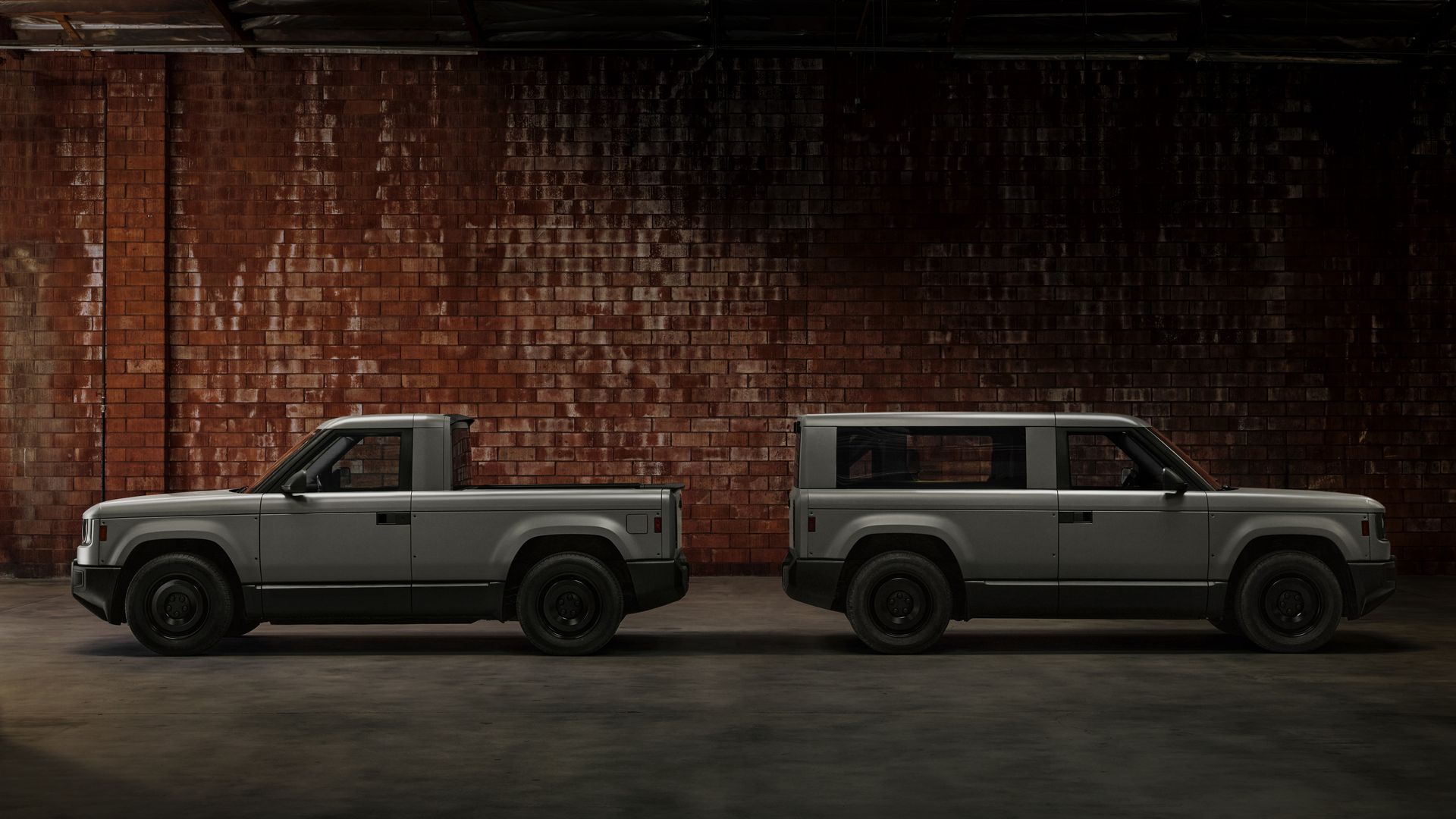
Slate says it has more than 180,000 "reservations" for its stripped-down, bare-bones electric pickup truck, with a starting price tag of $24,950.
Why it matters: Slate, backed by Amazon founder Jeff Bezos, is betting that automakers can profit from affordable EVs by selling customization instead of packing every feature into the vehicle upfront.
Driving the news: Slate today confirmed the under-$25,000 MSRP for the simple two-seat pickup truck and said an SUV version will start at $29,950.
- Pre-orders begin today, requiring a $300 deposit.
- It has a driving range of 205 miles, can tow up to 2,000 pounds and has a payload capacity of 1,550 pounds.
- What it doesn't have is a radio or touchscreen — or about half the parts found in a typical truck.
The intrigue: Slate's goal is to provide an affordable EV that people can customize gradually over time.
- "Slate gives customers the freedom to buy only what they need today and personalize their vehicle as their needs change tomorrow," said Peter Faricy, the former Amazon Marketplace vice president who became Slate CEO in March.
Between the lines: More than 175 accessories will be available from the Slate Marketplace, with more than 80 costing less than $500 — including roof racks, stereos, zip-off seat covers and light covers.
- The truck isn't painted, but buyers can choose from more than 100 wrap colors for $500 — or pick their own custom color.
Reality check: It's a $25,000 electric truck, sure, but once people add all their preferences, Slate buyers are likely to pay a lot more.
What we're watching: How many of those reservation holders turn into actual buyers.
4. Drive-thru

💰 Automakers can't get enough of the memory chips needed for high-tech cars because they're all going to data centers as prices skyrocket. (Automotive News gift link)
✂️ Lucid is cutting its U.S. workforce by approximately 18% as part of a cost-savings plan under new CEO Silvio Napoli. (CNBC)
🚫 Tesla is disputing claims that its driver-assistance software caused a fatal crash in Texas in which a Model 3 plowed into a woman's home, killing her. (Yahoo Finance)
- "This makes no sense," CEO Elon Musk wrote on X. FSD drives slowly through neighborhood streets and this was a high speed crash!"
⚡️ Terawatt Infrastructure is borrowing as much as $300 million from banks to support its global buildout of charging hubs for robotaxis, another sign of the importance of AV infrastructure. (Bloomberg)
5. 🚘 What I'm driving
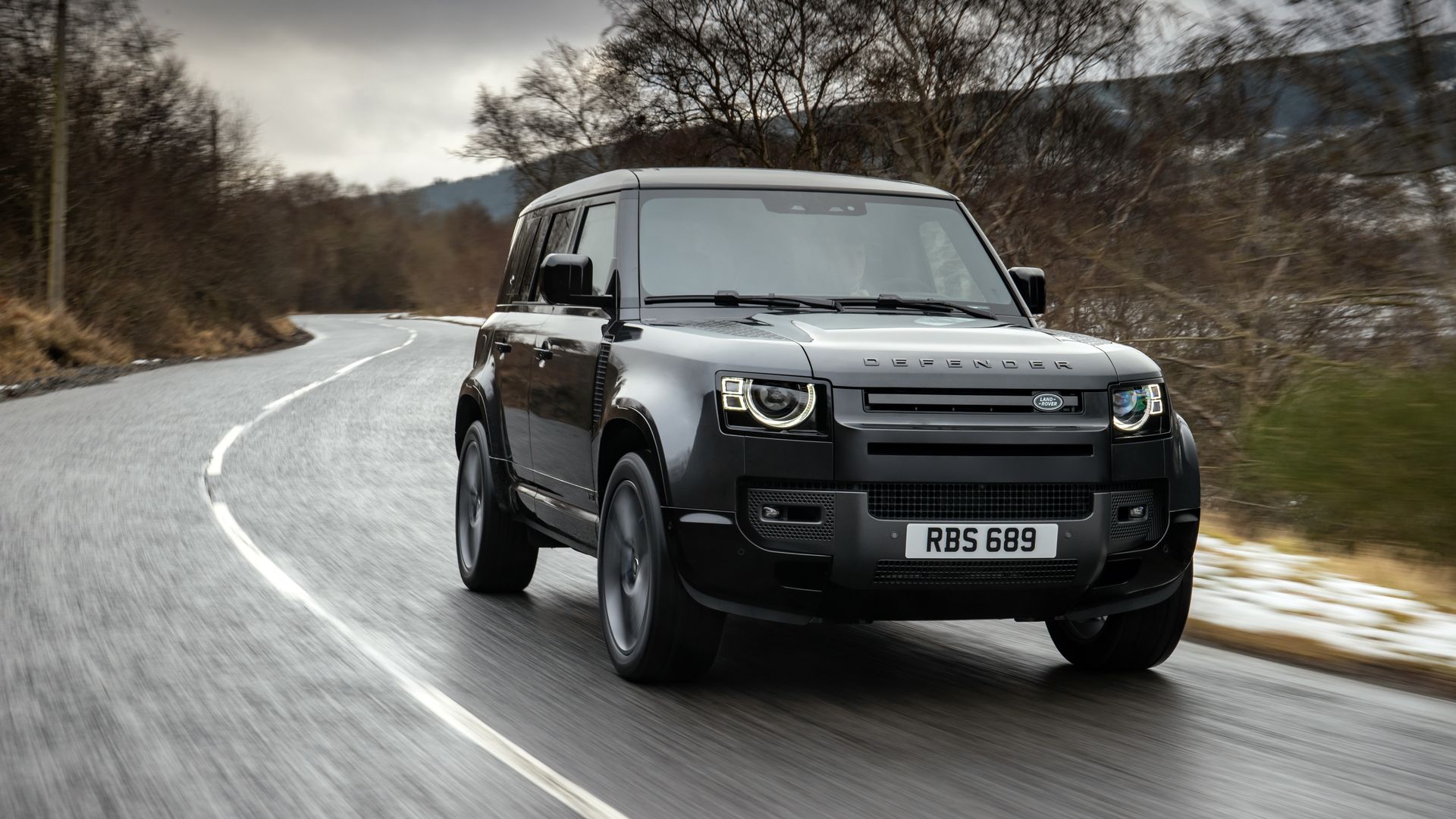
2026 Land Rover Defender 110
- MSRP: Starts at $63,500; as tested: $110,910 for X-Dynamic SE trim with interior upgrade, tow package, head-up display and other options, plus delivery.
- Under the hood: 493-hp, 5.0-liter V8 engine
- Fuel economy: 17 mpg combined city/highway
- Manufacturing site: Nitra, Slovakia
What's new: Refreshed exterior, new paint colors; a new 13-inch infotainment screen, and a revised center console design. Also cool: a new off-road adaptive cruise control system for rugged terrain.
What I loved: Iconic styling, luxury interior and comfortable ride due to its air suspension. But keep in mind I tested the Defender in grocery-getting mode, not off-road.
What drove me crazy: The rear-mounted spare tire made operating the side-hinged tailgate a real chore.
I test-drive vehicles in my role as a juror for the North American Car and Truck of the Year awards. Opinions are my own.
Thanks to editors Pete Gannon and Amy Stern. If you're a fan of this newsletter, please ask your friends to sign up, too.
Sign up for Axios Future of Mobility

Stay ahead of the trends upending the auto industry, including electrification, the AI revolution and more, with Joann Muller.