Axios Future of Mobility

July 30, 2025

🤷♂️ Another week, another tariff deadline looming for automakers. Everyone will be happy to get some clarity soon and end the distractions.
- As of today, however, nothing's really clear. And that's not great for an industry trying to retool in the face of changing technology and new competition from China.
1,460 words, a 5.5-minute read
1 big thing: Lopsided tariffs squeeze U.S. carmakers
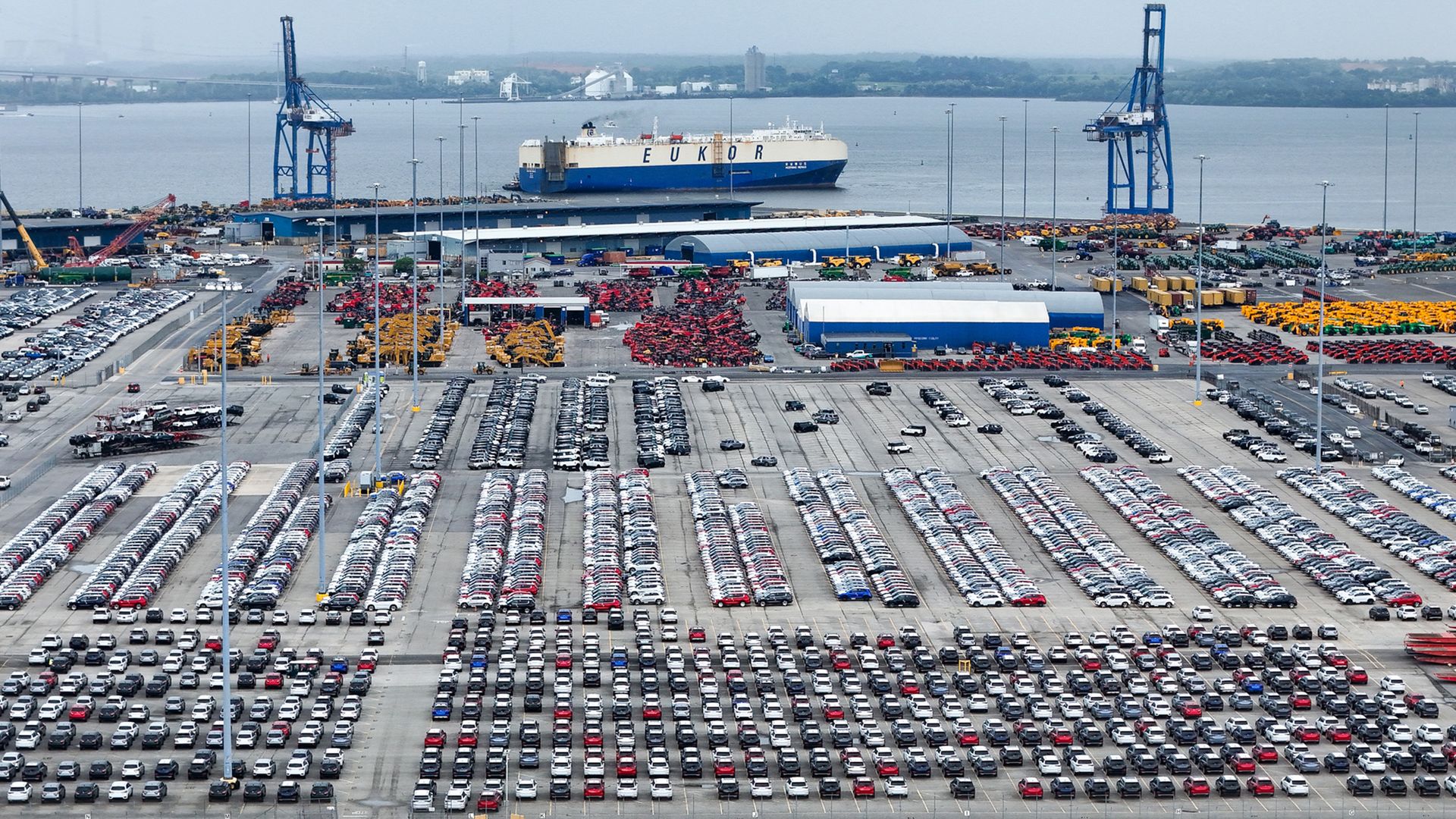
A consequence of President Trump's new trade deals with Japan and the European Union is that they could entice foreign automakers to import even more cars to the U.S. rather than grow their American operations.
Why it matters: Trump's effort to reshape global commerce assumes that punishing tariffs on imports will force foreign manufacturers to set up factories in America, strengthening the U.S. economy.
- But his trade policy conflicts in many ways with those industrial policy goals — for now at least — by making it cheaper to import cars than to build them in North America.
The big picture: That probably won't be the case forever.
- But neither U.S. automakers nor the United Auto Workers is happy about the advantages their competitors have at the moment.
Where it stands: Tariffs on cars imported from Japan or Europe will face a 15% tariff, starting Aug. 1, in lieu of a 25% tax hike the U.S. imposed on all imported vehicles and car parts earlier this year.
- It might seem like a reprieve, but it's still sharply higher than the 2.5% they had been paying before Trump took office.
- U.S.-built cars, by contrast, are taxed 25% on imported parts (except for those that comply with the U.S.-Mexico-Canada trade agreement signed by Trump in his first term). That applies not just to the Detroit 3 carmakers but also to foreign automakers with U.S. plants.
- Plus, they're subject to 50% tariffs on imported steel, aluminum and, soon, copper.
- Cars built in Canada and Mexico, already taxed at 25%, face even higher tariffs beginning Friday. For Canada, the new rate would be 35%; for Mexico, 30%. Many companies build vehicles in Canada or Mexico and ship them to the U.S.
Winners and losers: For now, the winners of Trump's head-spinning trade policies are Japan, the UK and the EU, James Schmidt, vice president-autos for the Oliver Wyman consultancy, tells Axios.
- Losers are the countries still negotiating, like South Korea, Mexico and Canada, as well as U.S. automakers that produce vehicles in those countries. Trump has said tariffs will go up Friday if no deal is reached.
- "It's a big jigsaw puzzle right now," says Schmidt. "The rest of the pieces still have to fall into place."
What they're saying: "U.S. trade policy should push automakers to build in America, with skilled union labor. A flat 15% tariff doesn't accomplish that," the UAW, which previously backed Trump's tough talk on tariffs, said in a statement.
The other side: "No president has taken a greater interest in restoring American auto industry dominance than President Trump, and the Administration is in constant touch with the auto industry to meet this objective," White House spokesperson Kush Desai told Axios.
The bottom line: U.S. trade policy is starting to come into focus, David Steinert, a partner in the automotive and industrial practice at the consulting firm AlixPartners, tells Axios via email.
- "We think there's a good chance that vehicle import tariffs for inside the USMCA will eventually be more favorable than those from the UK, Europe, Japan and Korea (potentially around an average 7.5%)."
2. Car buyers' snowballing auto debt
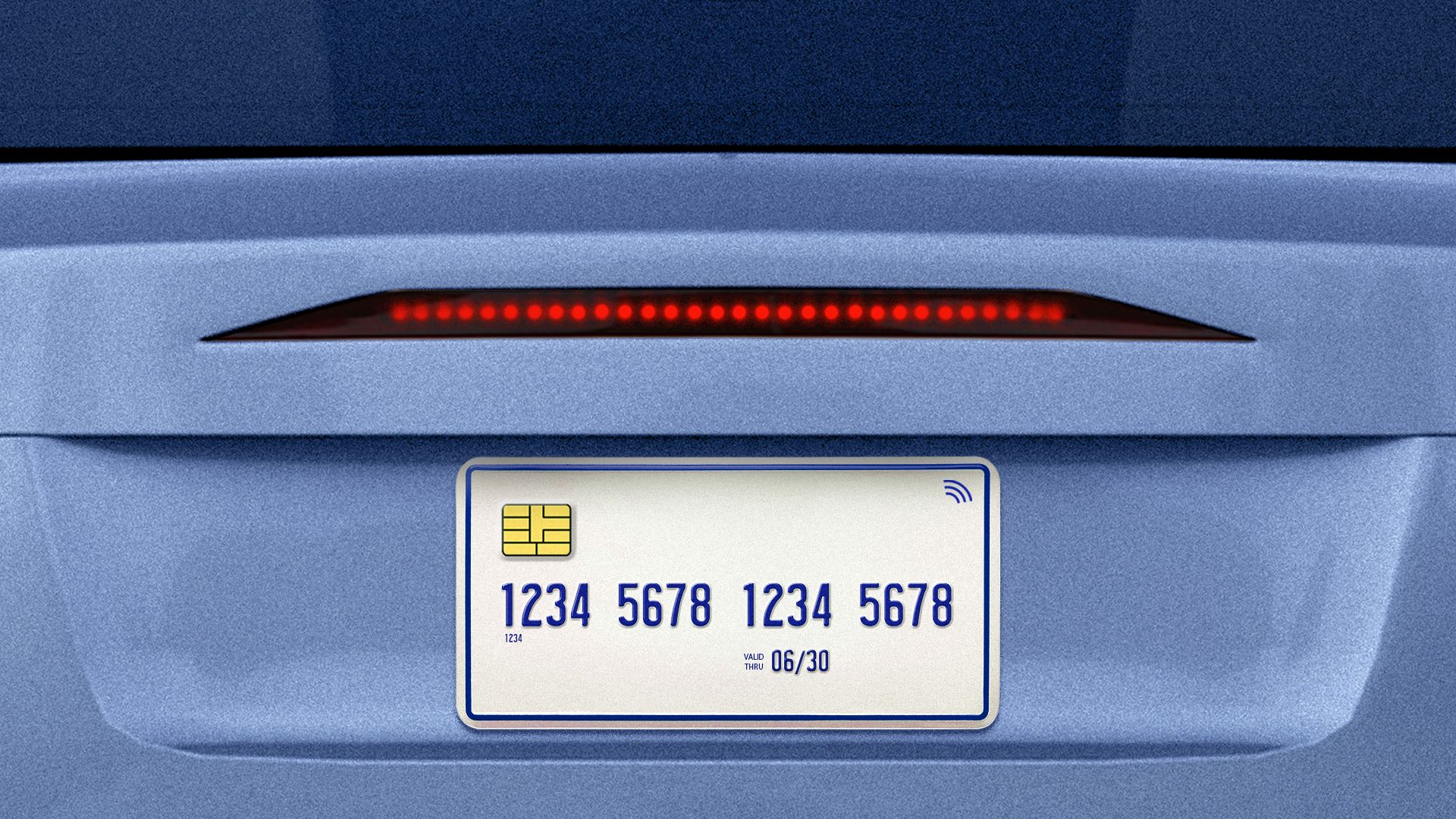
A growing share of car owners find themselves underwater on their auto loans, and they are dragging that debt into their next vehicle purchase, according to new data from the car-shopping site Edmunds.com.
Why it matters: High car prices and steep loan rates have combined to create an affordability crisis for U.S. car buyers already under broad financial stress.
- When car buyers roll up debt owed on their trade-in into the purchase of their next vehicle, they can really get into trouble.
By the numbers: More than 1 in 4 new vehicle trade-ins are underwater, a four-year high, according to Edmunds' Q2 data.
- Americans with upside-down car loans owe an average of $6,754, Edmunds found.
- Nearly one-third of car owners stuck with negative equity between $5,000 to $10,000 on their trade-in carried that debt into their next car loan.
- The average monthly payment for buyers who rolled negative equity into a new loan climbed to $915 in the second quarter, compared with $756 a month for the overall industry.
Reality check: Potential tax deductions for new car purchases won't offset the thousands more that consumers will pay in interest by trading in a car with negative equity, Ivan Drury, Edmunds' director of insights, said in a press release.
The bottom line: Car owners are at risk of getting stuck in a cycle of debt they can't escape.
3. Stellantis' turnaround plan: more muscle cars
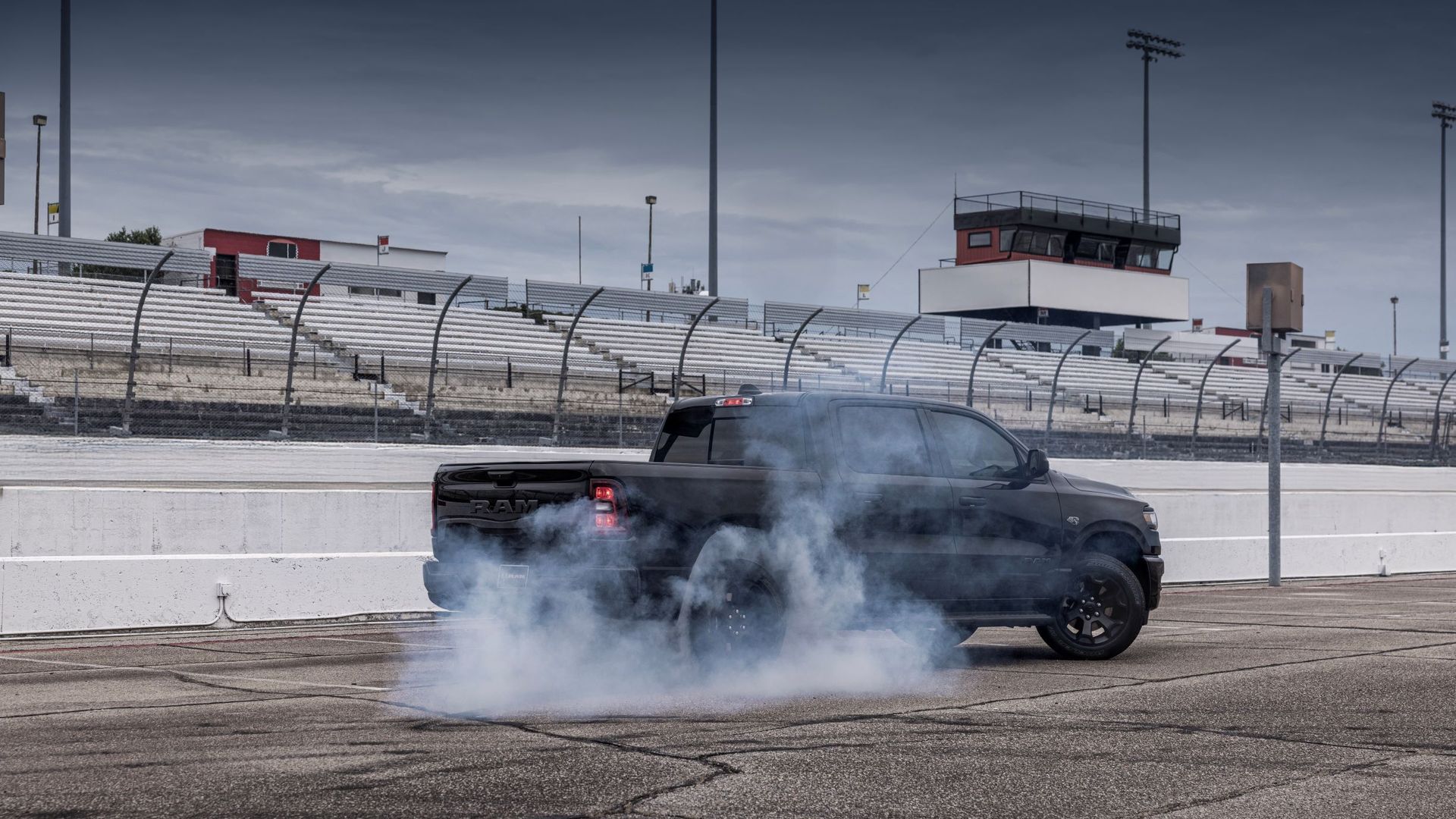
Stellantis' strategy to get back on track after a dismal 2024 is to reconnect with customers by giving them more of what they want: muscle cars and Hemi V8 engines.
Why it matters: Stellantis was never wild about electric vehicles or fuel-sipping engines, and now that the regulatory pressures that had pushed the company in that direction are easing, it's bringing back the muscle.
The big picture: 2025 is going to be "a tough year," said new CEO Antonio Filosa, who highlighted signs of progress in the first half but acknowledged that "we still have tons of work to do in North America."
Between the lines: Stellantis needs to grow to get back to good health, according to Filosa, and that means reversing decisions by his predecessor, Carlos Tavares, to phase out popular models like the Jeep Cherokee, a base-level Ram pickup and the gasoline-powered Dodge Charger.
- Seven models were killed in all, accounting for 300,000 units and "several billions" in revenue, Filosa said. "So now we are restoring that lineup."
"Bringing back the Hemi V8 engine was not a difficult decision; actually, it was an obvious one," he added in a call with analysts.
- Within 24 hours, Stellantis had more than 10,000 orders for Hemi-powered Ram pickups, he said.
What to watch: It will take more than restoring gas-guzzling muscle cars to Stellantis' lineup to bring the company back from the brink.
- Executives warned that "tough decisions" are yet to come in the second half.
4. Drive-thru
ICYMI...
🚖 Waymo keeps expanding to more cities. The robotaxi company says Dallas is next, starting next year; Avis will manage the fleet. (Axios)
🔋 South Korea's LG Energy Solution has signed a $4.3 billion deal to supply Tesla with lithium-ion phosphate (LFP) batteries made in Michigan, helping the EV maker reduce its reliance on Chinese imports due to tariffs. (Reuters)
🔮 Bill Ford, 68, might not be ready to retire as executive chair of Ford Motor Co., but some analysts believe the rising profile of his 37-year-old daughter, Alexandra Ford English, means he's thinking about succession. (Bloomberg)
⛽️ Stellantis is the latest carmaker to pull back from hydrogen fuel cell development, citing the lack of refueling infrastructure. (Automotive News)
- 😀 Yes, but: If you live anywhere near one of the 52 public hydrogen stations in California, you can get a great deal on a hydrogen-powered Toyota Mirai: a $35,000 discount off the $52,890 sticker price, 0% interest on a 72-month loan and a $15,000 fuel card.
5. What I'm driving: Mercedes-Benz EQS
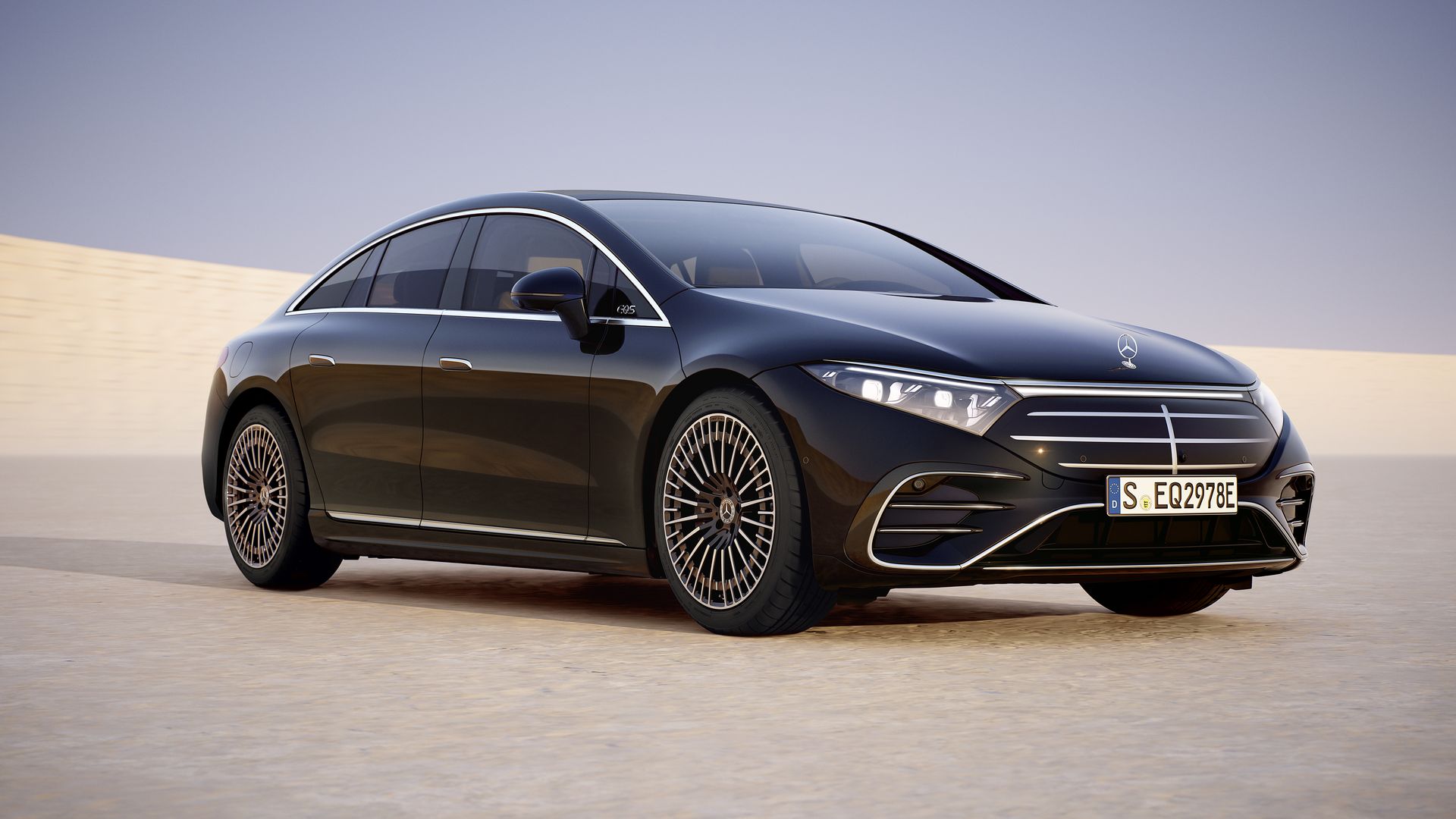
Few cars are as plush and technologically advanced as Mercedes-Benz's flagship S-class sedan, and those traits also define its electric counterpart, the EQS sedan.
The big picture: Introduced in 2021, the EQS was Mercedes' first luxury EV, and it continues to carry the banner for the German carmaker's growing portfolio of electric vehicles.
What's new: For 2025, the EQS Sedan gets a larger battery (118 kWh, up from 108 kWh), boosting the driving range to 390 miles.
- It also has a sleeker, more refined grille up front and cushier reclining seats for rear passengers.
Pricing starts at $104,400 for the EQS 450+ sedan and goes up to $147,550 for the high-performance AMG version.
- I drove the $107,400 all-wheel-drive EQS 450 4Matic. With added tech and trim features, the total sticker price came to $115,360.
Tech features abound, as you'd expect in a top-of-the-line Mercedes, including a fingerprint scanner to activate individual driver profiles, a voice-command system and augmented-reality navigation in the head-up display.
- The car's centerpiece is the MBUX Hyperscreen, a stunning curved screen across the entire width of the car, merging three displays into one.
The hands-free advanced driver-assistance system took me by surprise the first time I tried it on I-94 in Detroit.
- I set the adaptive cruise control speed and took my hands off the wheel, and it suddenly initiated an automatic lane change that I hadn't intended.
- It turns out automatic lane change is a sub-feature that was switched on in the car's multi-media system without my knowledge.
💭 My thought bubble: More and more cars now come with this kind of ADAS technology, but it's disconcerting when the car behaves in ways you don't expect.
I test-drive vehicles in my role as a juror for the North American Car and Truck of the Year awards. Opinions are my own.
Thanks for reading! Please encourage your friends and colleagues to sign up.
Thanks to Ben Berkowitz and Jay Bennett for editing.
Sign up for Axios Future of Mobility