Axios Future of Mobility

March 11, 2026

Welcome back!
✈️ Today, we're looking skyward at the next era of aviation, where new electric aircraft will soon be taking off.
- 📍 In D.C.? Join me Thursday, March 19 at 8am for an Axios Live event exploring the future of autonomous vehicles, featuring conversations with Rep. Bob Latta (R-Ohio), Sen. Gary Peters (D-Mich.) and Advocates for Highway and Auto Safety president Cathy Chase. RSVP here.
1,689 words, a 6½-minute read ...
1 big thing: A flying start for air taxis
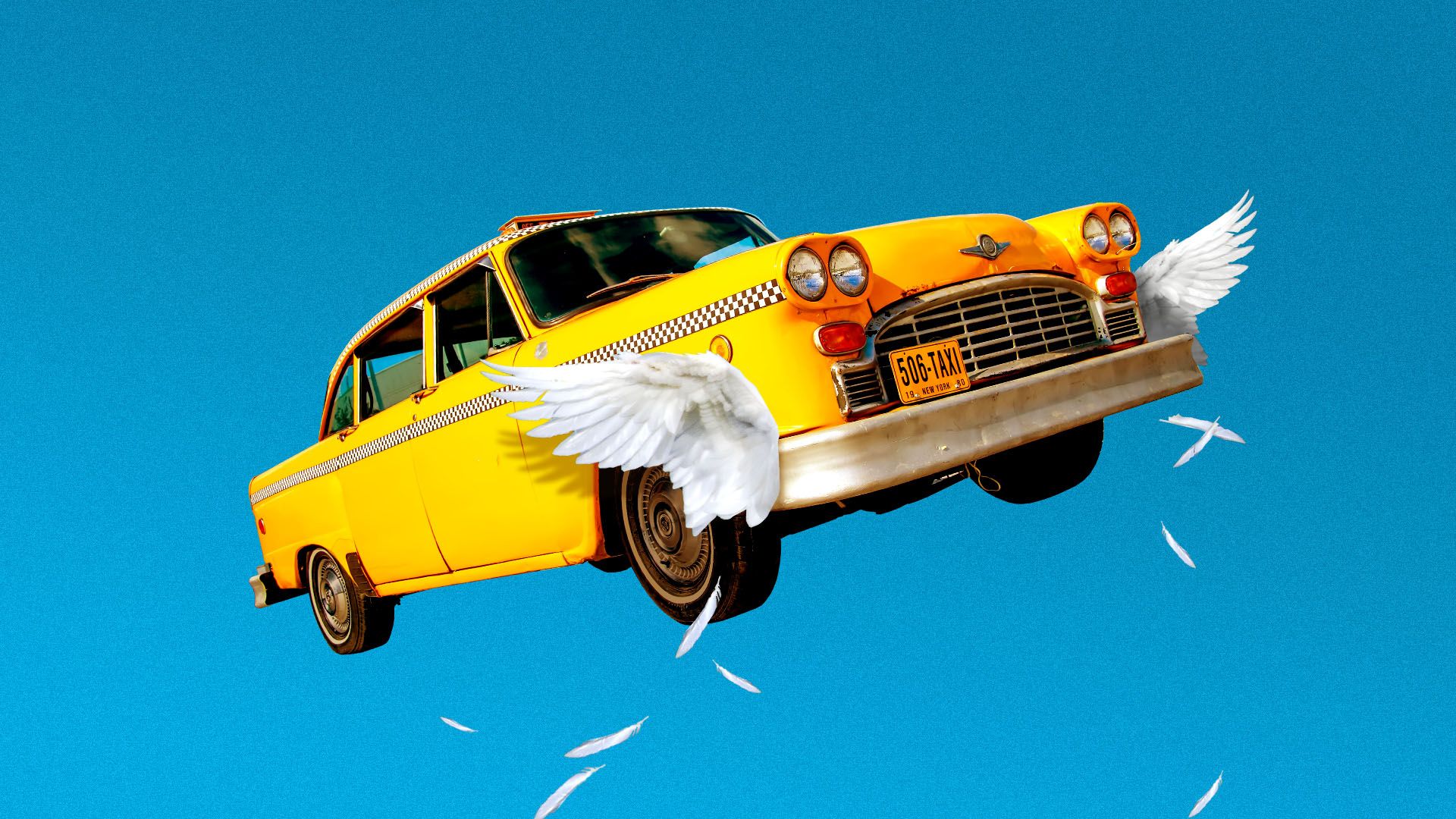
The U.S. aims to accelerate the next era of aviation with eight pilot projects to test innovative electric aircraft across 26 states, the Trump administration announced this week.
Why it matters: Together, the projects will create one of the largest real-world testing environments for next-generation aircraft, the Federal Aviation Administration said in a statement.
The stakes: The U.S. is competing against China to lead in advanced air mobility.
- Just last week, China declared that the "low-altitude economy" — drones and electric air taxis — will be an engine of growth alongside critical industries like artificial intelligence and quantum computing.
- China has rapidly scaled industries it prioritizes — just look at electric vehicles — raising the stakes for U.S. companies racing to commercialize next-gen aircraft.
The projects, announced Monday, are part of a Trump administration pilot program letting U.S. companies test real-world operations ahead of final FAA certification.
Most are testing eVTOLs — piloted aircraft that take off like helicopters and fly horizontally like traditional planes. (More on these below👇)
- A couple will use electric or hybrid planes that take off and land conventionally, or require only a short runway.
- One, Boeing-owned Wisk Aero, is exclusively focused on autonomous flight.
Between the lines: The sexiest project involves air taxi passenger flights in Manhattan. But dig into the list and it's clear the FAA, initially at least, is leaning harder into moving boxes than people.
- Many of the pilots involve cargo transport or medical emergency response — services that could provide real community benefits immediately.
Zoom in: Here are a few examples:
- Vermont-based Beta Technologies, a participant in seven of the eight projects, will run medical flights in New England, Texas, Utah and North Carolina. It will also run cargo logistics in multiple states, including for offshore energy sites in Louisiana.
- Joby Aviation, which is involved in five projects, is already targeting Manhattan for its air taxi launch. But among other projects, it will also explore ways to support firefighters during wildfires in western states.
- Archer Aviation is a participant in three projects in Texas, Florida and New York. It already has plans to create an electric air taxi network in Miami.
- Boeing's Wisk will lay the groundwork in Texas to integrate its autonomous planes into the National Airspace System.
The intrigue: Los Angeles, which hopes to have electric air taxis flying in time for the 2028 Olympics, was not selected as a test site — potentially hurting Archer's ambitions as the "official air taxi partner" of the LA Games.
- Melissa McCaffrey, Archer's head of government affairs, said Archer is still preparing to "demonstrate this technology to the world during the Olympics."
2. How hailing an air taxi will work
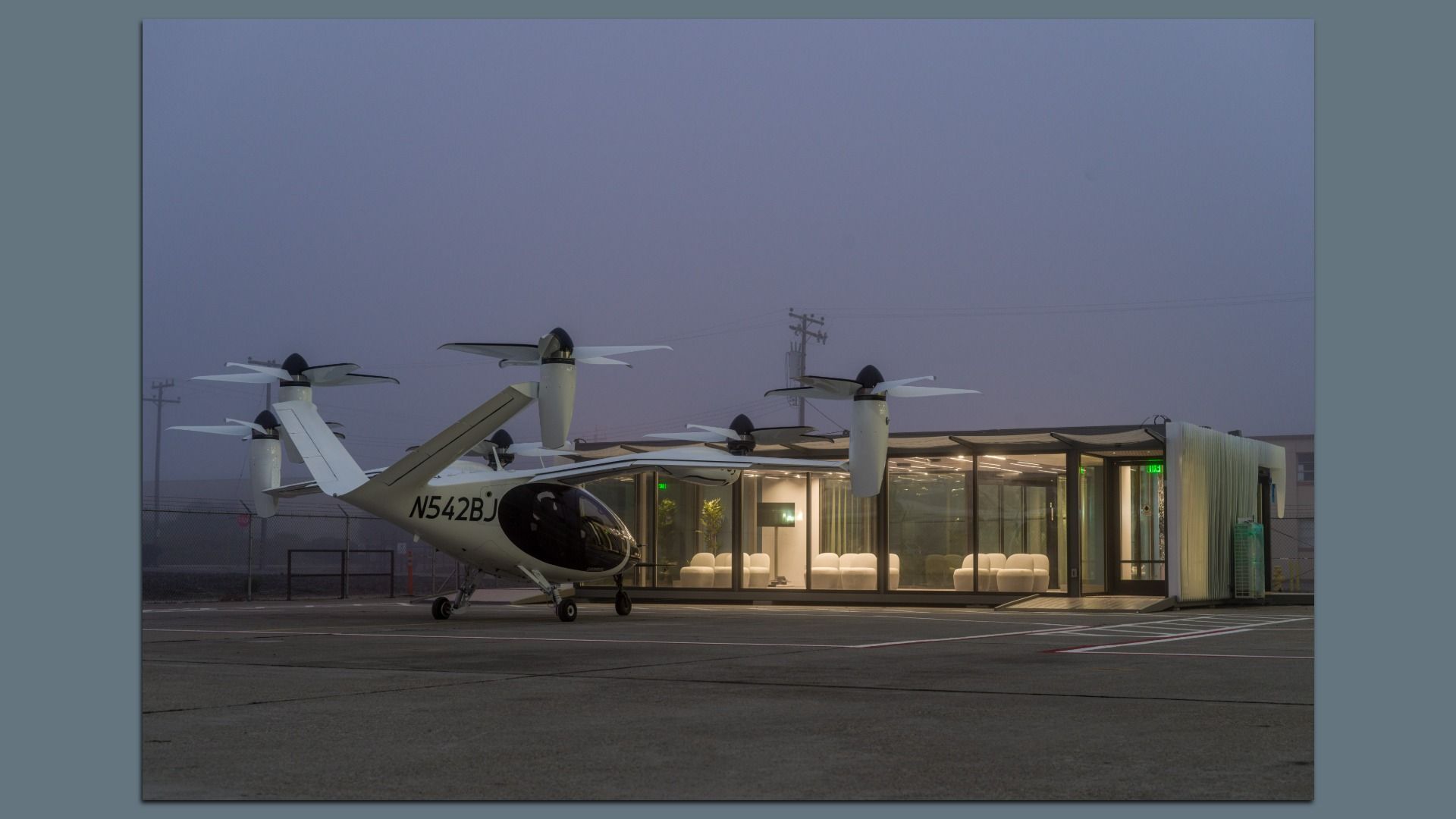
The next era in aviation requires an entirely new ecosystem: new types of aircraft, new infrastructure and new ways to book a trip. Here's what you need to know.
🗣️ First, the lingo: Get used to new terminology like "eVTOLs" and "vertiports."
What's an eVTOL? I keep hoping someone will come up with a better name for these newfangled planes, which are the first new category of aircraft in 80 years.
- eVTOL stands for "electric vertical takeoff and landing." They're essentially giant, low-flying electric drones that carry passengers or cargo.
Zoom in: Unlike helicopters that have a single rotor mast, eVTOLs have multiple smaller rotors. That makes them both safer and quieter — there's less of that thump, thump, thumping in the air.
- They run on electric batteries, not fossil fuels, and have a range of around 100 miles.
- Their design is simplified, intended for mass production — drawing on automotive manufacturing techniques to drive down costs.
Vertiports are where eVTOLs will take off, land and recharge.
- For air taxi operators, that means building new passenger lounges and landing zones in cities — perhaps on the roofs of parking garages or skyscrapers — and at major airports.
- For cargo flights, eVTOLs will need places to land near warehouses or regional airports.
- New charging infrastructure will be required for both.
The idea is to seamlessly integrate vertiports into existing ground transportation hubs. Joby Aviation, for example, recently partnered with Metropolis Technologies to develop 25 of them at its AI-enabled parking facilities across the U.S.
📲 Booking an air taxi will be a lot like hailing a ride on Uber or Lyft.
- Uber previewed its Uber Air powered by Joby service at a press event in Dubai recently (just days before missiles started flying).
How it works: Riders enter their destination in the "Where to?" bar, as usual. If their trip qualifies, Uber Air powered by Joby will appear as an option.
- With one tap, the app will book every leg of the journey — including Uber Black pickup and drop-off at Joby vertiports.
💵 How much will an air taxi cost you? Archer says it wants rides to be competitive with Uber Black.
The bottom line: We're still at least a few years away from this new era of transportation, but the vision is beginning to take shape.
3. Knives out in air taxi battles

Joby and Archer are engaged in a high-stakes, multifront legal battle that includes allegations of stolen trade secrets and accusations of national security risks.
Why it matters: It's a sign of a tightening race in the emerging market for advanced air mobility as the leading players fight for market dominance and regulatory approval.
Driving the news: Archer sued Joby in federal court in California this week, alleging that its rival has concealed extensive ties to Chinese suppliers.
- The timing of the lawsuit coincided with the FAA's announcement of the pilot projects.
- Archer (involved in three of the projects) said Joby (a participant in five) should be disqualified from the program.
The other side: Alex Spiro, an attorney for Joby, said the company "doesn't respond to nonsense."
- "Archer's constant legal issues and flailing business operations have left it no choice but to resort to invented nonsensical theories. We look forward to seeing them in court."
⚖️ Catch up quick: It's not the first legal skirmish among eVTOL developers.
- Archer's suit was filed as a counterclaim to a November lawsuit by Joby that accused Archer of corporate espionage.
- In February, Archer sued a different eVTOL developer, Vertical Aerospace, claiming it copied the design and technology of Archer's Midnight aircraft. That lawsuit came just days after Archer opened a new engineering hub in Vertical's hometown in Bristol, England, triggering a likely talent war.
Flashback: In 2021, Archer itself was the target of a patent infringement suit brought by Wisk. The companies reached a settlement in 2023 and agreed to work together on autonomous flight.
The big picture: The patent fights are to be expected as the eVTOL industry consolidates and moves closer to regulatory approval, legal experts say.
- "Do they get scrappier? Yes," says Graham Phero, an aviation patent attorney at Sterne Kessler. "Companies are competing for funding and talent," he tells Axios.
- "They're also competing for the ability to ultimately get that next contract. That's what's going to keep your company alive — so things can get very testy," Phero added.
The bottom line: It's reminiscent of the dawn of aviation, when the Wright brothers waged a patent war against competitors.
- Back then, the legal entanglements stalled American aviation for decades. It remains to be seen how it'll play out this time.
4. ⛽️ Gas pain, EV gain?

If sharply higher gas prices have you thinking (again) about buying an electric vehicle, start by looking on the used car lot.
Between the lines: Used EVs cost less than preowned gas cars (most are priced below $30,000) and they're the most affordable cars to own, according to a University of Michigan study.
- They don't need gasoline, they require less maintenance and their batteries last longer than expected.
Yes, but: There are lots of variables to consider — and the biggest one is charging.
- Charging at home is relatively cheap, but charging at a public DC fast-charger costs about four times as much — often about the same as a fill-up at the gas station.
- As gas prices rise, however, even public charging could have a cost advantage over gasoline.
Zoom in: Veloz, an EV education nonprofit, published a cost comparison last December, before the recent spike in gas prices.
- On average, fully charging an EV at home costs $12.86, compared to $43.00 to fill up a standard 14-gallon gas tank — saving EV drivers up to $2,000 per year, Veloz said.
The catch: Not everyone has access to a home charger.
What's next: You can do the math yourself using Veloz's EV savings calculator, which compares public and home charging costs by ZIP code and vehicle.
The bottom line: Gas prices would need to stay high for years — not weeks or months — to drive a lasting shift toward EVs.
- But for budget-pinched shoppers, a deal on a used EV could be attractive.
5. Drive-thru
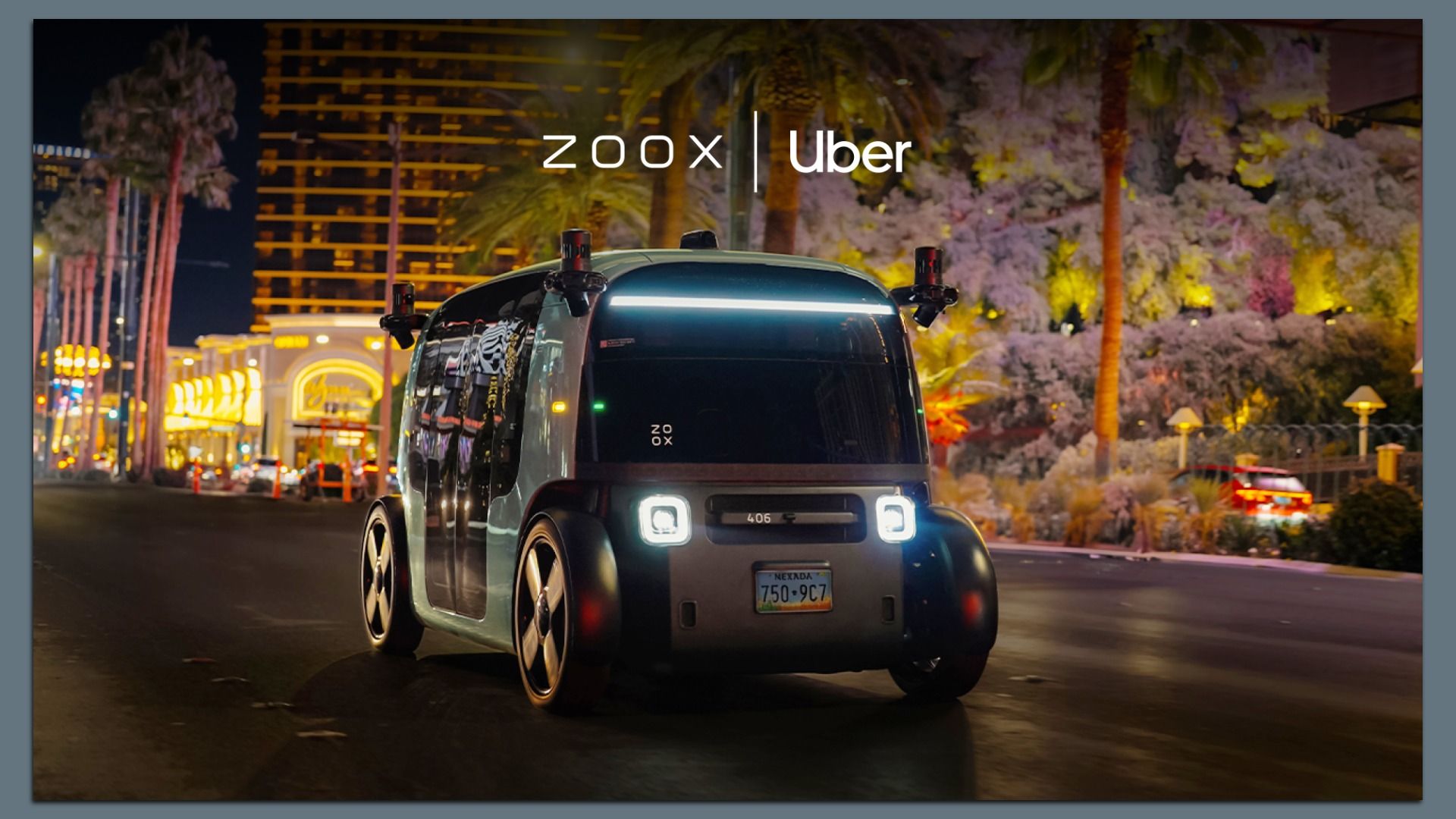
🚖 Zoox, the Amazon-owned robotaxi company, has been busy.
- Today, it's announcing a multiyear partnership to deploy robotaxis on Uber's network — in Las Vegas this summer, and in Los Angeles in 2027. It's the latest in a series of AV partnerships for Uber.
- The National Highway Traffic Safety Administration is seeking public comment on Zoox's application for an exemption from motor vehicle safety standards to deploy 2,500 robotaxis that have no human controls.
- And the company has begun testing AVs in Dallas and Phoenix and is adding a fleet command center in Scottsdale, Arizona — a move expected to create "hundreds of jobs across these markets."
🚢 Aluminum, plastics and other materials are at risk from supply chain disruptions as a result of the Iran war, which could have ripple effects for the global auto industry. (CNBC)
👷♂️ Ford is launching a new AI system for its Pro commercial vehicle business — a crucial growth area for the automaker. (CNBC)
Thanks for reading! And thanks to Pete Gannon and Bill Kole for editing. See you next time. Please ask your friends to sign up!
Sign up for Axios Future of Mobility